
In the realm of mechanical design and manufacturing, engineering drawings serve as the definitive blueprint, translating conceptual designs into actionable instructions. These drawings meticulously document not only the geometric form of a component but also its critical dimensional and geometric tolerances, surface finish requirements, and datum references. For complex components like cylindrical gears, this information is paramount for ensuring proper function, interchangeability, and manufacturability. However, a significant gap persists between traditional 2D drawings and modern 3D Computer-Aided Design (CAD) models. While 3D models excel at visualizing form and fit, they often lack a robust, standardized, and machine-interpretable method for conveying the rich tolerance and surface specification data inherent in the original 2D drawing. This disconnect can lead to information loss, interpretation errors, and inefficiencies in downstream processes like Computer-Aided Manufacturing (CAM) and inspection planning.
My research directly addresses this challenge by proposing a novel, automated methodology for reconstructing a fully annotated 3D model of a cylindrical gear directly from its 2D Drawing Exchange Format (DXF) file. The core objective is not merely to create a “dumb” solid but to intelligently extract, correlate, and reintegrate key geometric parameters along with their associated tolerance and surface finish data. The proposed framework systematically processes the DXF file, distinguishes entities from different orthographic views, identifies and correlates dimensions with their corresponding geometric features, predicts gear parameters using machine learning, and finally, executes a parametric 3D reconstruction in CAD software that explicitly incorporates critical tolerances. This approach aims to bridge the digital thread, enhancing the value of 3D models by making them complete, self-contained digital twins of the drawing specifications.
Deconstructing the DXF File: A Structured Data Mine
The DXF file format, developed by Autodesk, is a tagged data representation of all the information contained in a CAD drawing. It serves as an excellent intermediary for this task due to its open specification and structured organization of entities. My process begins with a thorough parsing and extraction of four fundamental categories of information from the DXF file, each critical for a complete reconstruction of cylindrical gears and similar components.
1. Geometric Entity Information: This forms the wireframe of the drawing. Key entities extracted include:
- LINE: Represents straight edges, center lines, and construction lines.
- CIRCLE: Represents holes, shafts, and cylindrical features like the pitch circle or bore of cylindrical gears.
- ARC: Represents fillets, rounded corners, and segments of circles.
Each entity is stored with its defining parameters (e.g., start/end points, center point, radius) and layer property, which often provides a semantic hint about its purpose (e.g., “Center,” “Object,” “Hidden”).
2. Dimensioning and Annotation Information: These are the alphanumeric specifications that define size and location. The system extracts:
- Linear Dimensions: For lengths and distances (e.g., keyway width, web thickness).
- Diameter Dimensions: For circular features (e.g., addendum circle, root circle diameter of cylindrical gears).
- Radius Dimensions: For fillets and arcs.
- Angular Dimensions.
For each dimension, the extraction captures its type, the numerical text value, and the coordinates of its defining points (e.g., extension line origins, arrowhead points). This data is crucial for later correlation with geometric entities.
3. Surface Finish (Roughness) Symbols: According to standards like ISO 1302, surface texture is indicated by a standard symbol. The algorithm identifies these symbolic blocks within the DXF file. The key challenge is determining the exact point on a drawing edge to which the roughness value applies. For a symbol with three connected lines, the logic involves:
- Finding all intersection points of connected lines.
- Identifying the text insertion point \( P_{text} \) of the roughness value (e.g., “Ra 6.3”).
- Calculating the perpendicular distances from \( P_{text} \) to the connected line segments.
- The segment with the shorter distance \( l_1 \) is the leader line. The endpoint of this segment farthest from \( P_{text} \) is identified as the application point \( A \) on the drawing geometry. The roughness value and point \( A \) are stored.
4. Geometric Dimensioning and Tolerancing (GD&T) Information: This includes symbols for form, orientation, and position tolerances (e.g., circular runout, symmetry). DXF represents these as complex “blocks.” My method extracts the vector data of these blocks and reconstructs them into a raster image. This image is then matched against a pre-built library of template images for all standard GD&T symbols using a Normalized Cross-Correlation (NCC) template matching algorithm. For a template image \( T(x’, y’) \) and a sub-region \( I(x+x’, y+y’) \) of the reconstructed symbol image, the correlation coefficient \( R(x, y) \) is calculated as:
$$R(x,y) = \frac{\sum_{x’,y’} (T'(x’,y’) \cdot I'(x+x’, y+y’))}{\sqrt{\sum_{x’,y’} T'(x’,y’)^2 \cdot \sum_{x’,y’} I'(x+x’, y+y’)^2}}$$
where \( T’ \) and \( I’ \) are the mean-subtracted versions of the template and image region, respectively:
$$T'(x’,y’) = T(x’,y’) – \frac{1}{w \cdot h}\sum_{x”,y”}T(x”,y”)$$
$$I'(x+x’,y+y’) = I(x+x’,y+y’) – \frac{1}{w \cdot h}\sum_{x”,y”}I(x+x”,y+y”)$$
The symbol with the highest correlation score is identified. The associated tolerance value (e.g., 0.25) and datum references (e.g., [A]) are extracted from the accompanying text entities. The coordinates of the tolerance frame’s attachment point are also recorded.
| Information Type | DXF Entities / Blocks | Extracted Key Data | Purpose in Reconstruction |
|---|---|---|---|
| Geometry | LINE, CIRCLE, ARC | Coordinates, Radii, Layer | Forms the 3D wireframe and solid shape. |
| Dimensions | DIMENSION | Type, Text Value, Definition Points | Defines sizes and drives parametric modeling. |
| Surface Finish | INSERT (of Roughness Block) | Roughness Value (Ra), Application Point (A) | To be applied to specific faces in the 3D model. |
| GD&T | INSERT (of Tolerance Block) | Symbol Type, Tolerance Value, Datum, Attachment Point | To be assigned to specific features relative to datums in 3D. |
Organizing Chaos: View Segmentation via K-Means Clustering
A mechanical drawing typically contains multiple orthographic views (front, top, side, sections). All entities from these views coexist in the same DXF coordinate space. A crucial preprocessing step is to automatically segment which entities belong to which view. I employ the K-means clustering algorithm for this task. The “seeds” for clustering are found by identifying the center points of each view. This is achieved by detecting all center lines (entities on the “Center” layer) and calculating their intersection points. Dense clusters of intersections reveal the central hub of each orthographic view.
With the number of clusters \( k \) set to the number of views and initial centroids \( C_i^{(0)} \) set to these calculated center points, the algorithm proceeds. For each geometric or dimensional entity (represented by a feature point like its midpoint or center), the algorithm assigns it to the cluster whose centroid is closest. The centroid of each cluster is then updated to the mean of all points assigned to it. This process iterates until convergence. The objective function minimized is the sum of squared distances (SSD):
$$J = \sum_{i=1}^{k} \sum_{\mathbf{x} \in S_i} \|\mathbf{x} – \boldsymbol{\mu}_i \|^2$$
where \( \mathbf{x} \) is a data point (entity feature point), \( S_i \) is the set of points in cluster \( i \), and \( \boldsymbol{\mu}_i \) is the centroid of cluster \( i \). The result is a clean separation of all lines, circles, arcs, and their associated dimensions into distinct groups corresponding to the front view, side view, etc. This step is foundational for correctly interpreting the 2D projections and establishing spatial relationships for 3D reconstruction of cylindrical gears and other parts.
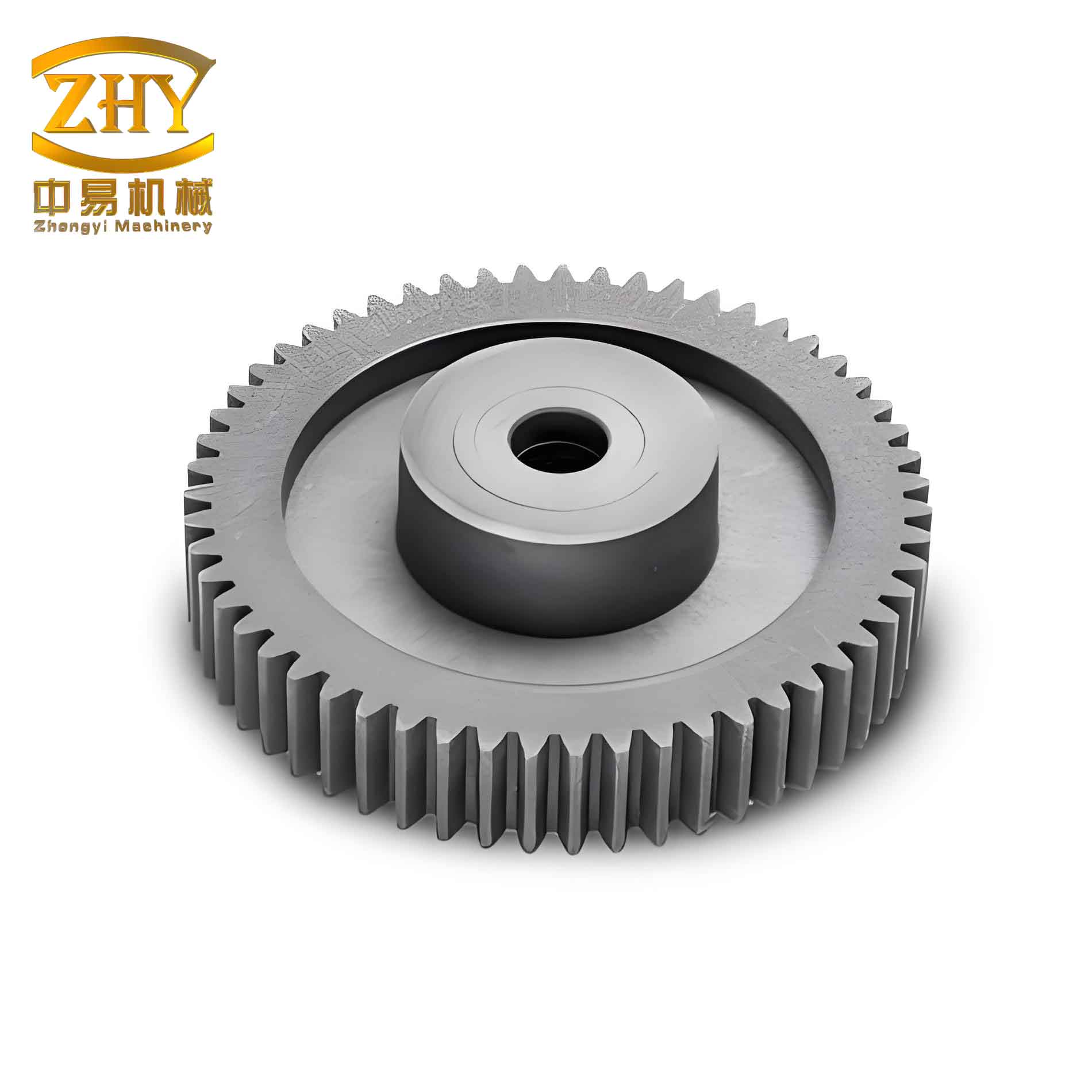
Intelligent Correlation and Parameter Prediction with BP Neural Networks
Simply having dimensions and geometry is not enough. The system must understand which dimension applies to which geometric feature. For standard cylindrical gears, many key parameters are interrelated. My approach uses a trained Backpropagation (BP) Neural Network to map extracted graphical data from specific views to the primary gear parameters.
The input layer of the network receives a feature vector derived from a specific view cluster. For the frontal view of a cylindrical gear, this might include normalized values related to observed diameters, distances between concentric circles, and presence of certain geometries like keyways. The hidden layers process this information. I utilize the hyperbolic tangent (tanh) activation function for the hidden layers due to its zero-centered output, which often leads to faster convergence compared to the sigmoid function:
$$\varphi(x) = \tanh(x) = \frac{e^{x} – e^{-x}}{e^{x} + e^{-x}}$$
For a hidden layer neuron \( i \), its output \( o_i \) given inputs \( x_j \) is:
$$o_i = \varphi(\text{net}_i) = \varphi\left( \sum_{j=1}^{M} w_{ij} x_j + \theta_i \right)$$
where \( w_{ij} \) are the weights, \( \theta_i \) is the bias, and \( M \) is the number of inputs. The weights for the hidden layers are initialized using the Xavier method to maintain stable variance of activations and gradients:
$$w \sim U\left[ -\frac{\sqrt{6}}{\sqrt{n_{in} + n_{out}}}, \frac{\sqrt{6}}{\sqrt{n_{in} + n_{out}}} \right]$$
The output layer produces a vector of predicted gear parameters, such as addendum diameter \( d_a \), dedendum diameter \( d_f \), module \( m \), face width \( b \), keyway width \( k_w \), and web thickness \( t_w \). During the training phase, the network learns from a dataset of known gear drawings and their correct parameters. The error between the predicted output \( o_k \) and the true value \( y_k \) is quantified using the Mean Squared Error (MSE) loss:
$$L = \frac{1}{2} \sum_{k=1}^{K} (y_k – o_k)^2$$
This error is then propagated backward through the network using gradient descent to adjust the weights \( w_{ij} \) and biases, minimizing the loss over many iterations.
For example, the network learns that a specific pattern of concentric circles in the front view with a particular radial distance correlates to a specific module and number of teeth for cylindrical gears. Once trained, the network can accurately predict parameters like the addendum diameter directly from the extracted view data. The table below shows exemplary results from such a prediction, demonstrating high accuracy with very low root mean square error (RMSE).
| Test Case | True Addendum Diameter (mm) | Predicted Diameter (mm) | Root Mean Square Error (RMSE) |
|---|---|---|---|
| 1 | 170.000 | 170.005 | 2.8e-5 |
| 2 | 228.000 | 227.999 | 1.5e-5 |
| 3 | 285.000 | 284.999 | 1.0e-5 |
| 4 | 210.000 | 209.992 | 2.5e-5 |
| 5 | 228.000 | 227.999 | 2.1e-5 |
This prediction step is powerful. It resolves ambiguities, fills in information that might be indirectly defined (e.g., calculating root diameter from addendum diameter and module), and provides a robust, normalized set of parameters to drive the subsequent 3D modeling process. The network effectively acts as an expert system interpreting the drawing’s intent.
Parametric 3D Reconstruction and Tolerance Embodiment
The final stage involves translating the extracted and inferred data into a semantically rich 3D CAD model. I achieve this through parametric modeling using the Application Programming Interface (API) of a commercial CAD system, such as SolidWorks via Visual Basic for Applications (VBA). The process is automated by a script that takes the structured data as input.
1. Base Geometry Creation: The script uses the predicted and extracted parameters to generate the core geometry. For a cylindrical gear, this involves:
- Creating sketch profiles based on diameters (bore, web, addendum circle).
- Using the gear module and number of teeth (calculated from diameters) to generate the precise tooth profile via the CAD system’s internal gear generation tools or imported standard libraries.
- Extruding and combining features to form the solid body of the gear, including the web, rim, and hub.
2. Embodiment of Tolerances and Surface Finish: This is the critical step that elevates the model from a simple shape to a true digital twin of the drawing. The script uses the stored correlation data to apply specifications to the correct geometric features in the 3D model:
- Dimensional Tolerances: The model’s parametric dimensions are assigned the upper and lower deviation values extracted from the drawing’s dimension text (e.g., \( \phi 45^{+0.033}_{-0.020} \)).
- Geometric Tolerances: Using the API, the script creates GD&T feature control frames. It attaches a circular runout tolerance to the gear teeth profile relative to datum axis A. It attaches a symmetry tolerance to the keyway relative to datum plane A. The tolerance values and datum references are pulled directly from the earlier extraction and matching step.
- Surface Roughness: The script applies the extracted roughness symbols (e.g., Ra 3.2) to the specific faces of the 3D model that correspond to the calculated application points \( A \) from the 2D drawing.
The output is a fully defined 3D part file where the tolerances are not just a note in a separate field but are formally and associatively attached to the relevant geometry. This enables model-based definition (MBD) workflows, where the 3D model itself becomes the master authority for manufacturing and inspection. The table below illustrates how the final 3D model data structure correlates with the original drawing information.
| Feature | Extracted Dimension & Tolerance | Applied 3D Feature | Associated GD&T / Roughness |
|---|---|---|---|
| Shaft Bore | φ45 +0.033/-0.020 | Cylindrical Face | Datum Feature [A] |
| Addendum Circle | φ190 (Theoretical) | Tooth Tip Cylinder | Ra 3.2 |
| Keyway Width | 14 +0.240/-0.020 | Keyway Slot Faces | Symmetry 0.25 to [A] |
| Gear Face | N/A | Side Face of Teeth | Circular Runout 0.25 to [A] |
| Web Side | 24 ±0.0 | Web Faces | Ra 6.3 |
Conclusion and Future Work
The methodology I have presented offers a comprehensive and automated pipeline for reconstructing intelligent 3D models from 2D DXF drawings, with a specific focus on cylindrical gears. By integrating DXF parsing, computer vision techniques, machine learning, and parametric CAD automation, the framework successfully bridges a significant gap in digital manufacturing. It moves beyond simple geometry conversion to capture and re-embed essential product manufacturing information (PMI) like geometric tolerances and surface finish directly onto the 3D model. This creates a more valuable digital asset that can seamlessly feed into simulation, CAM, and computer-aided inspection systems.
The use of K-means clustering provides a robust method for view segmentation, a common bottleneck in reconstruction. The application of a BP neural network addresses the complex, non-linear relationship between 2D graphical features and standard mechanical part parameters, enabling accurate and automated parameter prediction for families of parts like cylindrical gears. Finally, the script-driven parametric modeling ensures consistency and allows for the explicit embodiment of tolerances.
Future research directions are abundant. The framework can be extended to support a wider variety of mechanical components beyond cylindrical gears, such as bevel gears, splines, and complex castings. The machine learning module can be enhanced with deeper architectures like Convolutional Neural Networks (CNNs) to directly process rasterized view images for feature recognition, potentially improving robustness. Furthermore, integrating this reconstruction pipeline with Product Lifecycle Management (PLM) systems could automatically generate or update part definitions, ensuring the digital thread remains unbroken from legacy drawings to modern model-based enterprises. The core principle—transforming drawings into intelligent, tolerance-aware 3D models—holds significant promise for digitizing and streamlining mechanical design and manufacturing processes.