
In modern manufacturing, gear grinding plays a critical role in achieving high precision and surface quality for transmission components. Among various methods, worm wheel gear grinding stands out due to its efficiency in generating involute profiles through continuous engagement between the grinding wheel and the gear. However, challenges such as grinding cracks and suboptimal surface roughness often arise, necessitating a deeper investigation into the grinding parameters. In this study, I focus on optimizing the gear grinding process parameters for 20CrMnTi gears using a worm wheel, with an emphasis on minimizing tooth surface roughness and preventing grinding cracks. The relationship between grinding parameters and surface quality is analyzed through a systematic experimental approach, and a multivariate regression model is developed to predict roughness under various conditions. This work aims to enhance the efficiency of gear profile grinding while ensuring superior surface integrity.
The importance of gear grinding cannot be overstated, as it directly impacts the performance, noise, and longevity of gear systems. Gear profile grinding, in particular, involves precise material removal to achieve the desired tooth geometry, but it is susceptible to issues like grinding cracks if parameters are not properly controlled. These cracks can lead to premature failure, making it essential to balance productivity with quality. In worm wheel gear grinding, the interaction between the grinding wheel and gear teeth is complex, influenced by factors such as wheel speed, feed rate, and depth of cut. Understanding these influences is key to optimizing the process. For instance, higher wheel speeds may reduce roughness but increase the risk of thermal damage, while improper feed rates can exacerbate surface irregularities. Thus, a comprehensive analysis of grinding parameters is vital for advancing gear grinding techniques.
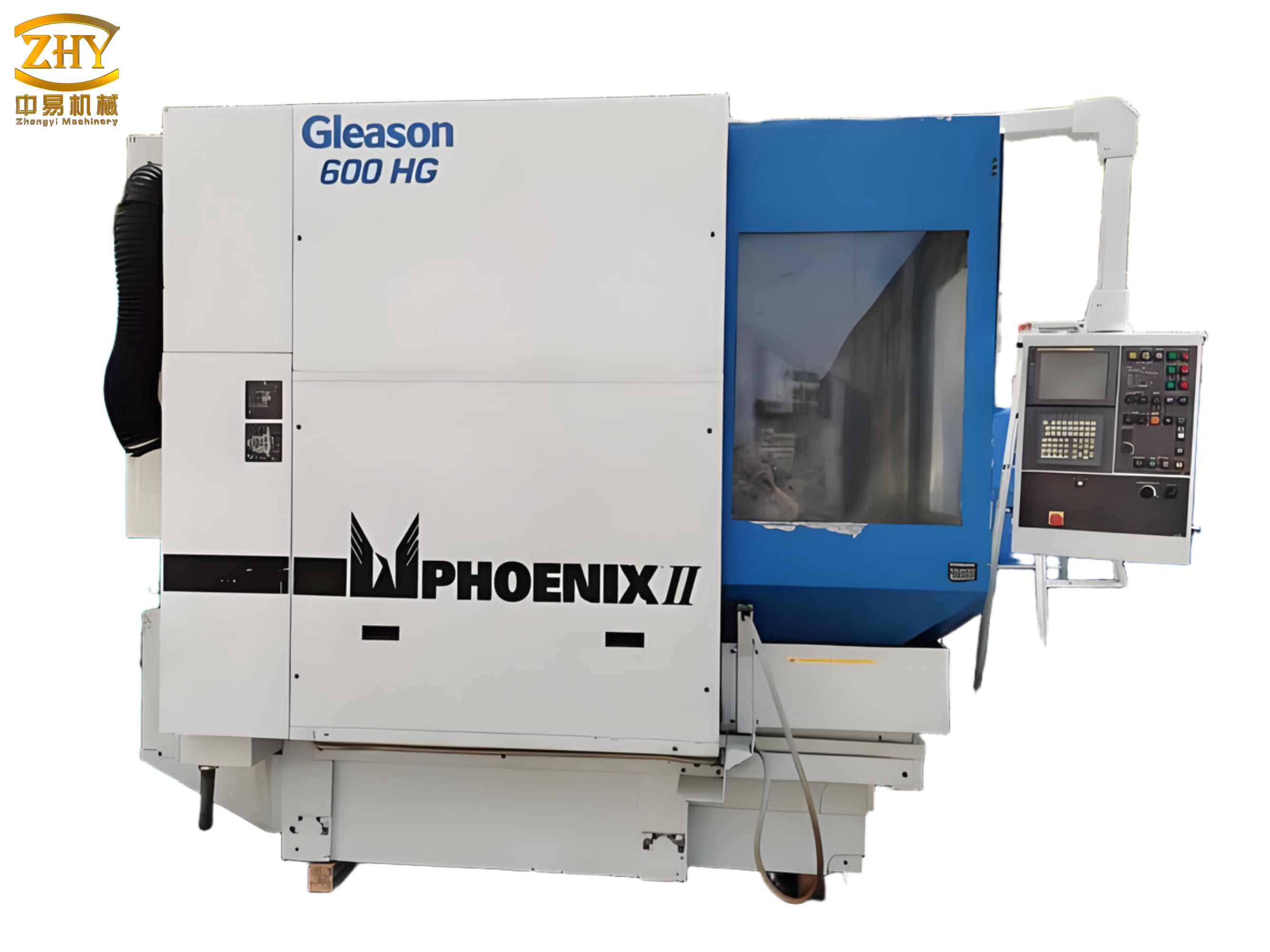
To investigate the effects of grinding parameters on tooth surface roughness, I designed a series of experiments using a KX500FLEX grinding machine and a CBN worm wheel. The workpiece material was 20CrMnTi, commonly used in automotive transmissions due to its high strength and wear resistance. The experimental setup involved varying three key parameters: grinding wheel linear velocity (v_s), axial feed velocity (v_w), and grinding thickness (a_p). A uniform design approach was adopted to efficiently explore the parameter space, as it allows for a reduced number of experiments while covering a wide range of conditions. This method is particularly suitable for gear grinding processes where multiple factors interact nonlinearly. The primary response variable was the arithmetic average roughness (Ra) of the tooth surface, measured using an Xcr20 roughness tester. Each test was repeated five times to ensure reliability, and the average values were recorded for analysis.
The experimental results revealed significant variations in tooth surface roughness across different parameter combinations. For example, higher wheel velocities generally led to smoother surfaces, while increased feed rates and grinding thicknesses tended to elevate roughness. This aligns with the principles of gear grinding, where excessive material removal rates can induce vibrations and plastic deformation, contributing to surface irregularities. Moreover, the risk of grinding cracks was observed to correlate with high thermal loads, often associated with elevated wheel speeds and depths of cut. To quantify these relationships, I performed an analysis of variance (ANOVA) to assess the significance of each parameter. The high F-values and low P-values confirmed that the selected factors had a substantial impact on roughness, validating the experimental design. The following table summarizes the experimental data, including the grinding parameters and corresponding roughness values.
| Test Group | Wheel Linear Velocity v_s (m/s) | Axial Feed Velocity v_w (mm/min) | Grinding Thickness a_p (mm) | Average Roughness Ra (μm) |
|---|---|---|---|---|
| 1 | 23 | 103 | 0.049 | 0.445 |
| 2 | 26 | 112 | 0.051 | 0.569 |
| 3 | 29 | 96 | 0.032 | 0.536 |
| 4 | 32 | 143 | 0.078 | 0.690 |
| 5 | 35 | 93 | 0.033 | 0.637 |
| 6 | 38 | 178 | 0.058 | 0.672 |
| 7 | 41 | 85 | 0.020 | 0.517 |
| 8 | 44 | 132 | 0.055 | 0.515 |
| 9 | 57 | 156 | 0.089 | 0.646 |
| 10 | 50 | 110 | 0.046 | 0.681 |
| 11 | 53 | 168 | 0.073 | 0.474 |
| 12 | 56 | 120 | 0.035 | 0.499 |
| 13 | 59 | 113 | 0.062 | 0.551 |
| 14 | 62 | 96 | 0.054 | 0.497 |
| 15 | 65 | 124 | 0.046 | 0.599 |
| 16 | 68 | 137 | 0.059 | 0.546 |
Based on the experimental data, I developed a multivariate regression model to predict tooth surface roughness as a function of the grinding parameters. The model incorporates linear, quadratic, and interaction terms to capture the nonlinear behavior inherent in gear grinding processes. The general form of the regression equation is given by:
$$ y = \beta_0 + \beta_1 x_1 + \beta_2 x_2 + \beta_3 x_3 + \beta_4 x_1^2 + \beta_5 x_2^2 + \beta_6 x_3^2 + \beta_7 x_1 x_2 + \beta_8 x_1 x_3 + \beta_9 x_2 x_3 $$
where y represents the tooth surface roughness (Ra), x_1 is the grinding wheel linear velocity, x_2 is the axial feed velocity, and x_3 is the grinding thickness. The coefficients β_i were estimated using least squares regression, and the model was validated through significance tests. The resulting equation for this study is:
$$ y = 0.3214 + 0.0041 x_1 – 0.0281 x_2 + 0.3161 x_3 + 0.0041 x_1^2 + 0.0002 x_2^2 + 62.2632 x_3^2 – 0.0001 x_1 x_2 + 0.3126 x_1 x_3 – 0.1413 x_2 x_3 $$
This model demonstrated a high coefficient of determination (R² = 0.9127), indicating that it explains over 91% of the variability in roughness. The ANOVA results for the regression model are summarized in the table below, highlighting the significance of each term. The F-statistic and P-values confirm the model’s adequacy, with all major terms contributing meaningfully to the prediction. Notably, the quadratic terms for feed velocity and grinding thickness showed strong positive correlations with roughness, emphasizing their critical role in gear grinding optimization. Additionally, the interaction between wheel velocity and grinding thickness was significant, suggesting that combined effects must be considered to avoid grinding cracks and achieve desired surface quality in gear profile grinding.
| Term | Partial Correlation | t-value | F-value | P-value |
|---|---|---|---|---|
| x_1 (Wheel Velocity) | -0.8847 | 0.8265 | 0.7380 | 0.0265 |
| x_2 (Feed Velocity) | 0.6986 | 2.4563 | 0.6854 | 0.0321 |
| x_3 (Grinding Thickness) | 0.9025 | 1.4569 | 0.5189 | 0.0418 |
| x_1^2 | -0.8945 | 0.8967 | 0.4862 | 0.0287 |
| x_2^2 | 0.8375 | 2.6500 | 0.0824 | 0.0153 |
| x_3^2 | 0.8465 | 0.9365 | 0.4724 | 0.0394 |
| x_1 x_2 | -0.9274 | 1.9365 | 0.1476 | 0.0229 |
| x_1 x_3 | 0.8354 | 2.1379 | 0.1375 | 0.0306 |
| x_2 x_3 | -0.9134 | 2.1456 | 0.2195 | 0.0182 |
The regression model provides valuable insights into the relationships between grinding parameters and tooth surface roughness. For instance, the negative partial correlation for wheel velocity (x_1) indicates that increasing wheel speed reduces roughness, which can be attributed to finer chip formation and reduced plastic deformation. Conversely, the positive correlations for feed velocity (x_2) and grinding thickness (x_3) suggest that higher values of these parameters exacerbate surface irregularities, potentially leading to grinding cracks if not controlled. In gear profile grinding, this is crucial because excessive feed rates can cause vibrations and increase the likelihood of micro-cracks on the tooth surface. The interaction terms further reveal that the combined effect of wheel velocity and grinding thickness can either mitigate or amplify roughness, depending on their levels. Therefore, optimizing these parameters is essential for minimizing defects in gear grinding applications.
To achieve optimal grinding conditions, I employed a multi-objective optimization approach using the particle swarm optimization (PSO) algorithm. The goals were to minimize tooth surface roughness and grinding time while preventing grinding cracks. The PSO parameters included a population size of 50, maximum iterations of 1000, inertia weight ω = 1, and learning factors c_1 = c_2 = 2. The objective function was defined as a weighted sum of roughness and time, with weights W_1 = 0.4 for roughness and W_2 = 0.6 for time, reflecting the priority on efficiency in industrial gear grinding. The optimization process iteratively adjusted the grinding parameters within practical constraints, such as wheel speed limits and machine capabilities. The results showed that the optimal parameters were a wheel linear velocity of 57 m/s, axial feed velocity of 86 mm/min, and grinding thickness of 0.031 mm, yielding a predicted roughness of 0.483 μm and a grinding time of 0.379 minutes. Compared to typical conditions, this represents a 6.40% reduction in roughness and a 12.19% improvement in efficiency, demonstrating the effectiveness of the approach for gear profile grinding without inducing grinding cracks.
The optimization results underscore the importance of parameter selection in gear grinding. For example, the optimal wheel velocity of 57 m/s strikes a balance between reducing roughness and avoiding thermal damage that could cause grinding cracks. Similarly, the moderate feed velocity and grinding thickness help maintain surface quality while maximizing productivity. To illustrate the trade-offs, the table below compares the optimized parameters with baseline values from common practice. The improvements highlight how targeted optimization can enhance both economic and technical outcomes in gear grinding processes. Moreover, the regression model serves as a predictive tool for selecting parameters in real-time, reducing the need for extensive trial-and-error in industrial settings. This is particularly beneficial for gear profile grinding, where precision is paramount, and any deviation can lead to significant quality issues.
| Parameter | Baseline Value | Optimized Value | Improvement |
|---|---|---|---|
| Wheel Linear Velocity v_s (m/s) | 55 | 57 | 3.64% |
| Axial Feed Velocity v_w (mm/min) | 82 | 86 | 4.88% |
| Grinding Thickness a_p (mm) | 0.018 | 0.031 | 72.22% |
| Roughness Ra (μm) | 0.516 | 0.483 | 6.40% |
| Grinding Time t (min) | 0.422 | 0.379 | 10.19% |
In conclusion, this study successfully optimizes worm wheel gear grinding parameters to enhance tooth surface quality and efficiency. The multivariate regression model effectively predicts roughness based on wheel velocity, feed velocity, and grinding thickness, with significant terms identified through statistical analysis. The optimization via PSO algorithm demonstrates practical improvements, reducing roughness by 0.033 μm and grinding time by 0.043 minutes compared to conventional settings. These findings emphasize the critical role of parameter control in preventing grinding cracks and achieving superior results in gear profile grinding. Future work could explore additional factors, such as coolant types or wheel wear, to further refine the model. Overall, this approach provides a robust framework for advancing gear grinding techniques in industrial applications, ensuring high performance and reliability.
The implications of this research extend beyond immediate applications, as optimized gear grinding processes contribute to energy savings and reduced environmental impact. For instance, lower roughness minimizes friction losses in gear systems, improving overall efficiency. Additionally, the prevention of grinding cracks enhances component durability, reducing waste and maintenance costs. As industries move towards sustainable manufacturing, such optimizations become increasingly valuable. The methods presented here can be adapted to other materials and grinding types, making them a versatile tool for engineers. Ultimately, the integration of modeling and optimization in gear grinding represents a step forward in smart manufacturing, where data-driven decisions lead to consistent quality and productivity gains.