
In my extensive experience within the gear manufacturing industry, I have consistently observed that the quality and longevity of gear-driven systems, such as reducers, hinge critically on the integrity of their individual gear components. The journey from raw material to a precision gear is fraught with potential pitfalls, with the processes of forging and heat treatment standing out as the most consequential stages. It is here, particularly during heat treatment, that the most insidious and costly heat treatment defects originate. These defects, if not meticulously controlled, can lead to catastrophic failures in service. This article delves into the intricate requirements for forging and heat treatment in gear production, offering a detailed examination of common pitfalls, their root causes, and strategies for mitigation, all from the perspective of a practicing engineer. The central theme will be the relentless pursuit of minimizing heat treatment defects through process understanding and control.
The foundation of a durable gear is laid during the forging process. Forging aims to produce a gear blank with a favorable grain flow and preliminary shape. However, lax process control can seed future failure. Inadequate heating, improper die design, or incorrect forging pressures can introduce internal flaws such as voids, seams, or, most dangerously, internal cracks. These subsurface discontinuities are often invisible during initial machining and inspection. They act as stress concentrators, lying dormant until awakened by subsequent machining stresses or, more commonly, by the thermal and transformational stresses imposed during heat treatment. The quenching phase of heat treatment, with its rapid cooling, can cause these micro-cracks to propagate, leading to a sudden fracture in a finished or semi-finished component. This type of failure represents a severe category of heat treatment defects that is actually precipitated by a prior forging flaw. Therefore, rigorous non-destructive testing (NDT) of forged blanks, such as ultrasonic inspection, is not merely advisable but essential to screen out these time bombs before valuable machining time is invested.
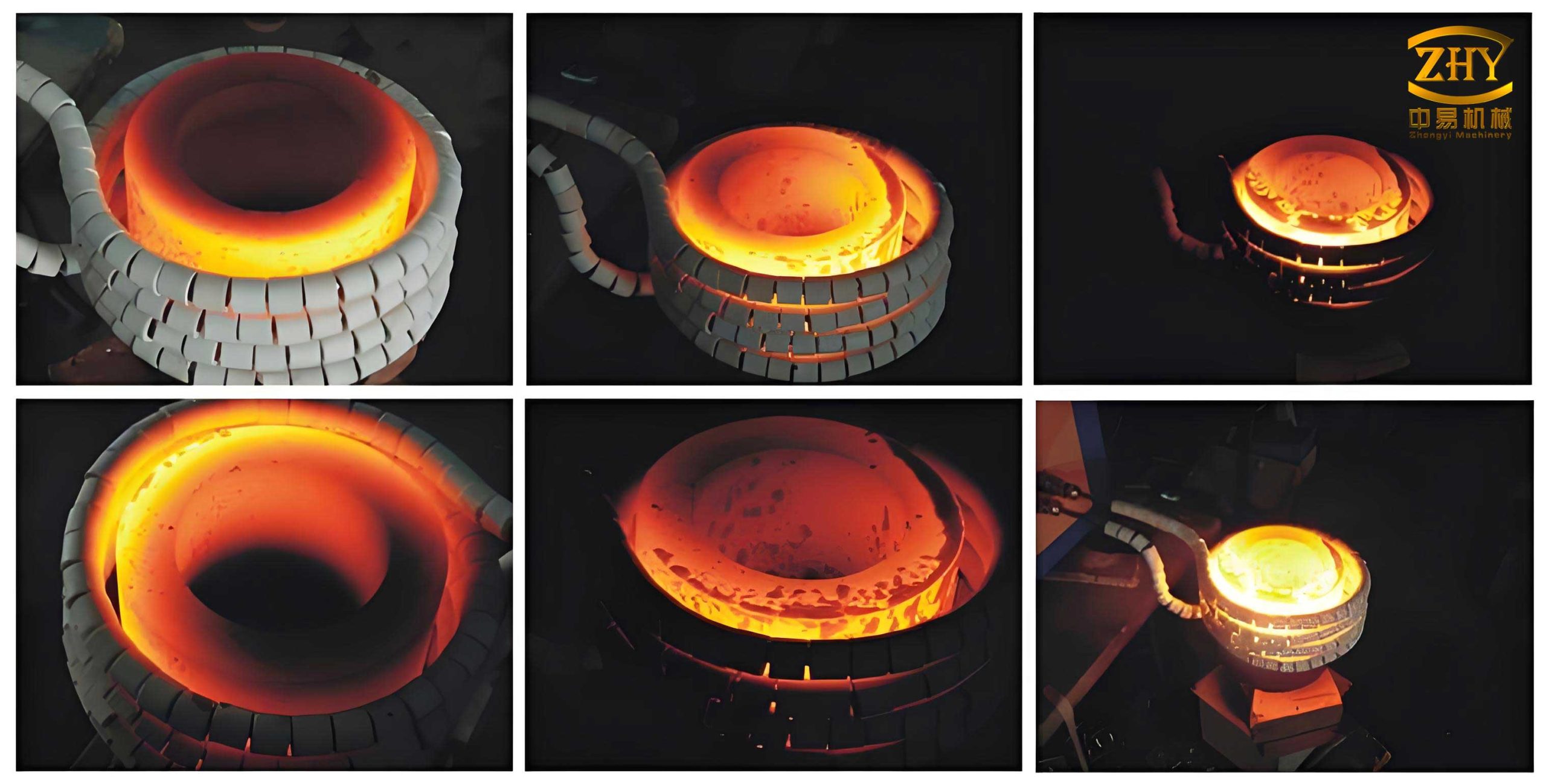
Heat treatment is the transformative heart of gear manufacturing, typically involving two or more distinct cycles. The first, applied to the machined blank, is often a normalizing or annealing process. Its primary objectives are to homogenize the microstructure, refine the grain size inherited from forging, and most importantly, to relieve internal stresses. This preparatory treatment drastically improves machinability, extending tool life and enhancing dimensional stability during rough machining. Neglecting this step can lead to unpredictable distortion during machining and set the stage for exacerbated heat treatment defects in the final hardening cycle. The relationship between pre-heat treatment hardness and machinability can be summarized by a Taylor-type tool life equation, modified for gear steels:
$$ V T^n = C $$
where \( V \) is cutting speed, \( T \) is tool life, \( n \) is an exponent dependent on the workpiece material and tool, and \( C \) is a constant. A properly normalized blank with lower, uniform hardness allows for a higher \( V \) or longer \( T \), directly impacting production efficiency and cost.
The final heat treatment, performed after the gear teeth have been cut, is designed to impart high surface hardness, wear resistance, and core toughness. Processes like carburizing followed by quenching and tempering, or induction hardening, are standard. This stage is the most prolific generator of heat treatment defects. The predominant issue is distortion—dimensional and shape changes caused by non-uniform thermal gradients and phase transformation stresses. For a cylindrical gear, distortion can manifest as changes in bore diameter, pitch diameter, tooth profile, and helix angle. Excessive distortion can render the gear unusable; for instance, a warped gear may result in one flank of the teeth being fully ground during finish grinding while the opposite flank retains unprocessed material (“black skin”). This not only scrapes the part but, if undetected, leads to an gear with uneven surface properties. The contact pattern under load will be biased, causing noise, vibration, and premature pitting failure. For bevel gears, the problem is often more acute, involving both axial runout and a “crowning” or bowing of the entire gear body. The following table categorizes common heat treatment defects and their primary causes in gear hardening:
| Defect Type | Manifestation | Primary Causes | Impact on Gear Performance |
|---|---|---|---|
| Distortion (Warping/Bowing) | Change in bore roundness, tooth geometry error, axial runout. | Non-uniform heating/cooling, residual stresses from machining, improper fixturing or support during quenching. | Poor meshing, increased noise and vibration, localized high stress, accelerated fatigue. |
| Quench Cracking | Macroscopic cracks, often originating from stress concentrators (sharp corners, keyways). | Excessive cooling rate (severity of quenchant), high carbon/hardness gradient, pre-existing micro-cracks from forging. | Catastrophic failure under load. |
| Soft Spots | Areas of lower than specified hardness. | Inadequate carburizing atmosphere, vapor blanket formation during quenching (poor agitation), surface contamination (oxides, decarburization). | Reduced wear resistance, initiation point for pitting and spalling. |
| Excessive Residual Austenite | Reduced hardness, dimensional instability over time. | Quenching from too high an austenitizing temperature, inadequate quenching rate or temperature, high alloy content. | Lower yield strength, potential for grinding burns, possible transformation in service causing dimensional change. |
| Grinding Burns & Cracks | Surface discoloration, rehardened or tempered zones, micro-cracks. | Excessive heat input during finish grinding after hardening, often due to incorrect wheel selection or feed rate on a distorted gear. | Severe reduction in fatigue strength, initiation of tooth breakage. |
The physics behind distortion can be modeled by considering the thermal stress (\( \sigma_{th} \)) and transformation stress (\( \sigma_{tr} \)). During heating and cooling, a temperature gradient (\( \nabla T \)) exists between the surface and core. The thermal stress is approximated by:
$$ \sigma_{th} \approx \frac{E \alpha}{1 – \nu} \nabla T $$
where \( E \) is Young’s modulus, \( \alpha \) is the coefficient of thermal expansion, and \( \nu \) is Poisson’s ratio. Simultaneously, when the surface transforms to martensite (with a specific volume increase) before the core, transformation induced plasticity (TRIP) occurs, generating \( \sigma_{tr} \). The total stress driving distortion is a complex superposition of these and other factors. Minimizing \( \nabla T \) through controlled heating rates and optimized quenching mediums (e.g., hot oil, polymer solutions) is paramount to controlling these heat treatment defects.
In my practice, combating these issues requires a holistic approach. It begins with symmetrical gear design, generous fillets, and uniform sections to promote even heating and cooling. The heat treatment process itself must be treated as a precision operation. For carburizing, precise control of atmosphere carbon potential (\( C_p \)) is needed to achieve the desired case depth without excessive carbon. The carbon diffusion depth (\( d \)) can be estimated by Fick’s law:
$$ d = k \sqrt{t} $$
where \( k \) is a temperature-dependent diffusion constant and \( t \) is time. Over-carburizing can lead to brittle carbides at the grain boundaries, another subtle but serious heat treatment defect.
The quenching operation is the most critical step. The placement of gears in the furnace and quench tank must ensure uniform media flow. Fixturing or press quenching for critical components can physically restrain distortion. The selection of quenchant, its temperature, and agitation level are calibrated based on the gear’s hardenability, which is often predicted using the ideal critical diameter (\( D_I \)) calculations based on the Grossmann method and alloy composition. Furthermore, the martensite start (\( M_s \)) temperature is a key parameter. A higher \( M_s \) means the transformation begins at a warmer temperature, allowing for some stress relief via plasticity before the part cools to room temperature, reducing the risk of quench cracking. For medium-carbon low-alloy steels, a tailored “low-temperature, short-time” quenching process has proven highly effective. By austenitizing at a lower temperature (e.g., 800-830°C instead of 850-880°C) for a precisely calculated duration, one can achieve a microstructure consisting of fine lath martensite with minimal retained austenite and undissolved carbides. This raises the effective \( M_s \) point, as less carbon is in solution in the austenite. The reduction in thermal and transformational stress directly mitigates the propensity for distortion and cracking—the most common heat treatment defects. Subsequent tempering at 200°C stabilizes the structure, precipitating fine ε-carbides and relieving quench stresses while maintaining high hardness (58-60 HRC). The improvement in toughness is significant, often doubling or trippling service life compared to conventional higher-temperature quenching.
The interplay between material selection and heat treatment is profound. For instance, the performance of a CrWMn steel die, as encountered in my work, exemplifies this. The traditional high-temperature quenching for such tools often resulted in a coarse microstructure with significant retained austenite, leading to premature failure from brittle fracture or wear. By adopting the low-temperature austenitizing and quenching regimen, the microstructure is refined to a tough lath martensite with fine carbides. The hardness after tempering remains in the required 58-60 HRC range, but the fracture toughness is markedly improved. The quantitative improvement in service life can be modeled using a stress-life (S-N) approach, where the new process effectively increases the fatigue strength coefficient (\( \sigma_f’ \)) of the material:
$$ \sigma_a = \sigma_f’ (2N_f)^b $$
where \( \sigma_a \) is the stress amplitude, \( N_f \) is the number of cycles to failure, and \( b \) is the fatigue strength exponent. A higher \( \sigma_f’ \) shifts the entire S-N curve upward, allowing for more cycles under the same applied stress, directly correlating to the observed multi-fold increase in die life.
To systematize the control of heat treatment outcomes, statistical process control (SPC) is indispensable. Key process parameters—furnace temperature profile, atmosphere composition, quench oil temperature and cooling rate—must be continuously monitored and charted. A capability analysis (Cpk) for critical output variables like case depth and surface hardness ensures the process is not only centered but also capable of producing within specifications with minimal variation. The table below outlines a framework for a preventive maintenance and control plan targeting heat treatment defects:
| Process Stage | Controlled Parameter | Measurement Method | Target Value & Tolerance | Corrective Action (if out of spec) |
|---|---|---|---|---|
| Pre-Forging Heating | Billet Temperature | Optical Pyrometer / Thermocouple | 1150°C ± 25°C | Adjust furnace setpoint, check burner efficiency. |
| Carburizing | Carbon Potential (Cp) | Oxygen Probe / Shim Stock Analysis | 0.80% C ± 0.05% | Rebalance atmosphere (add enrich gas or air). |
| Austenitizing | Furnace Temperature Uniformity | Multiple Loaded Thermocouples (TUS Survey) | ± 10°C across workload | Repair furnace insulation, recalibrate heating elements. |
| Quenching | Oil Temperature & Agitation Flow Rate | Temperature Gauge, Flow Meter | 60°C ± 5°C, 0.8 m/s ± 0.1 m/s | Adjust heat exchanger, check pump and impeller. |
| Tempering | Temperature & Time | Furnace Controller Chart Recorder | 200°C ± 5°C for 120 min ± 10 min | Recalibrate controller, ensure proper load spacing. |
| Final Inspection | Surface Hardness, Case Depth, Distortion (Runout) | Rockwell Tester, Microhardness Tracer, CMM/Runout Gauge | e.g., 58-62 HRC, 0.8-1.2 mm CHD, < 0.05 mm TIR | Quarantine batch, root cause analysis on process parameters. |
In conclusion, the path to manufacturing high-performance, reliable gears is inextricably linked to mastering the dual arts of forging and heat treatment. From my vantage point, the majority of field failures can be traced back to latent heat treatment defects or defects created during heat treatment that stemmed from earlier process shortcomings. Internal cracks from poor forging practice, distortion from uncontrolled quenching, soft spots from atmospheric inconsistencies—all these represent significant economic losses and safety risks. The solution lies not in any single silver bullet but in a culture of rigorous discipline across the entire value chain. This includes stringent quality checks on forged blanks, the application of stress-relief treatments before machining, and the meticulous, data-driven control of every furnace cycle and quench tank operation. Advanced techniques like low-temperature quenching for certain steels demonstrate how a deep understanding of metallurgical principles can be leveraged to fundamentally redesign processes for greater robustness against heat treatment defects. Ultimately, the consistent production of superior gears demands that we treat heat treatment not as a mere “black art” but as a precise engineering science, where every variable is known, controlled, and optimized to deliver a component that meets not just the drawing specifications, but the unforgiving demands of real-world operation.