
In my work on diesel engine systems, matching a starter motor is a critical task that involves balancing numerous mechanical and electrical parameters. A seemingly minor mismatch in dimensions or timing can lead to catastrophic failures. Among these, gear milling stands out as a particularly destructive phenomenon. Through direct investigation and analysis, I have encountered and resolved cases where improper design parameters led directly to this failure. Gear milling occurs when the starter pinion gear, unable to mesh properly with the flywheel ring gear, spins at high speed while pressed against the ring gear’s face or teeth, acting like a milling cutter and grinding them away. This article details my analysis of the root causes, centered on dimensional chain errors, and presents the theoretical framework, corrective measures, and validation tests conducted to resolve the issue.
The primary function of any starter—whether electric or pneumatic—is to crank the engine to its ignition speed. For electric starters, which are most common, the system converts electrical energy from the battery into mechanical torque via a DC motor. The torque is then transmitted through a drive mechanism featuring a pinion gear that must engage with the flywheel’s ring gear. The control apparatus, typically an electromagnetic switch (solenoid), manages this engagement sequence. A critical phase in this sequence is the “soft” or “inertia” engagement used in many modern starters. Here, the pinion is propelled axially towards the ring gear while being allowed to rotate slowly. The solenoid’s main contacts, which power the motor, are designed to close only after the pinion has either fully meshed or is physically prevented from further axial movement by contacting the ring gear.
The core of the gear milling problem lies in the violation of this engagement sequence. If the main motor circuit is energized before the pinion’s axial movement is mechanically blocked by the ring gear, and the teeth are not in perfect alignment for meshing, the pinion will begin to spin at full speed while its face is simply pressed against the ring gear. This is the precise condition that initiates gear milling. My investigation focused on the two interrelated dimensional parameters that dictate this timing: the Blocked-Pinion Activation Distance and the Starter Mounting Face to Ring Gear Distance.
1. Theoretical Foundation and Fault Mechanism
Let’s define the key dimensions. The starter is mounted to the engine via its flange. The critical axial distances are as follows (see schematic representation in analysis):
- Lmount: The axial distance from the starter’s mounting face to the engagement-side face of the flywheel ring gear. This is a property of the engine’s flywheel housing and flywheel assembly.
- Lpinion,max: The maximum distance the pinion can travel axially from its resting position within the starter before its movement is physically blocked internally (simulated by a test block).
- Lact: The “Blocked-Pinion Activation Distance.” This is the specific pinion travel distance at the exact moment the solenoid’s main contacts close, while the pinion is blocked from further travel. At this point, the engagement spring within the starter is fully compressed.
For reliable, non-destructive engagement, the following condition must be met during the starter’s operation on the engine:
$$ L_{act} > L_{mount} $$
This inequality is fundamental. It ensures that by the time the solenoid’s main contacts close to apply full power to the motor, the pinion gear has already traveled far enough to make physical contact with the ring gear face (i.e., it is “blocked” by the ring gear, not an internal stop). When contact occurs, the pinion’s slight rotation allows it to find the correct alignment and snap into mesh under the force of the now-compressing engagement spring.
The failure condition for gear milling is the inverse:
$$ L_{act} \leq L_{mount} $$
If this is true, the solenoid contacts close and the motor receives full voltage before the pinion touches the ring gear. The pinion, now spinning at high speed, continues its axial travel until it hits the stationary ring gear. The impact and continued high-speed sliding contact under pressure result in immediate and severe gear milling of both components.
The engagement dynamics can be modeled further. The force from the solenoid plunger (Fs) works through a lever (the shift fork) to propel the pinion. The relationship is governed by the lever ratio (R = L1/L2). The pinion travel (xp) relates to the plunger travel (xs) and the pre-engagement free play (δfree) before the plunger contacts the shift fork:
$$ x_p = R \cdot (x_s – \delta_{free}) $$
The main contact closure occurs at a specific plunger position, xs, act. Therefore, Lact is determined by:
$$ L_{act} = R \cdot (x_{s, act} – \delta_{free}) + C $$
Where C is a constant representing the pinion’s position at rest relative to the mounting face. Any variation in R, δfree, xs, act, or C directly affects Lact.
| Parameter | Symbol | Design Intent | Effect if Too Small | Effect if Too Large |
|---|---|---|---|---|
| Blocked-Pinion Activation Distance | Lact | Must be greater than Lmount | Leads to early motor energization, causing gear milling | May cause late engagement or failure to engage; increased mechanical shock. |
| Mount Face to Ring Gear Distance | Lmount | Must be less than Lact, with allowance for mesh depth. | Ensures timely blocking of pinion before activation; too small may over-compress components. | Directly contributes to condition Lact ≤ Lmount, causing gear milling. |
| Solenoid Contact Closure Position | xs, act | Set to occur after full pinion travel is achieved or blocked. | Causes early motor power, primary driver for low Lact. | Delays motor power, may prevent start. |
| Shift Fork Lever Ratio | R | Optimized for force and travel. | Reduces pinion travel per plunger movement, can lower Lact. | Increases travel, can raise Lact. |
2. Root Cause Investigation and Dimensional Analysis
In a specific case of recurring gear milling on a diesel engine platform, my team and I performed a detailed dimensional audit. The procedure and findings are summarized below.
Step 1: Starter Conformance Check. The starter’s technical specification defined a critical functional test: “At a voltage of 16V, with a block placed at distance Lspec from the mounting face, the pinion shall contact the block and the main solenoid contacts shall remain open.” This test directly verifies that Lact > Lspec. Testing samples from the production batch, including units from failed engines, yielded the following data:
| Starter Sample | Test Block Position (Lspec) | Main Contacts Status at Block Contact | Inferred Lact relative to Lspec |
|---|---|---|---|
| Specification | Nominal Value | Must be OPEN | Lact > Lspec |
| Sample A (From failed engine) | Lspec | CLOSED | Lact, A ≤ Lspec |
| Sample B (From warehouse) | Lspec – 1mm | OPEN | Lspec – 1mm < Lact, B ≤ Lspec ? |
| Sample C (From warehouse) | Lspec | MARGINAL/CLOSING | Lact, C ≈ Lspec |
The data clearly indicated that the starters were being produced at the lower extreme of, or even below, their Lact tolerance. This was the first contributing factor to gear milling.
Step 2: Engine Installation Dimension Check. The engine drawing specified that the distance from the starter mounting face to the ring gear face, Lmount, should be set to (Lspec – 4 mm). This provided a 4mm “safety margin” to ensure Lact > Lmount even with some component variation. Direct measurement on engines exhibiting gear milling revealed a significant deviation:
$$ L_{mount, measured} = L_{spec} + 0.4 \text{ mm} $$
Combining the two findings created the perfect failure condition:
$$ L_{act, starter} \approx L_{spec} \quad \text{and} \quad L_{mount, engine} = L_{spec} + 0.4 \text{ mm} $$
Therefore,
$$ L_{act} \leq L_{mount} $$
The gear milling was now fully explained. The solenoid contacts were closing when the pinion was still 0.4 mm away from the ring gear. The motor would then spin the pinion up, which would then travel that final 0.4 mm as a high-speed rotating cutter into the stationary ring gear.
Step 3: Cross-Platform Comparison. We verified the same starter model used on a different engine type, where Lmount was correctly maintained at (Lspec – 4 mm). No instances of gear milling were reported from that platform, confirming that the interaction of the two dimensions was the root cause.
3. Corrective Solution and Validation
The most efficient and immediate corrective action was to increase the starter’s Lact to be reliably greater than the out-of-specification Lmount on the affected engines. Modifying the engine’s flywheel housing dimension was a larger logistical challenge. The solution was to introduce a spacer (shim) of thickness ‘d’ between the solenoid body and the starter’s main housing/end cover.
The effect of this spacer is to physically offset the entire solenoid assembly away from the starter. This changes the kinematic chain. Let’s define:
– L4: The initial free travel of the solenoid plunger before it contacts the shift fork lever.
– L5: The total effective plunger travel from start to main contact closure.
With the spacer installed, the effective free travel is reduced because the solenoid body is farther away. The new free travel becomes (L4 – d). The plunger still needs to travel the full L5 to close the contacts. Therefore, the plunger contacts the shift fork earlier in its stroke. The pinion travel at contact closure, which defines Lact, becomes:
$$ L_{act, new} = R \cdot (L_5 – (L_4 – d)) + C = R \cdot (L_5 – L_4 + d) + C $$
Comparing to the original Lact, orig = R \cdot (L_5 – L_4) + C, the increase is:
$$ \Delta L_{act} = L_{act, new} – L_{act, orig} = R \cdot d $$
Thus, adding the spacer directly and predictably increases the Blocked-Pinion Activation Distance. We selected a spacer thickness ‘d’ such that Lact, new > Lmount, measured for all affected engines.
Validation Testing: Starters fitted with the corrective spacer were subjected to the conformance test. As predicted, with the test block at Lspec, the pinion now contacted the block well before the main contacts closed, confirming Lact had been increased. Subsequently, these modified starters were installed on engines known to have the excessive Lmount dimension. Extended cranking tests were performed, involving hundreds of start cycles. The result was a complete elimination of the gear milling failure. The solution was effective and reliable.
4. Forward Design Principles and Prevention
This investigation yields clear forward design principles for starter-engine matching to prevent gear milling:
- Explicit Dimension Chain Definition: The relationship $$ L_{act} > L_{mount} $$ must be a cornerstone of the interface control document. Tolerance stacks for both the starter’s Lact and the engine’s Lmount must be analyzed to guarantee this condition under all worst-case scenarios.
- Built-in Safety Margin: A deliberate safety margin (e.g., 3-5 mm) should be designed into the system:
$$ L_{act, min} – L_{mount, max} = \text{Margin} > 0 $$
This margin absorbs variations in manufacturing, wear, and assembly. - Robust Validation Testing: The “blocked-pinion activation” test is non-negotiable for starter qualification. Engine assemblies should have Lmount measured as a critical quality check.
- System-Level Analysis: The starter cannot be treated as a black box. Designers must understand the internal kinematics—lever ratios, spring characteristics, solenoid timing—as these directly define Lact.
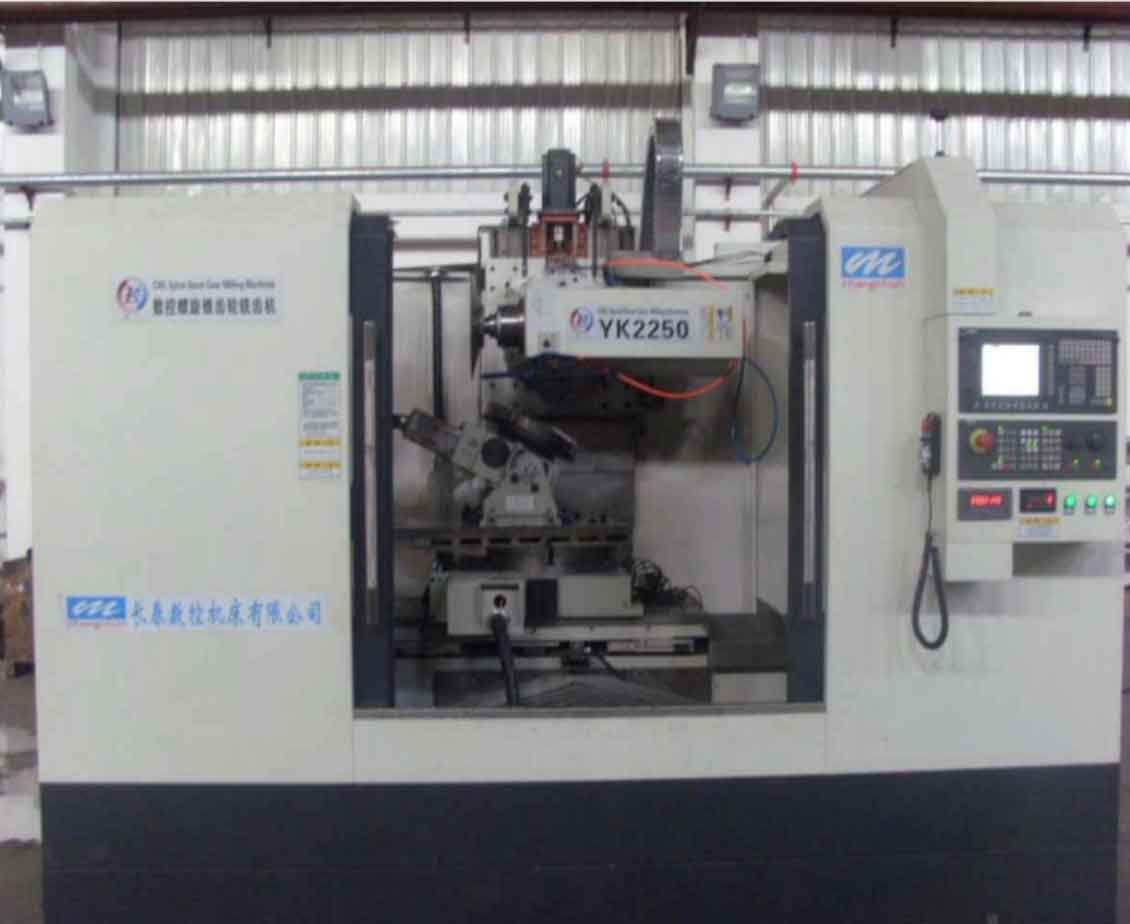
The prevention of gear milling is fundamentally about controlling the timing of energy delivery relative to mechanical position. Advanced manufacturing techniques, such as CNC gear machining, ensure precise tooth geometry for smooth engagement, but they cannot compensate for a fundamental system-level timing error like Lact ≤ Lmount. Precision in system integration is just as crucial as precision in component manufacture.
Modern design can incorporate sensor feedback or adaptive control algorithms to prevent gear milling, but for the vast majority of applications, adherence to the simple dimensional inequality outlined here is the most reliable and cost-effective safeguard. My experience resolving this issue underscores that a deep, first-principles understanding of the engagement sequence is essential. By rigorously defining, controlling, and verifying the dimensions Lact and Lmount, the destructive process of gear milling can be entirely designed out of the starter-engine system.