
In this analysis, I will discuss the spalling failure observed in a gear shaft raceway during factory testing of a turboprop engine reducer. The gear shaft, integral to the reducer’s planetary gear system, experienced premature spalling after only 72 hours of operation, well below the expected service life of 200 hours. Through a comprehensive investigation involving various analytical techniques, I aim to elucidate the root causes of this failure, emphasizing the role of surface integrity and material properties. The gear shaft, fabricated from 14CrMnSiNi2MoA steel with a carburized and hardened surface, serves as the inner race for bearings, and its failure prompted a detailed examination to prevent recurrence.
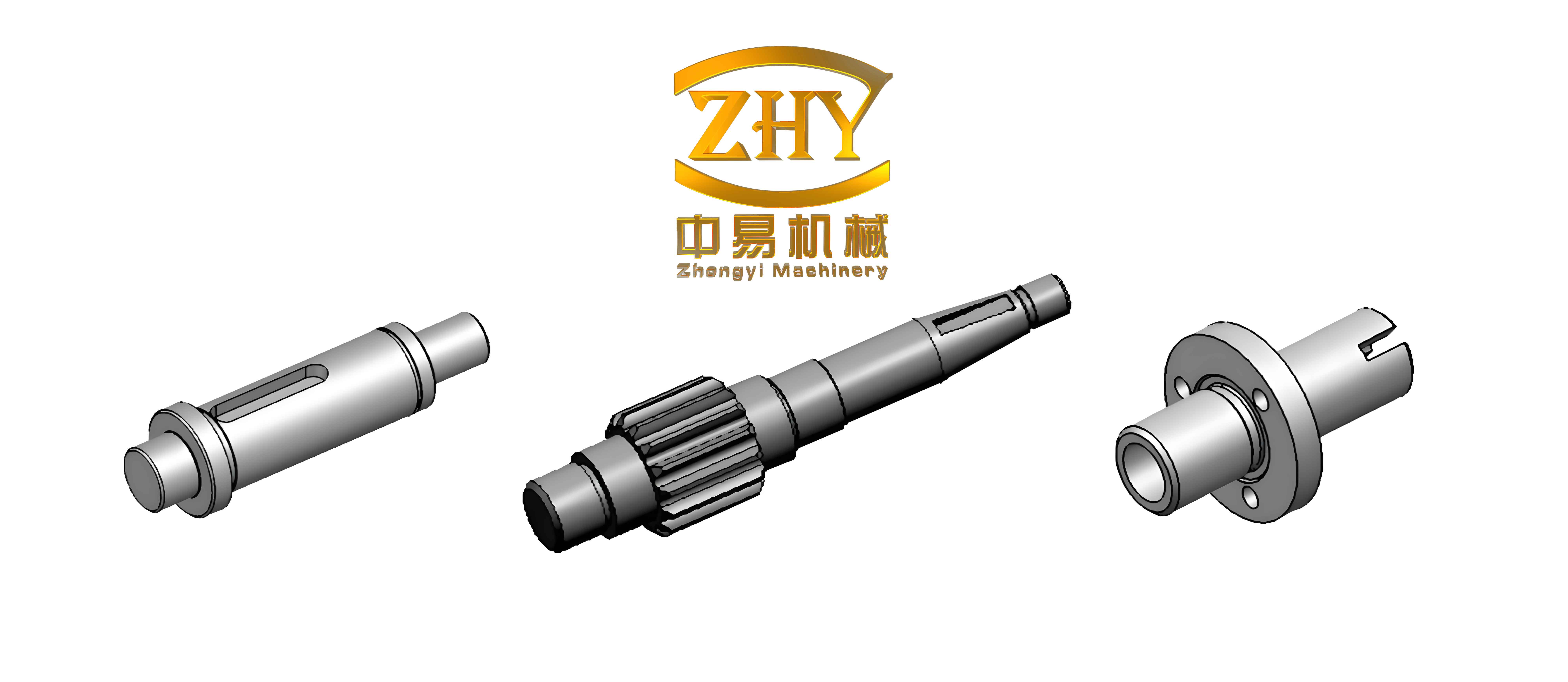
The initial step in our analysis involved macroscopic observation of the failed gear shaft raceway. We identified two distinct spalling pits located near the smaller gear end, characterized by a碾压 and worn appearance. These pits, measuring approximately 10 mm by 8 mm and 1 mm by 5 mm in circumferential and axial directions, respectively, were separated by a region with numerous microcracks. The microcracks ran parallel to each other, indicating potential stress concentration areas. This macroscopic evidence suggested that the failure initiated from the surface and propagated under cyclic loading conditions, typical of contact fatigue mechanisms in gear shaft applications.
To further investigate surface defects, we performed magnetic particle testing on the gear shaft raceway. The results revealed multiple axial microcracks in the working zone adjacent to the smaller gear. These cracks were short, straight, and ranged from 2 to 5 mm in length. In contrast, the bearing outer race exhibited small indentations without spalling, and the rollers showed contact marks but no significant damage. The gear teeth themselves displayed uniform wear patterns without misalignment or overload signs. This testing confirmed that the microcracks were localized to the gear shaft raceway surface, potentially acting as initiation sites for more severe damage.
Scanning electron microscopy (SEM) provided high-resolution insights into the spalling region of the gear shaft. The analysis showed characteristic fatigue striations in the spalled area, indicative of progressive crack propagation under repeated stress cycles. When we artificially opened the cracks, the fracture surfaces revealed linear origins at the raceway surface, with no evidence of metallurgical defects in the source regions. The crack propagation zones exhibited fine, dense fatigue striations, while the carburized layer displayed a mixed morphology of intergranular and dimple features, and the base material showed uniform, fine dimples. This SEM evidence strongly supports that the gear shaft failure resulted from contact fatigue, originating from surface-level stress concentrators.
We conducted grinding burn inspection according to standard procedures, which revealed striped burn marks across the gear shaft raceway surface. These marks were particularly prominent near the microcracks and spalling areas, indicating localized overheating during the grinding process. Grinding burns can alter the microstructure and introduce residual stresses, compromising the gear shaft’s durability. The presence of these burns suggested that the manufacturing process may have involved excessive grinding parameters, such as high feed rates or inadequate cooling, leading to thermal damage on the gear shaft surface.
Metallographic examination of samples from both normal and microcracked regions of the gear shaft raceway provided critical microstructural insights. In normal areas, we observed a continuous white layer of secondary quenching burn less than 11 μm thick, followed by a dark tempered layer under 52 μm deep. In microcracked regions, cracks originated at the surface and propagated at 90-degree angles, with multiple branches and sharp tips. These cracks were entirely within the burned zones, with no underlying metallurgical defects. This indicates that the grinding burns created a brittle, transformed layer on the gear shaft, facilitating crack initiation under operational stresses.
Hardness testing using a microhardness tester revealed significant differences between burned and normal areas of the gear shaft. We measured hardness gradients with a 200 g load and 0.05 mm indent spacing, and the results are summarized in Table 1. The burned regions exhibited lower hardness compared to the normal areas, which can be attributed to the microstructural changes induced by grinding burns. The hardness profile can be modeled using an exponential decay function to represent the effect of depth on material properties:
$$ H(d) = H_0 + (H_s – H_0) e^{-k d} $$
where \( H(d) \) is the hardness at depth \( d \), \( H_0 \) is the base material hardness, \( H_s \) is the surface hardness, and \( k \) is a decay constant. For the gear shaft, the reduced hardness in burned areas lowers the contact fatigue strength, making it more susceptible to spalling.
| Depth (mm) | Normal Area Hardness (HV) | Burned Area Hardness (HV) |
|---|---|---|
| 0.00 | 750 | 600 |
| 0.05 | 740 | 590 |
| 0.10 | 730 | 580 |
| 0.15 | 720 | 570 |
| 0.20 | 710 | 560 |
The contact fatigue process in the gear shaft can be described using classical fatigue theory. The maximum shear stress \( \tau_{\text{max}} \) below the surface drives crack initiation, and it can be calculated using Hertzian contact mechanics for a gear shaft raceway:
$$ \tau_{\text{max}} = \frac{3F}{2\pi a b} $$
where \( F \) is the applied load, \( a \) is the semi-major axis of the contact ellipse, and \( b \) is the semi-minor axis. For the gear shaft, the presence of grinding burns increases the effective stress intensity factor \( K \), accelerating crack growth. The fatigue life \( N_f \) can be estimated using the Paris-Erdogan law:
$$ \frac{da}{dN} = C (\Delta K)^m $$
where \( da/dN \) is the crack growth rate, \( \Delta K \) is the stress intensity factor range, and \( C \) and \( m \) are material constants. In the gear shaft, the burned surface layers reduce the threshold \( \Delta K_{\text{th}} \), leading to premature failure.
Grinding burns on the gear shaft surface result from excessive thermal energy input during machining. The temperature rise \( \Delta T \) during grinding can be approximated by:
$$ \Delta T = \frac{q}{\rho c v} $$
where \( q \) is the heat flux, \( \rho \) is the material density, \( c \) is the specific heat capacity, and \( v \) is the grinding wheel velocity. For the gear shaft, high \( \Delta T \) causes phase transformations, forming hard and brittle secondary quenching layers that are prone to cracking. Additionally, residual tensile stresses \( \sigma_r \) are induced, which superimpose on the applied contact stresses, reducing the fatigue limit of the gear shaft. The combined stress \( \sigma_{\text{total}} \) can be expressed as:
$$ \sigma_{\text{total}} = \sigma_{\text{applied}} + \sigma_r $$
where \( \sigma_{\text{applied}} \) is the operational stress. In the gear shaft, the residual stresses from grinding burns lower the endurance limit, facilitating crack initiation even under normal loads.
To quantify the impact of grinding burns on the gear shaft’s performance, we can consider the reduction in contact fatigue strength. The modified fatigue strength \( S_f’ \) due to surface defects can be related to the original strength \( S_f \) through a knockdown factor \( K_f \):
$$ S_f’ = \frac{S_f}{K_f} $$
For the gear shaft, \( K_f \) increases with the severity of grinding burns, as observed in the hardness and microstructural data. This relationship highlights the importance of controlling grinding parameters to maintain the integrity of the gear shaft raceway.
In summary, the spalling of the gear shaft raceway was primarily caused by contact fatigue initiated from grinding burns. The burns led to microstructural alterations, reduced hardness, and residual tensile stresses, all of which compromised the gear shaft’s resistance to cyclic loading. The fatigue cracks propagated from the surface, eventually resulting in spalling. This failure underscores the critical need to optimize grinding processes for gear shaft manufacturing, ensuring adequate cooling, appropriate wheel selection, and controlled feed rates to prevent thermal damage.
Based on our findings, I recommend a thorough review of the grinding procedures for the gear shaft. Implementing real-time monitoring of grinding temperatures and forces could help detect anomalies early. Additionally, using softer grinding wheels and optimizing coolant application can minimize the risk of burns. Regular inspections of the gear shaft raceway using non-destructive techniques like eddy current testing could also aid in early defect detection, prolonging the service life of the gear shaft in turboprop engine reducers.
Further research could focus on developing advanced surface treatments for the gear shaft, such as laser peening or cryogenic processing, to enhance fatigue resistance. Modeling the thermomechanical effects during grinding on the gear shaft using finite element analysis could provide deeper insights into process optimization. By addressing these aspects, we can significantly improve the reliability and durability of gear shaft components in aerospace applications.