
The relentless pursuit of higher performance in aerospace propulsion systems necessitates the development of gear transmissions capable of operating under increasingly severe conditions of high speed and heavy load. As a core component within these powerplants, the meshing performance, reliability, and longevity of helical gear pairs are of paramount importance. Consequently, advanced optimization techniques, particularly gear tooth modification, have become indispensable in modern transmission design. This process involves the intentional deviation of the gear tooth profile or lead from its theoretical, perfectly conjugate geometry to compensate for deflections and misalignments under operational loads, thereby enhancing performance.
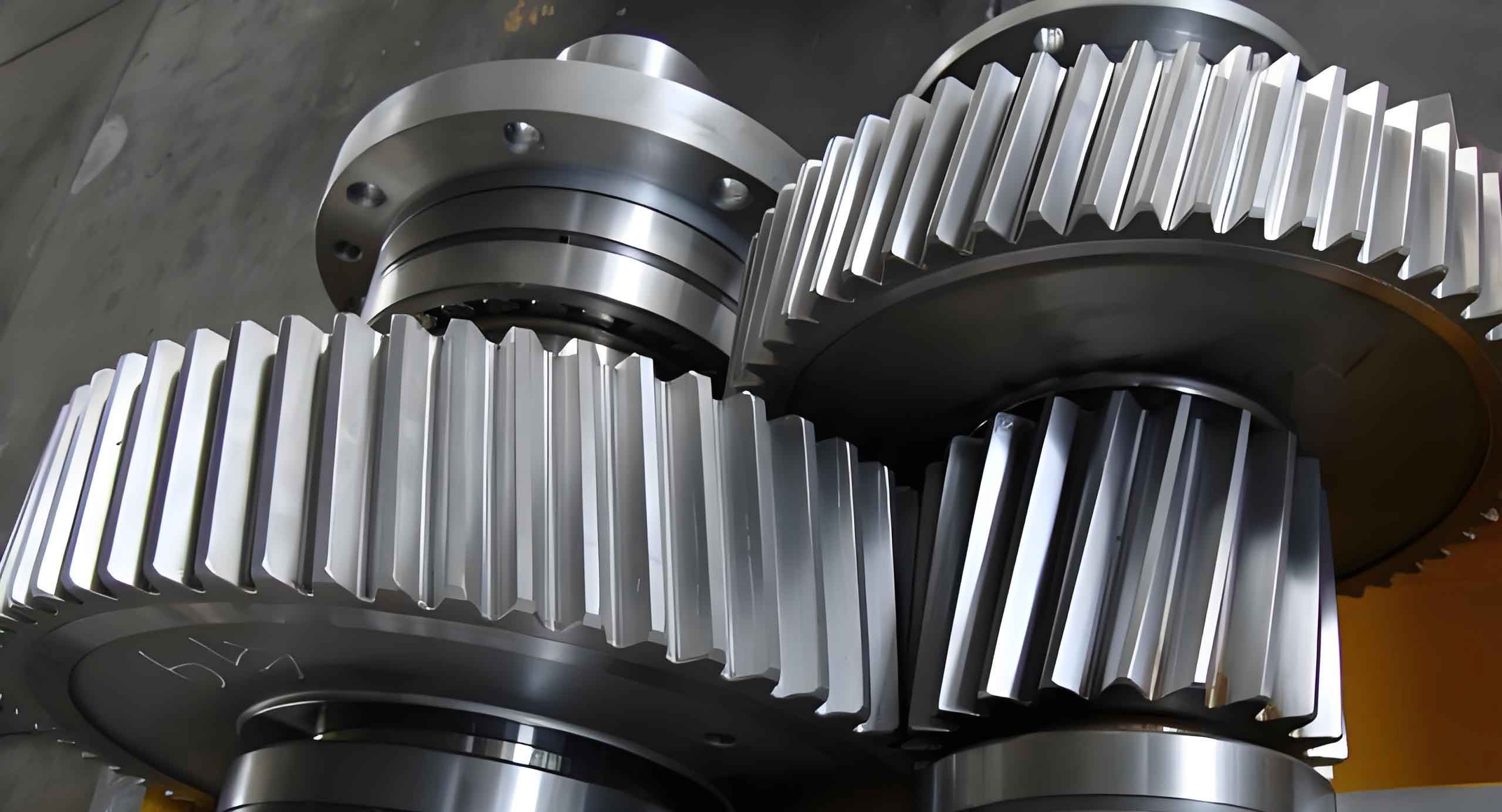
Tooth modifications are primarily categorized into two types: profile modification and lead modification. Profile modification, often referred to as tip and/or root relief, involves removing a small amount of material from the tooth flank near the tip and root regions. This mitigates the effects of mesh stiffness variation, reduces transmission error, and alleviates impact forces at the points of engagement and disengagement caused by manufacturing tolerances and elastic deformations. For a helical gear pair, this modification can be applied to one or both members. Lead modification, which includes crowning or end relief, alters the tooth surface along its face width. Its primary purpose is to counteract the effects of system deflections—such as shaft bending, torsional wind-up, and bearing displacements—that cause misalignment and lead to uneven load distribution across the tooth face, a phenomenon known as edge loading. By properly crowning the tooth, contact can be centralized, promoting a more uniform pressure distribution and significantly increasing the load-carrying capacity of the helical gear.
With the advancement of computational power, sophisticated software tools like KISSsoft have become industry standards for performing these complex analyses. KISSsoft is a specialized software suite for the design, calculation, and optimization of drive systems. It offers powerful simulation capabilities for analyzing gear contact, stress, and dynamics according to international standards like ISO. Utilizing such software for the modification design of aerospace helical gears enables engineers to efficiently evaluate different modification strategies, predict performance improvements, and significantly reduce development time and cost compared to pure trial-and-error physical testing. This analysis focuses on applying KISSsoft to design and analyze modifications for a high-speed helical gear pair from an aero-engine gearbox, evaluating key performance metrics before and after modification to demonstrate the tangible benefits of this engineering practice.
Critical Performance Indicators for Helical Gear Modification Evaluation
To objectively assess the effectiveness of a proposed modification scheme for a helical gear, several key performance indicators must be calculated and compared against the unmodified baseline design. These indicators provide a comprehensive view of the gear’s strength, dynamic behavior, and contact quality.
1. Gear Tooth Strength
The primary modes of gear failure include pitting (surface fatigue), tooth bending fracture, scuffing, and wear. For high-reliability aerospace helical gears operating in enclosed, lubricated systems, pitting resistance and bending strength are the two most critical checks. The contact stress calculation, following standards like ISO 6336, predicts the risk of surface fatigue. The bending stress calculation evaluates the tooth’s resistance to breakage at the root fillet. A successful modification should not compromise these strengths; ideally, it should lower the calculated stresses by improving load distribution and reducing dynamic overloads.
2. Transmission Error (TE)
Transmission Error is a fundamental metric for evaluating the dynamic excitation of a gear pair. It is defined as the difference between the actual angular position of the output gear and the position it would occupy if the gears were perfectly conjugate, rigid, and accurately manufactured. In essence, it is the kinematic error in the drive. TE arises from manufacturing inaccuracies, assembly misalignments, and most importantly, the elastic deflections of teeth, shafts, and bearings under load. A simplified representation for a single tooth pair in mesh can be expressed as the linear displacement along the line of action:
$$TE = R_b \cdot (\theta_{in, actual} – \theta_{in, ideal})$$
where \( R_b \) is the base radius of the driving gear, and \( \theta \) represents angular positions. The fluctuation of TE over the mesh cycle is a primary source of gear noise and vibration. Therefore, one key goal of helical gear modification is to minimize the peak-to-peak value of the TE curve, leading to smoother and quieter operation.
3. Tooth Surface Load Distribution
This analysis reveals how the transmitted load is distributed across the active tooth flank during meshing. An ideal distribution shows a uniform, centered contact pattern. However, misalignments and deflections typically cause the load to concentrate at one or both ends of the tooth (edge loading) or create areas of sudden load change. This uneven distribution leads to localized high stresses, accelerating fatigue and wear. Load distribution is often visualized as a stress map on the tooth flank or as a graph of load per unit face width along the path of contact. Effective lead crowning aims to centralize this distribution and eliminate high edge stresses.
4. Specific Sliding (Sliding Ratio)
Specific sliding quantifies the relative sliding velocity between mating tooth surfaces normalized by the rolling velocity. It is a crucial parameter influencing wear, scuffing risk, and the efficiency of elastohydrodynamic lubrication (EHL). High sliding ratios can lead to excessive heat generation and accelerated surface damage. For a balanced design where both pinion and gear exhibit similar wear characteristics, the sliding ratios should be controlled and kept as symmetric as possible. A common guideline is to maintain the specific sliding magnitude within acceptable bounds, such as between -2 and 2 for good performance, and ideally closer to the range of -1 to 1 for optimal conditions.
Helical Gear Modification Design Process Using KISSsoft Software
1. Baseline Helical Gear Pair Parameters
The subject of this analysis is the output stage helical gear pair from an aero-engine reduction gearbox. The system operates at a high input power and rotational speed, placing significant demands on the gear components. The basic geometric and operational parameters of the gear pair are summarized in the table below.
| Parameter | Pinion (z3) | Gear (z4) |
|---|---|---|
| Normal Module, \( m_n \) (mm) | 1.75 | |
| Number of Teeth, \( Z \) | 33 | 67 |
| Normal Pressure Angle, \( \alpha_n \) (°) | 22.5 | |
| Helix Angle, \( \beta \) (°) | 12.7 (Left Hand) | 12.7 (Right Hand) |
| Face Width, \( b \) (mm) | 37 | 33 |
| Transmitted Power (kW) | 250 | |
| Pinion Speed (rpm) | ~21,000 (Output Stage Input) | |
2. Development of the Modification Strategy
The design of the modification scheme is not arbitrary; it follows established guidelines and is refined through iterative analysis. International standards provide initial formulas for calculating modification magnitudes. For profile modification, the maximum tip relief \( \Delta_{max} \) can be estimated to compensate for the mesh deflection under load:
$$\Delta_{max} = \frac{K_A \cdot F_t/b}{\epsilon_{\alpha} \cdot c_{\gamma}}$$
where \( K_A \) is the application factor, \( F_t/b \) is the tangential force per unit face width, \( \epsilon_{\alpha} \) is the transverse contact ratio, and \( c_{\gamma} \) is the mesh stiffness. For lead crowning, the crown amount \( C_a \) is often related to the expected or permissible misalignment \( f_{sh} \):
$$C_a \approx 0.5 \cdot f_{sh}$$
KISSsoft software incorporates these standard methodologies and, more importantly, performs advanced system-wide calculations considering shaft deflections, bearing clearances, and housing stiffness to predict the effective misalignment under load. Based on this comprehensive system analysis, the software suggests modification parameters aimed at optimizing transmission error, contact pressure, and flash temperature.
Starting from these software-generated suggestions and incorporating empirical knowledge from similar aerospace helical gear applications, a final modification set was iteratively refined. The refinement process involved running multiple KISSsoft contact analyses, examining the resulting TE curves, load distribution maps, and stress plots until a configuration yielding significant improvements was achieved. The finalized modification parameters applied to both the pinion and gear are listed below.
| Parameter | Pinion (z3) | Gear (z4) |
|---|---|---|
| Profile Modification | ||
| Amount (Tip Relief), μm | 7 | 7 |
| Start Diameter (\(d_{ca}\)), mm | φ60.519 | φ117.353 |
| Lead Modification | ||
| Crowning Amount, μm | 8 | 8 |
Detailed Analysis of Results: Before vs. After Modification
1. Comparative Gear Strength Analysis
Using the ISO 6336:2006 Method B within KISSsoft, the load-carrying capacity of the helical gear pair was evaluated for both the unmodified and modified designs. Key strength and dynamic coefficients are compared in the following table.
| Parameter | Pinion (z3) – Unmodified | Gear (z4) – Unmodified | Pinion (z3) – Modified | Gear (z4) – Modified |
|---|---|---|---|---|
| Contact Stress, \( \sigma_H \) (MPa) | 1064.93 | 1064.93 | 1012.88 | 1012.88 |
| Bending Stress, \( \sigma_F \) (MPa) | 420.15 | 466.32 | 379.34 | 421.02 |
| Dynamic Factor, \( K_V \) | 1.5030 | 1.3378 | ||
| Face Load Factor (Contact), \( K_{H\beta} \) | 1.0811 | 1.0987 | ||
The results reveal significant improvements. The dynamic factor \( K_V \), which accounts for internally generated dynamic loads due to transmission error and mass-elastic properties, decreased from 1.503 to 1.338. This indicates that the modifications successfully reduced dynamic excitations, leading to smoother operation of the helical gear pair. The contact stress and bending stress for both members showed a clear reduction post-modification. The contact stress decreased by approximately 4.9%, directly enhancing the pitting resistance and potential service life. The bending stress for the pinion, which is typically the more critical member, decreased by about 9.7%. The face load factor \( K_{H\beta} \) showed a marginal increase. This can be explained by the dual effect of crowning: while it corrects for misalignment (which lowers \( K_{H\beta} \)), it also reduces the effective contact length (which increases \( K_{H\beta} \)). The net effect in this case was a slight increase, but this was overwhelmingly offset by the reduction in the dynamic factor \( K_V \) in the overall stress calculation, leading to the noted stress reductions.
2. Transmission Error (TE) Analysis
The transmission error curves provide a direct visualization of the dynamic improvement. For the unmodified helical gear, the TE curve exhibited a pronounced fluctuation with a peak-to-peak value of 1.19 μm over one mesh cycle. The modified helical gear pair displayed a dramatically smoother and flatter TE curve. The peak-to-peak value was reduced to just 0.42 μm, representing a reduction of about 65%. This substantial decrease in kinematic excitation is a primary reason for the lower dynamic factor (\(K_V\)) and is directly linked to reduced noise and vibration levels in the gearbox. The modification effectively “tunes” the mesh stiffness variation, minimizing the deflection mismatch between the teeth as they roll through the contact zone.
3. Tooth Surface Load Distribution
The analysis of load distribution across the tooth flank is perhaps the most visually striking evidence of the modification’s benefit. For the unmodified helical gear, the contact analysis predicted a load distribution that was skewed, with areas of high load concentration near the edges of the face width. The maximum load per unit length was calculated at 1180.9 N/mm. Furthermore, the load progression along the path of contact showed abrupt changes or “jumps,” indicative of poor load sharing between tooth pairs and potential edge contact.
After applying the profile and lead modifications, the load distribution transformed significantly. The contact pattern became centralized on the tooth flank, forming a well-defined elliptical area in the middle of the face width and along the profile. The detrimental edge loading was completely eliminated. The maximum load per unit length was reduced to 1153.4 N/mm. More importantly, the load transition became gradual and smooth along the path of contact. This uniform and centered load distribution minimizes stress concentrations, lowers the risk of localized pitting or scuffing at the tooth ends, and significantly improves the fatigue life of the helical gear teeth.
4. Specific Sliding Analysis
The specific sliding curves for both the pinion and gear were analyzed. The results indicated that for this particular helical gear design, the sliding ratios were already within an acceptable range (-1 to 1) even in the unmodified state, which is a characteristic of well-proportioned gear geometry. The modifications caused only minor, non-detrimental shifts in these curves. The primary goals of this study—reducing stress, TE, and improving load distribution—were achieved without adversely affecting the sliding behavior. The sliding ratios remained well within the optimal range, ensuring good wear characteristics and lubrication conditions for the modified helical gear pair.
Validation and Conclusion
The ultimate validation of any analytical design comes from physical testing. The modification parameters derived from the KISSsoft analysis were implemented in the manufacturing of the prototype helical gear pair. Following a full engine test cycle, the gears were inspected. The actual contact pattern observed on the tooth flanks showed a clear, centralized elliptical contact area in the middle of the face width, with no signs of edge contact or severe edge loading. This experimental contact pattern correlated exceptionally well with the predicted contact pattern from the KISSsoft software for the modified design. This correlation provides strong, real-world validation that the KISSsoft-based modification design process is reliable and effective for high-performance aerospace helical gear applications.
In conclusion, this detailed analysis demonstrates the critical importance and profound impact of systematic tooth modification for aerospace helical gears. By employing KISSsoft software to design and analyze a combined profile and lead modification scheme, the following key improvements were achieved for the high-speed output stage gear pair:
- Enhanced Load Capacity: The contact and bending stresses were reduced, directly increasing the gear’s resistance to pitting and bending fatigue.
- Superior Dynamic Performance: The transmission error peak-to-peak value was reduced by approximately 65%, leading to a lower dynamic factor. This translates to smoother, quieter operation with reduced vibration excitation.
- Optimal Load Distribution: The load was successfully centralized on the tooth flank, eliminating dangerous edge loading and creating a smooth, uniform pressure distribution. This minimizes stress concentrations and is fundamental to achieving high reliability and longevity.
- Practical Validation: The close agreement between the software-predicted contact pattern and the actual test result confirms the accuracy and utility of the KISSsoft-based design methodology.
Therefore, the integration of advanced analytical tools like KISSsoft into the design process enables the development of highly optimized, robust, and reliable helical gear transmissions capable of meeting the extreme demands of modern aerospace applications, ultimately contributing to improved engine performance, reduced maintenance, and enhanced operational safety.