
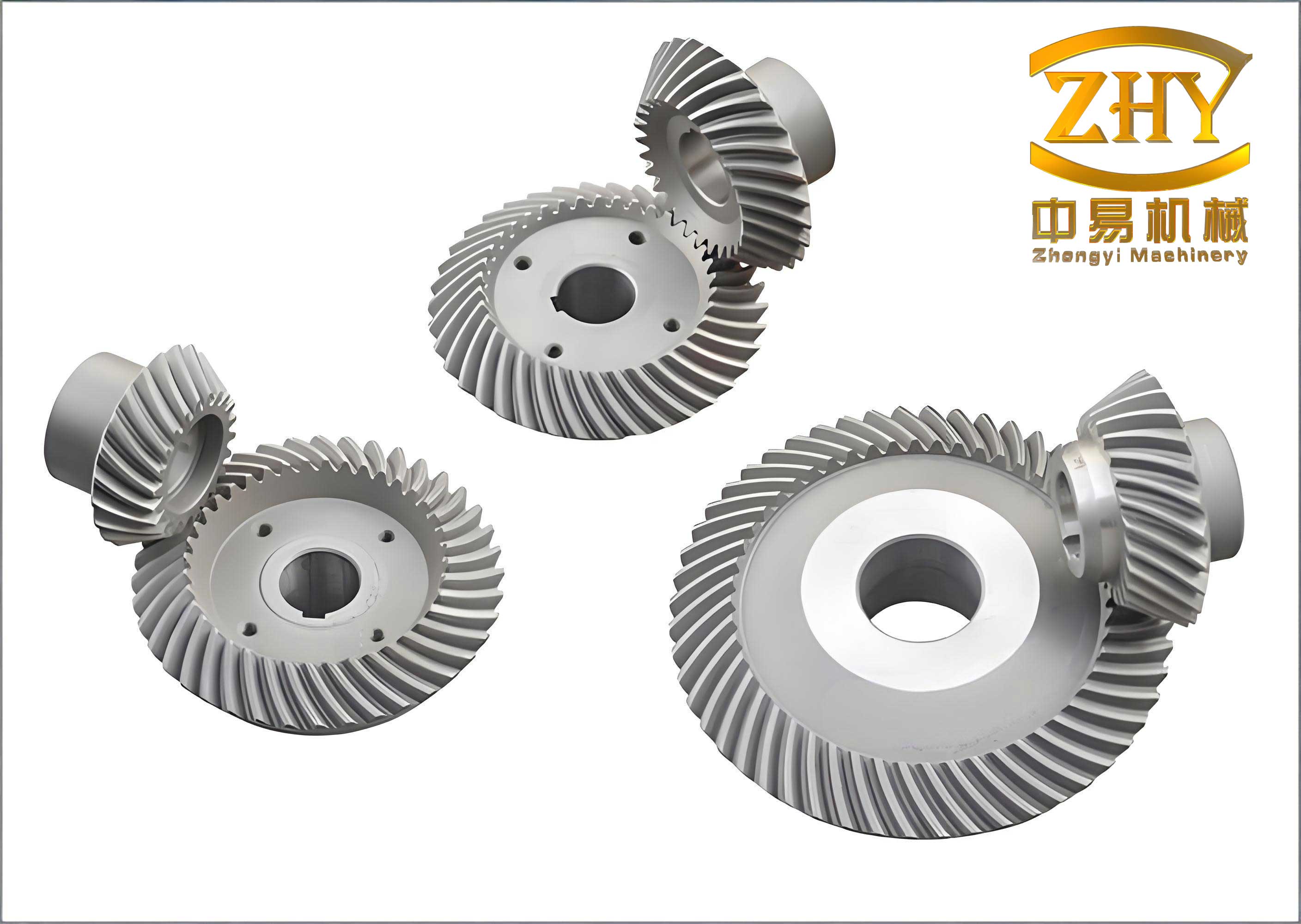
The analysis and assurance of the structural integrity and fatigue life of hyperbolic gear sets, which serve as the critical power-transmitting components in automotive drive axles, present a significant engineering challenge. While theoretical strength checks and meshing analyses are performed during the design phase, achieving accurate predictions remains difficult. This inaccuracy stems from the complex interplay of manufacturing tolerances, elastic deformations of the gear teeth and supporting shafts, and system-level vibrations, all of which introduce dynamic loads not fully captured in simplified models. To bridge the gap between theoretical prediction and physical reality, and to enable more effective system diagnostics, conducting direct measurements of tooth root bending stresses under operating conditions is of paramount importance. In this study, we embark on a detailed investigation, employing the strain gauge method to measure the bending stress at the root of a driven hyperbolic gear under both quasi-static and high-speed dynamic loading. Our objective is to elucidate the stress distribution during meshing and, critically, to quantify the influence of dynamic effects induced by increasing rotational speeds.
Among various experimental stress analysis techniques, such as photoelasticity, the electrical resistance strain gauge method was selected for this investigation due to its relative simplicity, mature technology, and proven reliability. The primary challenge in applying this method to a rotating hyperbolic gear within an assembled axle lies in the successful attachment of the strain gauges and the routing of signal wires from the rotating component to the stationary data acquisition system. This study details a methodology that overcomes these hurdles through component modification and ingenious wiring schemes, enabling reliable data collection even during high-speed operation that simulates real vehicle conditions.
Fundamentals of Gear Tooth Bending Stress
The bending stress at the root of a gear tooth, such as in a hyperbolic gear, arises from the tangential component of the transmitted load acting on the tooth flank. This load creates a bending moment at the critical root fillet section. The classical Lewis bending formula provides a foundational understanding, though it is simplified. The nominal bending stress \(\sigma_{F0}\) can be expressed as:
$$
\sigma_{F0} = \frac{F_t}{b \cdot m_n} \cdot Y_F \cdot Y_S \cdot Y_\beta
$$
where \(F_t\) is the nominal tangential load at the reference circle, \(b\) is the face width, \(m_n\) is the normal module, \(Y_F\) is the form factor, \(Y_S\) is the stress correction factor, and \(Y_\beta\) is the helix angle factor. For a hyperbolic gear, the calculation is more complex due to the offset and varying geometry along the tooth. The total root stress \(\sigma_F\) accounts for application factors:
$$
\sigma_F = \sigma_{F0} \cdot K_A \cdot K_V \cdot K_{F\beta} \cdot K_{F\alpha}
$$
Here, \(K_A\) is the application factor, \(K_V\) is the dynamic factor (accounting for internal dynamic forces from meshing impacts), \(K_{F\beta}\) is the face load factor (for uneven load distribution across the face width), and \(K_{F\alpha}\) is the transverse load factor (for uneven load sharing between simultaneous tooth pairs). The dynamic factor \(K_V\) is particularly sensitive to rotational speed and manufacturing accuracy, making its experimental determination crucial for high-speed hyperbolic gear applications.
Test Specimen and Experimental Setup
The test specimen was a complete single-reduction rear drive axle assembly from a light-duty vehicle. The axle featured a full-floating axle shaft design with a rated output torque capacity of 10,000 N·m. The core of the assembly was a pair of hyperbolic gears with an 8-grade accuracy rating according to Chinese standards. The detailed parameters of the axle and the gear set are summarized in Table 1.
| Parameter | Value |
|---|---|
| Drive Axle | |
| Rated Output Torque | 10,000 N·m |
| Tire Rolling Radius | 0.375 m |
| Gear Set (Pinion/ Ring Gear) | |
| Gear Ratio | 4.875 |
| Number of Teeth | 8 / 39 |
| Module (at Midpoint) | 7.564 mm |
| Mean Pressure Angle | 22° 30′ |
| Mean Spiral Angle | 47° / 33° 47′ |
| Ring Gear Face Width | 42 mm |
| Hypoid Offset | 30 mm |
| Accuracy Grade | 8 |
The testing was conducted with the complete axle assembly installed on a drive axle test rig at an angle replicating its vehicle mounting. A schematic of the test principle is shown conceptually in Figure 1 (Note: The original figure number is omitted per instructions, but the concept is described). A drive motor was connected to the input pinion flange via a coupling to provide input power. A loading motor was connected to the right-side wheel hub to apply a braking torque, simulating vehicle load. A critical modification was required for the left side: to route the strain gauge wires from the rotating ring gear out of the axle, the left wheel hub could not be connected to a load motor. Instead, the wires were passed through a hollow section of the left axle shaft. Furthermore, to prevent the differential from functioning (which would allow one wheel to spin freely without load), the differential’s spider gears were welded to their cross shaft, effectively locking the differential.
Strain Gauge Application and Measurement Strategy
The selection and placement of strain gauges are critical for accurate stress measurement in a hyperbolic gear tooth. We utilized KFG-1-120-C2-11 foil strain gauges with a 120-ohm resistance. A half-bridge circuit configuration was employed, incorporating a temperature compensation gauge to account for temperature fluctuations within the axle housing during operation.
The precise location for bonding the strain gauges on the tensile side (drive side) of the ring gear tooth root was determined using the 30° tangent method. The centerline of the gauge grid was carefully aligned with the line marking the theoretically critical root fillet section along the tooth length. To investigate the load distribution pattern across the face width of the hyperbolic gear tooth, four strain gauges were bonded on a single tooth at equidistant intervals from the toe (inner end) to the heel (outer end). These were labeled a_i0 to a_i3 for the i-th tooth, with a_i0 at the heel and a_i3 at the toe. To capture potential load sharing variations among different teeth, this pattern was repeated on a total of six teeth, distributed in three pairs at roughly 120-degree intervals around the gear circumference. Figure 2 (original reference omitted) illustrates the physical placement of the gauges on the ring gear before assembly.
After bonding, the fine wires from the gauges were carefully routed along the gear root and secured to a miniature terminal block, which was also adhesively bonded to the gear body. The entire assembly, including wires and terminals, was then encapsulated with a robust, oil-resistant protective coating to ensure insulation and survivability in the lubricant environment.
Subsequent to instrumenting the ring gear, the entire drive axle was reassembled according to technical specifications. Key components, including the axle shaft and hub, were specially modified to create a passageway for a multi-channel slip ring assembly. This slip ring, mounted at the inboard end of the left axle shaft flange, facilitated the transmission of the strain signals from the rotating ring gear to the stationary data acquisition system. Finally, the axle was filled with the specified gear oil. A photograph of the test setup is presented in Figure 3 (original reference omitted).
Test Conditions and Data Acquisition
The experimental campaign was designed to isolate and study different effects on hyperbolic gear root stress. It was divided into two distinct phases:
- Quasi-Static Testing: The axle output speed was maintained at a very low 5 rpm, while the output braking torque was ramped from 0 to 2,000 N·m. This condition approximates a static loading scenario, minimizing dynamic inertial effects.
- Dynamic Testing: The output torque was held constant at 2,000 N·m, while the output speed was increased in steps from 0 to 200 rpm. This phase was designed to investigate the influence of rotational speed and the associated dynamic loads on the root stress.
Prior to formal data collection, the axle was subjected to a brief run-in period. During testing, forced-air cooling was applied to maintain the lubricant temperature below 80°C, preventing gauge drift or failure. Data from all active strain gauge channels were recorded using a high-speed digital data acquisition system synchronized with the axle’s angular position via an encoder.
Analysis of Quasi-Static Test Results
The quasi-static test results provide a clear picture of the stress evolution at the root of a hyperbolic gear tooth during a single meshing cycle under near-static conditions. Figure 4 (conceptual description) plots the stress variation measured by the four gauges (a_i0 to a_i3) on a representative tooth over one complete revolution of the ring gear under a constant load. A positive stress value indicates tension at the root, while negative indicates compression.
The plot reveals a characteristic pattern: the stress magnitude rises from the heel-side gauge (a_i0), peaks near the mid-face width (around a_i1), and then declines towards the toe-side gauge (a_i3). This pattern confirms the load transition across the face of the hyperbolic gear tooth during meshing. Engagement typically begins near the heel (large end) and progresses towards the toe (small end). The lower peak stress at the very start and end of engagement is attributed to load sharing with the preceding and succeeding tooth pairs, respectively, a feature contributing to the smooth operation of hyperbolic gears.
Figure 5 (conceptual description) shows the stress peaks from the a_i1 gauge location for four different load levels: 500, 1000, 1500, and 2000 N·m. The linear and stable progression of stress with increasing torque confirms the proper functioning of the test rig and measurement system, establishing a reliable baseline.
Correlation with Finite Element Analysis
To provide a theoretical benchmark, a finite element analysis (FEA) of the gear pair was conducted. The complex tooth flank geometry of the hyperbolic gear, generated via the HFT (Hypoid Formate) method, was modeled based on the theory of gearing. A three-dimensional solid model was created and imported into a commercial FEA software (ABAQUS). The material was defined as low-carbon steel with an elastic modulus of 207 GPa and a Poisson’s ratio of 0.25. The model was meshed with a combination of hexahedral and tetrahedral elements, with local refinement in the contact and root fillet regions, as shown in Figure 6 (conceptual description).
A two-step nonlinear quasi-static analysis was performed. First, a 2000 N·m resistive torque was applied to the ring gear. Second, a small rotational displacement was applied to the pinion to simulate one meshing step. Frictional contact was defined between the gear flanks. The resulting maximum principal stress contour on the ring gear is depicted in Figure 7 (conceptual description). The FEA confirms that the highest tensile bending stress occurs in the root fillet region, validating the gauge placement strategy. Furthermore, the stress distribution along the tooth length from heel to toe during engagement shows a trend of increase followed by a decrease, which aligns qualitatively with the experimental measurements.
A quantitative comparison is presented in Table 2, which shows the peak tensile stress at the a_i1 location for different teeth from the quasi-static test and the corresponding FEA result at 2000 N·m.
| Tooth Number | Measured Peak Stress (MPa) | FEA Result (MPa) | Deviation |
|---|---|---|---|
| 1 | 298 | 320 | -6.9% |
| 2 | 305 | -4.7% | |
| 3 | 312 | -2.5% | |
| 4 | 315 | -1.6% | |
| 5 | 308 | -3.8% | |
| 6 | 302 | -5.6% |
The measured values show a slight dispersion (approximately ±3% around the mean) due to inevitable minor inconsistencies in gauge bonding and local micro-geometry variations. The FEA result is about 5-7% higher than the average measurement. This discrepancy can be attributed to several factors: 1) The strain gauge measures the surface strain in its primary direction, which may not perfectly align with the direction of the maximum principal stress obtained from FEA. 2) The FEA model assumes ideal geometry and material properties, whereas real parts have micro-imperfections. 3) There are inherent system noises in the measurement chain (e.g., slip ring contact noise). Nevertheless, the agreement is within an acceptable engineering margin, validating both the test methodology and the FEA model. The quasi-static test is particularly valuable for diagnosing issues related to contact pattern, assembly misalignment, or support stiffness without the confounding influence of dynamics.
Analysis of Dynamic Test Results
The dynamic test results reveal the significant impact of rotational speed on the root stress behavior of the hyperbolic gear. Figure 8 (conceptual description) displays a time-series segment of the stress signal from the a_i1 gauge location on Tooth #4 under a constant 2000 N·m load at 200 rpm output speed. The fundamental meshing frequency is clearly visible, with each stress pulse corresponding to a single tooth engagement. Within each pulse, the shape mirrors the quasi-static engagement pattern. However, a crucial dynamic phenomenon is observed: the peak amplitude of these pulses is not constant but modulates in a longer-period cycle.
Detailed analysis shows that this longer period encompasses exactly eight meshing cycles. Since the driving pinion has eight teeth, this modulation is directly attributed to variations in the meshing behavior of each individual pinion tooth. Differences in tooth-to-tooth spacing (pitch error), profile deviations, and potentially slight variations in system response for different angular positions of the pinion shaft generate unique dynamic loads for each pinion tooth engagement. This manifests as a variation in the force applied to, and consequently the root stress induced in, the ring gear tooth. This finding highlights the direct link between manufacturing accuracy of the hyperbolic gear set and the dynamic load spectrum it experiences.
The effect of speed is quantitatively summarized in Figure 9 (conceptual description) and the associated data in Table 3. Figure 9 plots the envelope connecting the peak stress values from the a_i1 gauge against time for different speeds. Table 3 extracts key statistical metrics: the mean value of the peak stress and the amplitude of its variation (approximated as half the difference between the maximum and minimum peaks in a representative sample).
| Output Speed (rpm) | Mean Peak Stress (MPa) | Stress Amplitude (MPa) | Dynamic Increase in Mean Stress (vs. 5 rpm) | Dynamic Increase in Stress Amplitude (vs. 5 rpm) |
|---|---|---|---|---|
| 5 (Quasi-Static) | 310 | ±5 | 0% | Baseline |
| 50 | 317 | ±10 | 2.2% | +100% |
| 100 | 328 | ±11 | 5.8% | +120% |
| 150 | 341 | ±11.5 | 10.0% | +130% |
| 200 | 356 | ±12 | 14.8% | +140% |
The data leads to two critical observations regarding the dynamic behavior of the hyperbolic gear:
- Increase in Mean Stress: The average level of the peak bending stress increases with speed. The jump from 5 rpm to 50 rpm is modest (~2%), but from 50 rpm to 200 rpm, the mean stress increases by about 12.4%. This indicates that the average dynamic load on the tooth is rising due to inertial effects and possibly changing force vectors.
- Dramatic Increase in Stress Amplitude: The oscillatory component of the stress (amplitude) exhibits a much more pronounced sensitivity to speed. Even at the relatively low speed of 50 rpm, the stress amplitude doubled compared to the quasi-static baseline. This amplitude continues to grow with speed, reaching a 140% increase at 200 rpm. This oscillation is a direct measure of the alternating dynamic loads caused by meshing impacts, tooth deflection under time-varying load, and resonance with system natural frequencies.
This experimental evidence validates theoretical models that predict an increase in both the mean and alternating components of root stress with rotational speed in a hyperbolic gear system. The stress amplitude is a key parameter for fatigue life calculation, as fatigue failure is driven by stress cycles. The relationship between speed (or frequency) and dynamic stress can be conceptually modeled by an equation that modifies the static stress:
$$
\sigma_{F, dynamic}(t) = \sigma_{F0} \cdot K_A \cdot \left[ 1 + \hat{K}_V(\omega) \cdot \sin(\omega_m t + \phi) \right] \cdot K_{F\beta} \cdot K_{F\alpha}
$$
where \(\omega\) is the rotational frequency, \(\omega_m\) is the meshing frequency, \(\phi\) is a phase angle, and \(\hat{K}_V(\omega)\) represents the amplitude of the dynamic load variation as a function of speed, which our test has quantified.
Discussion and Implications for Gear Design and Reliability
The successful implementation of this dynamic testing methodology for hyperbolic gear root stress opens several avenues for advanced research and practical engineering improvement. The data clearly shows that dynamic effects are not merely a small perturbation but can dominate the stress state, especially the alternating stress amplitude crucial for fatigue.
Firstly, the measured dynamic stress spectra can be used to calibrate and refine the empirical dynamic factor \(K_V\) used in standard gear rating calculations (e.g., ISO 10300, AGMA 2003). Often, \(K_V\) is determined from charts based on pitch line velocity and accuracy grade. Our method allows for a direct, system-specific measurement of \(K_V\)’s effect on stress, potentially leading to more accurate and less conservative design margins for specific hyperbolic gear applications.
Secondly, this technique is a powerful tool for comparative studies. It can quantitatively assess the impact of:
- Gear Manufacturing Accuracy: Testing gears of different quality grades (e.g., ISO 6 vs. ISO 8) would directly show the reduction in dynamic stress amplitude achieved by higher precision in a hyperbolic gear.
- System Stiffness and Damping: Modifications to the axle housing, bearing preload, or the introduction of damping elements can be evaluated by their effect on the measured dynamic stress response.
- Micro-Geometry Modifications: Intentional tooth flank corrections (tip relief, root relief, lead crowning) are applied to optimize meshing and reduce shock. This test method provides direct feedback on their efficacy in mitigating dynamic root stress in a hyperbolic gear.
The fatigue life \(N_f\) of a gear tooth is commonly estimated using an S-N curve (stress vs. cycles to failure) and the Palmgren-Miner linear damage rule for variable amplitude loading. If the stress time history \(\sigma(t)\) is known from tests like ours, the fatigue damage per cycle can be calculated more accurately. For a simple approximation using the extracted parameters, the damage \(D\) per revolution of the ring gear could be related to the stress amplitude \(\sigma_a\):
$$
D \propto \sigma_a^m
$$
where \(m\) is the slope of the S-N curve (e.g., m ≈ 6-9 for hardened steel). Since our tests show \(\sigma_a\) can more than double with speed, the predicted fatigue damage per cycle could increase by a factor of \(2^m\), which is between 64 and 512 times. This starkly illustrates why dynamic testing is essential for high-speed or high-reliability hyperbolic gear applications.
Conclusions
This comprehensive investigation has successfully demonstrated a reliable methodology for measuring tooth root bending stress in a drive axle hyperbolic gear under both quasi-static and dynamic operating conditions. The key findings are summarized as follows:
- The electrical resistance strain gauge method, coupled with customized component modification and a slip-ring signal transmission system, provides a viable and accurate solution for conducting dynamic stress tests on rotating hyperbolic gears within fully assembled axle systems.
- Quasi-static testing reveals the expected load transition across the face width of the hyperbolic gear tooth during meshing, with stress magnitudes showing good correlation with finite element analysis results, thereby validating the experimental approach.
- Dynamic testing uncovers the significant influence of rotational speed. Both the mean value and, more critically, the oscillatory amplitude of the tooth root bending stress increase substantially with speed. The stress amplitude, which drives fatigue damage, showed a particularly sensitive response, more than doubling at moderate speeds compared to the quasi-static baseline.
- The observed modulation of stress peaks correlates with the number of pinion teeth, providing direct evidence of how individual tooth errors and system dynamics contribute to the overall dynamic load spectrum on the hyperbolic gear.
The implications of this work are significant for the design and reliability engineering of hyperbolic gear drives. The methodology enables the empirical determination of dynamic load factors, facilitates comparative studies on the effects of manufacturing quality and system design changes, and provides critical input data for advanced fatigue life prediction models. By moving beyond static analysis and capturing the true dynamic stress state, this approach paves the way for developing more robust, efficient, and durable hyperbolic gear systems for automotive and other demanding applications.