
As a mechanical engineer specializing in powertrain systems for agricultural vehicles, I have spent decades immersed in the intricate world of gear design and lubrication. Among all gear types, hyperbolic gears hold a particularly fascinating place due to their unique geometry and demanding operational requirements. In this comprehensive account, I will share my firsthand insights into the science, maintenance, and critical lubrication protocols for hyperbolic gears, drawing from extensive field experience and theoretical analysis. The proper care of these components is not merely a technical detail; it is the cornerstone of vehicle reliability and longevity.
The fundamental principle behind hyperbolic gears, often found in the rear axles of multi-ton agricultural transport vehicles, lies in their hypoid design where the pinion axis is offset from the crown gear axis. This configuration generates a combination of rolling and sliding motions, which, while enabling smoother power transmission, higher load capacity, and reduced noise compared to conventional spiral bevel gears, also creates severe conditions of pressure and shear at the tooth contact interface. The contact mechanics can be initially described by the Hertzian contact theory for curved surfaces. For two elastic bodies in contact, the maximum contact pressure \( P_{max} \) is given by:
$$ P_{max} = \frac{3F}{2\pi a b} $$
where \( F \) is the normal load, and \( a \) and \( b \) are the semi-major and semi-minor axes of the elliptical contact area, respectively. For hyperbolic gears, this pressure is exceptionally high due to the offset pinion, leading to extreme boundary lubrication conditions. The relative sliding velocity \( V_s \) between the gear teeth is another critical parameter influencing lubricant film formation and is a direct consequence of the hypoid offset. It can be expressed as:
$$ V_s = \omega_1 r_1 – \omega_2 r_2 \cos \beta $$
Here, \( \omega_1 \) and \( \omega_2 \) are the angular velocities of the pinion and gear, \( r_1 \) and \( r_2 \) are the respective pitch radii, and \( \beta \) is the spiral angle. This sliding action is precisely why hyperbolic gears demand lubricants with exceptional extreme pressure (EP) properties.
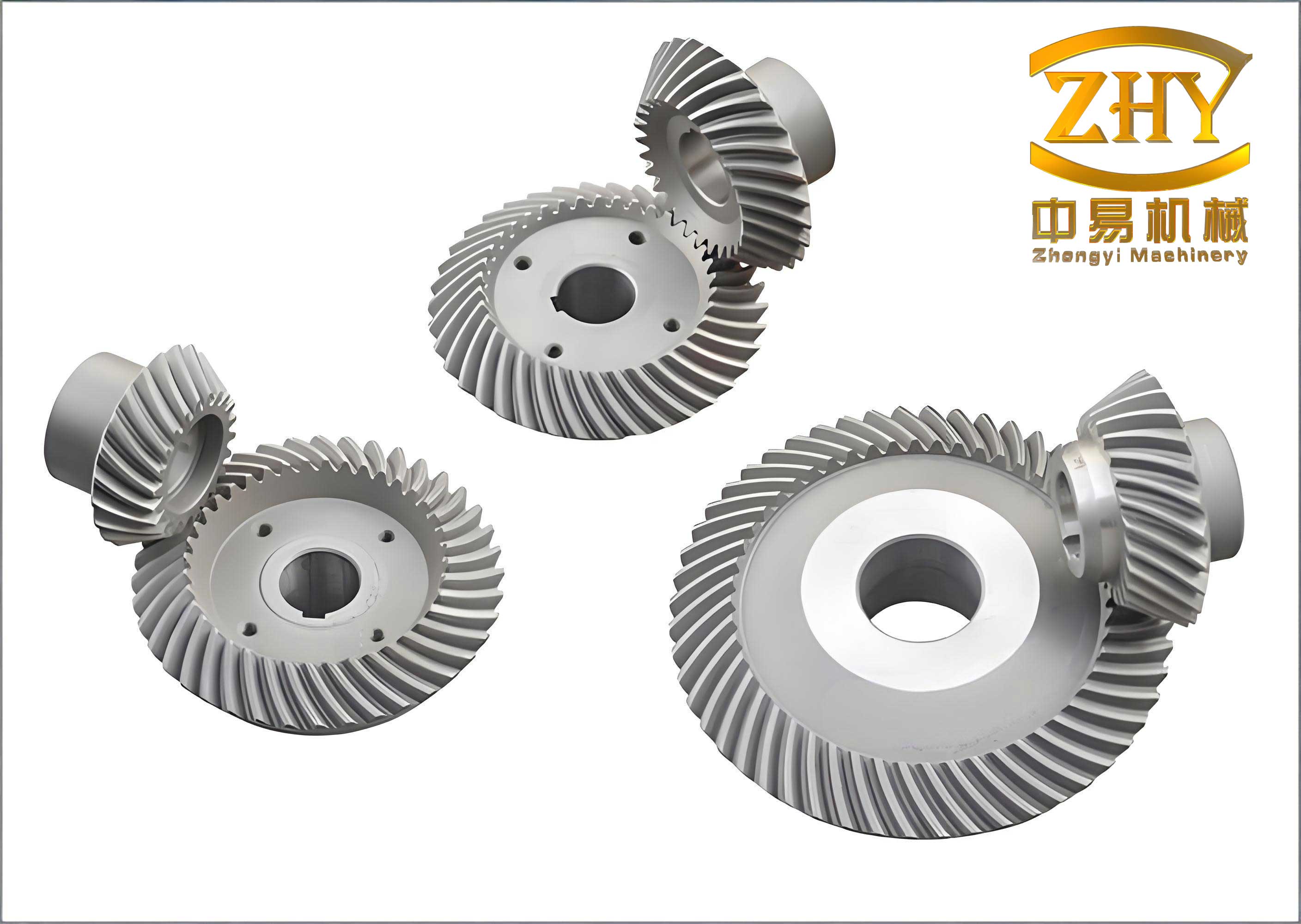
Observing the image above, one can appreciate the complex curvature of hyperbolic gears. This geometry is not just for show; it distributes stress more evenly but simultaneously intensifies the need for a robust lubricant film. The failure to maintain this film leads to rapid wear, pitting, and ultimately, catastrophic gear failure. My fieldwork has repeatedly confirmed that the single most important factor in preserving hyperbolic gears is the selection and correct application of a dedicated hypoid gear oil, specifically the fractionated or distillate-type double curve gear oil prevalent in many markets.
These specialized oils are formulated with a base stock of highly refined mineral or synthetic hydrocarbons and fortified with a sophisticated additive package containing sulfur-phosphorus compounds. The primary mechanism of action is tribochemical. Under the high temperatures and pressures generated at the contact points of hyperbolic gears, these additives react chemically with the metal surface to form a thin, sacrificial layer of iron sulfide and iron phosphate. This layer has a low shear strength, preventing direct metal-to-metal contact and thus averting scuffing, scoring, and adhesive wear. The reaction rate is temperature-dependent, following an Arrhenius-type relationship:
$$ k = A e^{-E_a / (R T)} $$
where \( k \) is the reaction rate constant, \( A \) is the pre-exponential factor, \( E_a \) is the activation energy for the film-forming reaction, \( R \) is the universal gas constant, and \( T \) is the absolute temperature at the contact zone. This underscores why thermal stability of the oil is paramount. The superior oxidative stability of modern fractionated gear oils ensures that this protective mechanism remains effective over extended periods without the oil itself degrading into sludge or varnish.
To quantify the performance benefits, let’s consider the key properties of a high-quality gear oil for hyperbolic gears and compare them with those of ordinary gear oils. The following table encapsulates the critical differences:
| Property | Premium Fractionated Hypoid Gear Oil (for Hyperbolic Gears) | Common GL-4/GL-5 Gear Oil (General Use) | Standard Machine Oil (Incorrect Substitute) |
|---|---|---|---|
| Extreme Pressure (EP) Additive System | Active Sulfur-Phosphorus, forms sacrificial films at >1500 MPa | Moderate Sulfur-Phosphorus or Chlorine, effective up to ~1000 MPa | None or minimal anti-wear additives |
| Kinematic Viscosity at 100°C (cSt) | Typically 18-24 (e.g., SAE 85W-140) | 14-18 (e.g., SAE 80W-90) | Varies widely, often lower |
| Four-Ball Wear Scar Diameter (mm) | ≤ 0.35 under high load (ASTM D4172) | 0.4 – 0.6 | > 0.8 |
| Oxidation Stability (Sludge, mg/100ml) | < 50 after 312 hours at 150°C | 50 – 150 | > 500 (rapid degradation) |
| FZG Failure Load Stage (DIN 51354) | > 12 (Very High) | 10 – 11 | < 6 |
| Typical Color | Pale to Deep Reddish-Brown (Distinctive) | Amber to Dark Brown | Pale Yellow to Brown |
| Compatibility with Copper/Alloys | Corrosion-inhibited, passes ASTM D130 | May cause tarnishing | No specific protection |
The data in this table is not merely academic; it translates directly to field performance. Using an ordinary gear oil in a system designed for hyperbolic gears is a recipe for premature failure. The EP film will not form adequately under the specific stress regime of hyperbolic gears, leading to boundary lubrication breakdown. The wear rate can be modeled using a modified form of the Archard wear equation, incorporating the lubricant’s EP effect:
$$ V = K_{eff} \frac{F_N \cdot s}{H} $$
Here, \( V \) is the wear volume, \( F_N \) is the normal load (exceptionally high in hyperbolic gears), \( s \) is the sliding distance (significant due to the hypoid offset), \( H \) is the surface hardness of the gear material, and \( K_{eff} \) is the effective wear coefficient, which is drastically reduced by the presence of a robust EP film from the correct oil. For an incorrect oil, \( K_{eff} \) can be orders of magnitude larger.
One of the most common and detrimental mistakes I have witnessed is the attempt to dilute hypoid gear oil with diesel fuel in winter to improve fluidity. This practice catastrophically compromises the oil’s chemistry. The dilution reduces the concentration of EP additives and alters the viscosity-pressure relationship, described by the Barus equation:
$$ \eta(P) = \eta_0 e^{\alpha P} $$
where \( \eta(P) \) is the viscosity at pressure \( P \), \( \eta_0 \) is the viscosity at atmospheric pressure, and \( \alpha \) is the pressure-viscosity coefficient. Adding diesel lowers \( \eta_0 \) and may affect \( \alpha \), but more critically, it disrupts the carefully balanced additive package. The result is that under the high contact pressure \( P \) of hyperbolic gears, the oil film cannot be maintained, and the chemical reaction to form the protective layer is inhibited. The consequence is almost immediate gear scuffing. For cold-weather operation, one must use a multi-grade hypoid gear oil with the correct low-temperature viscosity grade (e.g., 75W-90) as specified by the manufacturer, never a homemade mixture.
The maintenance procedure for hyperbolic gears is a ritual that demands precision. When changing the oil, it is imperative to completely drain the old fluid. Any residual oil carries with it worn metal particles and degraded additives that act as abrasives and catalysts for further oxidation. After draining, the housing must be flushed with a light, compatible flushing oil or even a portion of the new gear oil to remove all sediment. Only then should the new oil be introduced. This process ensures that the fresh additive system can work on a clean surface. The used oil, often still containing active chemicals, must be stored separately from other lubricants or engine oils to prevent cross-contamination, which complicates recycling processes.
The service life or drain interval for oil in hyperbolic gears is not a fixed number but a function of multiple operational variables. While a typical recommendation might be around 30,000 kilometers for domestic quality oils under moderate service, this can vary significantly. We can model the remaining useful life (RUL) of the oil based on key degradation factors. A simplified prognostic model might consider:
$$ RUL = \frac{C_{additive}^{initial} – C_{additive}^{threshold}}{k_{oxid} \cdot T_{avg}^n + k_{wear} \cdot L_{total}} $$
In this expression, \( C_{additive} \) represents the concentration of critical EP additives, \( k_{oxid} \) is the oxidation rate constant, \( T_{avg} \) is the average operational temperature, \( n \) is an exponent (often around 2 for Arrhenius-like behavior), \( k_{wear} \) is a rate constant for additive depletion via reaction with metal surfaces, and \( L_{total} \) is the total load-time integral the gears have experienced. For severe service conditions—such as frequent heavy hauling, operation in dusty environments, or sustained high torque—the drain interval should be shortened. The table below provides a guideline for adjusting oil change periods based on service severity for systems using hyperbolic gears:
| Service Condition Category | Description (e.g., Agricultural Vehicle Use) | Multiplicative Factor for Base Drain Interval (e.g., 30,000 km) | Key Monitoring Parameter |
|---|---|---|---|
| Mild / Normal | Highway transport, light loads, clean environments, moderate temperatures | 1.0 (Base 30,000 km) | Visual inspection for discoloration, routine oil analysis after 20,000 km |
| Severe | Heavy towing, off-road operation, high ambient dust, stop-and-go cycles | 0.5 – 0.7 (15,000 – 21,000 km) | Regular oil analysis for Fe, Cu wear metals and additive depletion (P, S content) every 10,000 km |
| Extreme | Continuous high-load operation (e.g., steep terrain), very high ambient temperatures (>40°C), contamination risk | 0.3 – 0.4 (9,000 – 12,000 km) | Frequent oil analysis (every 5,000 km), monitor viscosity increase and total acid number (TAN) |
The performance of hyperbolic gears is also intimately tied to the precise setting of gear backlash and pinion depth. Misalignment increases specific loading and can cause localized stress concentrations that exceed even the capabilities of a premium EP oil. The contact pattern on the gear teeth, often checked with marking compound, should be centered on the tooth flank. Deviations indicate the need for mechanical adjustment. The relationship between misalignment \( \delta \) and the resulting increase in localized contact stress \( \Delta \sigma \) can be approximated for simplified cases by:
$$ \Delta \sigma \approx \sigma_0 \left(1 + \frac{\delta}{h}\right)^m $$
where \( \sigma_0 \) is the nominal contact stress, \( h \) is a characteristic length related to the contact ellipse size, and \( m \) is an exponent typically between 1 and 2. This nonlinear increase underscores why proper gear setup is a prerequisite for effective lubrication of hyperbolic gears.
Another aspect often overlooked is the thermal management of the rear axle housing containing the hyperbolic gears. During operation, power losses are converted into heat. The dominant sources are meshing losses \( P_m \), churning losses \( P_c \), and bearing losses \( P_b \). The total heat generation \( Q_{gen} \) can be estimated as:
$$ Q_{gen} = P_m + P_c + P_b = (1 – \eta_m)T \omega + C \rho \omega^3 d^5 + \sum (f_b F r \omega) $$
Here, \( \eta_m \) is the mesh efficiency (high for hyperbolic gears but still <1), \( T \) is torque, \( \omega \) is angular speed, \( C \) is a churning loss coefficient, \( \rho \) is oil density, \( d \) is gear diameter, \( f_b \) is a bearing friction coefficient, \( F \) is bearing load, and \( r \) is bearing pitch radius. This heat must be dissipated through the housing to prevent the oil temperature from exceeding its design limit, typically 120-130°C for mineral-based oils. Excessive temperature accelerates oil oxidation, depicted by the following differential equation for the formation of oxidation products [Ox]:
$$ \frac{d[Ox]}{dt} = k_{ox}[O_2][RH] $$
where \( [O_2] \) is dissolved oxygen concentration and \( [RH] \) represents reactive hydrocarbon molecules in the oil. High temperature increases \( k_{ox} \) exponentially, leading to sludge, varnish, and increased corrosion potential. Therefore, ensuring clean cooling fins on the axle housing and using an oil with high thermal stability are non-negotiable for the health of hyperbolic gears.
The evolution of lubricant technology for hyperbolic gears continues. Fully synthetic polyalphaolefin (PAO)-based oils are now available, offering even wider operating temperature ranges and longer drain intervals. Their viscosity-temperature behavior is superior, more closely following the Walther-MacCoull equation, which forms the basis of the ASTM D341 viscosity-temperature chart:
$$ \log \log(\nu + c) = A – B \log T $$
where \( \nu \) is kinematic viscosity in cSt, \( T \) is absolute temperature in Kelvin, and \( A \), \( B \), and \( c \) are constants. PAO-based fluids have a flatter slope (lower \( B \)), meaning their viscosity changes less with temperature, ensuring better lubrication of hyperbolic gears during cold starts and at peak operating temperatures.
In conclusion, the reliable operation of hyperbolic gears is a symphony of precise mechanical design, correct assembly, and, most critically, dedicated lubrication science. From the chemical reactions that form protective films under extreme pressure to the physical laws governing film thickness and heat dissipation, every detail matters. Using the specified fractionated hypoid gear oil, adhering to strict change-out procedures, avoiding harmful practices like dilution, and monitoring service conditions are all essential disciplines. The geometry of hyperbolic gears presents a unique challenge, but with the right knowledge and practices, these gears can deliver millions of cycles of smooth, powerful, and quiet service, forming the resilient backbone of heavy-duty agricultural and transport machinery. My experience has shown that investing in proper lubrication for hyperbolic gears is never an expense; it is the most cost-effective insurance policy against downtime and costly repairs.