
In my extensive experience with mechanical systems, particularly in agricultural and heavy-duty vehicles, I have consistently observed that the proper lubrication of hyperbolic gears is paramount to ensuring longevity, efficiency, and reliability. Hyperbolic gears, often employed in the final drive or rear axle assemblies of vehicles like four-wheel agricultural trucks, represent a sophisticated form of gearing. Their unique design, characterized by crossed axes and curved tooth profiles, offers significant advantages such as smoother operation, higher load-carrying capacity, and reduced noise compared to conventional gears. However, these benefits come with a critical caveat: hyperbolic gears demand specialized lubrication. The use of inappropriate lubricants can lead to catastrophic failures, underscoring the necessity for a deep understanding of hyperbolic gears oil. This article delves into the characteristics, application methodologies, and maintenance protocols for hyperbolic gears oil, aiming to provide a comprehensive guide that leverages technical data, formulas, and practical insights.
The fundamental principle behind hyperbolic gears operation lies in their tooth contact geometry. Unlike spur or helical gears, the teeth of hyperbolic gears engage in a combination of rolling and sliding motions, which generates complex stress fields and elevated temperatures at the contact points. This necessitates a lubricant that can withstand extreme pressure (EP) conditions while maintaining a protective film. The primary function of hyperbolic gears oil is not merely to reduce friction but to form a chemically reactive layer that prevents metal-to-metal contact. This is achieved through advanced additive packages, typically containing sulfur-phosphorus compounds, which react with the gear surface under high pressure and temperature to create a sacrificial layer. This layer, often a metallic sulfide or phosphate film, has low shear strength, allowing it to deform easily and prevent scuffing or scoring. The performance of hyperbolic gears oil can be quantified using the film thickness parameter, Λ, defined as the ratio of the lubricant film thickness (h) to the composite surface roughness (σ):
$$ \Lambda = \frac{h}{\sigma} $$
For hyperbolic gears to operate in the elastohydrodynamic lubrication (EHL) regime, Λ should be greater than 3. The minimum film thickness in EHL contacts can be estimated using the Hamrock-Dowson equation, which for point contacts (relevant to hyperbolic gears) is given by:
$$ h_{min} = 2.69 R’ U^{0.67} G^{0.53} W^{-0.067} (1 – 0.61 e^{-0.73k}) $$
where:
- \( R’ \) is the effective radius of curvature,
- \( U \) is the dimensionless speed parameter \( \frac{\eta_0 u}{E’ R’} \),
- \( G \) is the dimensionless material parameter \( \alpha E’ \),
- \( W \) is the dimensionless load parameter \( \frac{w}{E’ R’^2} \),
- \( k \) is the ellipticity parameter,
- \( \eta_0 \) is the dynamic viscosity at atmospheric pressure,
- \( u \) is the entrainment velocity,
- \( E’ \) is the effective elastic modulus,
- \( \alpha \) is the pressure-viscosity coefficient,
- \( w \) is the load per unit width.
These formulas underscore the critical role of viscosity and pressure-viscosity characteristics in hyperbolic gears oil, which must be meticulously tailored to maintain adequate film thickness under varying operational conditions.
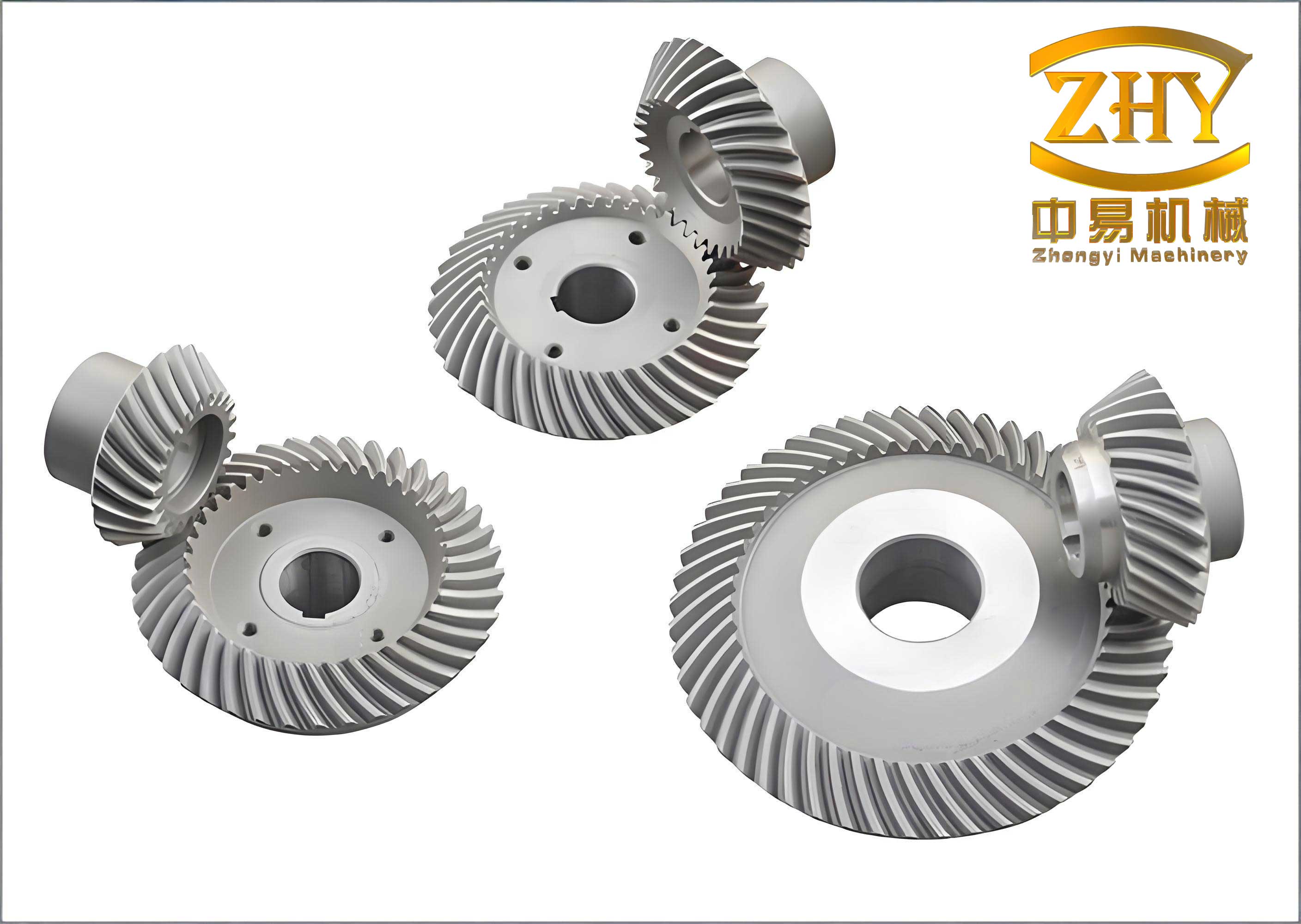
Hyperbolic gears oil is distinctly formulated as a fractional-type lubricant, meaning it is derived from carefully selected petroleum base stocks or synthetic hydrocarbons that are then fortified with performance-enhancing additives. One of its hallmark features is exceptional oxidative stability. Oxidation, catalyzed by high temperatures and metal surfaces, leads to sludge formation and viscosity increase, which can impair lubrication. The oxidation resistance of hyperbolic gears oil is often evaluated using tests like the Rotary Bomb Oxidation Test (RBOT) or Thin-Film Oxygen Uptake Test (TFOUT), with premium grades exhibiting induction times exceeding 300 minutes. This longevity directly translates to extended drain intervals, reducing maintenance costs and downtime. Moreover, the anti-wear and extreme pressure properties are quantified through standard bench tests such as the Four-Ball EP Test (ASTM D2596) and the FZG Gear Test (DIN 51354). For instance, the load-carrying capacity is expressed as the “Last Non-Seizure Load” or “Mean Hertz Load” in Newtons. The following table summarizes key performance metrics for a typical hyperbolic gears oil compared to a conventional gear oil:
| Property | Hyperbolic Gears Oil (e.g., API GL-5) | Conventional Gear Oil (e.g., API GL-4) | Test Method |
|---|---|---|---|
| Kinematic Viscosity at 100°C (cSt) | 14.0 – 16.0 | 13.5 – 15.5 | ASTM D445 |
| Viscosity Index | >95 | >90 | ASTM D2270 |
| Four-Ball Weld Load (N) | >2500 | >1500 | ASTM D2596 |
| FZG Failure Load Stage | >12 | >10 | DIN 51354 |
| Copper Strip Corrosion (3h at 100°C) | 1b (max) | 2 (max) | ASTM D130 |
| Oxidation Stability (RBOT, min) | >400 | >200 | ASTM D2272 |
| Foam Tendency (Seq I/II/III, ml) | 20/0/20 (max) | 50/0/50 (max) | ASTM D892 |
The superior load-carrying capacity of hyperbolic gears oil is not merely a result of higher viscosity but stems from the synergistic action of EP and anti-wear additives. These additives undergo tribochemical reactions at the asperity contacts. The reaction kinetics can be described by an Arrhenius-type equation, where the rate of protective film formation increases with temperature:
$$ k = A e^{-\frac{E_a}{RT}} $$
where \( k \) is the rate constant, \( A \) is the pre-exponential factor, \( E_a \) is the activation energy, \( R \) is the gas constant, and \( T \) is the absolute temperature. This explains why hyperbolic gears oil performs optimally under the high-temperature conditions prevalent in hyperbolic gears assemblies. Furthermore, the oil’s ability to protect against rust and corrosion is vital, as moisture ingress can occur in agricultural environments. The corrosion inhibition is achieved through polar additives that form a monolayer on metal surfaces, blocking electrochemical reactions. The effectiveness can be modeled using the Stern-Geary equation for corrosion current density:
$$ I_{corr} = \frac{B}{R_p} $$
where \( B \) is the Stern-Geary constant and \( R_p \) is the polarization resistance, which is significantly increased by effective inhibitors in hyperbolic gears oil.
In practical application, the correct use of hyperbolic gears oil is as critical as its formulation. A common misconception is that any high-viscosity lubricant can suffice for hyperbolic gears. This is a dangerous fallacy. Substituting with ordinary gear oil, even those labeled for heavy-duty service, can lead to immediate gear scoring and pitting due to insufficient EP properties. The distinct reddish-brown color of fractional hyperbolic gears oil serves as a visual identifier, aiding in preventing mix-ups with engine oils or hydraulic fluids, which typically have different hues. During oil changes, a thorough flushing procedure is non-negotiable. Residual old oil, contaminated with wear debris and degraded additives, can compromise the new oil’s performance. The cleaning process should involve draining the old oil, flushing with a light flushing oil or a portion of the new hyperbolic gears oil, and ensuring the gear housing is free of sludge. I recommend following a systematic procedure: drain, flush, inspect magnetic plugs for ferrous particles, refill with the correct grade, and check for leaks.
Seasonal considerations are particularly relevant for hyperbolic gears oil. In colder climates, there might be a temptation to dilute the oil with diesel fuel to lower its viscosity and improve cold-flow properties. This practice is detrimental and must be strictly avoided. Dilution drastically reduces the oil’s film strength and EP performance. The effective viscosity of a mixture can be approximated using the Arrhenius mixing rule:
$$ \ln \eta_{mix} = x_1 \ln \eta_1 + x_2 \ln \eta_2 $$
where \( \eta_{mix} \) is the viscosity of the mixture, \( \eta_1 \) and \( \eta_2 \) are the viscosities of the hyperbolic gears oil and diesel, respectively, and \( x_1 \) and \( x_2 \) are their mole fractions. Even a small addition of diesel (e.g., 10% by volume) can reduce the viscosity by over 50%, pushing the Λ value below the critical threshold and leading to boundary lubrication and rapid gear failure. Instead, one should select the appropriate viscosity grade for the ambient temperature. For hyperbolic gears, typical specifications are a lower viscosity grade like SAE 75W-90 for winter (ensuring pumpability at low temperatures) and a higher grade like SAE 85W-140 for summer (providing adequate film thickness at high operating temperatures). The relationship between viscosity and temperature is captured by the Vogel-Fulcher-Tammann equation or the simpler Walther-ASTM equation used in the viscosity-temperature chart:
$$ \log \log(\nu + 0.7) = A – B \log T $$
where \( \nu \) is the kinematic viscosity in centistokes, \( T \) is the absolute temperature in Kelvin, and A and B are constants specific to the oil. This equation helps in selecting the right hyperbolic gears oil grade based on expected operational temperature ranges.
The service life or drain interval for hyperbolic gears oil is not a fixed number but depends on a multitude of factors. While a baseline of 10,000 kilometers is often cited for domestic hyperbolic gears oils under moderate service, this can be extended with excellent maintenance practices. Key factors influencing oil life include load factor, operating temperature, contamination level, and the specific design of the hyperbolic gears set. To optimize drain intervals, condition-based monitoring is advisable. Regular oil analysis can detect early signs of degradation, such as increased acid number (AN), indicating oxidation, or elevated wear metal concentrations (iron, copper, lead) signaling component wear. The rate of additive depletion can be modeled as a first-order decay process:
$$ C(t) = C_0 e^{-kt} $$
where \( C(t) \) is the concentration of a critical additive (e.g., anti-wear agent) at time \( t \), \( C_0 \) is the initial concentration, and \( k \) is the depletion rate constant dependent on operational severity. By tracking these parameters, one can move from fixed intervals to predictive maintenance, thereby maximizing the utility of the hyperbolic gears oil. The economic benefit is substantial, as the cost of oil analysis is minor compared to the expense of a major overhaul of the hyperbolic gears assembly.
Beyond basic lubrication, hyperbolic gears oil plays a role in heat dissipation. The power loss in a gear set, which manifests as heat, consists of load-dependent and load-independent losses. The meshing power loss \( P_m \) for hyperbolic gears can be estimated using an empirical formula:
$$ P_m = \frac{\mu H V_{e}}{cos \beta} $$
where \( \mu \) is the coefficient of friction, \( H \) is the transmitted power, \( V_{e} \) is the relative sliding velocity, and \( \beta \) is the spiral angle of the hyperbolic gears. A high-quality hyperbolic gears oil with appropriate friction modifiers can reduce \( \mu \), thereby lowering power loss and operating temperature. The overall heat balance in the gearbox can be expressed as:
$$ Q_{generated} = Q_{dissipated} + Q_{stored} $$
where \( Q_{generated} = P_m \), \( Q_{dissipated} \) is heat lost to the environment via convection and radiation, and \( Q_{stored} \) leads to a temperature rise. Proper oil volume and circulation ensure effective heat transfer, preventing thermal runaway that could break down the oil and damage the hyperbolic gears.
In summary, the selection, application, and maintenance of hyperbolic gears oil are critical disciplines that directly impact the performance and lifespan of hyperbolic gears systems. The oil’s unique formulation, characterized by high EP capacity, oxidative stability, and corrosion protection, is engineered specifically for the demanding contact conditions of hyperbolic gears. Through understanding the underlying tribological principles, employing proper handling procedures, and implementing condition-based monitoring, operators can ensure that their hyperbolic gears operate reliably over extended periods. The investment in correct hyperbolic gears oil and its disciplined use pays dividends in reduced repair costs, lower downtime, and enhanced operational efficiency. As technology advances, we may see further evolution in hyperbolic gears oil formulations, including the increased use of synthetic base stocks and nano-additives, but the fundamental principles outlined here will remain cornerstone knowledge for anyone responsible for the care of hyperbolic gears.
To further elucidate the interaction between hyperbolic gears design parameters and lubricant requirements, consider the following table that correlates gear geometry factors with recommended oil properties:
| Hyperbolic Gears Design Parameter | Typical Range | Influence on Lubrication Demand | Recommended Oil Property Focus |
|---|---|---|---|
| Spiral Angle (β) | 30° – 45° | Higher angle increases sliding velocity, raising temperature and shear. | High thermal stability, shear-stable viscosity modifiers. |
| Offset Distance (E) | 10% – 30% of pinion pitch diameter | Larger offset increases tooth curvature and contact pressure. | Enhanced extreme pressure (EP) additive package. |
| Module (m) / Diametral Pitch (P) | Varies by load (e.g., 4-8 mm module) | Smaller modules (finer teeth) have higher specific loads and thinner film conditions. | Higher base oil viscosity, robust anti-wear additives. |
| Transmission Ratio (i) | 3:1 to 10:1 for rear axles | High ratios lead to significant speed difference between pinion and ring gear, affecting entrainment velocity. | Optimized viscosity for mixed rolling/sliding conditions. |
| Surface Finish (Ra) | 0.4 – 0.8 μm | Smoother surfaces allow thinner films but are more prone to micropitting. | Additives specifically designed to prevent micropitting (e.g., certain phosphorus compounds). |
The interplay between these geometric factors and lubricant performance can be synthesized into a performance index for hyperbolic gears oil selection. One could propose a dimensionless merit number, M, that combines key oil properties and gear parameters:
$$ M = \frac{(VI \cdot \eta_{100}) \cdot (L_{weld})}{(\Delta TAN \cdot \mu_{40})} \cdot \frac{1}{(E \cdot \tan \beta)} $$
where:
- \( VI \) is the viscosity index,
- \( \eta_{100} \) is the viscosity at 100°C,
- \( L_{weld} \) is the weld load from the Four-Ball test,
- \( \Delta TAN \) is the increase in total acid number over a standard test, indicating oxidation tendency,
- \( \mu_{40} \) is the coefficient of friction measured at 40°C,
- \( E \) is the offset distance,
- \( \beta \) is the spiral angle.
A higher M value suggests an oil better suited for demanding hyperbolic gears applications. This conceptual index, while not a standard, highlights the multifaceted nature of lubricant selection for hyperbolic gears.
Finally, it is worth emphasizing that the successful deployment of hyperbolic gears oil hinges on a holistic approach. This includes proper storage to prevent contamination, using clean tools during handling, and ensuring that the gear housing breathers are functional to prevent moisture accumulation. Education of maintenance personnel is crucial; they must understand why hyperbolic gears require their specific oil and the consequences of deviations. In the grand scheme of machinery management, the hyperbolic gears assembly is often a high-value component, and its protection through correct lubrication is one of the most cost-effective strategies available. As we continue to push the boundaries of mechanical power transmission, the role of specialized lubricants like hyperbolic gears oil will only grow in importance, safeguarding the intricate dance of metal teeth that drives our machines forward.