
In my work on precision measurement and manufacturing, I have developed an integrated system that combines advanced image processing with coordinate metrology to address critical challenges in gear production, particularly those arising from heat treatment defects. Heat treatment defects, such as distortion and concentricity errors, are common in gears after thermal processing, leading to deviations in geometry that affect performance. This article details the system’s design, from optical resolution and coordinate establishment to practical application in correcting heat treatment defects, with an emphasis on using formulas and tables for clarity.
The foundation of this system lies in image intensity resolution. When employing analog-to-digital converters (ADCs) with varying bit depths, the granularity of gray-level subdivision differs significantly. Generally, ADCs with 8, 10, 12, 14, or 16 bits are used, corresponding to gray-level counts of 256, 1024, 4096, 16384, and 65536, respectively. This resolution is crucial for discerning subtle variations in light intensity, which directly impacts the ability to detect edges and contours in images. The relationship between bit depth and gray levels is summarized in Table 1.
| ADC Bit Depth (bits) | Number of Gray Levels |
|---|---|
| 8 | 256 |
| 10 | 1024 |
| 12 | 4096 |
| 14 | 16384 |
| 16 | 65536 |
Mathematically, the number of gray levels $L$ is given by:
$$ L = 2^n $$
where $n$ is the ADC bit depth. Higher bit depths enable finer discrimination of intensity, which is essential for accurately identifying boundaries affected by heat treatment defects, such as warped edges in gear profiles.
In our setup, we use a CCD camera with a light-sensitive element consisting of a receptor plate. This plate contains a grid of pixels, and the camera incorporates an integrated digitization circuit—an ADC signal conversion board. This board operates at a specific bit depth, resolving a precise number of gray levels, and outputs direct video signals with digital scanning and pixel addressing capabilities. For instance, with a 10-bit ADC, we achieve 1024 gray levels, allowing detailed intensity mapping. The system’s optical resolution is defined by the camera’s field of view and pixel count. If the field of view has length $L_f$ and width $W_f$, and the image board scans $N_x \times N_y$ points, the distance between adjacent points in the image, representing spatial resolution, is:
$$ \Delta x = \frac{L_f}{N_x}, \quad \Delta y = \frac{W_f}{N_y} $$
This resolution can be enhanced by reducing the field of view or increasing the scan points, which is vital for detecting minute distortions from heat treatment defects.
The establishment of a sub-coordinate system is central to our approach. The signal from the CCD camera is processed by an image board capable of addressing a large array of points. This board performs data acquisition, conversion, and storage functions. The computer records image information—different gray values within the field of view—and stores it in a two-dimensional array. This array effectively represents a coordinate system, denoted as $A[i][j]$, where $i$ and $j$ are the coordinates of a point, and the value $A[i][j]$ represents its gray level. Through programmed control, we classify gray values: for example, gray values near 255 indicate bright regions (e.g., areas where light passes through holes), while values near 0 indicate dark regions (e.g., areas blocked from light). The boundary between bright and dark regions, where gray values transition, defines the contour of features like gear holes. Specifically, points with gray values $g$ satisfying $0 < g < 255$ are identified as edge points. Their coordinates are recorded, and by fitting these points, we compute geometric parameters such as the center coordinates $(x_c, y_c)$ and radius $r$ in the sub-coordinate system. Since these parameters are measured in pixel units, conversion to real-world dimensions requires scaling by a fixed coefficient $k$, derived from the optical magnification $M$:
$$ k = \frac{\text{Actual length per pixel}}{\text{Pixel distance}} = \frac{L_f}{N_x \cdot M} $$
Thus, real radius $R = k \cdot r$ and real coordinates $(X_c, Y_c) = k \cdot (x_c, y_c)$. This sub-coordinate system’s resolution is pivotal for identifying heat treatment defects, as it allows precise mapping of distorted geometries.
To integrate local measurements into a global context, we establish a master coordinate system using linear encoders (optical scales) installed on the worktable’s moving axes. As the worktable moves, the encoders output signals proportional to displacement, which are fed into the computer via an I/O interface. This creates a master coordinate system that tracks the worktable’s position. Since the CCD camera’s location within this master system is known and addressable, the sub-coordinate system can be precisely located within the master framework. The transformation between sub-coordinate and master coordinate systems enables comprehensive measurement across large workpieces. The master system’s accuracy, often within micrometers, ensures that corrections for heat treatment defects are applied consistently. For example, if the worktable moves by $\Delta X_m$ and $\Delta Y_m$ in the master coordinates, the sub-coordinate origin shifts accordingly, allowing seamless stitching of multiple image-based measurements.
The practical application of this system is demonstrated in post-heat-treatment gear machining, specifically in grinding gear bores to correct concentricity errors caused by heat treatment defects. Gears often exhibit distortion after heat treatment, leading to misalignment between the bore center and the pitch circle center. This misalignment results in excessive pitch circle runout ($\delta_o$), a critical quality parameter. To address this, we employ a method that leverages the image-based measurement system to identify and correct these heat treatment defects. The process begins with inspecting the heat-treated gear using a mandrel and three pitch pins (with diameters selected based on gear module and controlled to tight tolerances, e.g., less than 0.001 mm). The pitch circle runout is measured, and the point of maximum runout (e.g., at angular position $\theta$) is marked. Then, using a self-truing three-jaw chuck on a grinding machine, the gear is clamped via the pitch pins, with one pin positioned at the marked high point. This setup effectively re-centers the bore grinding process relative to the pitch circle, compensating for heat treatment defects. The principle of center shift is illustrated mathematically: let the original bore center be $O$, and points $A$, $B$, and $C$ on the pitch circle define the clamping points, with $A$ at the high point. After clamping, the new bore center $O’$ is determined by the circle through $A$, $B$, and $C$. The shift vector $\vec{d} = O’ – O$ corrects the misalignment from heat treatment defects. The grinding allowance is typically larger than the runout, ensuring complete material removal. This method swaps the machining and inspection benchmarks, enhancing accuracy by directly targeting heat treatment defects.
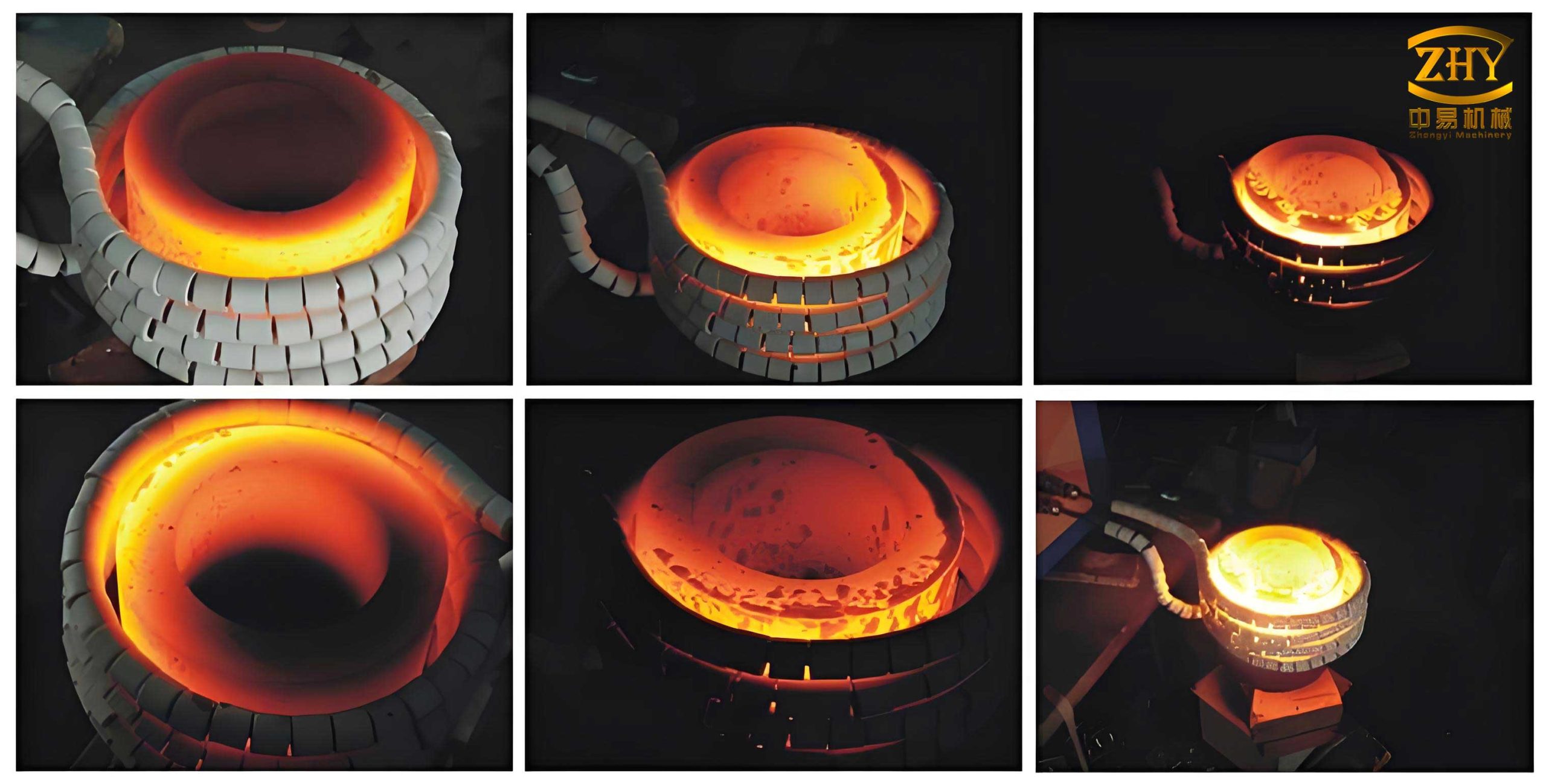
The effectiveness of this approach hinges on the precise detection of heat treatment defects through image processing. By using the sub-coordinate system, we map the gear’s profile and identify deviations in the pitch circle and bore. The gray-level analysis allows us to distinguish between nominal and distorted regions, with heat treatment defects manifesting as irregular intensity patterns. For instance, localized hardening or warping can cause variations in surface reflectivity, detectable as gray-value anomalies. We repeatedly scan multiple gears to build a statistical understanding of heat treatment defects, enabling proactive adjustments in the grinding process. Table 2 summarizes key parameters in the correction process for heat treatment defects.
| Parameter | Symbol | Typical Value/Range | Role in Addressing Heat Treatment Defects |
|---|---|---|---|
| Pitch Circle Runout | $\delta_o$ | 10–50 μm | Quantifies distortion from heat treatment defects |
| Grinding Allowance | $a_g$ | 100–200 μm | Ensures removal of material affected by heat treatment defects |
| Optical Magnification | $M$ | 10×–50× | Enhances detection sensitivity for heat treatment defects |
| ADC Bit Depth | $n$ | 10–12 bits | Provides gray-level resolution to identify heat treatment defects |
| Coordinate Resolution | $\Delta x$ | 1–5 μm/pixel | Determines precision in mapping heat treatment defects |
To further elaborate on the image processing aspect, the system’s ability to resolve heat treatment defects depends on the signal-to-noise ratio in gray-level detection. We model the intensity $I(x,y)$ at a point $(x,y)$ as:
$$ I(x,y) = I_0 \cdot R(x,y) + \eta(x,y) $$
where $I_0$ is the incident light intensity, $R(x,y)$ is the reflectivity (affected by surface conditions from heat treatment defects), and $\eta$ is noise. The ADC quantizes this into gray levels $g$, and by applying thresholding, we segment regions. For edge detection, we use gradients:
$$ \nabla g = \sqrt{ \left( \frac{\partial g}{\partial x} \right)^2 + \left( \frac{\partial g}{\partial y} \right)^2 } $$
Points with $\nabla g$ above a threshold are considered edges, and their coordinates are used for fitting circles or other geometries. This process is repeated across multiple gears to characterize common heat treatment defects, such as ovality or taper in bores.
The integration of sub-coordinate and master coordinate systems allows for large-scale measurement. Suppose we measure a gear with multiple holes. For each hole, the sub-coordinate system provides local parameters, which are transformed to master coordinates using:
$$ X_{\text{master}} = X_{\text{sub}} \cdot k + X_{\text{offset}}, \quad Y_{\text{master}} = Y_{\text{sub}} \cdot k + Y_{\text{offset}} $$
where $(X_{\text{offset}}, Y_{\text{offset}})$ is the camera’s position in the master system. This enables computation of hole center distances and other relational metrics, critical for assessing assembly compatibility after heat treatment. In practice, we have validated this system against coordinate measuring machines (CMMs), showing maximum deviations within 3 μm for standard parts, confirming its reliability in quantifying heat treatment defects.
Beyond gear bores, the system can be extended to other components prone to heat treatment defects, such as bearing races or turbine blades. The key is adapting the image processing algorithms to specific geometries. For gears, we often deal with circular features, so circle fitting algorithms like least-squares are employed. The error in fitting, denoted as $\epsilon$, reflects the severity of heat treatment defects:
$$ \epsilon = \frac{1}{N} \sum_{i=1}^{N} \left| \sqrt{(x_i – x_c)^2 + (y_i – y_c)^2} – r \right| $$
where $N$ is the number of edge points. High $\epsilon$ values indicate significant distortion from heat treatment defects, triggering corrective actions like adjusted grinding parameters.
In the grinding process itself, the correction for heat treatment defects is dynamic. Based on image-derived data, we adjust the chucking force or pin positions to optimize center shift. The relationship between clamping force $F$ and correction $\vec{d}$ can be approximated linearly for small deformations:
$$ \vec{d} = \mathbf{K} \cdot \vec{F} $$
where $\mathbf{K}$ is a compliance matrix influenced by gear material and heat treatment history. By iteratively measuring and grinding, we minimize $\delta_o$, often reducing it to below 5 μm, well within tolerance limits. This iterative correction is essential because heat treatment defects can vary between gears, even within the same batch.
To summarize, the synergy of high-resolution imaging, precise coordinate metrology, and adaptive machining forms a robust framework for mitigating heat treatment defects. The system’s flexibility allows it to handle various part sizes and geometries, making it invaluable in precision manufacturing. Future enhancements could involve real-time feedback loops, where image processing directly controls grinding machines, further automating the correction of heat treatment defects. Additionally, integrating machine learning could predict heat treatment defects based on process parameters, enabling proactive measures.
Throughout this discussion, the term “heat treatment defects” has been emphasized to underscore its prevalence and impact. In gear manufacturing, these defects are a major source of scrap and rework, but with advanced metrology and corrective techniques, their effects can be substantially reduced. The tables and formulas provided herein encapsulate the technical core of our approach, offering a reference for practitioners dealing with similar challenges. By continuously refining our methods, we aim to push the boundaries of precision in the face of inherent thermal distortions.