
The pursuit of efficient, reliable, and quiet power transmission underpins much of mechanical engineering. Among the various solutions, gear drives stand out for their precision and versatility. While spur gears are conceptually simpler, the quest for smoother operation and higher load capacity in compact spaces has made helical gear systems a dominant choice in countless industrial applications, from automotive transmissions to heavy machinery. The inherent helical angle of the tooth trace ensures gradual engagement and disengagement, leading to higher contact ratios, reduced noise, and superior load distribution compared to their spur counterparts. However, this increased complexity also introduces unique dynamic challenges that must be meticulously understood and managed.
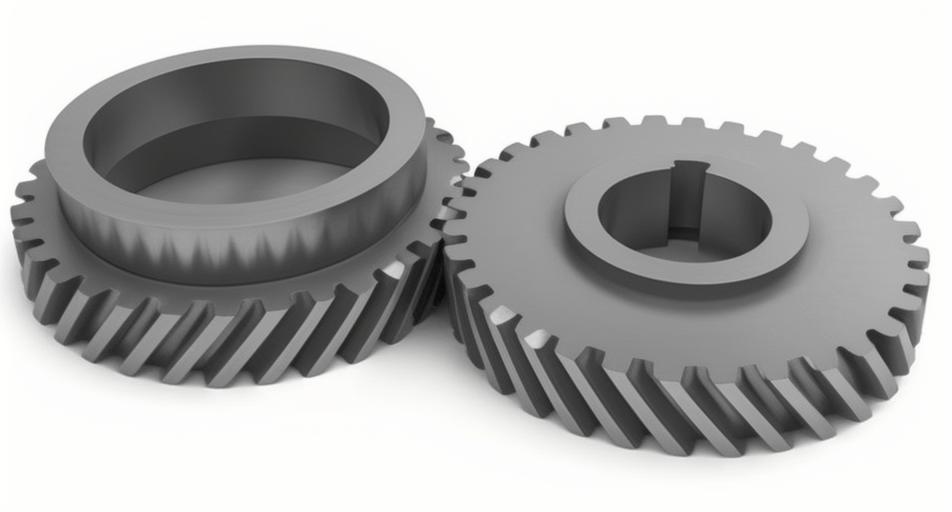
The dynamic behavior of any geared system, including helical gear pairs, is fundamentally nonlinear. This nonlinearity stems from several intrinsic factors: the periodic fluctuation of mesh stiffness as the number of contacting tooth pairs changes, manufacturing and assembly errors manifesting as transmission error excitation, and perhaps most critically, the presence of gear backlash. Backlash, the intentional clearance between mating teeth, is essential to prevent jamming due to thermal expansion and to ensure proper lubrication. Yet, it acts as a discontinuous nonlinearity that can induce severe vibrations, increased noise levels, elevated dynamic loads, and even chaotic motion, compromising the system’s stability and reliability. Accurately modeling this backlash nonlinearity is therefore paramount for predictive analysis and design optimization.
Historically, the dynamics of gear systems have been extensively studied, often using spur gear models as a foundation. The piecewise-linear function, representing an instantaneous loss of contact at the boundary of the backlash zone, has become a standard and widely accepted model for spur gears where the contact ratio is relatively low. However, the direct application of this discontinuous model to helical gear systems is questionable. The helical gear’s operation is characterized by a progressive and overlapping tooth engagement along the face width. This results in a smoother transition in and out of contact, a characteristic that a discontinuous piecewise-linear function fails to capture. The dynamics predicted by such a model for a helical gear system may significantly deviate from real-world behavior, leading to inaccurate assessments of vibration and noise. This work addresses this critical gap by developing a continuous nonlinear backlash function tailored for helical gear dynamics and rigorously investigating its impact on the system’s nonlinear response.
Mathematical Modeling of the Helical Gear System
To analyze the influence of the backlash function, a representative nonlinear dynamic model must first be established. We consider a single-stage parallel-axis helical gear pair. The model incorporates the primary sources of nonlinearity and excitation relevant to geared systems: time-varying mesh stiffness, static transmission error, and gear backlash. Crucially, for a helical gear, the tooth forces have three spatial components. While the radial component is often neglected for simplicity, the axial component induced by the helix angle cannot be ignored as it couples the torsional vibration with axial translational vibrations of the gears along their shafts. This coupling is a distinctive feature of helical gear dynamics.
Thus, we develop a three-degree-of-freedom, shaft-torsion coupled, lumped-parameter model. The degrees of freedom are: the axial translation of the pinion ($z_p$), the axial translation of the gear ($z_g$), and the relative torsional displacement along the line of action ($x$). The model assumes rigid gear bodies, massless shafts, and considers damping in both the axial supports and the gear mesh. The following figure schematically represents the model, where $m_p$, $m_g$ are the masses; $k_{pz}$, $k_{gz}$ and $c_{pz}$, $c_{gz}$ are the axial support stiffness and damping coefficients; $k_m(t)$, $c_m$ are the time-varying mesh stiffness and damping; $T_p$, $T_g$ are the input and load torques; $r_{bp}$, $r_{bg}$ are the base circle radii; $\beta$ is the helix angle; and $e(t)$ is the static transmission error.
The equations of motion are derived using Newton’s second law. The time-varying mesh stiffness is approximated by its fundamental harmonic component:
$$k_m(t) = k_{avg} + k_{amp} \cos(\omega_m t + \phi)$$
where $k_{avg}$ is the average mesh stiffness, $k_{amp}$ is the stiffness variation amplitude, $\omega_m$ is the gear mesh frequency, and $\phi$ is a phase angle. The transmission error is modeled as a simple harmonic function: $e(t) = e_0 + e_a \cos(\omega_m t)$, where $e_0$ is the mean error and $e_a$ is the error amplitude.
The governing differential equations for the three degrees of freedom are as follows:
Axial motion of the pinion:
$$m_p \ddot{z}_p + c_{pz} \dot{z}_p + c_m \left[ \dot{x} – \frac{\dot{z}_p}{\tan\beta} + \frac{\dot{z}_g}{\tan\beta} – \dot{e}(t) \right] + k_{pz} z_p + k_m(t) \cdot f_h\left( x – \frac{z_p}{\tan\beta} + \frac{z_g}{\tan\beta} – e(t) \right) = -F_z$$
Axial motion of the gear:
$$m_g \ddot{z}_g + c_{gz} \dot{z}_g – c_m \left[ \dot{x} – \frac{\dot{z}_p}{\tan\beta} + \frac{\dot{z}_g}{\tan\beta} – \dot{e}(t) \right] + k_{gz} z_g – k_m(t) \cdot f_h\left( x – \frac{z_p}{\tan\beta} + \frac{z_g}{\tan\beta} – e(t) \right) = F_z$$
Torsional/Relative displacement motion:
$$m_e \ddot{x} – \frac{m_e \ddot{z}_p}{\tan\beta} + \frac{m_e \ddot{z}_g}{\tan\beta} + c_m \left[ \dot{x} – \frac{\dot{z}_p}{\tan\beta} + \frac{\dot{z}_g}{\tan\beta} – \dot{e}(t) \right] + k_m(t) \cdot f_h\left( x – \frac{z_p}{\tan\beta} + \frac{z_g}{\tan\beta} – e(t) \right) = F_m + F_a(\tau)$$
Here, $F_z$ represents the axial pre-load or external axial force (often set to zero for basic analysis), $F_m$ is the mean force from the transmitted torque, $F_a(\tau)$ represents torque fluctuations, $m_e = \left( \frac{r_{bp}^2}{I_p} + \frac{r_{bg}^2}{I_g} \right)^{-1}$ is the equivalent mass, and $I_p$, $I_g$ are the mass moments of inertia. The function $f_h(\cdot)$ is the gear backlash function, which is the central focus of this study. In the classic piecewise-linear model, it is defined as:
$$f_{PL}(x) = \begin{cases}
x – b, & x > b \\
0, & -b \le x \le b \\
x + b, & x < -b
\end{cases}$$
where $b$ is half the total gear backlash (dimensionless after normalization). This function is discontinuous at $x = \pm b$, implying an instantaneous loss of contact.
To facilitate numerical analysis and generalization, the equations are non-dimensionalized. Defining a characteristic length $b_c$ (often related to the backlash) and the natural frequency $\omega_n = \sqrt{k_{avg}/m_e}$, we introduce non-dimensional time $\tau = \omega_n t$, displacements $X_1 = z_p/b_c$, $X_3 = z_g/b_c$, $X_5 = x/b_c$, and their corresponding velocities. This yields a set of six first-order non-dimensional differential equations, with parameters representing non-dimensional stiffness, damping, and forcing terms.
Developing a Continuous Backlash Function for Helical Gears
The piecewise-linear model, while adequate for spur gears with low contact ratios, is physically inconsistent with the engagement mechanics of a helical gear system. In a helical gear mesh, multiple teeth are in contact simultaneously, and the load transfer from one tooth pair to the next is progressive. The transition into and out of contact is not abrupt but smooth, as the contact lines sweep across the face width. Therefore, the force-displacement relationship across the backlash region should reflect this smooth transition rather than a hard switch.
To derive a more appropriate model, we treat the classic piecewise-linear function $f_{PL}(x)$ as a target for approximation within the context of a helical gear’s behavior. The goal is to find a continuous, smooth, and differentiable function $f_h(x)$ that captures the essential nonlinearity—the dead zone where no force is transmitted—but with rounded corners at the boundaries $x = \pm b$. This can be achieved through high-order polynomial fitting. The fitting is performed over the domain $[-B, B]$ where $B > b$ to ensure a good transition to the linear regions. The fitted polynomial must be odd-symmetric (i.e., $f_h(-x) = -f_h(x)$) to maintain physical consistency, meaning it should contain only odd-powered terms of $x$.
We perform polynomial fits of increasing order (3rd, 5th, 7th, 9th) to the piecewise-linear function. The coefficients for these odd-term polynomials are summarized in the table below. The quality of the fit is assessed by the maximum deviation from the piecewise-linear function within the transition region.
| Polynomial Term | 3rd Order Fit | 5th Order Fit | 7th Order Fit | 9th Order Fit |
|---|---|---|---|---|
| $x^1$ | 0.17386 | -0.05268 | -0.15549 | -0.15405 |
| $x^3$ | 0.06375 | 0.18083 | 0.28330 | 0.28096 |
| $x^5$ | – | -0.01167 | -0.03664 | -0.03562 |
| $x^7$ | – | – | 0.00171 | 0.00155 |
| $x^9$ | – | – | – | 8.38e-6 |
As the polynomial order increases, the fit becomes smoother and the maximum deviation decreases significantly. The deviation stabilizes for orders of 7 and above. A 7th-order polynomial offers an excellent compromise between accuracy and model complexity. It provides a sufficiently smooth approximation of the transition zone, which is critical for modeling the continuous contact characteristic of helical gear engagement, while keeping the mathematical expression tractable for dynamic analysis. Therefore, we adopt the following 7th-order polynomial as the continuous backlash function for the helical gear system analysis:
$$f_h(x) = \alpha_1 x + \alpha_3 x^3 + \alpha_5 x^5 + \alpha_7 x^7$$
with the coefficients $\alpha_1 = -0.1555$, $\alpha_3 = 0.2833$, $\alpha_5 = -0.0366$, and $\alpha_7 = 0.0017$ for a normalized backlash $b=1$.
Dynamic Analysis Under Different Backlash Functions
To investigate the profound effect of the backlash function formulation, we conduct a comparative nonlinear dynamic analysis of the helical gear system under two conditions: System A using the traditional piecewise-linear function $f_{PL}(x)$, and System B using the proposed 7th-order polynomial function $f_h(x)$. The non-dimensional parameters used in the simulation are derived from a typical helical gear pair, with key values listed below.
| Parameter Description | Symbol | Value |
|---|---|---|
| Average Mesh Stiffness Ratio | $k_{33}$ | 1.0 |
| Stiffness Fluctuation Coefficient | $k$ | 0.2 |
| Mean Force | $f_m$ | 0.1 |
| Axial Damping Ratio | $\xi_{11}$, $\xi_{22}$ | 0.02 |
| Mesh Damping Ratio | $\xi_{33}$ | 0.05 |
| Axial Stiffness Ratio | $k_{11}$, $k_{22}$ | 1.1 |
| Normalized Backlash | $b$ | 1.0 |
The primary control parameter for the analysis is the non-dimensional excitation frequency $\Omega = \omega_m / \omega_n$, which is varied over a wide range. The system’s response is solved numerically using a variable-step Runge-Kutta method. The global dynamics are visualized using bifurcation diagrams (plotting the local maxima of the torsional displacement $X_5$), which are complemented by the calculation of the largest Lyapunov exponent (LLE) to quantitatively distinguish between periodic ($\text{LLE}<0$), quasi-periodic ($\text{LLE} \approx 0$), and chaotic ($\text{LLE}>0$) motions. Phase portraits, Poincaré sections, and FFT spectra are used for detailed diagnosis at specific frequency points.
Dynamics of System A (Piecewise-Linear Backlash)
For the system with the discontinuous backlash model, the bifurcation diagram reveals extremely rich and complex dynamics. The response is highly sensitive to frequency changes, featuring numerous sudden jumps between different attractors. The system traverses through periods of stable periodic motion, quasi-periodic motion, high-periodic cycles, and chaotic motion. Notably, phenomena like grazing bifurcations and boundary crises are observed, where the trajectory briefly touches the discontinuity boundary at $x = \pm b$, leading to a sudden change or destruction of an attractor. For example, in a specific frequency band, the system exhibits a period-5 motion that intermittently transitions into a chaotic state before being restored, a hallmark of the severe nonlinear interactions induced by the hard contact loss. The maximum Lyapunov exponent spectrum confirms these transitions, with positive exponents correlating with wide, chaotic bands in the bifurcation diagram. The Poincaré sections for chaotic regimes show scattered, fractal-like point clouds, while quasi-periodic motions appear as closed curves.
Dynamics of System B (7th-Order Polynomial Backlash)
In stark contrast, the dynamics of the helical gear system modeled with the continuous polynomial backlash function (System B) are markedly tamer. The bifurcation diagram shows significantly larger regions of stable periodic-1 motion, especially at lower and higher frequency ranges. The transition to complex motion occurs at a higher frequency threshold. When quasi-periodic or chaotic motions appear, their parameter intervals are notably narrower. The chaotic attractors that do appear seem less “violent,” with Poincaré sections showing more structured, albeit still complex, patterns. The frequent jumping and grazing-induced crises seen in System A are largely absent. The system exhibits a more predictable progression: from stable period-1, through a Hopf bifurcation to quasi-periodic motion, a brief window of chaos or high-period motion, and a return to stable period-1 motion. The overall dynamic landscape is simplified, with fewer co-existing attractors and a reduced propensity for unpredictable jumps.
Comparative Summary and Physical Interpretation
The comparative analysis yields two fundamental insights. First, the mathematical form of the backlash function has a decisive and dramatic impact on the predicted nonlinear dynamic response of the gear system. It is not a minor modeling detail but a core determinant of the system’s stability landscape. Second, the behavior predicted by the continuous polynomial model for the helical gear system aligns far better with the expected physical behavior of such systems. The piecewise-linear model, with its inherent discontinuity, exaggerates nonlinear effects like impacts and promotes a propensity for chaotic motion and instability that is more characteristic of systems with clear, sudden contact loss (like certain spur gear or mechanical clearance scenarios). The helical gear’s progressive mesh naturally filters high-frequency impacts and softens the transition through the backlash zone, a characteristic embodied by the smooth, continuous polynomial function. Therefore, the high-order fitted backlash function provides a more physically consistent and likely more accurate model for analyzing the nonlinear dynamics of helical gear transmission systems.
Conclusion
This investigation underscores the critical importance of selecting an appropriate physical model for nonlinear dynamic analysis. For helical gear systems, whose operation is defined by smooth, overlapping tooth contact, the traditional piecewise-linear backlash function is physically inconsistent and can lead to overly pessimistic predictions of dynamic instability and chaos. By developing a continuous, high-order polynomial approximation of the backlash nonlinearity, we obtain a model that reflects the gradual load transfer and softened impact characteristics inherent to helical gear meshes. The comparative dynamic analysis conclusively demonstrates that this continuous model results in a more stable dynamic response with larger regions of periodic operation and less severe chaotic regimes, which correlates with the known smooth-running nature of helical gears. Consequently, for accurate design, vibration prediction, and noise reduction in helical gear transmissions, employing a tailored, continuous backlash function, such as the 7th-order polynomial proposed here, is essential. Future work will involve experimental validation and extending this approach to more complex multi-mesh helical gear systems, such as planetary drives.