
In my capacity as an engineer focused on the integrity and reliability of aviation propulsion systems, I have been directly involved in investigating a recurring and critical issue: the fracture of gear shafts within the main oil pumps of aero-engines. Multiple units failed during service, with operational hours ranging from 77 to 500 hours. This persistent problem posed a significant threat to engine safety and operational readiness. Through a meticulous, hands-on analytical process, I determined the root cause and developed effective preventive measures. This comprehensive account details my approach, findings, and recommendations, emphasizing the central role of the gear shaft in this failure mode.
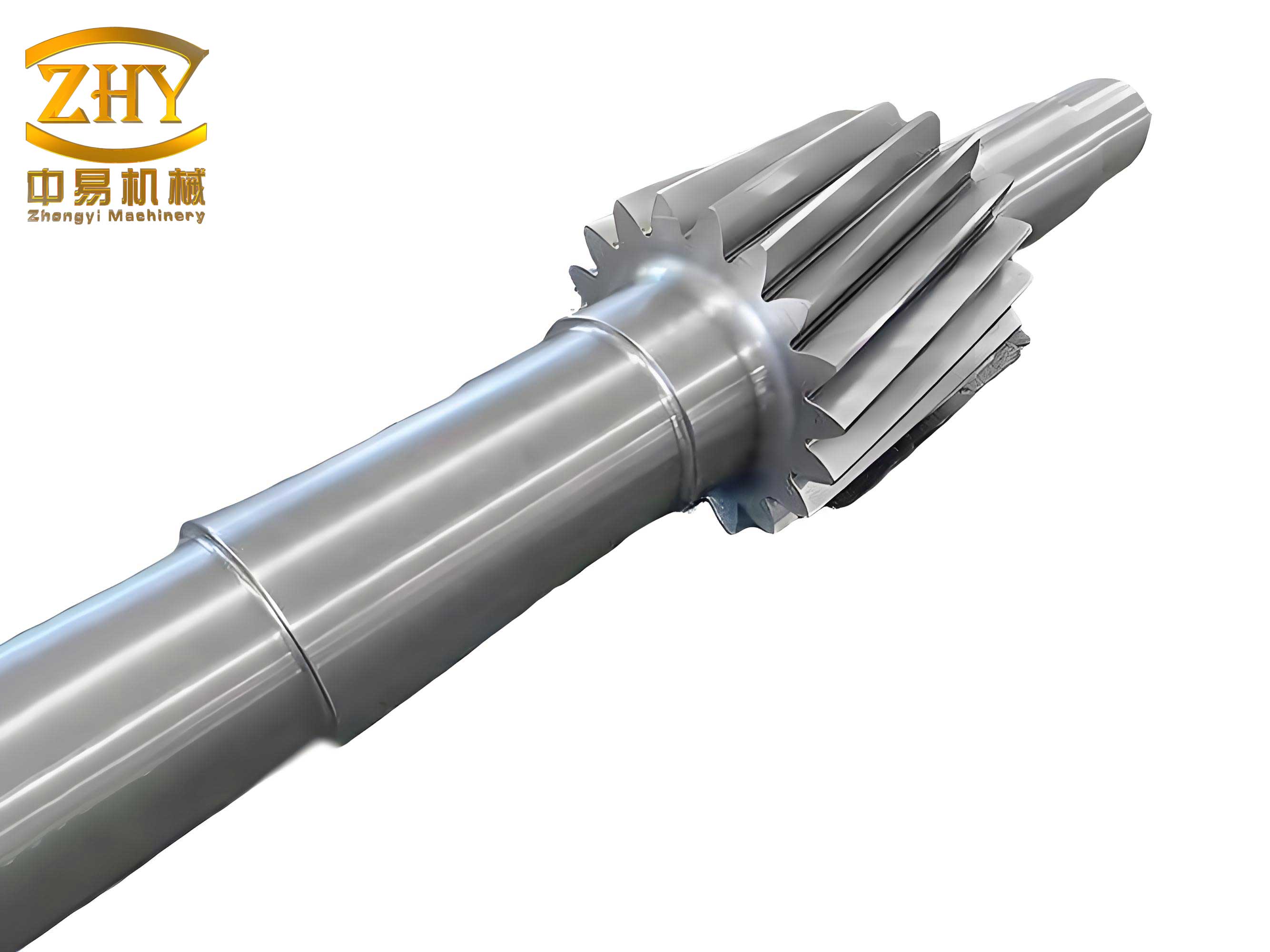
The main oil pump is a vital component, and its failure can lead to catastrophic engine seizure. The pump assembly consists of a driving gear shaft and a driven gear shaft, both manufactured from 16CrNi4MoA steel, meshing within a housing. The driven gear shaft rotates within a bronze bushing made of ZQSn10-1, with a designed radial clearance of 0.2 mm. The initial failure manifestation was always the catastrophic fracture of the driving gear shaft, accompanied by a complete seizure of the driven gear shaft within its bushing.
My investigation followed a structured forensic methodology, integrating macro-observation, detailed fractography, metallurgical examination, and surface chemical analysis. The primary objective was to decipher the sequence of events that led to the final fracture of the driving gear shaft.
Macroscopic Observations and Initial Assessment
Upon disassembling the failed pumps, the scene was consistent. The driving gear shaft had fractured at the splined section. The fracture surface was relatively flat and perpendicular to the shaft axis, but it was heavily smeared with secondary damage, obscuring original features. Crucially, the splines near the fracture were visibly twisted, indicating significant plastic deformation prior to failure. This immediate clue pointed towards a torsional overload event. Simultaneously, the driven gear shaft was irrevocably seized inside its bushing. Forcing them apart was impossible without sectioning the bushing. Once opened, both components showed severe circumferential scoring. The driven gear shaft surface exhibited two distinct, wide bands of heavy wear, while the corresponding inner surface of the bushing showed an even more pronounced blackened band. Notably, two circular, raised spots were observed on the bushing inner wall, aligned with its oil feed holes.
Detailed Fractographic Analysis of the Fractured Gear Shaft
To understand the fracture mode of the driving gear shaft, I conducted a scanning electron microscopy (SEM) examination. The entire fracture surface was covered in severe smearing and rubbing marks, a testament to the violent final moments of rotation. However, in localized areas not completely obliterated, I could identify a dimpled morphology. These dimples were elongated and aligned, characteristic of a shear mode under torsional loading. The formula for shear stress ($\tau$) in a solid circular shaft under torque ($T$) is fundamental:
$$\tau = \frac{T \cdot r}{J}$$
where $r$ is the radial distance from the center and $J$ is the polar moment of inertia. For a solid shaft of radius $R$, $J = \frac{\pi R^4}{2}$. The presence of shear dimples confirms that the ultimate failure occurred when the applied torsional stress exceeded the shear strength of the 16CrNi4MoA material. No evidence of pre-existing material defects like inclusions or cracks was found. Therefore, I concluded that the driving gear shaft failed by a single, severe event of torsional overload fracture. The twisting of the splines, quantified as approximately 45 degrees, is direct physical evidence of this overload. The question then became: what created the immense resistance that led to this overload?
Metallurgical and Tribological Examination of the Worn Interfaces
The answer lay in the interaction between the driven gear shaft and the bushing. The seizure was not instantaneous; it was the culmination of a progressive wear process. Examining the bushing’s inner surface under the SEM revealed a complex wear landscape. The severely worn black band showed deep, continuous circumferential grooves, evidence of abrasive cutting. Furthermore, there were areas with features resembling adhesive transfer, where material appeared to have been smeared, piled up, and even locally melted. Energy Dispersive X-ray Spectroscopy (EDS) spot analysis within this band confirmed the transfer of iron (Fe) from the steel gear shaft onto the copper-tin bushing surface.
| Analysis Location | C | O | P | Fe | Cu | Sn | Al | Si | Interpretation |
|---|---|---|---|---|---|---|---|---|---|
| Severe Friction Band | – | 3.73 | – | 8.07 | 78.08 | 9.75 | – | – | Base bushing composition + Fe transfer from shaft |
| Spot 1 (Black Deposit) | 0.17 | 5.15 | 5.06 | 0.39 | 71.89 | 17.35 | – | – | Oxidized/melted bushing material |
| Embedded Particle 1 | – | 73.68 | – | – | 26.32 | – | – | – | High Oxygen content, likely Al2O3 |
| Embedded Particle 2 | – | 71.93 | – | – | 28.07 | – | – | – | High Oxygen content, likely Al2O3 |
| Unworn Bushing Area | 0.34 | – | – | – | 90.00 | 9.67 | – | – | Nominal ZQSn10-1 composition |
More telling were the less severely worn areas of the bushing. Here, I found numerous hard, angular particles firmly embedded into the relatively soft bronze surface. EDS analysis identified these particles as rich in oxygen and aluminum or silicon, pointing strongly to contaminants like alumina (Al2O3) or silicon carbide (SiC). These are exceptionally hard materials commonly found in grinding dust or sand. Their presence was the smoking gun. The wear process likely initiated as a classic three-body abrasive wear mechanism. The Archard wear equation provides a foundational model for such wear:
$$V = K \frac{L \cdot s}{H}$$
where $V$ is the wear volume, $K$ is a dimensionless wear coefficient, $L$ is the normal load, $s$ is the sliding distance, and $H$ is the hardness of the softer surface (the bushing). The hard contaminant particles ($H_{particle} >> H_{bushing}$) acted as abrasives, plowing grooves in both the driven gear shaft and the bushing, increasing friction and generating wear debris.
The two mysterious raised spots on the bushing required special attention. Cross-sectional metallography of Spot 1 revealed a distinct layer of re-solidified material on top of the bushing. This layer had an equiaxed grain structure with precipitates, unlike the as-cast structure of the original bushing. Its composition was similar to the bushing but with elevated oxygen and phosphorus, indicating oxidation during a high-temperature event. Critically, beneath this deposit, the bushing surface still showed abrasive grooves. This sequence proved that severe abrasive wear and friction had already occurred, generating heat and debris, before a final thermal event caused localized melting of accumulated debris and oil in the oil hole, which then solidified to form the spot. This signifies that the final seizure was preceded by a period of intense frictional heating.
Synthesis of the Failure Mechanism and Sequence
Piecing all evidence together, I reconstructed the failure timeline. It is a chain reaction initiated by system contamination.
- Contamination Introduction: Hard, exogenous particles (Al2O3/SiC) entered the oil system, possibly through maintenance, a breached seal, or initial assembly. These particles circulated with the lubricant.
- Incipient Abrasive Wear: Particles became trapped in the close-clearance interface between the driven gear shaft and the bushing. Acting as abrasives, they began to cut into both surfaces. This three-body abrasion increased the coefficient of friction ($\mu$) and the frictional torque. The wear rate at this stage can be conceptualized by a modified form of the abrasive wear equation, accounting for particle concentration ($C_p$):
$$ \frac{dV}{dt} = K_{ab} \cdot C_p \cdot \frac{L \cdot v}{H} $$
where $v$ is the sliding velocity. - Clearance Reduction and Thermal Runaway: As wear progressed, generated metallic debris (from both the steel gear shaft and bronze bushing) mixed with the original hard particles, creating a vicious cycle. The wear debris filled the clearance, and frictional work was converted into heat. The formula for frictional power ($P_f$) is:
$$ P_f = \mu \cdot L \cdot v $$
This heat caused thermal expansion. Critically, the steel gear shaft and bronze bushing have different coefficients of thermal expansion ($\alpha$). The expansion, combined with debris accumulation, drastically reduced the operational clearance, transitioning the contact into a severe mixed regime of abrasion and adhesion. - Seizure and Torque Rise: Eventually, the interference and friction became so great that the driven gear shaft seized completely within the bushing. At this moment, the rotational resistance for the driving gear shaft spiked towards infinity. The driving gear shaft, still being powered by the engine accessory gearbox, was subjected to a massive, instantaneous torque overload.
- Fracture of the Driving Gear Shaft: The torque ($T$) applied to the driving gear shaft exceeded its ultimate torsional strength. The shear stress at the spline root (a stress concentrator, quantified by a stress concentration factor $K_t$) reached a critical value:
$$ \tau_{max} = K_t \cdot \frac{T \cdot r}{J} \geq \tau_{ultimate} $$
This resulted in a rapid, brittle-torsional overload fracture. The splines twisted plastically before final rupture, consistent with the observed 45-degree deformation.
Therefore, the fracture of the driving gear shaft was a symptom, not the cause. The root cause was the progressive abrasive wear and subsequent seizure of the driven gear shaft assembly, instigated by oil system contamination with hard foreign particles.
| Component | Primary Failure Mode | Key Evidence | Underlying Cause |
|---|---|---|---|
| Driving Gear Shaft | Torsional Overload Fracture | Twisted splines (45°), shear dimples on fracture face, no material defects. | Sudden, extreme torque due to seizure of driven assembly. |
| Driven Gear Shaft & Bushing Interface | Progressive Abrasive Wear leading to Adhesive Seizure (Scuffing) | Embedded Al2O3/SiC particles, abrasive grooves, Fe transfer, melted deposits. | Contamination of lubricant by hard, foreign particles. |
| Oil System | Contamination / Loss of Filtration Efficacy | Presence of exogenous hard particles in critical interface. | Probable ingress during maintenance, assembly, or filter bypass. |
Mathematical Modeling of the Seizure Trigger
To further solidify the analysis, I considered the thermo-mechanical conditions at seizure. The initial clearance ($C_0$) is 0.2 mm. Wear and thermal expansion reduce this. The change in radial clearance ($\Delta C$) due to thermal expansion can be approximated by:
$$ \Delta C = (\alpha_{bushing} – \alpha_{shaft}) \cdot R \cdot \Delta T $$
where $\alpha_{bushing}$ and $\alpha_{shaft}$ are the coefficients of thermal expansion for bronze and steel, $R$ is the nominal radius, and $\Delta T$ is the temperature rise at the interface. Given $\alpha_{bronze} > \alpha_{steel}$, the bushing expands more, reducing clearance. Simultaneously, wear debris of average size $d_{debris}$ accumulates. Seizure becomes imminent when the effective clearance is consumed:
$$ C_0 – \Delta C – n \cdot d_{debris} \approx 0 $$
where $n$ is an effective number of debris layers. The frictional heat generation rate is a function of the friction coefficient, which itself increases dramatically as clearance approaches zero, leading to a positive feedback loop—a thermal runaway condition. This model explains the transition from gradual wear to sudden catastrophic seizure.
Proposed Corrective and Preventive Actions
Based on this root cause analysis, I recommended a multi-pronged strategy to prevent recurrence of this specific gear shaft failure. The goal is to break the failure chain at its earliest point.
| Measure | Implementation | Intended Effect | Targeted Failure Stage |
|---|---|---|---|
| Enhanced Oil System Cleanliness Control | Strict protocols for oil changes using filtered oil; mandatory flushing after any maintenance involving system opening; improved filtration system design with finer absolute ratings. | Eliminate or drastically reduce the introduction of hard abrasive particles ($C_p \rightarrow 0$). | Stage 1: Contamination Introduction |
| Regular Condition Monitoring | Scheduled spectrometric oil analysis (SOA) to monitor wear metal (Fe, Cu, Sn) trends and detect silica/alumina contamination. | Provide early warning of abnormal wear before seizure occurs. | Stage 2 & 3: Incipient Wear |
| Design Modification: Debris-Holding Grooves | Machining small, dedicated circumferential grooves (non-pressure carrying) on the bushing’s inner wall. | Create safe reservoirs to trap and isolate wear debris and contaminant particles, preventing them from circulating in the load-bearing clearance. This alters the wear equation by effectively reducing $C_p$ in the critical zone. | Stage 2 & 3: Wear Progression |
| Material Pairing Review | Investigation into alternative bushing materials or surface coatings with higher embeddability for particles and better compatibility with the steel gear shaft under marginal lubrication. | Increase system robustness to transient contamination events. | All Stages |
The design modification of adding debris-holding grooves is particularly elegant. It acknowledges that perfect cleanliness is sometimes unattainable in service. By providing a dedicated space for contaminants, the primary running clearance is protected, significantly extending the component’s life and providing a buffer against eventual failure. The effectiveness of this modification can be conceptually assessed by considering that it increases the system’s tolerance to a certain volume of contaminant particles before the critical interface is compromised.
Conclusion and Broader Implications
This failure investigation underscores a fundamental principle in tribology and mechanical design: the failure of a robust component like a hardened steel gear shaft is often precipitated by the degradation of its interfacing partners or its operating environment. The driving gear shaft fractured due to a torsional overload, but the true origin was a tribological failure in the journal bearing supporting the driven gear shaft. The sequence—contamination, abrasive wear, clearance loss, thermal runaway, seizure, and overload—is a classic cascade that can affect many rotating systems.
The mathematical relationships governing wear, friction, heat generation, and stress are interconnected. This case highlights the importance of a systems-level approach to failure analysis. By combining detailed physical examination with tribological principles and simple engineering models, I was able to move from observing a broken gear shaft to diagnosing a lubrication system contamination issue and proposing effective, practical solutions. The implemented measures, particularly the synergistic combination of procedural controls and a simple yet intelligent design change to the bushing, have proven successful in preventing the recurrence of this specific gear shaft fracture mode in the fleet, enhancing the overall reliability and safety of the aero-engine’s lubrication system.