
The accurate prediction of dynamic behavior is paramount in the design of modern power transmission systems. Among critical components, the helical gear stands out for its ability to transmit motion smoothly and quietly under heavy loads due to the gradual engagement of its angled teeth. However, this advantage is contingent upon controlling undesirable vibrations. Excessive vibration in helical gear pairs leads to increased noise, accelerated fatigue, and can ultimately cause catastrophic failure. Modal analysis, which determines the inherent vibration properties—namely natural frequencies and mode shapes—of a structure, is a fundamental tool for dynamic design. It allows engineers to avoid resonant conditions by ensuring that excitation frequencies, such as meshing frequencies and their harmonics, do not coincide with the structure’s natural frequencies.
In contemporary research and industrial practice, Finite Element Analysis (FEA) has become the standard for performing modal analysis on complex components like helical gears. While significant work has been devoted to studying the effects of geometric parameters, material properties, and mesh density, the critical role of boundary conditions is often oversimplified. A prevalent approach in many published studies is to model the helical gear as a fixed structure by applying rigid constraints to its entire bore and keyway surfaces. This assumption, while convenient for a simplified analysis, deviates substantially from the real operational state of a gear mounted on a shaft. The actual support condition involves compliance from the shaft, bearings, and housing, which cannot be accurately represented by a perfectly rigid fixation. Furthermore, helical gears in operation are subjected to centrifugal forces due to rotation, which induces a prestress field, effectively stiffening the structure and altering its dynamic characteristics. An analysis that ignores this rotational prestress is a static modal analysis, which may not reflect the true dynamic response under operating speeds.
This work, therefore, focuses on investigating the significant impact of boundary constraint conditions on the dynamic modal analysis of a helical gear. Using a coupled computer-aided design (CAD) and FEA workflow, we establish a detailed three-dimensional model of a helical gear and subject it to prestressed modal analysis under various, more realistic boundary conditions. The primary objective is to quantify the discrepancies in predicted natural frequencies and mode shapes between the commonly used idealized constraints and constraints that better approximate actual mounting scenarios. The findings underscore the necessity of carefully considering boundary condition representation to enhance the predictive accuracy of finite element models in the dynamic design and analysis of helical gear systems.
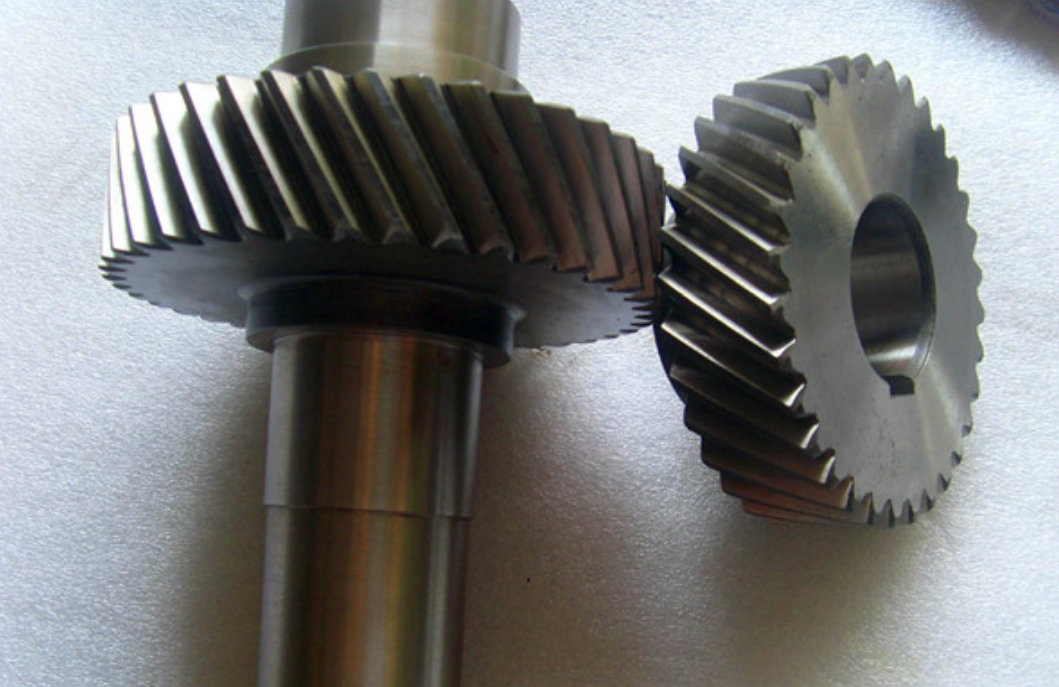
Theoretical Foundation for Dynamic Analysis of a Rotating Helical Gear
The dynamic behavior of a helical gear, or any elastic structure, is governed by the principles of structural dynamics. When discretized using the finite element method, the equation of motion for the gear system under general forcing can be expressed as:
$$ \mathbf{M}\{\ddot{u}(t)\} + \mathbf{C}\{\dot{u}(t)\} + \mathbf{K}\{u(t)\} = \{F(t)\} $$
where $\mathbf{M}$, $\mathbf{C}$, and $\mathbf{K}$ are the global mass, damping, and stiffness matrices of the helical gear finite element model, respectively. The vectors $\{u(t)\}$, $\{\dot{u}(t)\}$, and $\{\ddot{u}(t)\}$ represent nodal displacements, velocities, and accelerations. $\{F(t)\}$ is the vector of time-varying external forces, which includes meshing forces, input torque fluctuations, and other operational loads.
For the purpose of extracting natural frequencies and mode shapes—the core of modal analysis—we consider the undamped, free-vibration condition. This simplification is standard practice, as damping typically has a minor effect on the natural frequencies and mode shapes of structures like a helical gear. Setting the damping matrix $\mathbf{C}$ and external force vector $\{F(t)\}$ to zero yields the undamped free-vibration equation:
$$ \mathbf{M}\{\ddot{u}(t)\} + \mathbf{K}\{u(t)\} = \{0\} $$
Assuming a harmonic solution of the form $\{u(t)\} = \{\phi\} e^{i \omega t}$, where $\{\phi\}$ is a vector of nodal amplitudes (the mode shape) and $\omega$ is the circular frequency of vibration, we arrive at the classical eigenvalue problem:
$$ (\mathbf{K} – \omega^2 \mathbf{M}) \{\phi\} = \{0\} $$
The solution to this equation yields a set of eigenvalues, $\omega_i^2$ ($i = 1, 2, …, n$), and their corresponding eigenvectors, $\{\phi_i\}$. The natural frequency $f_i$ for mode $i$ is related to the eigenvalue by $f_i = \omega_i / (2\pi)$. The eigenvector $\{\phi_i\}$ describes the spatial deformation pattern of the helical gear when vibrating at that particular frequency.
When analyzing a rotating helical gear, the centrifugal force due to angular velocity induces a initial stress field within the gear body. This prestress modifies the effective stiffness of the structure. Small deformations from this prestressed state are governed by a tangent stiffness matrix $\mathbf{K}_T$, which is the sum of the conventional elastic stiffness matrix $\mathbf{K}_E$ and a stress stiffness matrix $\mathbf{K}_\sigma$ that depends on the initial stress state $\sigma_0$:
$$ \mathbf{K}_T = \mathbf{K}_E + \mathbf{K}_\sigma(\sigma_0) $$
For a prestressed modal analysis, the eigenvalue problem is reformulated using this tangent stiffness matrix:
$$ (\mathbf{K}_T – \omega^2 \mathbf{M}) \{\phi\} = \{0\} $$
Therefore, the natural frequencies and mode shapes of a rotating helical gear are dependent not only on its geometry and material but also on the operational speed through the stress-stiffening effect captured in $\mathbf{K}_\sigma$.
Finite Element Modeling and Analysis Methodology
The process for conducting the dynamic modal analysis of the helical gear involves several systematic steps, from geometric creation to result extraction. A parametric approach was adopted to ensure model consistency and facilitate future studies.
Geometric Modeling and Discretization
The three-dimensional solid model of the subject helical gear was created using CATIA V5 software. The key geometric parameters are defined in the table below:
| Parameter | Symbol | Value | Unit |
|---|---|---|---|
| Normal Module | $m_n$ | 2.0 | mm |
| Number of Teeth | $z$ | 24 | – |
| Helix Angle | $\beta$ | 10 | ° (Right Hand) |
| Face Width | $b$ | 20 | mm |
| Bore Diameter | $d_b$ | 20 | mm |
| Keyway Width | $w_k$ | 6 | mm |
The model was exported in a neutral format (IGES) and imported into the ANSYS Workbench environment. The material assigned was AISI 8620 steel (a common gear steel analogous to 20CrMnTi), with the following linear isotropic properties: Young’s Modulus $E = 200$ GPa, Poisson’s Ratio $\nu = 0.3$, and Density $\rho = 7850$ kg/m³.
The gear body was meshed using higher-order 3D solid elements (SOLID186 in ANSYS), which are well-suited for modeling complex geometries and capturing stress gradients. A convergence study was performed to ensure the results were mesh-independent. The final mesh consisted of approximately 850,000 nodes and 550,000 elements, with refined elements in the root fillet regions and around the keyway where stress concentrations are expected.
Boundary Condition Definitions
The definition of boundary constraints is the central variable in this investigation. Three distinct constraint types were applied to the helical gear model to simulate different levels of mounting realism.
| Constraint Type | Description | Physical Justification / Typical Use |
|---|---|---|
| Type 1: Full Fixity | All degrees of freedom (DOFs: UX, UY, UZ, ROTX, ROTY, ROTZ) are constrained on the entire cylindrical bore surface and on both lateral sides of the keyway. | This represents an idealized, perfectly rigid connection to an infinite-stiffness shaft and housing. It is computationally simple and commonly found in literature for “free-free” mode comparison or when boundary effects are ignored. |
| Type 2: Partial Fixity (Single Key Side) | All DOFs are constrained on the entire bore surface, but only on one lateral side of the keyway (simulating the driving side of the key in transmission). | This condition acknowledges that the key primarily transmits torque through one side. It is slightly more realistic than Type 1 but still assumes a rigid shaft connection. |
| Type 3: Simulated Bearing Support | This model attempts to more closely approximate a real mounting. The cylindrical bore surface and one keyway side have radial constraints (UX, UY fixed) but are free axially (UZ) and in rotation. Additionally, axial constraints (UZ fixed) are applied to annular ring areas on both gear faces, representing contact with shaft shoulders or spacers. | This is the most realistic condition modeled. It allows for the gear to “float” axially on the shaft while being radially and torsionally located by the key and radially supported by the bearings at the simulated shoulder locations. It introduces compliance into the system. |
Analysis Procedure: Prestressed Modal Analysis
A two-step analysis sequence was executed in ANSYS for each boundary condition:
Step 1: Static Structural Analysis for Prestress. A constant rotational velocity of $\Omega = 200$ rad/s (approximately 1910 RPM) was applied to the entire helical gear model. A centrifugal force load was automatically calculated from this velocity. This analysis solves for the steady-state stress and strain field $\sigma_0$ induced by the rotation. The “Prestress Effects” option was activated to store this stress state.
Step 2: Modal Analysis with Prestress. Following the static analysis, a standard modal analysis was performed. The prestress state from Step 1 was imported, and the analysis was configured to use the tangent stiffness matrix $\mathbf{K}_T$. The Block Lanczos eigenvalue extraction method was employed due to its efficiency and reliability for large, symmetric models. The first 20 modes were extracted to ensure capture of all relevant low- and mid-frequency modes of the helical gear.
Results and Comparative Discussion
The results clearly demonstrate that the boundary constraint condition has a profound and non-negligible impact on the predicted dynamic characteristics of the helical gear. The differences manifest in both the quantitative values of natural frequencies and the qualitative nature of the mode shapes.
Analysis of Natural Frequencies
The first ten natural frequencies for the helical gear under the three constraint types are tabulated below. The percentage difference is calculated relative to Constraint Type 3, which is taken as the most realistic baseline.
| Mode Number | Constraint Type 1 (Hz) | Constraint Type 2 (Hz) | Constraint Type 3 (Hz) | Error: Type 1 vs Type 3 | Error: Type 2 vs Type 3 |
|---|---|---|---|---|---|
| 1 | 31,906 | 30,766 | 11,239 | +184% | +174% |
| 2 | 37,282 | 36,467 | 30,191 | +23.5% | +20.8% |
| 3 | 37,307 | 37,055 | 37,171 | +0.37% | -0.31% |
| 4 | 40,044 | 38,130 | 39,325 | +1.83% | -3.04% |
| 5 | 43,600 | 42,135 | 42,650 | +2.23% | -1.21% |
| 6 | 43,639 | 43,004 | 43,078 | +1.30% | -0.17% |
| 7 | 46,362 | 43,041 | 45,309 | +2.33% | -5.01% |
| 8 | 47,122 | 44,959 | 47,987 | -1.80% | -6.31% |
| 9 | 57,309 | 56,091 | 55,878 | +2.56% | +0.38% |
| 10 | 58,082 | 56,607 | 56,783 | +2.29% | -0.31% |
The data reveals several critical trends:
1. Dramatic Impact on Low-Order Modes: The most striking observation is the colossal discrepancy in the first natural frequency. Constraint Types 1 and 2 predict a value nearly three times higher than Type 3. This is because the first mode in the more realistic Type 3 condition is a rigid-body-like mode involving a “pendulum” swing of the gear about the axial constraints, which is extremely soft. The fully-fixed conditions (Types 1 & 2) completely suppress this motion, resulting in the first flexible mode (often a circumferential or torsional mode) being identified as Mode 1 at a much higher frequency.
2. Convergence at Higher Modes: For modes 3 and above, the frequencies predicted by all three constraint types begin to converge, with percentage errors generally falling below 3-6%. This indicates that the higher-frequency, localized deformation modes (like tooth bending and web distortion) are less sensitive to the global boundary constraints at the bore and are primarily governed by the local stiffness of the helical gear body itself.
3. Effect of Constraint Stiffness: In general, Constraint Type 1 (full fixity) produces the highest frequencies for a given mode number, followed by Type 2, with Type 3 yielding the lowest. This aligns perfectly with structural dynamics theory: increasing the restraint stiffness at the boundaries increases the overall system stiffness ($\mathbf{K}$), thereby raising the natural frequencies, as seen from the eigenvalue equation $\omega_i^2 = \lambda_i(\mathbf{K}, \mathbf{M})$.
Analysis of Mode Shapes
The boundary conditions not only shift frequencies but can also alter the sequence and nature of the mode shapes. The primary mode shapes identified for the helical gear are categorized below:
| Mode Shape Designation | Description | Typical Occurrence (Constraint Type) |
|---|---|---|
| Rigid-Body Swing | The gear oscillates as a pendulum, swinging about the axial constraint points. This is a low-stiffness mode. | Mode 1 (Type 3) |
| Circumferential (Umbrella) Mode | The gear expands and contracts uniformly in the radial direction, akin to a breathing mode. Often involves symmetric radial deformation of the rim. | Mode 1 (Types 1 & 2), Mode 4 (Type 1) |
| Torsional Mode | One face of the gear rotates relative to the other about the gear axis. This is a shearing deformation of the web. | Modes 2 & 3 (Type 1), Modes 4 & 5 (Type 3) |
| Bending (Cantilever) Mode | The gear axis bends, causing the rim to deflect laterally. This becomes possible when constraints are not perfectly rigid. | Modes 2 & 3 (Type 3) |
| Diametral (2-Node) Mode | The rim deforms into an oval shape (2 diametral nodes). This is a common rim-dominated mode. | Higher Modes (All Types) |
| Tooth-Based Local Modes | Localized vibration of individual teeth or groups of teeth, largely independent of the gear body. | Highest Extracted Modes |
Comparison of Mode Shape Sequences:
For Constraint Type 1, the sequence was: Mode 1 – Circumferential; Modes 2 & 3 – Torsional; Mode 4 – Circumferential (higher order); Mode 5 – Diametral Bending.
For Constraint Type 3, the sequence was fundamentally different: Mode 1 – Rigid-Body Swing; Modes 2 & 3 – Bending (about two perpendicular axes); Modes 4 & 5 – Torsional.
This shift highlights a critical point: the “first flexible mode” of the gear system is entirely dependent on the mounting. A designer relying on a fully-fixed model (Type 1) would be concerned with a circumferential mode at ~32 kHz, while the actual system (Type 3) might first exhibit a problematic bending mode at ~30 kHz, which could be excited by misalignment or radial load components. This has direct implications for resonance avoidance strategies.
Parametric Study and Further Discussion
To generalize the findings, one must consider the interaction between boundary conditions and key helical gear parameters. The sensitivity analysis suggests the following relationships:
Helix Angle ($\beta$): The helix angle influences the axial coupling of forces and the torsional stiffness of the teeth. A higher helix angle generally increases the axial thrust and may slightly alter the participation of axial vs. torsional components in the global modes. However, the fundamental trend regarding boundary condition sensitivity remains valid.
Face Width-to-Diameter Ratio ($b/d$): This ratio significantly affects the gear’s bending stiffness. A stubby gear (low ratio) will have higher bending stiffness, potentially making its bending modes less sensitive to boundary support stiffness. A long, narrow gear (high ratio) will be more flexible in bending, and its low-frequency bending modes will be exquisitely sensitive to the constraint conditions at its ends, much like a beam on supports.
Web/Plate Design: The geometry of the central web (solid, webbed, or spoked) controls the torsional and bending stiffness of the gear body. A lightweight webbed design will have lower natural frequencies overall and may see a greater relative frequency shift between constraint types for web-dominated modes (like torsion) compared to a solid design.
The underlying mechanism can be summarized by considering the total potential energy of the vibrating helical gear system. It comprises the strain energy $U_s$ of the gear body and the potential energy $U_b$ stored in the elastic boundary supports (if modeled as springs).
$$ \Pi_{total} = U_s + U_b = \frac{1}{2} \{u\}^T \mathbf{K}_E \{u\} + \frac{1}{2} \{u_b\}^T \mathbf{K}_b \{u_b\} $$
where $\mathbf{K}_b$ is the stiffness matrix of the boundary supports. In the fully-fixed model (Types 1 & 2), $\mathbf{K}_b \to \infty$, effectively removing $U_b$ and constraining $\{u_b\}=0$. In the compliant support model (Type 3), $\mathbf{K}_b$ is finite, allowing boundary motion $\{u_b\}$ and storing energy $U_b$. This reduces the overall system stiffness for modes that involve motion at the boundaries, leading to lower natural frequencies, precisely as observed.
Engineering Significance and Design Recommendations
The implications of this study are direct and practical for engineers involved in the design and analysis of helical gear transmissions.
- Resonance Avoidance: An inaccurate boundary condition model can lead to a severe miscalculation of the critical speed map. A system believed to be safe from resonance (based on a fully-fixed model) might actually have a dangerous low-frequency bending mode that coincides with a 2x or 3x rotational speed excitation. This is particularly crucial for high-speed helical gear applications.
- Dynamic Load and Stress Prediction: Forced-response analyses (e.g., harmonic response) that use modal superposition are highly dependent on accurate natural frequencies and mode shapes. Errors in these inputs propagate into incorrect predictions of dynamic amplification factors and operational stress levels.
- Noise and Vibration Troubleshooting: When correlating FEA models with experimental modal tests, using realistic boundary conditions is essential for a meaningful comparison. The mode shapes from a test, especially the low-order ones, will match a compliant-boundary FEA model far better than a fixed-boundary one.
Recommended Modeling Strategy:
For a high-fidelity dynamic analysis of a helical gear, the following approach is recommended:
- Model the Mounting System: Whenever possible, include simplified models of the shaft section and bearing supports in the analysis. Use spring elements or flexible connector elements to represent bearing stiffnesses.
- If Isolating the Gear is Necessary: If a component-mode analysis is required, apply constraints that reflect the physical interface. For a helical gear keyed to a shaft and located between shoulders, use a combination of:
- Radial constraints on the bore and key side.
- Axial constraints on annular areas of the side faces corresponding to shoulder contact.
- Release all rotational degrees of freedom unless a shrink fit is specified.
- Always Perform a Prestressed Analysis for Rotating Components: For operational speeds above ~20% of the first natural frequency, the stress-stiffening effect should be included, as it can cause frequency shifts on the order of several percent.
- Perform a Boundary Condition Sensitivity Study: As demonstrated, assess the range of possible natural frequencies by analyzing extreme cases (fully fixed vs. very compliant) to understand the potential error band in the predictions.
Conclusion
This investigation conclusively demonstrates that boundary constraint conditions exert a profound and fundamental influence on the outcomes of a dynamic modal analysis for a helical gear. The common practice of applying fully-fixed constraints to the bore and keyway, while computationally expedient, introduces significant inaccuracies, particularly for the lower-order global modes of vibration. These low-frequency modes, which include rigid-body swings and gear body bending, are the most susceptible to excitation by operational forces and are critical for resonance avoidance.
The results show discrepancies exceeding 180% for the first natural frequency when comparing idealized fixed constraints to a more realistic compliant support model. Furthermore, the sequence and nature of the dominant mode shapes are altered, which can lead to incorrect identification of critical modes in the design phase. Higher-frequency modes, typically associated with local tooth or rim deformation, show greater consistency across different boundary conditions.
Therefore, to enhance the predictive accuracy and reliability of finite element models in the dynamic design of helical gear systems, it is imperative to move beyond simplified boundary conditions. Engineers should strive to incorporate representations of the actual mounting compliance, either by modeling adjacent components or by applying judiciously selected constraint sets that mimic the physical interfaces. Coupled with the inclusion of rotational prestress effects, this approach will yield a more truthful representation of the helical gear’s dynamic characteristics, leading to more robust, quiet, and reliable gear design.