
The pursuit of higher performance, reliability, and efficiency in mechanical power transmission systems is a constant engineering endeavor. Among the core components, the helical gear stands out due to its superior meshing characteristics, high load-bearing capacity, and smooth, quiet operation facilitated by gradual tooth engagement. These attributes make it indispensable in demanding sectors such as aerospace, high-speed rail, and marine propulsion. A critical design parameter that significantly influences the performance envelope of a helical gear pair is the application of profile shift, or modification. This technique involves altering the standard tool position during gear cutting, effectively shifting the tooth profile relative to the reference pitch circle. The strategic use of profile shift modification offers numerous advantages, including the prevention of undercutting in pinions with low tooth counts, adjustment of the center distance without changing the gear ratio, and most importantly, the potential to optimize the load distribution across the tooth flank to enhance strength and reduce stress concentration.
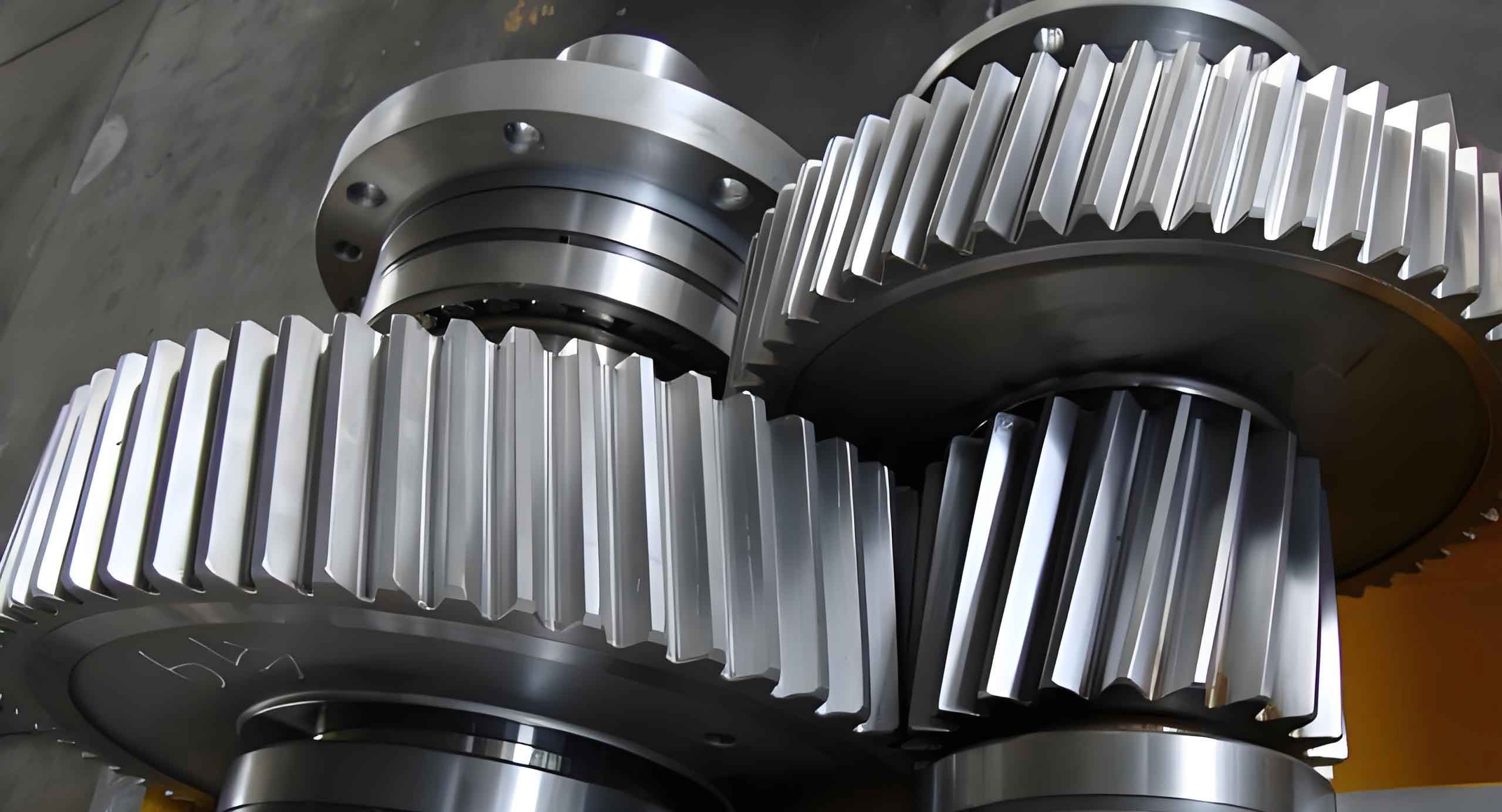
However, any alteration in the gear geometry inevitably impacts its dynamic behavior. The primary internal excitation in a gear transmission system is the time-varying meshing stiffness (TVMS). As the number of tooth pairs in contact fluctuates during the meshing cycle, the effective stiffness at the mesh point varies periodically. This stiffness fluctuation is a fundamental source of vibration and dynamic load, which can lead to increased noise, reduced transmission accuracy, and accelerated fatigue failure. Therefore, accurately predicting the TVMS under different design conditions is paramount for dynamic analysis. While extensive research has been conducted on the TVMS of standard helical gears, the specific effects of profile shift modification on this key parameter and the consequent dynamic characteristics are not yet fully systematized. This knowledge gap makes it challenging to provide clear guidelines for the optimal design of modified helical gear transmissions.
This work aims to bridge this gap by conducting a comprehensive analytical investigation into the influence of various profile shift designs on the dynamic performance of helical gear systems. The core of our methodology involves two integrated analytical models. First, we develop a refined analytical model to compute the TVMS of a profile-shifted helical gear pair. This model is based on the potential energy method and the slice theory, carefully incorporating the geometric changes induced by modification, such as altered addendum, dedendum, working pressure angle, and contact ratio. Second, we establish an eight-degree-of-freedom, lumped-parameter dynamic model of the gear transmission system using Lagrange’s equations. This model accounts for the transverse, axial, and torsional vibrations induced by the helical angle and the changing center distance. The calculated TVMS for different modification cases is then introduced as a parametric excitation into this dynamic model. By solving the equations of motion, we obtain the dynamic response, primarily analyzed through the dynamic transmission error (DTE) and the dynamic mesh force. We systematically compare the responses of standard and modified gear pairs, quantify the changes using statistical indicators, and elucidate the underlying mechanisms linking profile shift, meshing stiffness, and dynamic behavior. The findings from this study are intended to serve as a valuable reference for engineers in designing and optimizing helical gear transmissions for enhanced dynamic performance.
Theoretical Foundation: Modeling Stiffness and Dynamics
1. Geometric Analysis of Profile-Shifted Helical Gears
Profile shift modification alters the basic dimensions of a gear tooth. For a helical gear, the modification is typically defined in the normal plane. The key geometric parameters for a modified gear differ from those of a standard gear. Let \( x_{n1} \) and \( x_{n2} \) be the normal profile shift coefficients of the pinion and gear, respectively. The modified tooth dimensions are calculated as follows:
The addendum and dedendum heights are given by:
$$ h_{ai} = (h_{a}^* + x_{ni} – \Delta y_n)m_n $$
$$ h_{fi} = (h_{a}^* + c^* – x_{ni})m_n $$
where \( h_{a}^* \) is the addendum coefficient, \( c^* \) is the bottom clearance coefficient, \( \Delta y_n \) is the addendum reduction coefficient, \( m_n \) is the normal module, and the subscript \( i = 1, 2 \) denotes the pinion and gear.
The operating center distance \( a’ \) and the operating transverse pressure angle \( \alpha_t’ \) are no longer equal to those of the standard gear pair. They must satisfy the following relations:
$$ a’ = \frac{m_t (z_1 + z_2) \cos \alpha_{0t}}{2 \cos \alpha_t’} $$
$$ \text{inv} \alpha_t’ = \frac{2 \tan \alpha_{0t} (x_{n1} + x_{n2})}{z_1 + z_2} + \text{inv} \alpha_{0t} $$
Here, \( m_t \) is the transverse module, \( z_1, z_2 \) are the tooth numbers, \( \alpha_{0t} \) is the standard transverse pressure angle, and inv denotes the involute function \(\text{inv} \alpha = \tan \alpha – \alpha\).
The contact ratio is a crucial parameter affecting TVMS. The total contact ratio \( \varepsilon_{\gamma} \) for a helical gear is the sum of the transverse contact ratio \( \varepsilon_{\alpha} \) and the face contact ratio \( \varepsilon_{\beta} \). Modification primarily affects \( \varepsilon_{\alpha} \), which is calculated based on the modified tip diameters and the length of the path of contact.
2. Analytical Calculation of Time-Varying Meshing Stiffness
We employ the potential energy method combined with the slice theory to calculate the TVMS of a profile-shifted helical gear pair. The gear tooth is considered as a non-uniform cantilever beam. The total mesh stiffness is composed of five components: Hertzian contact stiffness \( k_h \), bending stiffness \( k_b \), shear stiffness \( k_s \), axial compressive stiffness \( k_a \), and fillet foundation stiffness \( k_f \).
For a single tooth pair in contact, the mesh stiffness \( k_{pair} \) is derived from the series connection of these components for both the pinion and gear:
$$ \frac{1}{k_{pair}} = \frac{1}{k_{h}} + \sum_{i=1}^{2} \left( \frac{1}{k_{b,i}} + \frac{1}{k_{s,i}} + \frac{1}{k_{a,i}} + \frac{1}{k_{f,i}} \right) $$
The formulas for these stiffness components, derived using the potential energy principle for a slice of the helical gear tooth, are summarized below. The calculation involves integration along the tooth profile from the start of active profile (SAP) to the tip.
Hertzian Contact Stiffness:
Represents the local contact deformation at the point of contact.
$$ k_h = \frac{\pi E L}{4(1-\nu^2)} $$
where \( E \) is Young’s modulus, \( L \) is the face width, and \( \nu \) is Poisson’s ratio.
Bending Stiffness:
Accounts for the energy due to bending moment.
$$ \frac{1}{k_b} = \int_{-\alpha_1}^{\alpha_2} \frac{3\{1+\cos\alpha_1′[(\alpha_2-\alpha)\sin\alpha – \cos\alpha]\}^2(\alpha_2-\alpha)\cos\alpha}{2EL[\sin\alpha + (\alpha_2-\alpha)\cos\alpha]^3} \, d\alpha $$
Shear Stiffness:
Accounts for the energy due to shear force.
$$ \frac{1}{k_s} = \int_{-\alpha_1}^{\alpha_2} \frac{1.2(1+\nu)(\alpha_2-\alpha)\cos\alpha \cos^2\alpha_1′}{EL[\sin\alpha + (\alpha_2-\alpha)\cos\alpha]} \, d\alpha $$
Axial Compressive Stiffness:
Accounts for the energy due to axial compressive force.
$$ \frac{1}{k_a} = \int_{-\alpha_1}^{\alpha_2} \frac{(\alpha_2-\alpha)\cos\alpha \cos^2\alpha_1′}{2EL[\sin\alpha + (\alpha_2-\alpha)\cos\alpha]} \, d\alpha $$
Fillet Foundation Stiffness:
Accounts for the deformation of the gear body at the tooth root. It is often calculated using an empirical formula based on a parabolic model of the gear body:
$$ \frac{1}{k_f} = \frac{\cos^2 \alpha_m}{EL} \left[ L^*\left(\frac{\mu_f}{S_f}\right)^2 + M^*\left(\frac{\mu_f}{S_f}\right) + P^*(1+Q^*\tan^2\alpha_m) \right] $$
In these formulas, \( \alpha_2 \) is the angle from the tooth centerline to the tip, \( \alpha_1′ \) is the pressure angle at the load application point, and \( \alpha \) is the integration variable representing the pressure angle along the tooth profile. \( L^*, M^*, P^*, Q^* \) are coefficients dependent on the tooth geometry.
The total TVMS \( k_{total}(t) \) for the gear pair is the sum of the stiffnesses of all tooth pairs in simultaneous contact. For a helical gear with a total contact ratio \( \varepsilon_{\gamma} \) between 2 and 3, the meshing cycle includes both double-tooth and triple-tooth contact zones. The total stiffness is calculated by summing the stiffness contributions from 2 or 3 tooth pairs in these respective zones.
$$ k_{total}(t) =
\begin{cases}
\sum_{i=1}^{2} k_{pair,i}(t) & \text{during double-tooth contact} \\
\sum_{i=1}^{3} k_{pair,i}(t) & \text{during triple-tooth contact}
\end{cases} $$
3. Dynamic Model of the Helical Gear System
To analyze the dynamic response, we establish an 8-DOF lumped-parameter model for the pinion-gear system. The model considers three translational motions (x, y, z) and one rotational motion (θ) for each gear. The generalized coordinate vector is defined as:
$$ \mathbf{q} = [x_p, y_p, z_p, \theta_p, x_g, y_g, z_g, \theta_g]^T $$
where subscripts \( p \) and \( g \) denote the pinion and gear, respectively. The x and y directions are in the transverse plane, and the z-direction is along the axis of rotation. The equations of motion are derived using Lagrange’s equation:
$$ \frac{d}{dt}\left( \frac{\partial L}{\partial \dot{\mathbf{q}}} \right) – \frac{\partial L}{\partial \mathbf{q}} + \frac{\partial D}{\partial \dot{\mathbf{q}}} = \mathbf{Q} $$
where \( L = T – V \) is the Lagrangian (kinetic energy \( T \) minus potential energy \( V \)), \( D \) is the Rayleigh dissipation function representing damping, and \( \mathbf{Q} \) is the generalized force vector.
The main source of excitation is the dynamic mesh force \( F_m \), which is a function of the TVMS \( k_m(t) \), mesh damping \( c_m \), and the dynamic transmission error (DTE) along the line of action.
$$ F_m = k_m(t) \cdot e_{DTE} + c_m \cdot \dot{e}_{DTE} $$
The DTE, which represents the displacement deviation from perfect kinematic motion, is calculated considering the gear rotations and translational vibrations:
$$ e_{DTE} = \left( r_{bp}\theta_p – r_{bg}\theta_g + (x_p – x_g)\cos\alpha_t’ + (y_p – y_g)\sin\alpha_t’ \right) \cos\beta_b $$
where \( r_{b} \) is the base circle radius and \( \beta_b \) is the base helix angle. The component \( \sin\beta_b \) relates to the axial force generation.
The mesh damping \( c_m \) is estimated as \( c_m = 2\xi \sqrt{m_e \bar{k}_m} \), where \( \xi \) is the damping ratio, \( m_e \) is the equivalent mass \( \left( m_e = \frac{m_p m_g}{m_p + m_g} \right) \), and \( \bar{k}_m \) is the average TVMS over one mesh cycle.
The final system of equations of motion can be written in matrix form as:
$$ \mathbf{M}\ddot{\mathbf{q}} + \mathbf{C}\dot{\mathbf{q}} + \mathbf{K}(t)\mathbf{q} = \mathbf{F}_{ext} + \mathbf{F}_{mesh}(\mathbf{q}, \dot{\mathbf{q}}, t) $$
where \( \mathbf{M} \), \( \mathbf{C} \), and \( \mathbf{K} \) are the mass, damping, and stiffness matrices, respectively. \( \mathbf{K}(t) \) contains the time-varying mesh stiffness \( k_m(t) \). \( \mathbf{F}_{ext} \) includes the input torque \( T_p \) and output load torque \( T_g \). \( \mathbf{F}_{mesh} \) is the nonlinear mesh force vector derived from \( F_m \).
To quantify the dynamic behavior, we analyze the time-domain response of the dynamic mesh force and its frequency spectrum. Furthermore, we employ statistical indicators to evaluate the overall vibration level and the impulsiveness of the signal. The Root Mean Square (RMS) and Kurtosis (KV) are used:
$$ X_{RMS} = \sqrt{\frac{1}{N}\sum_{i=1}^{N} x_i^2} $$
$$ X_{KV} = \frac{1}{N}\sum_{i=1}^{N} \left( \frac{x_i – \bar{x}}{\sigma} \right)^4 $$
where \( \bar{x} \) is the mean, \( \sigma \) is the standard deviation, and \( N \) is the number of data points. A normalized change rate \( Y_S \) for these indicators is defined to compare modified designs against the standard design:
$$ Y_S = \frac{Y_i – Y_0}{Y_0} \times 100\% $$
where \( Y_i \) is the indicator value for the modified design and \( Y_0 \) is for the standard design.
Analysis of Modification Effects on Dynamic Characteristics
1. System Parameters and Case Design
We analyze a single-stage helical gear transmission. The basic geometric and material parameters are listed in Table 1.
| Parameter | Pinion | Gear | Unit |
|---|---|---|---|
| Normal Module, \( m_n \) | 5.5 | mm | |
| Number of Teeth, \( z \) | 17 | 107 | – |
| Face Width, \( L \) | 70 | mm | |
| Helix Angle (at Ref. Circle), \( \beta \) | 17 | ° | |
| Normal Pressure Angle, \( \alpha_n \) | 20 | ° | |
| Addendum Coefficient, \( h_a^* \) | 1.0 | – | |
| Bottom Clearance Coefficient, \( c^* \) | 0.25 | – | |
| Young’s Modulus, \( E \) | 2.06e11 | Pa | |
| Poisson’s Ratio, \( \nu \) | 0.3 | – | |
The operating conditions are set as: pinion speed \( n_p = 1000 \, \text{rpm} \), input torque \( T_p = 1000 \, \text{N·m} \), and output torque \( T_g = 6294 \, \text{N·m} \). To investigate the effect of profile shift, five distinct modification cases are designed, as shown in Table 2. Case 3 represents the standard (non-modified) gear pair for baseline comparison.
| Case | Description | Pinion Shift \( x_{n1} \) | Gear Shift \( x_{n2} \) | Sum \( x_{n\Sigma} \) |
|---|---|---|---|---|
| 1 | Positive Modification (Both +) | 0.1 | 0.3 | 0.4 |
| 2 | Mixed Modification (Pinion -, Gear +) | -0.1 | 0.3 | 0.2 |
| 3 | Standard (No Modification) | 0 | 0 | 0 |
| 4 | Negative Modification (Both -) | -0.1 | -0.3 | -0.4 |
| 5 | Balanced Negative Modification | -0.2 | -0.2 | -0.4 |
2. Influence on Time-Varying Meshing Stiffness
The calculated TVMS for one mesh period under the five cases is plotted. A clear trend is observed. Compared to the standard helical gear pair (Case 3), gear pairs with a positive sum of modification coefficients \( x_{n\Sigma} > 0 \) (Cases 1 & 2) exhibit an overall reduction in the magnitude of TVMS. Conversely, gear pairs with a negative sum \( x_{n\Sigma} < 0 \) (Cases 4 & 5) show a significant increase in the TVMS magnitude.
This phenomenon is directly linked to the change in the transverse contact ratio \( \varepsilon_{\alpha} \). Positive modification increases the operating pressure angle \( \alpha_t’ \), which effectively shortens the path of contact. This leads to a decrease in \( \varepsilon_{\alpha} \). Since the face contact ratio \( \varepsilon_{\beta} \) remains constant, the total contact ratio \( \varepsilon_{\gamma} \) decreases. A lower contact ratio means the proportion of the meshing cycle spent in the triple-tooth-contact zone (with higher stiffness) is reduced, while the double-tooth-contact zone (with lower stiffness) is extended. The net result is a lower average mesh stiffness and a reduced peak-to-peak variation. The relationship between the operating pressure angle and path of contact can be expressed as:
$$ g_{\alpha} = r_{a1}^2 – r_{b1}^2 + r_{a2}^2 – r_{b2}^2 – a’\sin\alpha_t’ $$
Negative modification has the opposite effect, decreasing \( \alpha_t’ \), lengthening the path of contact, increasing \( \varepsilon_{\alpha} \) and \( \varepsilon_{\gamma} \), and consequently raising the average and peak values of the TVMS.
3. Dynamic Response Analysis
The TVMS for each case is fed into the 8-DOF dynamic model. The dynamic mesh force is obtained by solving the equations of motion numerically. The time-domain and frequency-domain responses are analyzed.
Time-Domain Response: The time-history of the dynamic mesh force for a positive modification case (lower stiffness) shows a noticeable reduction in the amplitude of fluctuation compared to the standard case. The peaks and valleys of the force waveform are lower. This indicates that the lower stiffness excitation generates smaller dynamic loads. For a negative modification case (higher stiffness), the opposite is true: the force fluctuation amplitude increases, leading to higher dynamic loads.
Frequency-Domain Response: The frequency spectrum of the dynamic mesh force reveals the mesh frequency \( f_m \) and its harmonics. The TVMS itself acts as a parametric excitation. In the spectrum of the mesh force for a positively modified helical gear, the amplitudes at the mesh frequency and its harmonics are generally lower than those of the standard gear. Furthermore, the sidebands around these frequencies appear to decay more rapidly. This is because the reduced stiffness and altered contact ratio not only lower the excitation level but also change the modulation characteristics of the signal. For negatively modified gears, the spectrum shows higher amplitudes at the mesh frequency and richer sideband structures, indicating a stronger and more complex dynamic interaction.
Quantitative Assessment via Statistical Indicators: To systematically compare the dynamic performance, the RMS and Kurtosis of the dynamic mesh force are calculated for all cases. The normalized change rates \( Y_S \) for these indicators are summarized in Table 3.
| Case | Modification Type | Sum \( x_{n\Sigma} \) | RMS Change Rate (%) | Kurtosis Change Rate (%) |
|---|---|---|---|---|
| 1 | Positive (Both +) | 0.4 | -8.5 | -15.2 |
| 2 | Mixed (Pinion -, Gear +) | 0.2 | -4.1 | -7.8 |
| 3 | Standard | 0 | 0.0 (Reference) | 0.0 (Reference) |
| 4 | Negative (Both -) | -0.4 | +12.3 | +22.7 |
| 5 | Balanced Negative | -0.4 | +10.9 | +18.5 |
The data clearly shows a strong correlation between the sum of modification coefficients and the dynamic response. Positive modification (\( x_{n\Sigma} > 0 \)) consistently yields negative change rates for both RMS and Kurtosis, signifying a reduction in the overall vibration level and the impulsiveness of the dynamic load. The reduction is more pronounced for larger positive \( x_{n\Sigma} \). Conversely, negative modification (\( x_{n\Sigma} < 0 \)) leads to positive change rates, indicating an increase in vibration and dynamic load severity, which also escalates with the magnitude of the negative sum. Kurtosis, being more sensitive to impulse-like events, shows a larger percentage change than RMS, highlighting that modification affects not just the energy but also the peak characteristics of the dynamic load.
Conclusion
This study presents a comprehensive analytical investigation into the effects of profile shift modification on the dynamic characteristics of helical gear systems. By integrating a refined analytical model for time-varying meshing stiffness (TVMS) with an eight-degree-of-freedom dynamic model, we have elucidated the chain of influence from geometric design to dynamic response. The key findings are summarized as follows:
- Modification Directly Alters TVMS: The sum of the profile shift coefficients \( x_{n\Sigma} \) is a decisive factor. Positive modification (\( x_{n\Sigma} > 0 \)) increases the operating pressure angle, reduces the transverse contact ratio, and consequently lowers the average value and fluctuation amplitude of the TVMS for the helical gear pair. Negative modification (\( x_{n\Sigma} < 0 \)) produces the opposite effect, significantly increasing the TVMS.
- TVMS Governs Dynamic Load: The change in TVMS directly translates to changes in dynamic mesh force. A lower TVMS results in smaller dynamic load fluctuations in the time domain and reduced amplitudes at the mesh frequency and its harmonics in the frequency domain. It also leads to a faster decay of sidebands. A higher TVMS exacerbates the dynamic load and enriches the spectral content.
- Quantifiable Dynamic Impact: Statistical indicators provide a clear metric for comparison. Positive modification reduces both the RMS (vibration level) and Kurtosis (peakiness/impulsiveness) of the dynamic mesh force, with the effect being more pronounced for larger positive \( x_{n\Sigma} \). Negative modification increases both indicators, signaling a degradation in dynamic performance.
In practical terms, this research provides valuable guidance for the design of helical gear transmissions. If the primary design goal is to minimize dynamic loads, vibration, and noise—common requirements in high-speed or precision applications—applying a positive profile shift modification is a viable strategy. However, designers must balance this with other factors such as bending and contact strength, which may be influenced differently by modification. Conversely, negative modification, while potentially increasing dynamic loads, might be employed in situations where maximizing the contact ratio for smoothness or adjusting the center distance is the critical constraint, provided that the system has sufficient robustness to handle the increased dynamic excitation. The models and analysis framework established in this work serve as a foundational tool for such multi-objective optimization in helical gear design.