
In the field of aerospace engineering, the design and analysis of spur gears are critical due to their widespread use in transmission systems, such as those found in aircraft engines and auxiliary power units. Spur gears, characterized by their straight teeth parallel to the axis of rotation, are favored for their simplicity, efficiency, and reliability. However, under the demanding conditions of aerospace applications—where weight reduction is paramount—spur gears often feature thin rims, thin webs, and flexible shafts. These design choices, while beneficial for lightweighting, can significantly influence the stress distribution within the gear teeth, particularly at the root where bending fatigue failures commonly initiate. Understanding the impact of rim thickness on root stress is essential for ensuring the structural integrity and longevity of aerospace spur gears. Traditional standards, such as ISO 6336 and AGMA, provide guidelines for calculating bending strength, including factors like the rim influence factor. Yet, these standards are often conservative and may not fully capture the complex stress states in modern lightweight spur gears. Therefore, this article employs a comprehensive three-dimensional finite element approach to investigate the effect of rim thickness on root stress in aerospace spur gears, comparing the findings with established standards and offering insights for practical design considerations.
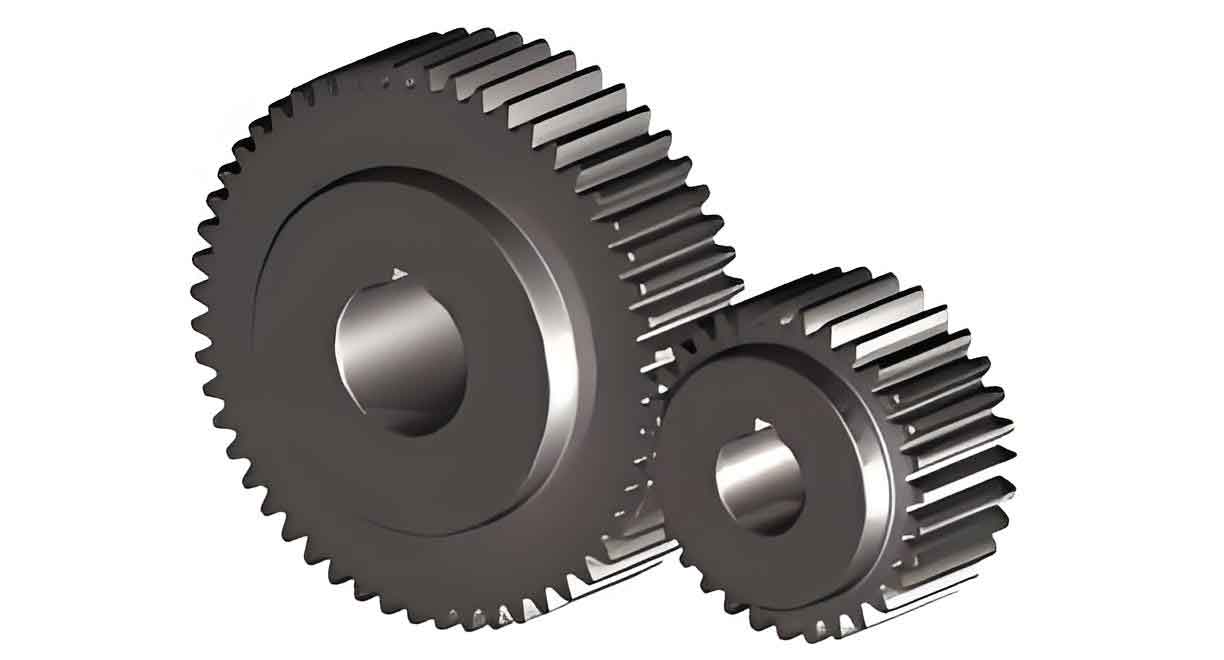
The bending fatigue strength of spur gears is a fundamental aspect of gear design, as tooth breakage at the root can lead to catastrophic system failures. In spur gears, the root stress is primarily induced by the transmitted load during meshing, and factors such as tooth geometry, load application point, and structural support from the rim play crucial roles. For spur gears with thin rims, the insufficient support can alter stress patterns, potentially shifting the failure location from the tooth root to the rim itself. This phenomenon is addressed in standards like ISO 6336-3:2006 and AGMA, which introduce a rim influence factor to account for thin-rim effects. The rim influence factor, denoted as \( Y_B \) in ISO and \( K_B \) in AGMA, varies with the rim thickness ratio—defined as the rim thickness divided by the full tooth height. According to these standards, when the rim thickness ratio is greater than 1.2, the factor is unity, indicating no significant effect on root stress. For ratios between 0.5 and 1.2, the factor increases sharply as the ratio decreases, reflecting heightened stress concentrations. Designs with ratios below 0.5 are generally not recommended due to excessive stress amplification. While these standards offer a simplified approach, they are based on empirical data and simplified models, which may not accurately represent the behavior of aerospace spur gears with complex geometries and boundary conditions. Hence, advanced numerical methods like finite element analysis (FEA) are increasingly employed to obtain more precise stress predictions for spur gears.
To delve deeper into this topic, I first examine the standard calculations for rim influence factors. Consider a spur gear pair with parameters typical of aerospace applications: pinion tooth count \( Z_1 = 44 \), gear tooth count \( Z_2 = 73 \), module \( m = 2.5 \, \text{mm} \), and pressure angle \( \alpha = 25^\circ \). The pinion, as the driving spur gear, has a pitch diameter \( d_1 = 110 \, \text{mm} \), addendum diameter \( d_a = 115 \, \text{mm} \), dedendum diameter \( d_f = 103.75 \, \text{mm} \), and total tooth height \( h = 5.625 \, \text{mm} \). The rim thickness \( s_R \) is varied to achieve different rim thickness ratios \( s_R / h \), as summarized in the table below. The inner diameter of the rim \( d_i \) is calculated accordingly for each case.
| Case Number | Rim Thickness Ratio \( s_R / h \) | Rim Thickness \( s_R \) (mm) | Rim Inner Diameter \( d_i \) (mm) |
|---|---|---|---|
| 1 | 0.5 | 2.8125 | 98.125 |
| 2 | 0.7 | 3.9375 | 95.875 |
| 3 | 0.9 | 5.0625 | 93.625 |
| 4 | 1.0 | 5.625 | 92.5 |
| 5 | 1.2 | 6.75 | 90.25 |
| 6 | 1.5 | 8.4375 | 86.875 |
Using integrated software tools like MASTA, which incorporates both ISO and AGMA standards, the rim influence factors for these spur gears are computed. The results, presented in the following table, show that the values from ISO 6336 and AGMA are virtually identical, reinforcing the consistency between these standards for conventional spur gear designs.
| Case Number | Rim Thickness Ratio \( s_R / h \) | Rim Influence Factor \( Y_B \) (ISO) | Rim Influence Factor \( K_B \) (AGMA) |
|---|---|---|---|
| 1 | 0.5 | 2.4008 | 2.4008 |
| 2 | 0.7 | 1.8625 | 1.8625 |
| 3 | 0.9 | 1.4604 | 1.4604 |
| 4 | 1.0 | 1.2918 | 1.2918 |
| 5 | 1.2 | 1.0001 | 1.001 |
| 6 | 1.5 | 1.000 | 1.000 |
The trend is clear: as the rim thickness decreases, the influence factor increases exponentially, indicating a significant rise in root stress for thin-rim spur gears. However, these standard factors are derived from simplified two-dimensional models or empirical curves, which may not fully account for three-dimensional effects and complex boundary conditions prevalent in aerospace spur gears. Therefore, I proceed to employ three-dimensional finite element analysis to validate and extend these findings.
My investigation begins with a five-tooth segment model of the spur gear, which offers a balance between computational efficiency and accuracy. This model focuses on the loaded tooth and its immediate neighbors, capturing local stress concentrations without the computational burden of a full gear model. The geometry of the spur gear teeth is generated using precise involute profiles, with a fillet radius at the root set to \( 0.38m \) to mimic realistic manufacturing practices. The five-tooth segment is meshed with second-order tetrahedral elements in ANSYS Workbench, with refined mesh at the tooth root to ensure convergence. The loading condition is simplified by applying forces at the highest point of single tooth contact (HPSTC), as this location typically produces the maximum bending stress in spur gears. A radial force of 798 N and a tangential force of 2192 N are applied, representing typical operational loads. The boundaries are constrained on both side faces of the segment to simulate symmetry, aligning with common practices in literature.
The stress distributions obtained from this five-tooth model reveal important insights. For spur gears, the root stress is primarily tensile on the loaded side and compressive on the opposite side. The von Mises stress, which combines these components, is often used as a criterion for yield prediction. In my analysis, I extract the maximum principal stress (tensile), minimum principal stress (compressive), and von Mises stress at the tooth root for each rim thickness ratio. The results are compiled in the table below, showcasing how these stresses vary with rim thickness in spur gears.
| Rim Thickness Ratio \( s_R / h \) | Max Tensile Stress (MPa) | Max Compressive Stress (MPa) | Von Mises Stress (MPa) |
|---|---|---|---|
| 0.5 | 293 | 756 | 675 |
| 0.7 | 237 | 523 | 470 |
| 0.9 | 241 | 421 | 380 |
| 1.0 | 242 | 389 | 350 |
| 1.2 | 247 | 355 | 320 |
| 1.5 | 253 | 330 | 300 |
From this data, I compute the rim influence factors based on the five-tooth model by normalizing the stresses with respect to the case with the thickest rim (ratio 1.5). For example, the influence factor for von Mises stress \( Y_{B,\text{von Mises}} \) is calculated as:
$$ Y_{B,\text{von Mises}} = \frac{\sigma_{\text{von Mises}}(s_R/h)}{\sigma_{\text{von Mises}}(1.5)} $$
Similarly, factors for tensile and compressive stresses are derived. Plotting these factors against the rim thickness ratio, I observe that the von Mises and compressive stress factors align closely with the ISO/AGMA curves, showing a smooth decrease as rim thickness increases. However, the tensile stress factor exhibits a different trend, remaining relatively stable or even increasing slightly with thicker rims. This discrepancy highlights the limitations of simplified models in capturing all stress components in spur gears. Nonetheless, the overall agreement validates the five-tooth finite element approach for preliminary assessments of rim effects in spur gears.
Despite the utility of segment models, aerospace spur gears often incorporate additional structural features like thin webs and flexible shafts, which can interact with the rim to alter stress distributions. To account for these factors, I develop a full three-dimensional finite element model of the entire spur gear shaft. This model includes the gear body with thin webs, a central shaft, and realistic boundary conditions simulating bearing supports and spline connections. The geometry is created in CAD software, ensuring accurate representation of all components. Meshing is performed with second-order elements, and a fine mesh is applied at critical regions like the tooth roots and rim-web junctions. The loading remains the same as in the segment model, applied at the HPSTC, while constraints are applied to simulate a statically determinate support system: radial and axial constraints at the bearing location and circumferential constraints at the spline.
The full model provides a comprehensive view of stress patterns in spur gears. For instance, with a rim thickness ratio of 0.5, the von Mises stress distribution shows high concentrations at the tooth root and the rim-web fillet, with a maximum value of 303 MPa at the root. As the rim thickness increases, the root stress decreases marginally, but more notably, the stress at the rim inner diameter reduces significantly. The table below summarizes the root stresses from the full model for various rim thickness ratios, emphasizing the behavior of spur gears under combined structural influences.
| Rim Thickness Ratio \( s_R / h \) | Max Tensile Stress (MPa) | Max Compressive Stress (MPa) | Von Mises Stress (MPa) |
|---|---|---|---|
| 0.5 | 278 | 333 | 303 |
| 0.7 | 271 | 324 | 295 |
| 0.9 | 267 | 319 | 289 |
| 1.0 | 264 | 317 | 287 |
| 1.2 | 264 | 315 | 284 |
| 1.5 | 263 | 313 | 280 |
Computing the rim influence factors from this full model, using the thickest rim case as reference, yields surprising results. Unlike the standard predictions, the factors for root stress—whether tensile, compressive, or von Mises—show only minor variations, with an increase of about 8% for the thinnest rim compared to the thickest. This suggests that for aerospace spur gears with integrated thin webs and flexible shafts, the rim thickness has a negligible impact on root stress, contradicting the conservative estimates of ISO and AGMA standards. To explain this, I examine the stress at the rim inner diameter, where the rim connects to the web. The maximum von Mises stress at this location changes substantially with rim thickness, as shown in the following table.
| Rim Thickness Ratio \( s_R / h \) | Max Von Mises Stress at Rim Inner Diameter (MPa) |
|---|---|
| 0.5 | 52 |
| 0.7 | 41 |
| 0.9 | 33 |
| 1.0 | 30 |
| 1.2 | 27 |
| 1.5 | 23 |
Normalizing these stresses relative to the thickest rim case gives a rim stress amplification factor \( Y_{B,\text{rim}} \):
$$ Y_{B,\text{rim}} = \frac{\sigma_{\text{rim}}(s_R/h)}{\sigma_{\text{rim}}(1.5)} $$
Plotting \( Y_{B,\text{rim}} \) against the rim thickness ratio reveals a trend remarkably similar to the ISO/AGMA rim influence factor curve. This indicates that while root stress in spur gears is relatively insensitive to rim thickness in full models, the rim itself experiences significant stress amplification in thin-rim designs, potentially leading to fatigue failures in the rim rather than the tooth root. This finding aligns with the cautionary note in ISO 6336 that thin rims may shift failure locations, but it underscores the need for detailed analysis beyond standard factors for aerospace spur gears.
To further elaborate on the mechanical principles, I derive some analytical expressions. The bending stress at the tooth root of spur gears can be approximated using the Lewis formula, modified for modern applications:
$$ \sigma_b = \frac{F_t}{b m} Y_F Y_B Y_\beta $$
where \( \sigma_b \) is the nominal bending stress, \( F_t \) is the tangential force, \( b \) is the face width, \( m \) is the module, \( Y_F \) is the form factor, \( Y_B \) is the rim influence factor, and \( Y_\beta \) is the helix angle factor (unity for spur gears). For spur gears with thin rims, \( Y_B \) becomes critical. From finite element results, I propose an empirical correction for \( Y_B \) based on the full model data. For von Mises root stress in aerospace spur gears with thin webs and flexible shafts, a linear approximation might be:
$$ Y_{B,\text{full}} = 1 + k \left(1 – \frac{s_R}{h}\right) $$
where \( k \) is a small constant (e.g., \( k \approx 0.08 \) from my data), indicating minimal sensitivity. In contrast, for rim stress, a more aggressive relation similar to the standard curve could be:
$$ Y_{B,\text{rim}} = \exp\left(\beta \left(1 – \frac{s_R}{h}\right)\right) $$
with \( \beta \) as a fitting parameter. These formulas, while simplistic, highlight the differential impact of rim thickness on various stress components in spur gears.
The implications for design are profound. For aerospace spur gears, where weight savings are crucial, thin rims can be employed without severely compromising root bending strength, provided that the overall structure—including webs and shafts—is considered. However, designers must carefully evaluate the rim stress to prevent rim fatigue failures. This necessitates advanced tools like three-dimensional finite element analysis, as standard methods may overpredict root stress effects. My study demonstrates that for the spur gear pair analyzed, the ISO/AGMA rim influence factor overestimates the root stress increase by a factor of up to three for thin rims, whereas the actual rise is less than 10%. This conservatism might lead to unnecessary overdesign, contradicting lightweight objectives for aerospace spur gears.
In addition to stress analysis, I explore the role of material properties and dynamic effects. Aerospace spur gears are often made from high-strength alloys like titanium or advanced steels, with fatigue limits that must be assessed under cyclic loading. The stress concentration factors at the tooth root and rim fillets can be derived from finite element results. For instance, the theoretical stress concentration factor \( K_t \) for spur gear teeth can be expressed as:
$$ K_t = \frac{\sigma_{\max}}{\sigma_{\nom}} $$
where \( \sigma_{\max} \) is the maximum stress from FEA and \( \sigma_{\nom} \) is the nominal stress from Lewis formula. My data shows that \( K_t \) varies with rim thickness, but less so in full models. Furthermore, dynamic factors such as meshing impacts and resonance might alter stress distributions in spur gears, but they are beyond the scope of this static analysis.
To enhance the discussion, I include a table comparing the rim influence factors from different methods for spur gears, summarizing key takeaways.
| Method | Rim Thickness Ratio \( s_R / h \) | Root Stress Influence Factor | Rim Stress Influence Factor | Remarks for Spur Gears |
|---|---|---|---|---|
| ISO 6336 / AGMA | 0.5 | 2.40 | Not defined | Conservative for root stress |
| Five-Tooth FEA | 0.5 | 2.25 (von Mises) | Not calculated | Aligns with standards for segment models |
| Full Model FEA | 0.5 | 1.08 (von Mises) | 2.26 | Root stress insensitive, rim stress critical |
This comparison underscores the importance of model fidelity in analyzing spur gears. The five-tooth model, while useful, neglects global structural interactions that mitigate root stress sensitivity in full spur gear assemblies. Therefore, for aerospace applications, I recommend using full three-dimensional finite element models to accurately assess both root and rim stresses in spur gears, especially when thin rims are involved.
In conclusion, my investigation into the influence of rim thickness on root stress in aerospace spur gears reveals nuanced insights. Through three-dimensional finite element analysis, I demonstrate that standard rim influence factors from ISO and AGMA are overly conservative for predicting root stress in spur gears with thin webs and flexible shafts. Instead, rim thickness has a minimal effect on root bending stress, with increases of less than 10% even for very thin rims. However, the stress at the rim inner diameter amplifies significantly, following trends similar to standard curves, indicating a potential failure shift to the rim. Thus, designers of aerospace spur gears should prioritize detailed finite element analyses over standard factors to optimize weight and strength. Future work could explore dynamic loading, thermal effects, and probabilistic fatigue analysis to further refine the design of high-performance spur gears for aerospace systems. This study contributes to the ongoing advancement of spur gear technology, ensuring reliability and efficiency in demanding aviation environments.