
Spur gear transmissions are pivotal components in modern machinery, providing essential power transfer in aerospace, maritime, and industrial applications. The reliability and efficiency of these systems are fundamentally linked to the quality of the lubricating film between meshing teeth. Elastohydrodynamic lubrication (EHL) analysis provides a critical framework for understanding the formation of this protective film under high contact pressures and transient operating conditions. However, lubricants in practical spur gear systems are rarely pristine; they often contain solid contaminant particles generated from wear, ingested from the environment, or introduced during assembly. These particles can significantly alter the local pressure, film thickness, and temperature fields within the contact, potentially leading to accelerated wear, scuffing, or catastrophic failure. This investigation establishes a comprehensive transient thermal EHL model for spur gears that explicitly accounts for the presence of a solid particle. By deriving a modified Reynolds equation incorporating particle effects and considering time-variant kinematics alongside thermal phenomena, this work systematically analyzes the influence of particle shape, size, and velocity on the critical lubrication characteristics of spur gears.
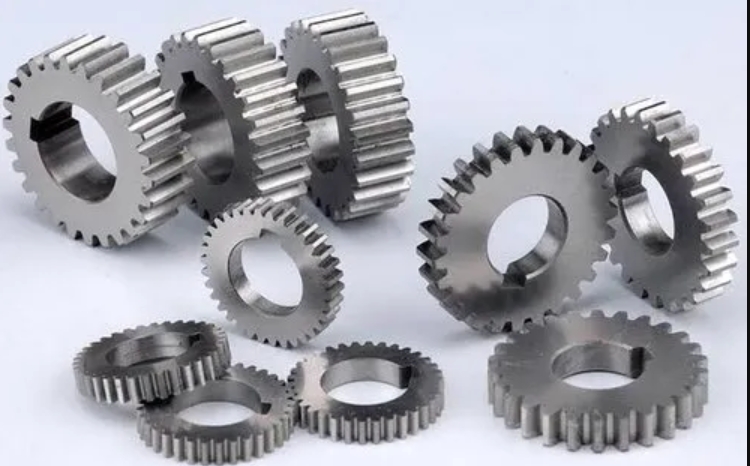
The performance and durability of a spur gear pair are intrinsically tied to the elastohydrodynamic (EHD) film separating the contacting tooth surfaces. Traditional spur gear EHL models often assume a clean, homogeneous lubricant. Yet, the reality of spur gear operation in demanding environments invariably involves lubricant contamination. Solid debris, whether metallic wear particles or external contaminants, becomes entrained in the oil and passes through the highly stressed contact conjunction. The presence of such a particle disrupts the continuous fluid film, creating a complex multi-regime lubrication scenario. This disturbance is not merely a geometric occlusion; it induces significant local perturbations in pressure, drastically reduces film thickness at the particle’s location, and can cause substantial localized temperature spikes due to increased shear and constricted flow. These effects are further compounded by the inherent transient nature of spur gear meshing, where load, rolling velocity, and contact geometry vary continuously along the path of contact. Therefore, a predictive model for spur gear lubrication must integrate three key aspects: the transient kinematics of the gear mesh, the thermal effects arising from viscous shearing and compression, and the disruptive influence of solid particles. This work aims to synthesize these elements into a single, robust numerical model to provide deeper insights into the failure mechanisms and performance limits of contaminated spur gear systems, ultimately contributing to more reliable gear design and maintenance strategies.
Mathematical Model Formulation
The contact between spur gear teeth is approximated as a transient, line-contact elastohydrodynamic problem. The model domain is divided into three distinct regions when a solid particle is present, as conceptually illustrated in the analysis schematic. Region 1 and Region 3 represent the standard full-film EHD zones upstream and downstream of the particle, respectively. Region 2 encompasses the area occupied by the solid particle, which is modeled as a non-deformable ellipsoidal body within the film. The following governing equations are established.
Governing Equations Considering Solid Particle Effects
The core of the model is the Reynolds equation, modified to account for the altered flow geometry in Region 2. For the full-film Regions 1 and 3, the standard thermal transient Reynolds equation applies:
$$ \frac{\partial}{\partial x} \left( \frac{\rho}{\eta} \right)_e h^3 \frac{\partial p}{\partial x} = 12u \frac{\partial}{\partial x}(\rho^* h) + 12 \frac{\partial}{\partial t}(\rho_e h) $$
In Region 2, where the particle is located, the film thickness is effectively reduced. Assuming the particle has a semi-length of \( z_0 \) in the z-direction (across the film) and moves with a velocity \( u_p \), the modified thermal Reynolds equation becomes:
$$ \frac{\partial}{\partial x} \left( \frac{\rho}{\eta^*} \right)_e (h – 2z_0)^3 \frac{\partial p}{\partial x} = 48\frac{\partial}{\partial x} \left[ \rho^* (h – 2z_0) \frac{u_1 + u_2 + 2u_p}{4} \right] + 48 \frac{\partial}{\partial t} \left[ \rho_e (h – 2z_0) \right] $$
Here, \( p \) is pressure, \( h \) is film thickness, \( \rho \) is density, \( \eta \) is viscosity, \( u = (u_1+u_2)/2 \) is the entrainment velocity, and \( u_1, u_2 \) are the surface velocities of the two spur gear teeth. The subscript \( e \) denotes effective or equivalent quantities derived from integration across the film thickness to account for the variation of fluid properties with temperature and pressure. The boundary conditions for pressure are \( p(x_{in}, t) = p(x_{out}, t) = 0 \) and \( p \geq 0 \) within the domain.
The film thickness equation incorporates both the geometric gap and the elastic deformation of the spur gear tooth surfaces:
$$ h(x,t) = h_0(t) + \frac{x^2}{2R(t)} – \frac{2}{\pi E} \int_{-\infty}^{x} p(\zeta, t) \ln(x-\zeta)^2 d\zeta $$
where \( h_0(t) \) is the central offset, \( R(t) \) is the time-varying equivalent radius of curvature for the spur gear contact, and \( E \) is the composite elastic modulus.
The load balance equation ensures the integrated pressure supports the instantaneous load per unit width \( w(t) \) from the spur gear meshing:
$$ \int_{x_{in}}^{x_{out}} p(x,t) dx = w(t) $$
The energy equation for the lubricant film, crucial for capturing thermal effects in spur gear contacts, is given by:
$$ c \left( \rho \frac{\partial T}{\partial t} + \rho u \frac{\partial T}{\partial x} + \rho w \frac{\partial T}{\partial z} \right) – k \frac{\partial^2 T}{\partial z^2} = – \frac{T}{\rho} \frac{\partial \rho}{\partial T} \left( \frac{\partial p}{\partial t} + u \frac{\partial p}{\partial x} \right) + \tau \frac{\partial u}{\partial z} $$
where \( T \) is temperature, \( c \) is specific heat, \( k \) is thermal conductivity, and \( \tau \) is shear stress. The terms represent convective heat transfer, conduction, compressive heating, and viscous dissipation, respectively.
The heat conduction in the solid spur gear teeth (modeled as semi-infinite bodies) is described by:
$$ c_i \rho_i \frac{\partial T}{\partial t} + U_i \frac{\partial T}{\partial x} = k_i \frac{\partial^2 T}{\partial z_i^2}, \quad i=1,2 $$
where subscript \( i \) denotes gear 1 or 2.
The lubricant’s viscosity and density are modeled as functions of pressure and temperature using the Roelands and Dowson-Higginson relations, respectively, which are essential for accurate spur gear EHL simulation:
$$ \eta(p, T) = \eta_0 \exp\left\{ (\ln \eta_0 + 9.67) \left[ -1 + (1 + 5.1 \times 10^{-9}p)^{Z_0} \left( \frac{T – 138}{T_0 – 138} \right)^{-S_0} \right] \right\} $$
$$ \rho(p, T) = \rho_0 \left[ 1 + \frac{0.6 \times 10^{-9}p}{1 + 1.7 \times 10^{-9}p} – 0.00065 (T – T_0) \right] $$
Dimensionless Formulation
To facilitate numerical solution, the governing equations are normalized. Key dimensionless parameters are defined as follows:
| Parameter | Definition |
|---|---|
| \( X \) | \( x/b \) |
| \( P \) | \( p/p_H \) |
| \( H \) | \( h R_0 / b^2 \) |
| \( \bar{\eta} \) | \( \eta / \eta_0 \) |
| \( \bar{\rho} \) | \( \rho / \rho_0 \) |
| \( \bar{T} \) | \( T / T_0 \) |
| \( \bar{t} \) | \( t u_0 / b \) |
| \( \bar{U} \) | \( u / u_0 \) |
| \( C_{wt}, C_{Rt}, C_{ut} \) | Time-varying coefficients for load, radius, and speed |
Here, \( b \) is the half-width of the Hertzian contact under a reference load \( w_0 \), \( p_H \) is the maximum Hertzian pressure, \( R_0 \) is a reference radius of curvature, and \( u_0 \) is a reference entrainment speed. The computational domain is typically set to \( X_{in} = -4.6 \) to \( X_{out} = 1.4 \) to ensure fully flooded conditions for the spur gear contact.
Numerical Methodology
The solution of the coupled, transient, thermal EHL problem for a spur gear with a solid particle employs advanced numerical techniques. The computational cycle spans the entire meshing period of a single spur gear tooth pair, from the start to the end of engagement, discretized into numerous time steps.
- Pressure Solution: The dimensionless Reynolds equation is solved using a multi-grid method, which accelerates convergence by operating on a hierarchy of grids. The film thickness equation is evaluated using a multi-grid integration technique. The load balance equation is satisfied by iteratively adjusting the central film thickness \( H_0 \).
- Temperature Solution: The energy equation for the fluid and the heat conduction equations for the spur gear teeth are solved using a column-by-column scanning technique. At each \( x \)-location, the temperature profile across the film and into the solids is computed.
- Coupled Iteration: The pressure and temperature calculations are performed alternately within each time step. The pressure solution assumes a known temperature field to update viscosity and density. Subsequently, the temperature solution uses the newly calculated pressure and film thickness fields. Convergence is achieved when the relative errors for dimensionless pressure and temperature fall below predefined tolerances (e.g., \( 10^{-3} \) and \( 10^{-4} \), respectively).
- Grid Structure: A multi-level grid system is used, with the finest grid containing 961 nodes in the \( X \)-direction. The film is discretized with 19 equally spaced nodes across its thickness, while each spur gear solid is modeled with 12 non-equally spaced nodes extending from the surface.
The initial conditions for the first time step (near the spur gear mesh inlet) are obtained from a steady-state EHL solution.
Results and Discussion
The analysis focuses on a specific spur gear pair. The time-varying load profile along the line of action is characterized, with key instants \( t_A \) to \( t_E \) identified for detailed analysis. The lubricant and spur gear material properties used in the simulation are summarized in the table below.
| Parameter | Value |
|---|---|
| Ambient Viscosity, \( \eta_0 \) (Pa·s) | 0.075 |
| Pressure-Viscosity Coefficient, \( \alpha \) (Pa⁻¹) | 2.19 × 10⁻⁸ |
| Ambient Density, \( \rho_0 \) (kg/m³) | 870 |
| Ambient Temperature, \( T_0 \) (K) | 313 |
| Spur Gear Material Young’s Modulus, \( E \) (Pa) | 2.06 × 10¹¹ |
| Spur Gear Material Poisson’s Ratio | 0.3 |
| Number of Teeth (Pinion/Gear) | 35 / 140 |
| Module (mm) | 2 |
| Pinion Speed (rpm) | 1000 |
| Pressure Angle (°) | 20 |
Base Case: Influence of a Solid Particle
The fundamental impact of introducing a solid particle into the spur gear contact is first examined. The particle is modeled as an ellipsoid with dimensionless semi-axes \( a=0.2 \) and \( b=0.15 \), located at \( X_c = -1.3 \), and is initially stationary (\( u_p = 0 \)).
Pressure and Film Thickness: The presence of the particle creates a severe constriction in the film. In Region 2, the oil film pressure rises dramatically compared to the clean spur gear case to force the lubricant around the obstruction. Immediately downstream (Region 3), the pressure drops and remains slightly below the clean-case pressure due to the downstream disturbance. Correspondingly, the film thickness plunges at the particle location. After passing the particle, the film remains thinner than in the clean spur gear case all the way to the outlet, and the characteristic EHL film constriction (neck) is also reduced in thickness. This indicates a persistent detrimental effect on the lubricant film integrity following a particle’s passage through a spur gear contact.
Effect of Particle Velocity
The velocity of the solid particle relative to the contacting spur gear surfaces is a critical parameter. Its influence on pressure and film thickness is analyzed for a particle with fixed shape and position.
Pressure and Film Thickness: The particle’s translational velocity \( u_p \) has a negligible direct effect on the peak pressure profile in the spur gear contact. However, it significantly influences the film thickness distribution. At a moderate speed (e.g., \( u_p = 1.0 \, \text{m/s} \)), the film thickness from the particle location to the outlet is actually increased compared to a stationary particle. This suggests that a particle moving with a favorable velocity can entrain additional lubricant. Conversely, at a higher speed (e.g., \( u_p = 1.5 \, \text{m/s} \)), the film thickness becomes smaller than for a stationary particle. This implies an optimal particle velocity range for minimizing film thickness reduction in a contaminated spur gear contact, beyond which the effect becomes detrimental again.
Effect of Particle Shape and Size
Solid contaminants in a spur gear system can exhibit various shapes. This is modeled by varying the aspect ratio \( a/b \) of the ellipsoidal particle, where \( a \) and \( b \) are the semi-axes in the \( x \)- and \( z \)-directions, respectively.
Pressure and Film Thickness: The particle’s shape profoundly affects the pressure spike and film thickness. For a more spherical particle (small \( a/b \)), the pressure increase in Region 2 is very sharp and high, and the film thickness at the particle is severely minimized. For an elongated, prolate particle (large \( a/b \)), the pressure disturbance is more gradual and of lower magnitude, and the film thickness reduction is less severe. In the limit of a very large \( a/b \) (approaching a long fiber), the particle’s effect on both pressure and film thickness in the spur gear contact becomes negligible, as it merely slightly raises the nominal film across a wide area without causing a sharp constriction.
Impact on Minimum Film Thickness and Maximum Temperature
The key performance indicators for spur gear lubrication are the minimum film thickness \( H_{min} \) and the maximum flash temperature \( T_{max} \). The presence of a solid particle detrimentally affects both.
Minimum Film Thickness: The global minimum film thickness in the spur gear contact occurs at or immediately downstream of the solid particle, and its value is consistently lower than in the clean-lubricant case throughout the meshing cycle. This represents a direct threat to surface protection.
Maximum Temperature: The solid particle induces a significant local temperature rise, often creating a temperature peak within Region 2 that can exceed the secondary temperature rise near the exit in a clean spur gear contact. This localized “hot spot” is critical because it can lead to lubricant degradation, reduction in local viscosity, and increased risk of scoring or welding on the spur gear tooth flanks.
The validity of the numerical model for the spur gear is checked by comparing the calculated minimum film thickness at several instants against predictions from the well-known Dowson-Higginson formula. The relative errors are all within an acceptable range (under 10%), confirming the reliability of the present analysis.
| Mesh Position | Numerical Result (μm) | Empirical Value (μm) | Relative Error (%) |
|---|---|---|---|
| 1 (\(t_A\)) | 0.4490 | 0.4867 | 7.7 |
| 2 (\(t_B\)) | 0.4689 | 0.5117 | 8.4 |
| 3 (\(t_C\)) | 0.4644 | 0.5069 | 8.4 |
| 4 (\(t_D\)) | 0.5123 | 0.5635 | 9.1 |
| 5 (\(t_E\)) | 0.6045 | 0.6115 | 1.1 |
Transient Effects Along the Spur Gear Path of Contact
The transient nature of spur gear meshing—with varying load, radius of curvature, and rolling/sliding velocities—dominates the overall pressure and film thickness profiles. The pressure distribution evolves significantly from instant \( t_A \) to \( t_E \), reflecting changes in operating conditions. The secondary pressure peak, a hallmark of EHL contacts, shifts its position and magnitude. Crucially, the localized pressure spike caused by the solid particle is superimposed on this transient base profile. The film thickness also shows strong time-variance, with the neck location moving. The particle’s effect (the sharp film thinning) is evident at all instants, but its severity relative to the surrounding film changes with the transient conditions of the spur gear mesh.
Detailed Analysis of Temperature Field
The thermal effects, particularly the localized heating due to a solid particle, are of paramount importance for spur gear performance.
Effect of Particle Velocity on Temperature: The particle’s velocity \( u_p \) has a striking effect on the temperature distribution in the spur gear contact. A stationary particle causes a significant but localized temperature rise. As the particle moves (\( u_p > 0 \)), the maximum temperature rise increases and its location shifts downstream. The entire temperature field in Region 2 and 3 is altered, with higher overall temperatures observed for moving particles. This is because a moving particle introduces additional shear in the already constricted film and affects the convective heat flow. This finding underscores that dynamic debris in a spur gear system is more thermally damaging than static debris.
Effect of Particle Shape on Temperature: The particle shape (aspect ratio \( a/b \)) also dictates the thermal signature. A spherical particle (small \( a/b \)) creates an intense but spatially concentrated temperature peak. A more elongated particle (large \( a/b \)) generates a broader, more moderate temperature rise spread over a longer distance in the direction of motion. Furthermore, the shape influences the exit temperature; more spherical particles tend to result in a lower exit temperature, while elongated particles can lead to a higher overall exit temperature, affecting the bulk thermal state of the spur gear tooth.
Conclusion
This investigation has developed and solved a comprehensive transient thermal elastohydrodynamic lubrication model for spur gears that incorporates the critical effect of solid contaminant particles. The modified Reynolds equation, derived for the particle-occupied region, coupled with full thermal and transient analysis, provides a powerful tool for understanding the complex tribological behavior of contaminated spur gear contacts.
The key findings are systematically summarized as follows:
- Film Thickness and Pressure: The introduction of a solid particle into a spur gear contact causes a severe local reduction in film thickness and a corresponding sharp increase in pressure at the particle’s location. The film remains thinner downstream compared to a clean contact.
- Particle Velocity: The translational velocity of the particle has a minimal effect on the pressure spike but a significant influence on film thickness. An optimal particle velocity may slightly ameliorate film thickness reduction, while excessive velocity worsens it. Particle velocity dramatically affects the temperature field, with moving particles causing higher and more widespread temperature rises than stationary ones.
- Particle Shape: The shape of the particle, characterized by its aspect ratio, is a major determinant of its impact. Spherical particles cause intense, localized pressure spikes and severe film thinning, while elongated particles cause more gradual pressure disturbances and less severe film reduction. Spherical particles also create more concentrated “hot spots,” whereas elongated particles cause a broader temperature rise.
- Performance Indicators: The global minimum film thickness in a spur gear contact is always reduced by the presence of a particle, compromising surface protection. The maximum contact temperature is significantly increased, often with the peak occurring at the particle location rather than the traditional exit zone, posing a severe risk of lubricant failure and surface damage.
- Transient and Thermal Coupling: The effects of the particle are superimposed on the strong transient variations inherent to spur gear meshing. The thermal analysis reveals that the localized heating due to a particle can be the dominant thermal event in the contact, a factor critically important for the design and thermal management of high-performance spur gear systems.
This work highlights that contamination control is not merely a cleanliness issue but a fundamental aspect of spur gear reliability engineering. The model provides a quantitative framework for assessing the risk associated with debris of different sizes, shapes, and motions, informing better filtration strategies, lubricant selection, and design practices for spur gears operating in challenging environments.