
In modern mechanical transmission systems, spur cylindrical gears are fundamental components, prized for their compact structure, wide power range, and broad speed ratio applicability. They are ubiquitous in fields ranging from construction and aviation to automotive and energy. However, the inherent imperfections of real-world engineering mean that these gears are never perfect. During manufacturing and operation, factors such as machine tool inaccuracies, cutting tool errors, and thermal deformations from meshing inevitably introduce deviations in the tooth profile. These deviations, known as tooth profile errors, are a primary source of transmission error and stand as a major contributor to noise, vibration, and a general reduction in the smoothness and reliability of gear transmission systems. Therefore, investigating the influence of tooth profile errors on the dynamic characteristics of spur gear systems is not merely an academic exercise; it holds significant practical importance for optimizing design, improving manufacturing processes, and enhancing the operational stability and longevity of machinery.
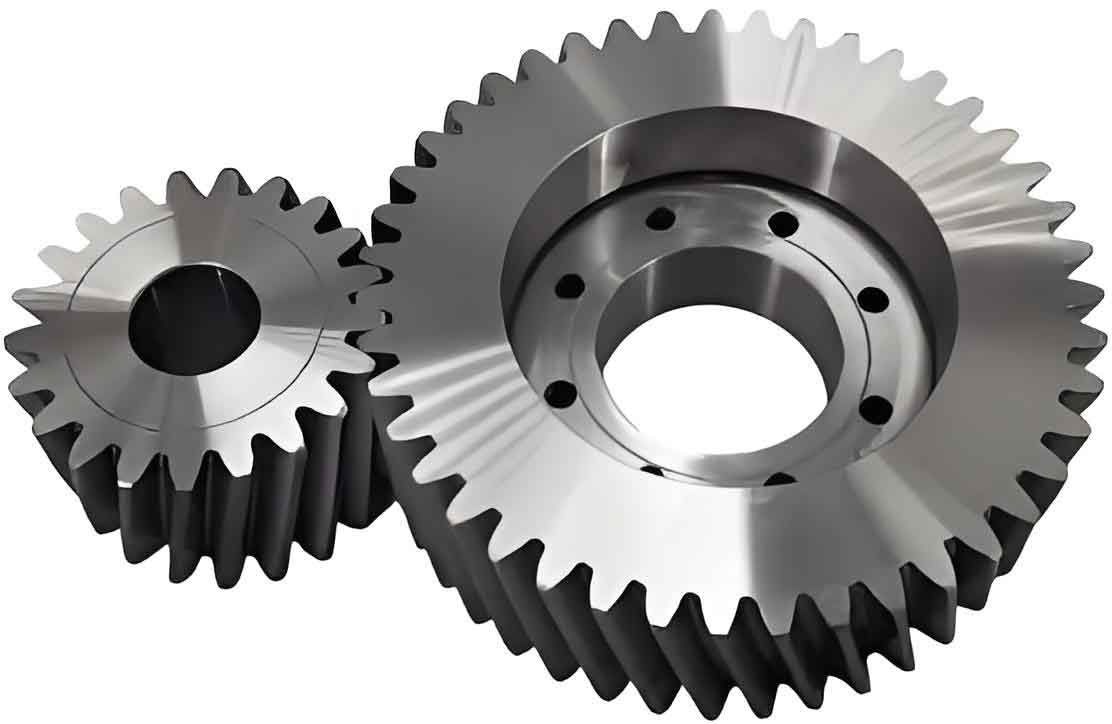
The dynamic performance of a gear system is governed by internal excitations, with time-varying mesh stiffness and transmission error being the most critical. In an ideal scenario, the transition of load between tooth pairs is smooth. In reality, the time-varying nature of mesh stiffness and the presence of profile errors create dynamic excitations that can lead to parametric vibrations, nonlinear responses, and even chaotic motion. The study of gear dynamics, therefore, focuses on modeling these phenomena, solving the resulting equations of motion, and analyzing the system’s response. My research delves into this complex interplay, specifically examining how different origins of tooth profile errors affect the dynamic behavior of single-stage and double-stage spur cylindrical gear transmissions. By integrating finite element analysis, multi-body elastic contact dynamics, and numerical simulation, this work aims to build a comprehensive understanding and provide a theoretical foundation for mitigating the adverse effects of these inevitable imperfections in cylindrical gears.
Tooth profile error, often termed profile deviation, refers to the departure of the actual manufactured tooth flank from its ideal theoretical form (the involute profile). This deviation is measured in the transverse plane along a direction perpendicular to the involute curve. In spur cylindrical gears, these errors disrupt the perfect kinematic motion, introducing vibrations and impacting load distribution. The primary internal dynamic excitations in a gear system include:
- Time-varying mesh stiffness excitation,
- Error excitation (from manufacturing and assembly),
- Damping, and
- Backlash.
Among error excitations, tooth profile error is particularly significant for noise generation. Profile errors can be categorized based on their shape: positive pressure angle error, negative pressure angle error, convex profile, and concave profile. Each type influences the contact conditions and stress distribution differently.
The genesis of tooth profile errors in cylindrical gears can be traced to three main sources: the cutting tool, the machine tool, and operational thermal effects.
1. Tool-Induced Error (ΔfT): In processes like hobbing, errors in the hob’s design, manufacture, alignment, and runout directly imprint onto the gear tooth. The resulting composite error can be expressed as:
$$ \Delta f_T = \sqrt{(\Delta f_\alpha)^2 + (\Delta f_\gamma)^2 + (\Delta f_r)^2 + (\Delta f_\alpha)^2 + (\Delta f_{\theta r})^2 + (\Delta f_{\alpha\theta})^2} $$
Where terms represent errors due to incorrect pressure angle ($\Delta f_\alpha$), non-radial deviation ($\Delta f_\gamma$), radial runout ($\Delta f_r$), axial runout ($\Delta f_\alpha$), and tilt ($\Delta f_{\theta r}, \Delta f_{\alpha\theta}$).
2. Machine Tool-Induced Error (ΔfM): Imperfections in the gear generating machine’s kinematics, such as errors in the worktable rotation or guideway straightness, lead to periodic errors. A simplified model for this is:
$$ \Delta f_M = \sqrt{(\Delta f_s)^2 + (\Delta f_r)^2} $$
Here, $\Delta f_s = \Delta S_2 \cos \alpha$ represents error from radial displacement, and $\Delta f_r = r \tan \alpha \cdot \Delta \gamma_g$ represents error from torsional vibration of the worktable.
3. Thermal Deformation-Induced Error (Δff): During operation, friction at the tooth contact generates heat, causing localized thermal expansion. This changes the tooth profile from its cold, manufactured state. The transient flash temperature rise $\Delta f(t)$ at the contact is complex, depending on friction, load, material properties, and sliding velocity. The resultant profile deviation at a point on the tooth height is:
$$ \Delta f_f(t) = \Delta \lambda(t) \left[ r_{bi} \left( \text{inv} \alpha_k – \text{inv} \alpha \right) + \frac{S}{2} \right] $$
Where $\Delta \lambda(t)$ is the thermal expansion coefficient multiplied by the temperature rise, $r_{bi}$ is the base radius, $S$ is the base tooth thickness, and $\alpha_k$ is the pressure angle after thermal expansion.
The core of dynamic analysis lies in accurately modeling the system. I consider both single-stage and double-stage spur cylindrical gear transmissions, accounting for translational and rotational degrees of freedom. The gears, shafts, and bearings are treated as a multi-body elastic system. The key nonlinear factors integrated into the model are:
- Time-Varying Mesh Stiffness, k(t): The foundation is the stiffness of an error-free tooth pair, $k_t(t)$, which varies periodically with the number of tooth pairs in contact. It is derived from the combined stiffness of Hertzian contact, bending, shear, and axial compression of the tooth modeled as a non-uniform cantilever beam. When a profile error $\delta$ is present, it introduces an additional compliance. The local stiffness change due to error on a single tooth is approximated by $k_i(t) = F_N / (b \cdot \delta)$, where $F_N$ is the normal load and $b$ the face width. The equivalent mesh stiffness contribution from the error on two mating teeth in series is $k_\omega(t) = (k_1(t) k_2(t))/(k_1(t) + k_2(t))$. The total effective mesh stiffness is then:
$$ k(t) = k_t(t) + k_\omega(t) $$
This formulation captures the softening effect of profile errors. - Mesh Damping, Cm: A proportional damping model is used:
$$ C_m = 2 \xi \sqrt{k(t) \frac{I_1 I_2 r_{b1}^2 r_{b2}^2}{I_1 r_{b1}^2 + I_2 r_{b2}^2}} $$
where $\xi$ is the damping ratio (often taken as 0.07-0.1). - Backlash Nonlinearity: The static transmission error $x(t)$ is filtered through a backlash function $f(x(t), b(t))$:
$$
f(x(t), b(t)) =
\begin{cases}
x(t) – b(t), & \text{if } x(t) > b(t) \\
0, & \text{if } |x(t)| \le b(t) \\
x(t) + b(t), & \text{if } x(t) < -b(t)
\end{cases}
$$
Crucially, the effective half-backlash $b(t)$ is itself affected by thermal expansion error: $b(t) = b_n – \Delta f_f$, making it a time-varying parameter.
Applying Newton’s second law and considering the gear mesh forces in the line of action, the equations of motion for a single-stage system can be derived. For a system with gears having moments of inertia $I_1$, $I_2$, base radii $r_{b1}$, $r_{b2}$, and supported by shafts with torsional stiffness $k_{\theta1}$, $k_{\theta2}$, the coupled torsional model is:
$$ I_1 \ddot{\theta}_1 + c_{\theta1} \dot{\theta}_1 + k_{\theta1} \theta_1 + r_{b1} \left[ c_m (r_{b1} \dot{\theta}_1 – r_{b2} \dot{\theta}_2 – \dot{e}(t)) + k(t) f(r_{b1} \theta_1 – r_{b2} \theta_2 – e(t), b(t)) \right] = T_1 $$
$$ I_2 \ddot{\theta}_2 + c_{\theta2} \dot{\theta}_2 + k_{\theta2} \theta_2 – r_{b2} \left[ c_m (r_{b1} \dot{\theta}_1 – r_{b2} \dot{\theta}_2 – \dot{e}(t)) + k(t) f(r_{b1} \theta_1 – r_{b2} \theta_2 – e(t), b(t)) \right] = -T_2 $$
Here, $\theta_i$ are angular displacements, $T_i$ are applied torques, and $e(t)$ represents other composite transmission errors (often modeled as $e(t)=e_0 + \sum e_i \cos(i\omega t + \phi_i)$). For a double-stage system, similar equations are formulated for each mesh, connected through the intermediate shaft’s inertia and stiffness, leading to a higher degree-of-freedom model.
To analyze the impact, I established a simulation model based on a case study similar to a wind turbine gearbox. The basic parameters for the gear pairs are summarized below:
| Parameter | Pinion (Driver) | Gear (Driven) | Unit |
|---|---|---|---|
| Number of Teeth, Z | 30 | 60 | – |
| Module, m | 3 | mm | |
| Pressure Angle, α | 20 | ° | |
| Face Width, b | 20 | mm | |
| Material | 42CrMo Steel | – | |
| Young’s Modulus, E | 210 | GPa | |
| Poisson’s Ratio, ν | 0.3 | – | |
| Rotational Speed, n | 900 | 600 (Stage 1) | rpm |
The first critical dynamic characteristic affected by profile error is the time-varying mesh stiffness. Using a combined analytical-FEA approach, the mesh stiffness over one engagement cycle was calculated for perfect cylindrical gears and for gears with the three types of profile errors. The results for a single-stage transmission at discrete engagement phases are illustrative. The following table compares the mesh stiffness values for the case of tool-induced error:
| Phase | Ideal Stiffness (×10⁸ N/m) | Stiffness with ΔfT (×10⁸ N/m) | Reduction |
|---|---|---|---|
| 1 | 1.122 | 1.073 | 4.4% |
| 2 | 1.368 | 1.268 | 7.3% |
| 3 | 1.333 | 1.298 | 2.6% |
| 4 | 1.399 | 1.212 | 13.4% |
| 5 | 1.364 | 1.282 | 6.0% |
A consistent trend observed across all error types and for both single and double-stage systems was a reduction in the effective mesh stiffness. The error introduces localized compliance, softening the tooth pair. The magnitude of reduction followed a distinct order: Thermal deformation error (Δff) caused the largest decrease, followed by machine tool error (ΔfM), and then tool error (ΔfT). This is logical, as thermal errors directly alter the material geometry and contact conditions under load. Furthermore, the stiffness reduction was more pronounced in the double-stage configuration. The higher rotational frequencies and complex load sharing in a double-stage system amplify the sensitivity to profile imperfections. The modified stiffness waveform $k(t)$ directly feeds into the dynamic equations, altering the system’s parametric excitation.
The dynamic response of the system was solved numerically using a variable-step integration scheme (like ODE45 in MATLAB, conceptually applied to the derived equations). The analysis focused on:
- Natural Frequencies: The inherent frequencies of the system were extracted from the linearized, un-damped homogeneous equations. Profile errors, by altering the average mesh stiffness and potentially the system’s inertia distribution, shift these frequencies. For tool and thermal errors, which generally reduce stiffness, the natural frequencies decreased. For certain machine tool errors that might affect the gear body geometry more uniformly, the natural frequencies could increase. This shift is crucial as it changes the proximity of excitation frequencies (like mesh frequency) to resonance conditions.
- Time-Domain Response: The dynamic transmission error (DTE) and gear body vibrations were computed. The presence of any profile error consistently increased the vibration amplitude in the time-domain response. The startup transient showed severe冲击 due to the sudden engagement of imperfect profiles. In steady-state, the response exhibited periodic oscillations with superimposed modulation. The amplitude for double-stage transmissions was significantly higher than for single-stage, highlighting the cumulative effect of errors through multiple meshes. Thermal error scenarios showed the most unstable and largest amplitude responses, as Δff is itself a time-varying function of load and speed.
- Frequency-Domain Response: The Fast Fourier Transform (FFT) of the steady-state response revealed the spectral composition. The healthy gear system spectrum was dominated by the mesh frequency ($f_m = n \cdot Z / 60$) and its harmonics. With profile errors, several changes occurred:
- The amplitude at the mesh frequency and its harmonics increased substantially.
- Sidebands appeared around the mesh frequency harmonics, spaced at the rotational frequency of the defective gear. This is a classic symptom of localized faults or periodic excitation variations.
- For severe errors, especially thermal and machine tool types in double-stage systems, the spectrum became “noisy” with elevated noise floor and numerous excitation-related frequencies, indicating highly nonlinear and potentially chaotic behavior.
The dynamic behavior can be summarized by the system’s response to the modified excitation. The governing equation for the relative displacement $x = r_{b1}\theta_1 – r_{b2}\theta_2 – e(t)$ along the line of action can be simplified to a nonlinear single-degree-of-freedom form:
$$ m_e \ddot{x} + c_m \dot{x} + k(t) f(x, b(t)) = F_m + \Delta F_{error} $$
Here, $m_e$ is the equivalent mass, $F_m$ is the mean force, and $\Delta F_{error}$ represents the additional fluctuating force component due to the kinematic error introduced by $\Delta f$. The function $f(x, b(t))$ encapsulates the backlash nonlinearity. The periodic variation of $k(t)$ and the geometric displacement from $\Delta f$ work together to drive parametric and forced vibrations. My simulations confirm that the system’s trajectory in the phase plane becomes more complex with error, exhibiting limit cycles of larger radius and, in some high-load scenarios with significant thermal error, period-doubling bifurcations.
In conclusion, this investigation systematically demonstrates the profound influence of tooth profile errors on the dynamic characteristics of spur cylindrical gear transmission systems. Through a combination of analytical modeling and numerical simulation, the following key findings were established for cylindrical gears:
- Tooth profile errors, originating from tool imperfections, machine tool inaccuracies, or operational thermal deformation, invariably lead to a reduction in the effective time-varying mesh stiffness of cylindrical gears. This reduction weakens the gear pair’s resistance to deformation under load.
- The softening effect on stiffness is most severe for thermally induced errors, followed by machine tool errors, and then tooling errors. The impact is consistently more pronounced in double-stage cylindrical gear systems compared to single-stage ones due to the cascading effect of excitations.
- These errors alter the system’s inherent properties, shifting natural frequencies and significantly amplifying vibration amplitudes in the time-domain response of cylindrical gear trains. The startup transient and steady-state vibrations are both adversely affected.
- In the frequency domain, profile errors in cylindrical gears manifest as increased harmonic amplitudes at the mesh frequency and the emergence of sidebands, with severe errors leading to a broadband increase in vibration energy, indicating chaotic tendencies.
- The dynamic response of cylindrical gears becomes increasingly nonlinear and unstable with the severity of the error, particularly for time-varying thermal errors, posing risks to reliability and noise emission.
This work underscores the critical importance of controlling tooth profile accuracy in the manufacturing and assembly of cylindrical gears. It also highlights the necessity of incorporating realistic error models into the dynamic design phase of gear transmission systems. Future work could focus on developing active compensation strategies or advanced profile modifications that are robust to these expected errors in cylindrical gears, thereby pushing the boundaries of performance, efficiency, and quiet operation in mechanical power transmission.