
In my extensive experience analyzing mechanical failures, fatigue fractures in rotating components are among the most prevalent and critical issues. As a failure analyst, I have encountered numerous cases where fatigue leads to catastrophic breakdowns, particularly in precision transmission systems. Gears, especially bevel gears, are fundamental elements in such systems, and their failure can halt entire operations. This report details my first-person investigation into a specific bevel gear fracture, employing a multi-faceted approach to uncover the root cause. The failure involved an active bevel gear from an engine transmission system, which exhibited a single tooth fracture after approximately 362 hours of service. My primary objective was to determine the fracture mechanism and identify the contributing factors to prevent recurrence.
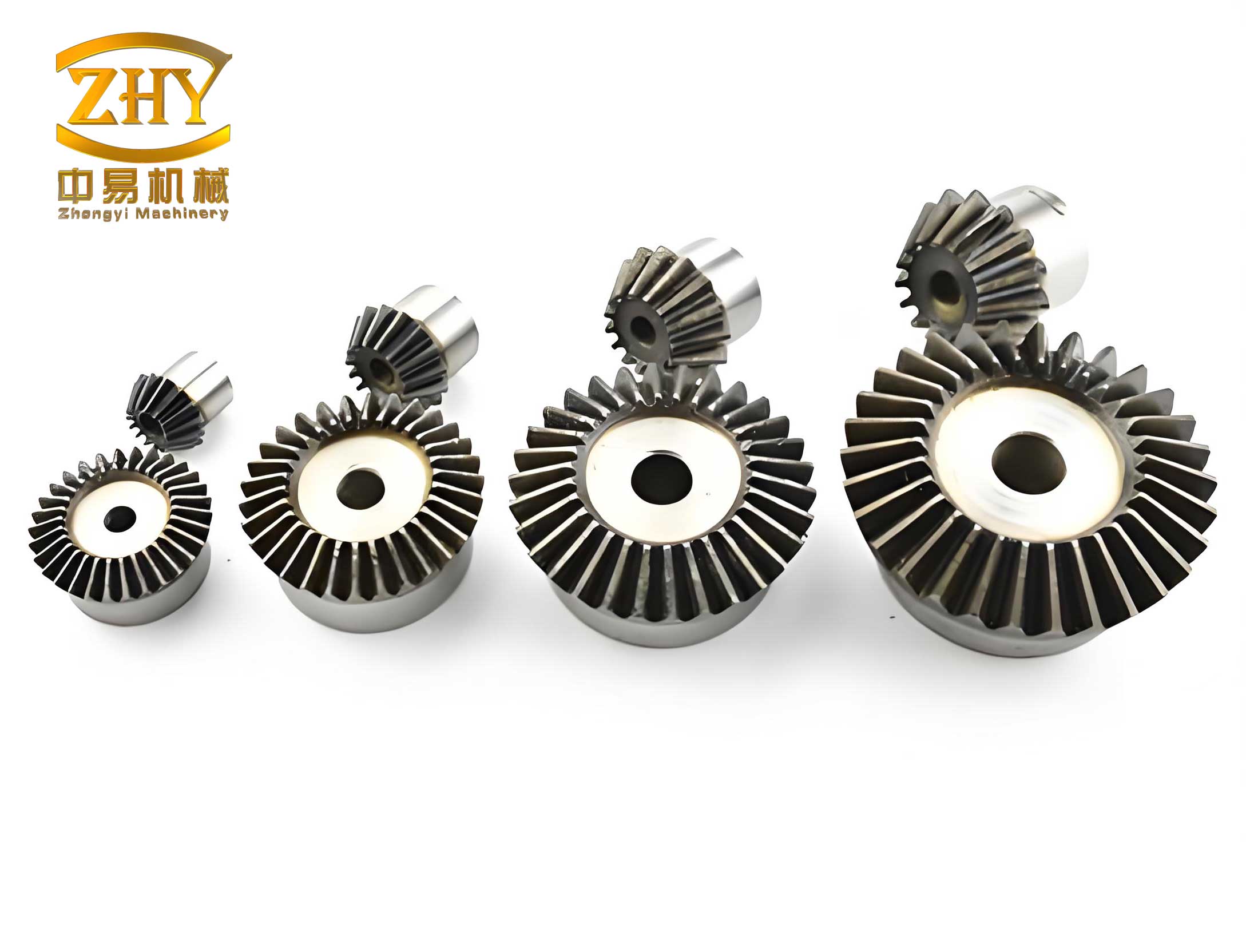
The bevel gear in question was manufactured from 18Cr2Ni4WA steel, a low-alloy carburizing grade commonly used for high-strength applications. The specified heat treatment involved case carburization of the tooth surfaces to a depth of 0.5 to 0.8 mm, achieving a surface hardness of ≥58 HRC, while the core hardness was required to be between 35 and 45 HRC. This combination is designed to provide a hard, wear-resistant surface capable of withstanding contact stresses, coupled with a tough core to resist bending loads. The gear operated in a dual-mode system: during engine start-up, it was driven by the starting generator via the mating bevel gear on the starting tooth flank, and during normal engine operation, it drove the mating gear on the working tooth flank.
Fatigue failure is a process driven by cyclic stresses below the material’s ultimate tensile strength. For a bevel gear, the primary failure modes include bending fatigue at the tooth root and contact fatigue (pitting) on the tooth flank. The bending fatigue life is governed by the applied cyclic stress at the root fillet, which can be approximated using the Lewis formula and its refined versions. The nominal bending stress at the root of a gear tooth can be expressed as:
$$ \sigma_F = \frac{F_t}{b \cdot m_n} \cdot Y_F \cdot Y_S \cdot Y_\beta \cdot K_A \cdot K_V \cdot K_{F\beta} \cdot K_{F\alpha} $$
Where:
$F_t$ is the tangential load at the reference cylinder,
$b$ is the face width,
$m_n$ is the normal module,
$Y_F$ is the tooth form factor (a function of tooth geometry and load application point),
$Y_S$ is the stress concentration factor,
$Y_\beta$ is the helix angle factor,
$K_A$ is the application factor,
$K_V$ is the dynamic factor,
$K_{F\beta}$ is the face load factor for bending, and
$K_{F\alpha}$ is the transverse load factor for bending.
For a straight bevel gear, the load application point significantly influences $Y_F$. If the contact pattern deviates from the ideal central position, the effective moment arm increases, leading to higher bending stresses. Furthermore, the stress concentration factor $Y_S$ is highly sensitive to the root fillet radius. A sharp transition or a small fillet radius can drastically increase the local stress, which is critical for fatigue initiation. The relationship between the theoretical stress concentration factor $K_t$ and the fillet radius $r$ for a simple geometry can be modeled as:
$$ K_t \propto \left( \frac{t}{r} \right)^{m} $$
where $t$ is a characteristic dimension (like tooth thickness) and $m$ is an exponent typically between 0.5 and 0.7 for such notches. Therefore, even minor deviations in the manufacturing of the root fillet can have a profound impact on fatigue performance.
Examination Process and Initial Findings
My investigation began with a meticulous visual inspection of the failed bevel gear. The overall gear exhibited no signs of overheating or discoloration. The fracture was localized to a single tooth, presenting a characteristic “spalled” or “dug-out” appearance at the root on both the working and starting flanks when viewed from the small end of the bevel gear. This visual cue immediately suggested a bending-dominated failure origin. Closer examination of the tooth contact patterns on the failed tooth and its neighbors revealed a critical anomaly. The wear marks, indicative of the meshing contact area, were not centered on the tooth profile. Instead, they were biased towards the tooth tip and, axially, towards the small end of the gear. This pattern deviation suggested misalignment or an incorrect meshing position, which would inherently alter the load distribution and increase the bending moment at the root.
The fracture surface was then carefully examined. Macroscopically, it displayed two distinct regions. The larger area (over 80% of the cross-section) was relatively flat and exhibited clear progression marks or “beach marks” radiating from a region near the root surface. The smaller area was rough and granular, typical of final overload fracture. The convergence of the progression marks pointed to the fatigue origin at the root fillet on the working flank, approximately 1-3 mm from the small end. Scanning Electron Microscopy (SEM) examination confirmed the fatigue mechanism. The origin region was a linear source about 2 mm in length, with no evidence of inherent material defects like inclusions or voids. The propagation zone showed fine, localized fatigue striations, which are the microscopic signature of cyclic crack advance. The spacing of these striations can sometimes be correlated with the stress intensity factor range, $\Delta K$, through the Paris law:
$$ \frac{da}{dN} = C (\Delta K)^m $$
where $da/dN$ is the crack growth rate per cycle, and $C$ and $m$ are material constants. While precise measurement was not performed here, their presence unequivocally confirmed fatigue as the failure mode.
Detailed Metrological and Material Analysis
To quantify potential manufacturing deviations, I conducted precise measurements of key geometric parameters. The specification required a root fillet radius between 0.3 mm and 0.4 mm at both the small and large ends of the teeth. Measurements were taken on the failed tooth and several adjacent teeth, focusing on the fillet on the working flank side. The results are summarized in the table below.
| Measurement Location | Small End Fillet Radius (mm) | Large End Fillet Radius (mm) |
|---|---|---|
| Failed Tooth | 0.44 | 0.67 |
| Adjacent Tooth 1 | 0.52 | 0.69 |
| Adjacent Tooth 2 | 0.58 | 0.72 |
| Adjacent Tooth 3 | 0.54 | – |
| Tooth Opposite Failed 1 | 0.54 | 0.71 |
| Tooth Opposite Failed 2 | 0.52 | – |
The data reveals a consistent trend: the fillet radii at the small end, while within the upper bound of the specification, are generally smaller than those at the large end. More importantly, visual inspection under a microscope revealed poor transition or “kneeing” at the fillet on the small end for several teeth. This is often a result of a tool path discontinuity during the grinding or machining process, leaving a sharp edge or a non-tangential blend. Such a feature acts as a potent stress concentrator.
Next, I measured the tooth thickness, a critical parameter for ensuring proper meshing and load sharing. The drawing requirement was $3.10_{-0.06}^{0}$ mm. I compared the failed gear with a gear that had successfully operated for 1000 hours and a reference master gear.
| Item | Drawing Requirement (mm) | Failed Bevel Gear (mm) | 1000h Gear (mm) | Reference Sample (mm) |
|---|---|---|---|---|
| Tooth Thickness | 3.10 -0.06/+0 | 3.30 | 3.108 | 3.04 – 3.05 |
The failed bevel gear exhibited a significant positive deviation of 0.20 mm beyond the maximum allowable limit. This meant the tooth was excessively thick. Given that the mating gear’s tooth thickness was within specification and the assembly records indicated acceptable backlash, this deviation would force an axial displacement of the gear during assembly to achieve the required clearance. Effectively, the installed position of this bevel gear would be offset axially from its theoretical design position.
Material integrity was assessed through metallography and hardness testing. Transverse sections through the fractured tooth were prepared. The microstructure of the carburized case was martensitic with a small amount of retained austenite, rated as a standard Grade 2 structure, which is acceptable. The core microstructure consisted of low-carbon martensite, also normal for this steel grade after quenching. Hardness traverses confirmed the treatment was performed correctly.
| Item | Case Depth (mm) | Subsurface Hardness (HV) | Core Hardness (HRC) |
|---|---|---|---|
| Failed Bevel Gear | 0.8 | 744 – 756 | 45 |
| Specification | 0.5 – 0.8 | ≥ 648 | 35 – 45 |
The results confirmed that the material properties of the bevel gear, including its fatigue resistance, were within the specified limits. Therefore, the cause of failure was not linked to inferior material quality or improper heat treatment.
Finite Element Analysis and Root Cause Synthesis
With the empirical data in hand, I proceeded to build computational models to simulate the stress state in the bevel gear under load. The goal was to isolate and quantify the effects of the two main anomalies: the tooth thickness error and the root fillet discontinuity. Finite Element Analysis (FEA) was conducted in two stages: a simplified 2D analysis of the fillet stress concentration and a more complex 3D analysis of the meshing condition due to assembly error.
For the 2D analysis, I employed the concept of an equivalent spur gear for the bevel gear at a specific cross-section. A plane stress model was created with a refined mesh at the root. Load was applied according to the 30° tangent method, simulating the worst-case bending load at the highest point of single tooth contact. Models with a perfect fillet and with various heights of a simulated “tool mark” or sharp edge at the fillet were analyzed. The key output was the maximum principal stress at the root. The results are summarized below.
| Nominal Fillet Radius (mm) | Tool Edge Height (mm) | Max. Root Bending Stress (MPa) | Stress Increase |
|---|---|---|---|
| 0.3 | 0 (Perfect) | 300 | Baseline |
| 0.3 | 0.12 | 375 | 25% |
| 0.3 | 0.18 | 385 | 28.3% |
| 0.4 | 0 (Perfect) | 265 | Baseline |
| 0.4 | 0.16 | 365 | 37.7% |
| 0.4 | 0.24 | 375 | 41.5% |
| 0.5 | 0 (Perfect) | 250 | Baseline |
| 0.5 | 0.20 | 310 | 24% |
| 0.5 | 0.30 | 320 | 28% |
The analysis unequivocally demonstrated that the presence of a sharp transition at the root fillet, even with a nominal radius within print, can elevate the localized bending stress by 25% to over 40%. This significantly reduces the fatigue strength of the bevel gear tooth. The stress concentration factor $K_f$ for fatigue can be related to the theoretical $K_t$ and the material’s notch sensitivity $q$:
$$ K_f = 1 + q (K_t – 1) $$
For high-strength steels like 18Cr2Ni4WA, $q$ is high, meaning the material is very sensitive to notches, making the observed geometric discontinuity particularly detrimental.
The second FEA model was a full 3D contact analysis of the bevel gear pair. I created accurate solid models of the pinion (the failed active bevel gear) and its mating gear. Three different assembly scenarios were simulated: nominal assembly, assembly with the pinion axially displaced outward by 0.2 mm (simulating the effect of its oversized tooth thickness), and assembly with the mating gear axially displaced outward by 0.2 mm. The contact patterns and the maximum bending stress at the root of the pinion’s tooth were extracted.
| Assembly Scenario | Contact Pattern on Pinion | Max. Bending Stress at Pinion Root (MPa) | Stress Increase vs. Nominal |
|---|---|---|---|
| Nominal Meshing | Centrally located | 280 (Baseline) | 0% |
| Pinion offset +0.2 mm | Biased towards pinion root | ~420 | ~50% |
| Gear offset +0.2 mm | Biased towards pinion tip | ~450 | ~60% |
The 3D FEA revealed that the axial misassembly, directly caused by the tooth thickness error, drastically alters the load distribution. The contact shifts from the central region towards an edge (either the root or the tip), creating a severe bending moment arm. This misalignment alone increased the maximum bending stress at the critical root location by 50-60%. When this elevated stress is combined with the additional stress concentration from the poor fillet geometry at the small end—the very location where the contact pattern was also biased—the resultant stress easily exceeds the fatigue endurance limit of the material.
Synthesizing all findings, the failure mechanism of this bevel gear is clearly delineated as a multi-stage process. First, a manufacturing error produced a tooth thickness exceeding the maximum allowable limit. During assembly, this forced an axial positional compromise, leading to a systematic misalignment and edge-loading condition. This misalignment increased the nominal bending stress at the tooth root by over 50%. Second, a separate manufacturing flaw in the machining/grinding process left a sharp transition or “knee” at the root fillet, predominantly at the small end of the teeth. This geometric discontinuity acted as a potent stress raiser, further amplifying the local stress by an additional 25-40%. The combination of these two factors created a local stress field at the root fillet on the working flank that was significantly higher than the design intent and the material’s fatigue strength. Cyclic operation under this condition initiated a fatigue crack at the stress concentration site. The crack propagated under continued cyclic loading, following the path of maximum tensile stress, until the remaining ligament could no longer support the load, resulting in final overload fracture. The entire fracture morphology, from the off-center origin to the final rupture zone, is perfectly consistent with this sequence of events.
Preventive Measures and General Implications for Bevel Gear Design
Based on this analysis, I recommended specific corrective actions focused on manufacturing process control. For the tooth thickness error, statistical process control (SPC) charts should be implemented for the gear hobbing and subsequent grinding operations. The capability indices ($C_p$, $C_{pk}$) for tooth thickness must be monitored to ensure the process is centered and capable of holding the tight tolerance. The formula for process capability is:
$$ C_p = \frac{USL – LSL}{6\sigma} $$
and
$$ C_{pk} = \min \left( \frac{USL – \mu}{3\sigma}, \frac{\mu – LSL}{3\sigma} \right) $$
where $USL$ and $LSL$ are the specification limits, $\mu$ is the process mean, and $\sigma$ is the process standard deviation. A $C_{pk}$ value greater than 1.33 is generally considered acceptable for critical dimensions like bevel gear tooth thickness.
To address the root fillet issue, the gear grinding procedure must be reviewed. The tool path programming should ensure a smooth, tangential blend between the tooth flank and the root fillet. Post-process inspection should include a qualitative check of the fillet transition under low-angle lighting or using a profilometer, in addition to verifying the fillet radius. A recommended practice is to specify not just a radius range but also a requirement for a smooth transition free of tool marks or discontinuities.
Furthermore, this case highlights the importance of a systems approach to gear design and manufacturing. The fatigue life of a bevel gear is not solely determined by its material strength but is a complex function of geometry, assembly, and load history. Designers should consider the sensitivity of bending stress to assembly errors. A robustness analysis, perhaps using Monte Carlo simulations incorporating dimensional tolerances, could be valuable. The effective bending stress considering variations can be modeled as:
$$ \sigma_{F, eff} = \sigma_{F, nom} \cdot f_{geometry} \cdot f_{assembly} \cdot f_{load} $$
where each $f$ factor represents a multiplier accounting for deviations from nominal conditions. For critical applications, specifying a higher grade of gear accuracy (e.g., AGMA Class 12 or better) may be justified to minimize runout and pitch errors that contribute to uneven load distribution among teeth.
In conclusion, the fracture of this active bevel gear was a definitive bending fatigue failure initiated by excessive cyclic stress at the tooth root. The root cause was traced to two synergistic manufacturing defects: a tooth thickness error leading to assembly misalignment and a localized stress concentration due to a poor root fillet transition. This investigation underscores the critical need for stringent dimensional control and surface finish quality in the production of high-performance bevel gears. Subsequent implementation of enhanced process controls and inspection protocols for these specific parameters successfully prevented the recurrence of such failures, validating the findings of this analysis. The methodologies employed here—combining traditional failure analysis techniques with advanced computational stress analysis—provide a robust framework for diagnosing and preventing fatigue-related failures in complex mechanical components like bevel gears.