
The reliable transmission of mechanical power fundamentally relies on the integrity of its components. Among these, cylindrical gears serve as quintessential elements within countless transmission systems. Their performance and operational lifespan are intrinsically linked to their resistance to various failure modes, with contact fatigue being a predominant and complex phenomenon governing long-term reliability.
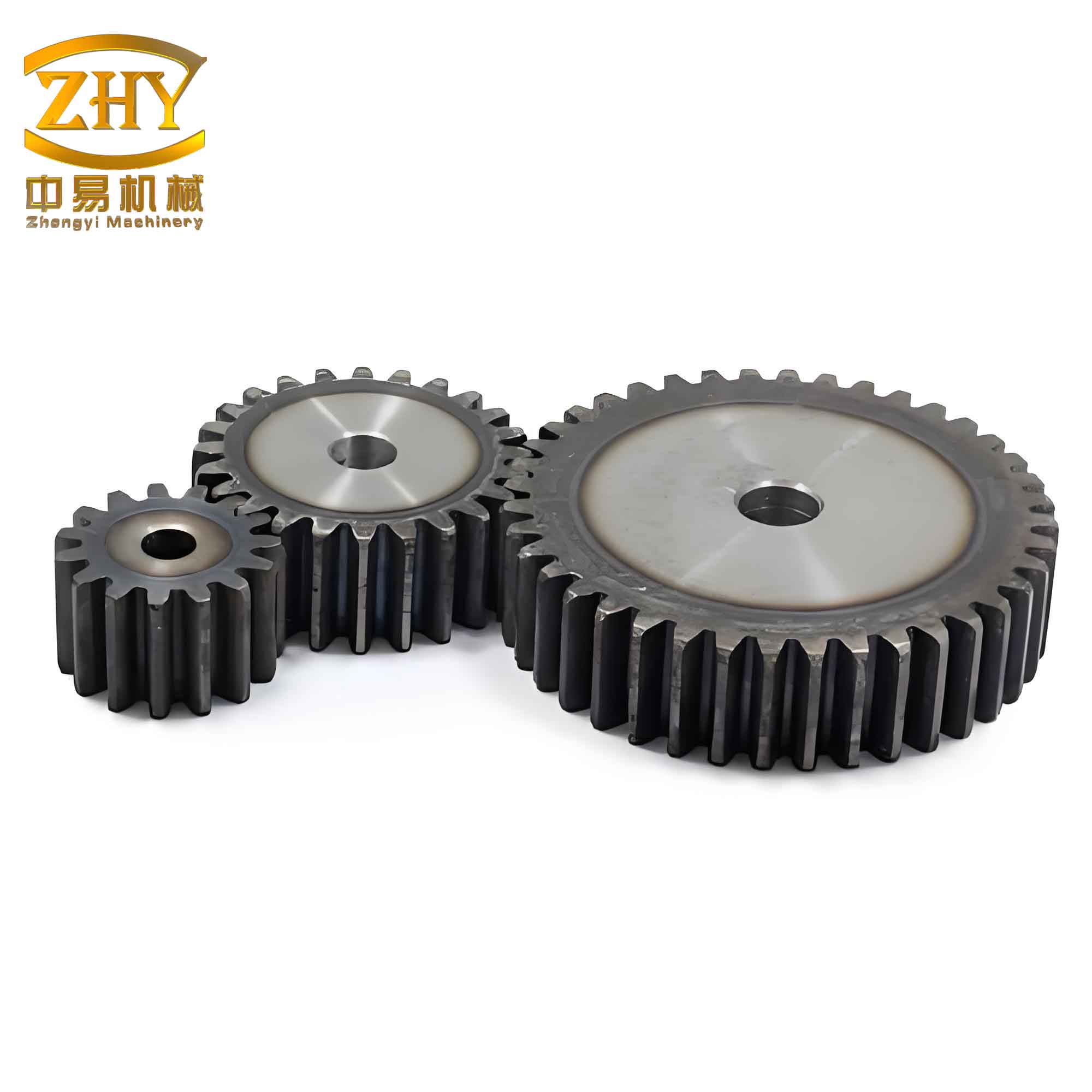
In service, the meshing action between gear teeth subjects their surfaces to cyclic rolling and sliding contact under significant load. This repeated stress application can initiate microscopic flaws beneath or on the surface, which may evolve into cracks. The subsequent propagation of these contact fatigue cracks dictates the ultimate failure mode. Typically, three primary paths are observed: shallow propagation leading to pitting and material spallation; subsurface growth parallel to the surface culminating in macro-scale spalling; or deep propagation towards the gear core, resulting in tooth fracture. Understanding the precise mechanics governing the initiation and, more critically, the propagation trajectory of these cracks is therefore paramount for the design of durable and safe cylindrical gears.
This investigation focuses on elucidating the crack propagation characteristics in a specific class of modern cylindrical gears. The core objective is to establish a predictive framework for fatigue life by analyzing the crack driving forces under various operational and geometric conditions. The methodology integrates numerical modeling of gear contact, advanced fracture mechanics simulation using the eXtended Finite Element Method (XFEM), and analytical calculation of key parameters like Stress Intensity Factors (SIFs).
Theoretical Foundation and Contact Analysis of Cylindrical Gears
The accurate prediction of crack behavior begins with a precise definition of the stress field from which the crack originates. For the cylindrical gears under study, the tooth geometry is characterized by an arc in the tooth trace direction and a variable hyperbolic curve in the profile direction. The mathematical definition of the tooth surface is derived from the gear generation principle, analogous to the face-milling of hypoid gears using a dual-blade cutter head.
The coordinate systems for the workpiece (gear blank) and the cutter are established. The position vector \(\mathbf{r}_i^{(c)}\) and unit normal vector \(\mathbf{n}_i^{(c)}\) for the cutting tool in the cutter coordinate system \(O_c x_c y_c z_c\) are given for both the straight blade segment and the tip fillet segment. Through coordinate transformation matrices \(\mathbf{M}_{di}, \mathbf{M}_{1i}, \mathbf{L}_{di}, \mathbf{L}_{1i}\), these are converted to the gear workpiece coordinate system \(O_d x_d y_d z_d\):
$$
\begin{aligned}
\mathbf{r}_i^{(d)}(u_i, \theta_i, \phi_i) &= \mathbf{M}_{di}(\phi_i) \mathbf{M}_{1i}(\theta_i) \mathbf{r}_i^{(c)}(u_i) \\
\mathbf{n}_i^{(d)}(u_i, \theta_i, \phi_i) &= \mathbf{L}_{di}(\phi_i) \mathbf{L}_{1i}(\theta_i) \mathbf{n}_i^{(c)}(u_i)
\end{aligned}
$$
This yields the complete tooth surface equation for the working flank and the fillet transition zone, defining the unique geometry of these cylindrical gears.
Contact between two such cylindrical gears occurs theoretically at a point, which under load deforms into an elliptical area. Determining the size and orientation of this contact ellipse is crucial for identifying regions of high stress concentration. The principal relative curvatures at the contact point are calculated from the gear geometry. The comprehensive radii of curvature in the tooth trace direction (\(R_x\)) and the profile direction (\(R_y\)) are:
$$
\frac{1}{R_x} = \frac{1}{R_{x}^{(p)}} + \frac{1}{R_{x}^{(g)}} = K_{x}^{(p)} + K_{x}^{(g)}, \quad \frac{1}{R_y} = \frac{1}{R_{y}^{(p)}} – \frac{1}{R_{y}^{(g)}} = K_{y}^{(p)} – K_{y}^{(g)}
$$
where \(K\) denotes curvature and superscripts \(p\) and \(g\) denote the pinion and gear, respectively.
Using Hertzian contact theory, the semi-major axis \(a\) and semi-minor axis \(b\) of the contact ellipse under a normal load \(\omega\) are:
$$
a = k_a \sqrt[3]{\frac{3\omega}{2E(A+B)}}, \quad b = k_b \sqrt[3]{\frac{3\omega}{2E(A+B)}}
$$
Here, \(E\) is the equivalent elastic modulus, \(k_a\) and \(k_b\) are coefficients dependent on the ellipse eccentricity \(e\), and \(A\), \(B\) are geometric parameters derived from the principal curvatures: \(A+B = \frac{1}{2}\left(\frac{1}{R_x} + \frac{1}{R_y}\right)\) and \(B-A = \frac{1}{2}\left(\frac{1}{R_x} – \frac{1}{R_y}\right)\).
Finite Element Analysis (FEA) of a gear pair model confirms the elliptical contact pattern and its trajectory across the tooth flank. A critical finding is that the highest contact stresses and smallest contact ellipses occur at the start of the single-tooth contact region. This location experiences a load step as the gear pair transitions from two-pair to single-pair contact, making it the most probable site for contact fatigue crack initiation in these cylindrical gears. This zone is identified analytically based on the gear geometry and meshing limits.
Modeling Crack Propagation Using XFEM in Cylindrical Gears
To simulate the growth of a crack from an initial flaw, the eXtended Finite Element Method (XFEM) is employed. Unlike conventional FEA, XFEM allows a crack to propagate through finite elements without requiring the mesh to conform to the crack geometry at each step. This is achieved by enriching the displacement field approximation with special functions that model the discontinuity across the crack face and the singularity at the crack tip.
For a domain \(\Omega\) containing a crack, the displacement field \(\mathbf{u}^h(\mathbf{X})\) is approximated as:
$$
\mathbf{u}^h(\mathbf{X}) = \underbrace{\sum_{i \in N} N_i(\mathbf{X}) \mathbf{u}_i}_{\text{Standard FEM}} + \underbrace{\sum_{j \in S} N_j(\mathbf{X}) H(\mathbf{X}) \mathbf{a}_j}_{\text{Crack face enrichment}} + \underbrace{\sum_{k \in T} N_k(\mathbf{X}) \left( \sum_{l=1}^{4} \Phi_l(\mathbf{X}) \mathbf{b}_k^l \right)}_{\text{Crack tip enrichment}}
$$
where:
- \(N_i(\mathbf{X})\) are the standard shape functions.
- \(\mathbf{u}_i\) are the standard nodal degrees of freedom (DOFs).
- \(H(\mathbf{X})\) is the Heaviside step function, creating a jump across the crack face. It is defined using the level set function \(\phi(\mathbf{X})\): \(H(\mathbf{X}) = \text{sign}(\phi(\mathbf{X}))\).
- \(\mathbf{a}_j\) are the added DOFs for nodes enriched by the crack face function (set \(S\)).
- \(\Phi_l(\mathbf{X})\) are the crack tip asymptotic functions in polar coordinates \((r, \theta)\): \(\left[ \sqrt{r} \sin\frac{\theta}{2}, \sqrt{r} \cos\frac{\theta}{2}, \sqrt{r} \sin\frac{\theta}{2} \sin\theta, \sqrt{r} \cos\frac{\theta}{2} \sin\theta \right]\).
- \(\mathbf{b}_k^l\) are the added DOFs for nodes enriched by the crack tip functions (set \(T\)).
The level set method tracks the crack geometry. The crack face is defined by \(\phi(\mathbf{X}, t) = 0\), and the crack front is located at the intersection of \(\phi(\mathbf{X}, t) = 0\) and another level set function \(\psi(\mathbf{X}, t) = 0\).
In this study, a semi-circular initial crack with a radius of 0.2 mm is embedded perpendicular to the tooth surface at the identified high-risk location (start of single-tooth contact) on the driving gear’s convex flank. A cyclic torque, simulating repeated meshing loads, is applied to the gear model. Crack propagation is governed by the maximum principal stress criterion, with propagation initiating when the stress at a crack tip exceeds a defined damage threshold (e.g., 100 MPa).
Crack Propagation Patterns and Parametric Influences
The XFEM simulation reveals a characteristic propagation path for contact fatigue cracks in these cylindrical gears. The crack initiates symmetrically, growing slowly towards the gear core. Subsequently, the dominant growth direction shifts towards the gear faces (along the tooth width). After reaching near the face, the crack may then turn back towards the core, eventually leading to tooth fracture. The angle between the crack path and the tooth surface is approximately 50°.
The influence of key geometric and operational parameters on the crack growth rate was systematically investigated.
Effect of Tooth Trace Radius (\(R_T\))
The tooth trace radius is a defining parameter for the curvature of these cylindrical gears. Simulations for different \(R_T\) values show distinct trends:
| Parameter Varied | Effect on Crack Growth Rate Towards Width | Effect on Crack Growth Rate Towards Core |
|---|---|---|
| Increasing \(R_T\) | Decreases | Increases |
This indicates that cylindrical gears with a smaller tooth trace radius (sharper longitudinal curvature) promote faster crack growth across the tooth face, while cracks in gears with larger radii tend to penetrate deeper initially.
Effect of Module (\(m\))
The module, defining the tooth size, significantly impacts crack behavior. Larger modules result in geometrically larger cylindrical gears.
| Parameter Varied | Effect on Crack Growth Rate (Both Directions) | Effect on Final Stable Crack Length in Core Direction |
|---|---|---|
| Increasing Module (\(m\)) | Increases | Increases |
For smaller modules (e.g., \(m \leq 3\) mm), the initial growth rates across the width were similar up to a certain number of load cycles.
Effect of Applied Torque (\(T\))
Higher operational loads naturally accelerate fatigue processes.
| Parameter Varied | Effect on Crack Growth Rate (Both Directions) | Effect on Cycle Count for Crack Initiation |
|---|---|---|
| Increasing Torque (\(T\)) | Increases | Decreases |
This confirms that higher loads not only make cracks propagate faster but also cause them to initiate earlier in the life of the cylindrical gears.
Analysis of Stress Intensity Factors (SIFs) in Cylindrical Gears
While XFEM simulates the crack path, a deeper quantitative understanding of the crack driving force is obtained through the analysis of Stress Intensity Factors (SIFs). In three-dimensional fracture mechanics, the stress field near a crack front is characterized by three modes: Mode I (opening, \(K_I\)), Mode II (sliding, \(K_{II}\)), and Mode III (tearing, \(K_{III}\)). For mixed-mode fatigue growth, the SIFs are crucial for predicting the growth rate and direction.
The M-integral method, an energy-based approach, is employed to extract accurate SIFs along the curved front of a three-dimensional crack in the cylindrical gear model. This involves creating a focused sub-model around the cracked tooth from the global FEA model and inserting the crack. The interaction integral \(M^{(1,2)}\) for two equilibrium states (actual and auxiliary) over a volume \(V\) surrounding the crack front is:
$$
M^{(1,2)} = \int_V \left[ \sigma_{ij}^{(1)} u_{i}^{(2)} + \sigma_{ij}^{(2)} u_{i}^{(1)} – W^{(1,2)} \delta_{1j} \right] \frac{\partial q}{\partial x_j} dV
$$
where \(q\) is a smooth weight function varying from 1 at the crack front to 0 at the boundary of \(V\), and \(W^{(1,2)} = \sigma_{ij}^{(1)} \epsilon_{ij}^{(2)} = \sigma_{ij}^{(2)} \epsilon_{ij}^{(1)}\). The SIFs are then related to the M-integral for specific auxiliary fields. For example, relating the actual state (state 1) to a pure Mode I auxiliary field (state 2a) yields \(K_I\):
$$
K_I = \frac{E}{2(1-\nu^2)} \frac{M^{(1,2a)}}{A_q}
$$
where \(A_q\) is the virtual crack extension area, \(E\) is Young’s modulus, and \(\nu\) is Poisson’s ratio. Similar relations give \(K_{II}\) and \(K_{III}\).
Analysis of SIFs during crack growth in cylindrical gears reveals a critical transition:
- Crack Initiation/Short Crack Stage (Size < 0.3 mm): \(K_I\), \(K_{II}\), and \(K_{III}\) are of comparable magnitude, indicating a complex, multi-axial stress state driving the initial flaw growth.
- Long Crack Propagation Stage (Size > 0.3 mm): \(K_I\) becomes dominant and increases steadily with crack extension, while \(K_{II}\) and \(K_{III}\) remain relatively small or even negative. This demonstrates that the sustained propagation of contact fatigue cracks in cylindrical gears is primarily driven by Mode I (tensile) opening.
Parametric Study on Mode I SIFs
The influence of design parameters on the dominant Mode I SIF was analyzed for various crack sizes.
Module (\(m\)): In the long crack stage, larger modules lead to higher \(K_I\) values both in the tooth width and core directions. The SIFs for different modules converge during the short crack stage but diverge significantly as the crack grows longer.
Tooth Trace Radius (\(R_T\)): During the transition from short to long crack, smaller \(R_T\) values (higher curvature) result in higher \(K_I\). However, in the deep long crack stage, a sufficiently large \(R_T\) (e.g., 300 mm) can effectively reduce the \(K_I\) at the crack front compared to smaller radii, suggesting a beneficial effect on retarding long crack growth in cylindrical gears.
Initial Crack Angle (\(\alpha\)): The orientation of the initial flaw matters. A crack perpendicular to the surface (\(\alpha = 90^\circ\)) has higher initial \(K_I\). However, a crack inclined towards the core (\(\alpha = 135^\circ\)) develops higher \(K_I\) values in the long crack propagation stage, potentially leading to more severe failure.
Conclusions
This comprehensive investigation into the contact fatigue crack propagation behavior of cylindrical gears has yielded several key insights that can guide their design and life prediction:
- Critical Failure Location: The region at the start of the single-tooth contact zone is identified as the most critical for contact fatigue crack initiation in these cylindrical gears, due to the load step and high contact pressure.
- Propagation Mechanism: Crack propagation is primarily driven by Mode I (opening) stress intensity factors after the initial short-crack stage. The characteristic path involves initial coreward growth followed by dominant growth across the tooth width, ultimately determining the functional life of the cylindrical gears.
- Influence of Gear Geometry:
- Module: Larger module cylindrical gears exhibit faster crack growth rates and higher stress intensity factors in the long crack stage.
- Tooth Trace Radius: A larger tooth trace radius can be beneficial, as it reduces the crack growth rate across the tooth width and can lower the Mode I SIF in the long crack stage, thereby enhancing resistance to contact fatigue failure in cylindrical gears.
- Influence of Operational Load: Higher applied torque accelerates both crack initiation and propagation, underscoring the importance of accurate load spectrum definition for life assessment of cylindrical gears.
- Influence of Initial Flaw: The orientation of initial surface defects significantly impacts the subsequent stress intensity. Inclined cracks may lead to higher driving forces in the long crack phase.
The integrated methodology combining contact mechanics, XFEM-based crack growth simulation, and fracture mechanics-based SIF analysis provides a powerful framework for assessing the contact fatigue performance of advanced cylindrical gears. The findings emphasize that optimizing geometric parameters, particularly the tooth trace radius, is an effective strategy for mitigating crack propagation and extending the service life of cylindrical gears in demanding applications.