
In the realm of automotive engineering, the Electric Power Steering (EPS) system has become a cornerstone for enhancing vehicle maneuverability and driver comfort. At the heart of many EPS systems lies a critical reduction mechanism: the screw gear pair, commonly referred to as a worm and gear set. The performance and durability of this screw gear transmission are paramount, as they directly influence steering feel, noise levels, and overall system longevity. My research focuses on a pivotal aspect of this mechanical interaction—the relationship between the center distance of the screw gears and the maximum contact stress experienced by the worm wheel during meshing. Understanding this relationship is essential for optimizing design parameters, minimizing wear, and preventing premature failure, thereby contributing to quieter and more reliable steering systems.
The contact between the screw gear teeth is a complex phenomenon governed by Hertzian contact mechanics. When the helical surfaces of the worm and the gear teeth engage, high localized stresses are generated. These stresses, if excessive, can lead to pitting, spalling, and ultimately, catastrophic failure. The center distance, defined as the distance between the rotational axes of the worm and the gear, is a fundamental geometric parameter. It not only dictates the basic gear geometry but also influences the backlash or tooth side clearance. In practical assembly, manufacturing tolerances, thermal expansion, and wear can cause deviations from the nominal center distance, altering the backlash and consequently, the contact conditions. This study aims to establish a mathematical correlation between the center distance and the peak contact stress on the worm wheel, employing both analytical methods based on Hertz theory and numerical simulations via finite element analysis (FEA).
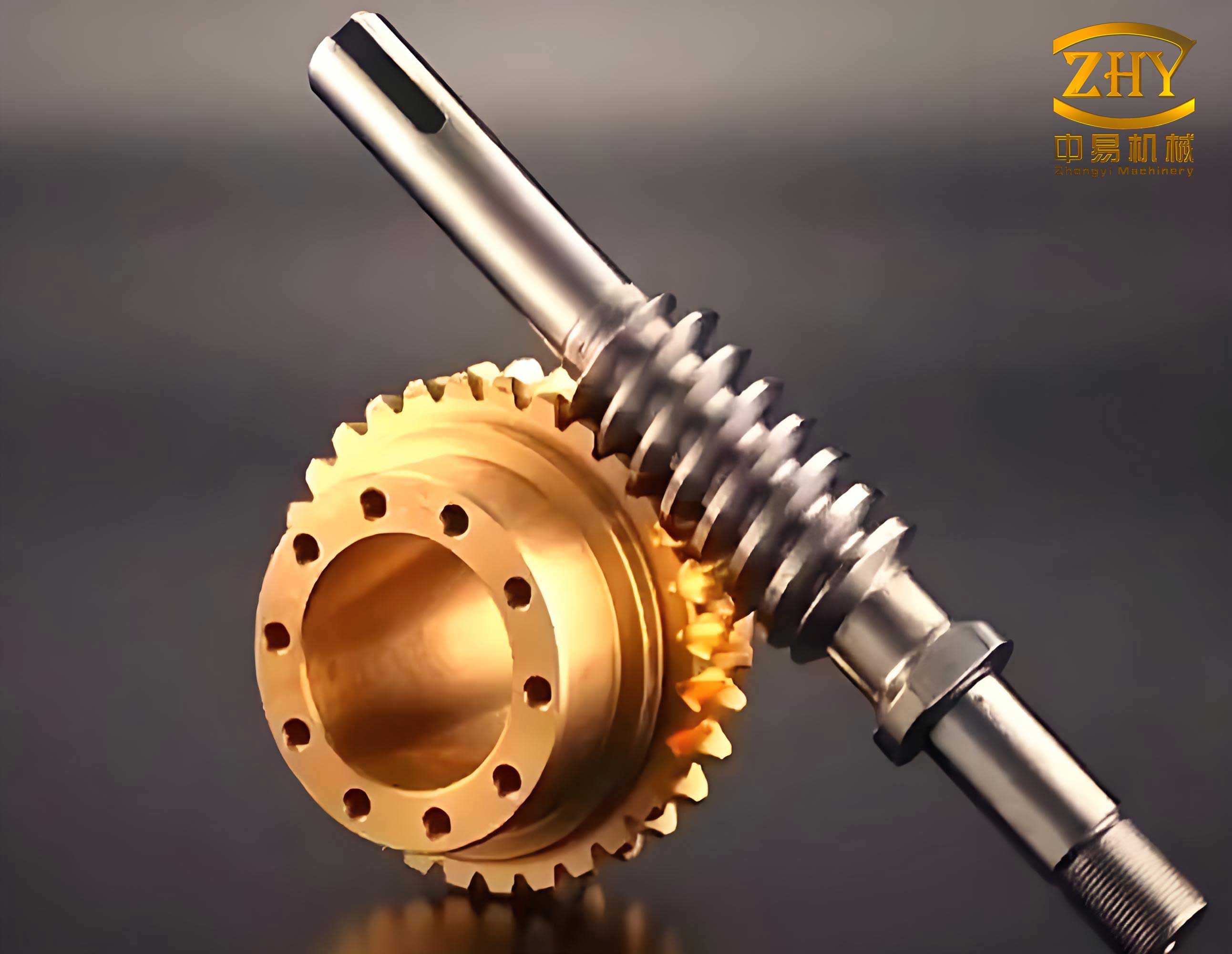
The fundamental theory for analyzing contact stresses in gear teeth originates from the work of Heinrich Hertz. For two elastic bodies in point or line contact, the maximum contact pressure can be derived from their geometry, material properties, and applied load. In the context of screw gears, the meshing action between the worm and the gear can be analogized to a modified gear-and-rack interaction due to the high helix angle of the worm. To develop an analytical model for the contact strength, several simplifying assumptions are made: the deformation of the worm wheel tooth is negligible, the load is uniformly distributed along the contact line, and the meshing process is quasi-static. These assumptions allow for a tractable formulation while capturing the essential physics.
The first step in the analytical derivation involves determining the minimum length of the contact line. For a single tooth pair in contact, the transverse contact ratio is taken as unity. Considering the enveloping geometry where the worm wheel teeth arc around the worm, the minimum contact line length $L_{min}$ is given by:
$$ L_{min} = \frac{2\pi d_1 \theta}{360^\circ \cos \gamma} $$
where $d_1$ is the pitch diameter of the worm, $\theta$ is half the tooth width angle (with a full angle of $150^\circ$), and $\gamma$ is the lead angle at the pitch cylinder. Next, the equivalent radius of curvature $\rho_n$ at the contact point is crucial. Approximating the worm surface as a rack in the normal plane, the composite radius of curvature is expressed as:
$$ \rho_n = \frac{d_2 \sin \alpha}{2 \cos \gamma} $$
Here, $d_2$ is the pitch diameter of the worm wheel, and $\alpha$ is the normal pressure angle. The normal force $F_n$ transmitted between the screw gears is a function of the output torque $T_2$, efficiency $\eta$, and geometric parameters:
$$ F_n = \frac{2000 \eta T_2}{d_2 \cos \alpha \cos \gamma} $$
The core Hertzian formula for contact stress $\sigma_{H0}$ for line contact is:
$$ \sigma_{H0} = Z_E \sqrt{ \frac{F_n}{L \rho_n} } $$
The material elasticity factor $Z_E$ for a plastic-steel gear pair, typical in EPS applications where the worm wheel is often made from engineering polymers like PA46 and the worm from steel, is approximately $50.3 \, \text{MPa}^{1/2}$. Substituting the expressions for $L_{min}$, $\rho_n$, and $F_n$ into the Hertz equation yields the analytical formula for the contact stress on the worm wheel tooth flank:
$$ \sigma_{H0} = Z_E \sqrt{ \frac{2000 \eta T_2}{\frac{\pi \theta d_1 d_2^2 \sin \alpha \cos \alpha}{360^\circ \cos \gamma}} } $$
This formula provides a direct, though simplified, relationship between the geometric parameters (including those influenced by center distance), transmitted torque, and the induced contact stress. The center distance $a$ implicitly affects $d_1$, $d_2$, and potentially $\gamma$ and $\alpha$ if the gear is profile-shifted. For the standard screw gear set studied here, the basic parameters are fixed, and the center distance variation is achieved through a change in the worm wheel’s addendum modification coefficient, effectively altering the operating pitch diameters and the backlash. The nominal parameters for the screw gears under investigation are summarized in the table below.
| Component | Number of Teeth | Face Width (mm) | Profile Shift Coefficient | Lead Angle at Pitch (°) | Center Distance (mm) | Normal Pressure Angle (°) | Normal Module (mm) |
|---|---|---|---|---|---|---|---|
| Worm | 2 | 36 | 0 | 17.73 | 45.00 | 14.5 | 2.0997 |
| Worm Wheel | 36 | 15 | 0.3036 | 17.73 |
The material properties for the steel worm and the PA46 plastic worm wheel are critical for both analytical and numerical calculations. Their key mechanical characteristics are listed in the following table.
| Material | Density (kg/m³) | Yield Strength (MPa) | Tensile Strength (MPa) |
|---|---|---|---|
| Steel (Worm) | 7850 | 780 | 1080 |
| PA46 (Worm Wheel) | 1100 | 84 | 140 |
While the analytical model offers valuable insights, it incorporates several simplifications. To capture the transient dynamics, non-uniform load distribution, and precise geometric interactions, a finite element analysis was conducted. The FEA model was constructed to simulate the moment just as the worm wheel tooth exits the mesh, which is often a critical instant for impact and high stress. To manage computational complexity and time, the model was simplified to a single tooth pair in engagement, representing the most loaded condition. The three-dimensional geometry of the screw gears was imported into pre-processing software, where the worm and a segment of the worm wheel containing one tooth were retained for analysis.
The pre-processing phase involved several crucial steps. The contact definition between the screw gear surfaces employed an augmented Lagrangian algorithm, known for its robustness in handling frictional contact problems with better convergence than the pure penalty method. A kinetic friction coefficient of 0.05 was assigned, representing the typical dynamic friction range (0.03 to 0.08) measured for such screw gear pairs. The mesh generation prioritized accuracy and efficiency; a hexahedral-dominated mesh with mid-side nodes was generated, resulting in 137,783 elements and 479,578 nodes. This type of mesh generally produces lower discretization errors and better convergence in dynamic analyses compared to tetrahedral meshes. The transient dynamics analysis was set up with a total time duration of 0.013 seconds, divided into 200 time steps, to adequately resolve the meshing impact event.
Boundary conditions were applied to replicate the operational constraints. The worm wheel’s central hub was constrained to allow only rotation about its axis, simulating its connection to the steering column. Similarly, the worm’s shaft was fixed in all translational degrees of freedom but permitted to rotate about its axis, representing its coupling to the electric motor. A constant rotational velocity of 147.03 rad/s was applied to the worm, while a resisting torque of 60 N·m was applied to the worm wheel, reflecting typical EPS operating conditions. The analysis solved for the dynamic response, extracting the time-history of contact stresses on the worm wheel tooth.
The center distance was systematically varied within a tolerance range of ±0.15 mm around the nominal value of 45.00 mm. For each specific center distance, the corresponding tooth side clearance (backlash) was determined from the geometric model. The FEA was then run for each configuration, and the maximum contact stress on the worm wheel tooth at the exit-from-mesh instant was recorded. The results are comprehensively presented in the table below, illustrating the interplay between center distance, backlash, and peak contact stress.
| Center Distance, $a$ (mm) | Tooth Side Clearance, $j$ (mm) | Maximum Contact Stress, $\sigma_{H_{max}}$ (FEA) (MPa) |
|---|---|---|
| 44.97 | 0.2128 | 96.218 |
| 44.98 | 0.2199 | 92.179 |
| 44.99 | 0.2270 | 90.131 |
| 45.00 | 0.2342 | 89.709 |
| 45.01 | 0.2413 | 90.958 |
| 45.02 | 0.2485 | 92.486 |
| 45.03 | 0.2556 | 92.979 |
A clear trend is observable from the FEA data. As the center distance increases from 44.97 mm to 45.00 mm, the maximum contact stress decreases, reaching a minimum value of approximately 89.71 MPa at the nominal center distance of 45.00 mm. Beyond this point, with further increase in center distance, the contact stress begins to rise again. This non-monotonic behavior indicates the existence of an optimal center distance that minimizes contact stress for this specific screw gear set. The relationship between the tooth side clearance $j$ and the maximum contact stress $\sigma_{H_{max}}$ was further analyzed by fitting a curve to the data points. A high-degree polynomial was found to provide an excellent fit. The relationship can be described by the following sixth-order polynomial function:
$$ \sigma_{H_{max}}(j) = 35070405632.00j^6 – 49349698222.72j^5 + 28902644000.61j^4 – 9018296753.98j^3 + 1581201136.29j^2 – 147714439.57j + 5744519.12 $$
The coefficient of determination $R^2$ for this fit is effectively 1.0, indicating that the curve accurately represents the trend within the studied range. This fitted function serves as a powerful predictive tool, allowing engineers to estimate the peak contact stress for any given backlash value within this interval, without performing a full FEA for each scenario. The underlying reason for this stress variation lies in the changing kinematics and load distribution. A smaller center distance (reduced backlash) increases the risk of tooth interference and may alter the effective contact ratio and the point of application of the force. Conversely, a larger center distance (increased backlash) can introduce more pronounced impacts at the moment of tooth engagement and disengagement, leading to higher dynamic loads and stresses. The minimum stress condition likely represents a balance where the contact pattern and load sharing are most favorable.
To validate the analytical model, the contact stress was also calculated using the derived formula for the same operating conditions ($T_2 = 60$ N·m). The results from both methods are compared in the subsequent table. It is important to recall that the analytical formula calculates a nominal contact stress based on steady-state assumptions, whereas the FEA captures the dynamic peak stress at a specific instant.
| Center Distance, $a$ (mm) | Backlash, $j$ (mm) | $\sigma_{H_{max}}$ (FEA) (MPa) | $\sigma_{H0}$ (Analytical) (MPa) | Absolute Difference (MPa) | Percentage Difference (%) |
|---|---|---|---|---|---|
| 44.97 | 0.2128 | 96.218 | 112.624 | 16.406 | 14.57 |
| 44.98 | 0.2199 | 92.179 | 106.714 | 14.535 | 13.62 |
| 44.99 | 0.2270 | 90.131 | 101.841 | 11.710 | 11.50 |
| 45.00 | 0.2342 | 89.709 | 99.155 | 9.446 | 9.53 |
| 45.01 | 0.2413 | 90.958 | 99.497 | 8.539 | 8.58 |
| 45.02 | 0.2485 | 92.486 | 102.663 | 10.177 | 9.91 |
| 45.03 | 0.2556 | 92.979 | 104.359 | 11.380 | 10.90 |
The comparison reveals that the analytical model consistently predicts higher contact stresses than the FEA, with differences ranging from about 8.6% to 14.6%. This discrepancy is expected and attributable to the simplifying assumptions in the analytical derivation. The formula assumes a perfectly uniform load distribution along the theoretical contact line and does not account for tooth deflection, dynamic effects, or stress concentration at the root or flank edges. In reality, the load is not uniform, and tooth compliance allows for some stress redistribution. Furthermore, the analytical stress is a nominal “bulk” stress, while the FEA identifies the precise local peak, which might be slightly smoothed by the numerical discretization. Despite these differences, the analytical model successfully captures the overall trend: the calculated stress also shows a minimum near the nominal center distance, validating its utility for preliminary design and trend analysis. The consistent overestimation also provides a built-in safety factor when using the analytical approach for design screening.
The implications of these findings for the design and maintenance of automotive EPS screw gear systems are significant. The identified non-linear relationship between center distance (or backlash) and contact stress underscores the importance of precise manufacturing and assembly tolerances. Deviations from the optimal center distance can lead to increased contact stresses, accelerating surface fatigue and wear mechanisms like pitting. This is particularly critical for the polymer worm wheel, whose yield and tensile strengths are substantially lower than those of the steel worm. The predictive polynomial model enables engineers to quickly assess the impact of tolerance stack-ups on contact performance. For instance, if wear over time increases the backlash beyond a certain threshold, the model can help estimate the corresponding rise in stress and inform maintenance schedules or redesign decisions. Furthermore, this research highlights the complex dynamic behavior of screw gears; the optimal point is not merely at zero backlash but at a specific positive value that minimizes dynamic impact loads. This insight can guide the specification of initial backlash in new EPS systems to balance noise, efficiency, and durability.
In conclusion, this integrated study employing both analytical mechanics and advanced finite element simulation has elucidated a fundamental relationship in automotive EPS screw gear pairs. The maximum contact stress on the worm wheel during the disengagement phase exhibits a distinct parabolic-like dependence on the center distance, decreasing to a minimum before increasing again. For the specific gear set analyzed, the minimum stress occurs at the nominal center distance of 45 mm, corresponding to a backlash of approximately 0.2342 mm. The phenomenon can be accurately modeled by a sixth-order polynomial function of the backlash, providing a valuable empirical tool for performance prediction. While the analytical Hertz-based formula offers a good first approximation and captures the trend, the finite element analysis provides a more accurate and detailed picture of the dynamic stress state, revealing differences of 9-15%. These results emphasize that careful control of the center distance in screw gear assemblies is crucial for maximizing contact strength and operational life. Future work could extend this analysis to include thermal effects, different material pairings, a wider range of center distance variations, and the influence of lubrication on the friction coefficient between the screw gears. Such investigations would further solidify the foundation for designing robust, quiet, and long-lasting electric power steering systems.