
The planetary roller screw assembly (PRSA) represents a highly efficient mechanical transmission device capable of converting rotary motion into linear motion, and vice versa, through rolling contact. Compared to traditional ball screws, the planetary roller screw assembly offers superior load-bearing capacity, higher permissible speeds, extended service life, and greater operational stability for equivalent dimensions. This makes the planetary roller screw assembly a critical component in demanding applications such as aerospace actuators, high-precision machine tools, robotics, and medical equipment.
Among the various configurations of planetary roller screw assemblies, the Inverted Planetary Roller Screw Mechanism (IPRSM) features a unique design where the nut acts as the rotational input element. This configuration allows the nut to be integrated directly with a rotary motor, often in a frameless design, creating a compact electromechanical actuator. The screw serves as the linear output member. This architecture is particularly advantageous for applications requiring high thrust density and direct drive capabilities. However, the dynamic behavior of an inverted planetary roller screw assembly under complex and variable operating conditions, especially during sudden load changes, remains challenging to predict and can significantly impact system precision and stability.
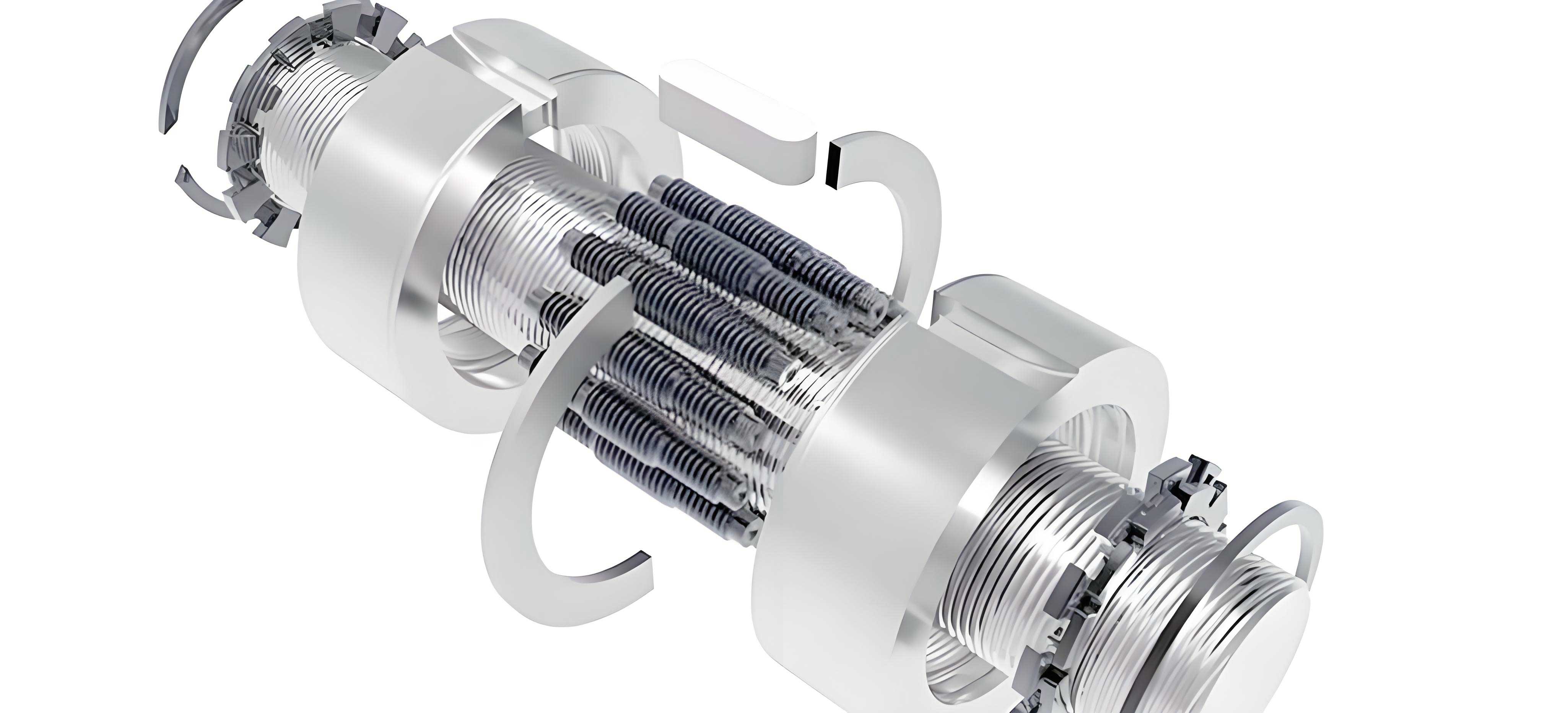
This paper presents a comprehensive analysis of the kinematic relationships and dynamic responses of an inverted planetary roller screw assembly. Beginning with fundamental motion principles, we derive the internal speed relations. A multibody dynamics simulation model is then developed and validated. Subsequently, the dynamic characteristics under sudden load variations are investigated in detail. Finally, the influence of PID control parameters on mitigating the effects of load transients is explored to enhance the system’s operational precision.
Kinematic Analysis of the Inverted Planetary Roller Screw Assembly
Working Principle and Motion Relationships
In an inverted planetary roller screw assembly, the nut is driven and rotates. Through threaded contact with the rollers, this rotary motion is transmitted. The rollers, distributed evenly around the screw by a retainer (or cage), undergo a compound motion: they rotate about their own axes (spin) and revolve around the screw axis (orbit), while also moving axially relative to the nut. The screw is prevented from rotating and thus translates axially, providing the linear output. The gearing at the ends of the screw and rollers ensures pure rolling contact between them, a key feature for efficiency and wear reduction.
The kinematics can be analyzed by considering the system as a planetary gear train combined with a helical transmission. Let us define the key angular velocities:
- $\omega_N$: Angular velocity of the Nut (input).
- $\omega_S$: Angular velocity of the Screw (output, $\omega_S = 0$ as it is rotationally fixed).
- $\omega_R$: Spin angular velocity of a Roller about its own axis.
- $\omega_P$: Orbital (or revolution) angular velocity of the Roller around the screw axis. This is also the angular velocity of the Retainer/Cage ($\omega_G$), i.e., $\omega_G = \omega_P$.
Considering the pure rolling condition at the screw-roller interface, the velocity瞬心 (instant center) of the roller relative to the screw is at the contact point. From geometry and velocity relations, the orbital speed of the roller can be expressed as:
$$ \omega_P = \frac{d_N}{d_N + d_S} \omega_N $$
where $d_N$ is the nut pitch diameter and $d_S$ is the screw pitch diameter.
Applying the planetary gear train formula to the system (considering the retainer as the carrier, the screw as the sun gear, and the roller gear as the planet gear), the transmission ratio in the converted mechanism is:
$$ i_{SR}^G = \frac{\omega_S – \omega_G}{\omega_R – \omega_G} = -\frac{d_R}{d_S} $$
Here, $d_R$ is the reference diameter of the roller gear. Since $\omega_S = 0$ and $\omega_G = \omega_P$, and knowing the total roller angular velocity relative to ground is $\omega_{RT} = \omega_R + \omega_P$, we can solve for the roller’s spin velocity $\omega_R$:
$$ \omega_R = \left( \frac{d_S + d_R}{d_S} \right) \omega_P $$
Substituting the expression for $\omega_P$ yields the final relation for roller spin:
$$ \omega_R = \frac{d_N (d_S + d_R)}{d_S (d_N + d_S)} \omega_N $$
The linear velocity of the screw $v_S$ is determined by the lead of the mechanism. For a multi-start screw/nut with $n$ starts and a pitch $P$, the relationship between nut rotation and screw displacement is:
$$ L_S = \frac{n P}{2\pi} \theta_N $$
Differentiating with respect to time gives the screw linear velocity:
$$ v_S = \frac{n P}{2\pi} \omega_N $$
These equations form the fundamental kinematic model of the inverted planetary roller screw assembly.
Dynamic Simulation Model Development
Geometric Modeling and Parameter Matching
To analyze dynamic behavior, a 3D model of an inverted planetary roller screw assembly was created based on established parameter matching principles to ensure proper meshing and function. The primary design parameters are summarized in Table 1.
| Component | Pitch Diameter (mm) | Lead (mm) | Number of Starts | Quantity |
|---|---|---|---|---|
| Screw | 14.0 | 2.0 | 4 | 1 |
| Nut | 21.6 | 2.0 | 4 | 1 |
| Roller | 3.6 | 0.5 | 1 | 10 |
Constraint and Contact Force Definition
A multibody dynamics model was built using ADAMS software. The following kinematic joints and constraints were applied to represent the real system:
- A Revolute Joint between the Nut and ground, allowing only rotation about the assembly axis. This joint is driven by the input motor/PID controller.
- A Cylindrical Joint between the Retainer (Cage) and ground, permitting both rotation and axial translation.
- A Revolute Joint between each Roller and the Retainer, allowing the roller to spin about its own axis.
- A Translational Joint between the Screw and ground, constraining it to pure axial motion.
Contact forces between the nut-roller and screw-roller threaded interfaces are critical for accurate dynamic simulation. The Impact function method was employed to model these contacts. The general form of the force is:
$$ F_{impact} =
\begin{cases}
0, & q > q_0 \\
K (q_0 – q)^e – C_{max} \cdot \frac{dq}{dt} \cdot STEP(q, q_0-d, 1, q_0, 0), & q \le q_0
\end{cases} $$
where:
$K$ is the contact stiffness,
$q$ is the distance between contact geometries,
$q_0$ is the free length or reference distance,
$e$ is the force exponent,
$C_{max}$ is the maximum damping coefficient,
$d$ is the penetration depth at which full damping is applied.
For components made of GCr15 bearing steel, typical contact parameters were used: $K = 1 \times 10^5$ N/mm, $e = 1.5$, $C_{max} = 50$ N·s/mm, $d = 0.2$ mm. Friction was modeled using the Coulomb method with static and dynamic coefficients of 0.3 and 0.25, respectively.
Model Validation under Steady Load
The dynamic model was first validated under a constant axial load of 5000 N applied to the screw, with a target nut speed of 300 rpm (31.42 rad/s) regulated by a basic PID controller. The steady-state simulated speeds were compared against theoretical values calculated from the derived kinematic equations. The results are presented in Table 2.
| Parameter | Theoretical Value | Simulated Value | Relative Error |
|---|---|---|---|
| Retainer Orbital Speed $\omega_P$ (rad/s) | 30.30 | 31.3 | 3.3% |
| Roller Spin Speed $\omega_R$ (rad/s) | 121.23 | 120.88 | 0.3% |
| Screw Linear Velocity $v_S$ (mm/s) | 16.07 | 16.25 | 1.1% |
The minor discrepancies are attributed to dynamic effects such as contact compliance, micro-vibrations, and slight clearances in the model, which are not considered in the rigid-body kinematic theory. The close agreement confirms the validity of the dynamic model for the inverted planetary roller screw assembly.
Dynamic Response to Sudden Load Changes
To investigate the behavior of the inverted planetary roller screw assembly under transient conditions, simulations were conducted where the axial load on the screw experienced a step change. The system was initially stabilized under a 500 N load. At time t=0.2s, the load was abruptly increased to three different levels: 1000 N, 1500 N, and 2000 N.
Effect on Rotational Speeds
The response of the nut, retainer, and roller speeds was analyzed. A consistent pattern was observed: immediately following the load step, all rotational velocities experienced a sudden drop before recovering to a new, slightly lower steady-state value. This is primarily due to the instantaneous increase in friction torque at the threaded contacts, which momentarily decelerates the rotating masses until the motor controller (PID) can compensate by increasing torque.
The magnitude of the speed drop is directly correlated with the magnitude of the load step. The data is summarized in Table 3.
| Load Step (N) | Nut Speed Drop, $\Delta \omega_N$ (rad/s) | Roller Spin Speed Drop, $\Delta \omega_R$ (rad/s) | Retainer Speed Drop, $\Delta \omega_P$ (rad/s) |
|---|---|---|---|
| 500 → 1000 | 1.10 | 0.62 | 3.42 |
| 500 → 1500 | 2.32 | 1.19 | 6.65 |
| 500 → 2000 | 3.52 | 1.93 | 9.56 |
The relationship is approximately linear, highlighting the significant impact of load transients on the operational speed stability of a planetary roller screw assembly.
Effect on Internal Contact Forces
The fluctuation in contact forces at the nut-roller and screw-roller interfaces was also examined. As expected, the mean contact force increased with the applied load. More importantly, the amplitude of force oscillations—the dynamic variation around the mean—also grew significantly with larger load steps.
For the nut-roller contact, the force fluctuation range increased from approximately 785 N for the 1000N step to about 1345 N for the 2000N step. A similar trend was observed for the screw-roller contact. This increase in dynamic force variation is attributed to several factors:
- Load Distribution Non-uniformity: The axial load is not shared perfectly equally among all engaged threads or rollers, especially during transients. This uneven distribution becomes more pronounced at higher loads.
- Enhanced Impact Effects: Higher loads can lead to greater elastic deformations and subtle changes in the kinematic path, potentially exacerbating micro-impacts within the assembly due to manufacturing tolerances and clearances.
Notably, the mean contact force on the nut side was consistently higher than on the screw side for the same axial load. This is a direct consequence of the difference in thread helix angles due to the different pitch diameters ($d_N > d_S$). The equilibrium of forces requires a larger normal contact force on the nut’s steeper helix to generate the same axial component. The mean forces for a 1500 N axial load are exemplarily compared in Table 4.
| Contact Interface | Approx. Mean Contact Force (N) | Reason |
|---|---|---|
| Nut – Roller | ~2930 | Smaller helix angle (larger pitch diameter) requires larger normal force for given axial force. |
| Screw – Roller | ~2570 | Larger helix angle (smaller pitch diameter) requires smaller normal force for given axial force. |
PID Control for Mitigating Load Transient Effects
To maintain precise linear velocity control of the screw in an inverted planetary roller screw assembly despite load disturbances, closed-loop control of the nut drive motor is essential. A Proportional-Integral-Derivative (PID) controller is commonly employed. The control law is given by:
$$ u(t) = K_p e(t) + K_i \int e(t) dt + K_d \frac{de(t)}{dt} $$
where $u(t)$ is the control output (e.g., motor torque or current), $e(t)$ is the speed error (target – actual), and $K_p$, $K_i$, $K_d$ are the proportional, integral, and derivative gains, respectively.
Simulations were conducted to analyze the effect of tuning the $K_p$ and $K_i$ parameters on the system’s response to the same 500 N to 1500 N load step. The derivative gain $K_d$ was kept at zero for this analysis to focus on the primary effects.
Effect of Proportional Gain ($K_p$)
Increasing the proportional gain $K_p$ strengthens the immediate response to an error. Simulation results demonstrated that a higher $K_p$ value significantly improves the system’s recovery from a load-induced speed drop:
- Faster Response: The time taken for the nut speed to return close to its setpoint after the disturbance was reduced.
- Reduced Speed Drop Magnitude: The depth of the initial speed sag was noticeably smaller with higher $K_p$.
- Smaller Steady-State Deviation: The final steady-state error after recovery was minimized.
For instance, with a low $K_p=10$, the steady-state nut speed error was about -1.7 rad/s after the transient. With a high $K_p=90$, this error was reduced to approximately -0.3 rad/s. This confirms that a well-tuned proportional gain is crucial for the dynamic stiffness and load disturbance rejection of a planetary roller screw assembly drive system.
Effect of Integral Gain ($K_i$)
The integral term works to eliminate steady-state error by integrating past errors over time. Analysis showed that while increasing $K_i$ effectively drives the long-term steady-state error toward zero, it has a much smaller effect on the initial response speed and the magnitude of the immediate speed drop compared to $K_p$.
However, increasing $K_i$ too much can lead to overshoot and oscillation during recovery. The optimal tuning for a planetary roller screw assembly subject to load transients typically involves a moderate to high $K_p$ for fast rejection, coupled with a sufficiently low $K_i$ to eliminate drift without causing instability.
Conclusion
This study conducted a thorough investigation into the motion characteristics of an inverted planetary roller screw assembly under variable load conditions through theoretical analysis and dynamic simulation. The key findings are summarized as follows:
- Validated Dynamic Model: A kinematic model was derived based on planetary gear and screw transmission principles. A corresponding multibody dynamics simulation model for the inverted planetary roller screw assembly was developed and validated against theoretical steady-state speeds, with errors less than 3.5%, confirming its accuracy.
- Dynamic Response to Load Transients: The inverted planetary roller screw assembly exhibits a distinct dynamic response to sudden load increases. All rotating components (nut, rollers, retainer) experience an instantaneous drop in speed, the magnitude of which is positively correlated with the size of the load step. Furthermore, internal contact force fluctuations increase significantly under larger load transients, indicating heightened dynamic stresses.
- Control Strategy for Performance Enhancement: PID control of the nut drive motor is an effective method to mitigate the adverse effects of load disturbances. Tuning the controller parameters directly influences system performance:
- Proportional Gain ($K_p$): Increasing $K_p$ enhances the system’s responsiveness, reducing both the depth of the speed drop and the recovery time. It is the primary parameter for improving dynamic load rejection in a planetary roller screw assembly.
- Integral Gain ($K_i$): Increasing $K_i$ is effective for eliminating steady-state speed error but has a limited effect on the initial transient response. Careful tuning is required to avoid instability.
The insights gained from this analysis provide valuable guidance for the design, application, and control system tuning of inverted planetary roller screw assemblies, particularly in applications prone to dynamic load variations where precision and stability are paramount.