
In the automotive industry, particularly for light-duty vehicles such as trucks, SUVs, and crossovers, the drive axle reducer assembly often relies on lightweight hyperbolic gears. These gears, known for their superior performance, offer significant advantages including enhanced smoothness, reduced noise levels, and the ability to lower the vehicle’s center of gravity due to the offset design of the pinion. This offset allows for greater torque transmission while reducing the overall weight of the drive axle assembly, contributing to material savings and improved vehicle layout flexibility. As a manufacturer deeply involved in this field, I have observed and implemented various processing techniques to optimize the “smoothness and low noise” characteristics of hyperbolic gears. Over the years, two primary finishing methodologies have emerged: the traditional lapping-only process and the more advanced grinding-lapping process. This article delves into these processes, comparing their technical parameters, efficiencies, and outcomes, with a focus on how the grinding-lapping approach has revolutionized the production of high-performance hyperbolic gears.
The fundamental appeal of hyperbolic gears lies in their complex geometry, which enables a larger contact area and more gradual engagement between teeth compared to traditional spiral bevel gears. This results in quieter operation and higher load-carrying capacity. However, achieving these benefits consistently requires meticulous control over the gear’s micro-geometry and surface integrity post-heat treatment. Heat treatment, while essential for hardening the gear teeth, inevitably introduces distortions and variations that must be corrected in the finishing stages. The choice of finishing process—whether lapping alone or a combination of grinding and lapping—directly impacts the final gear quality, production cost, and acoustic performance.
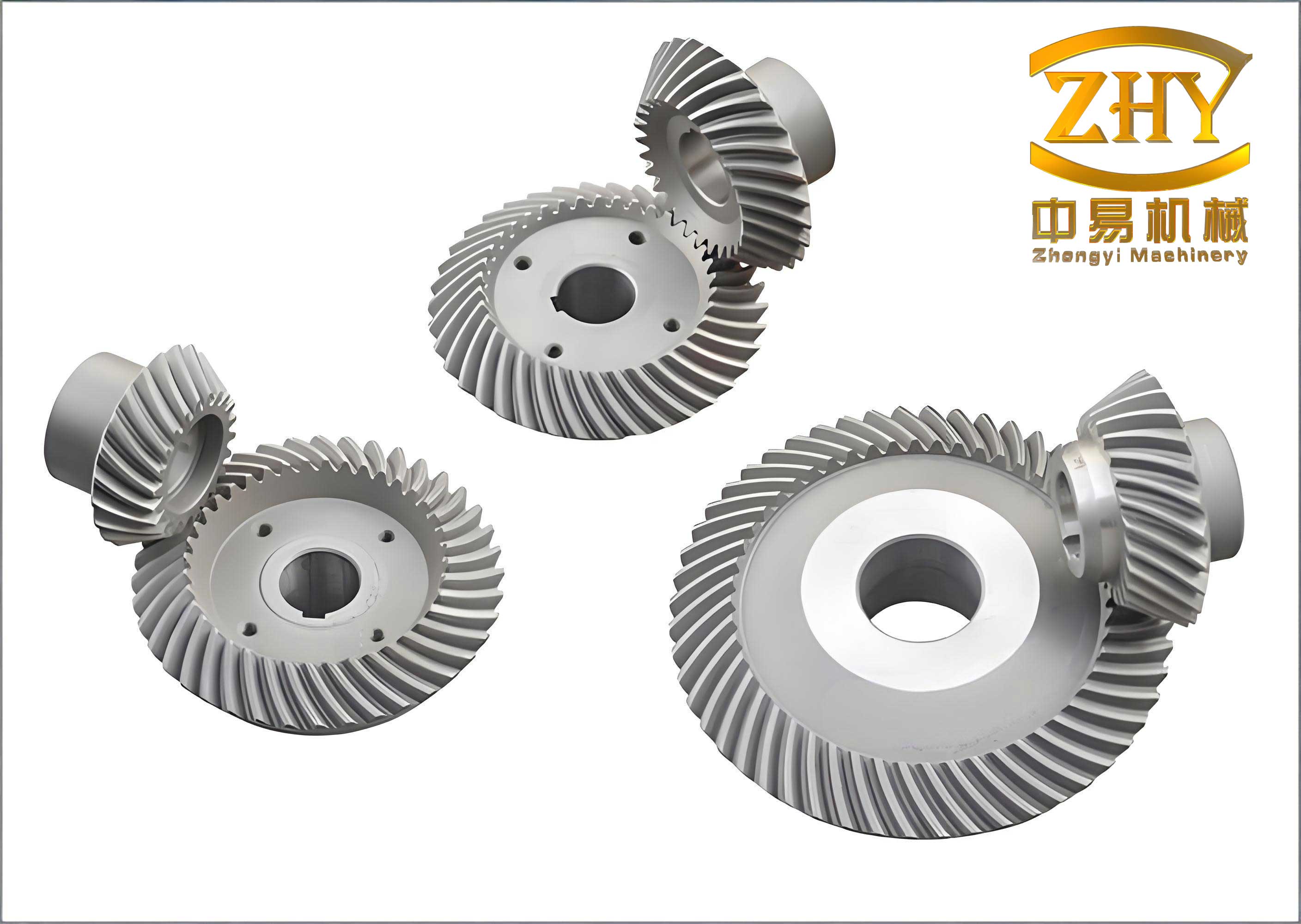
The traditional process for manufacturing lightweight hyperbolic gears, established since the 1970s with technology transfers from companies like Gleason, follows a well-defined sequence. It begins with forging the gear blank, followed by normalizing to relieve stresses. The blank is then machined to create the gear body, after which the teeth are cut via milling operations. Following this, the gears undergo heat treatment to achieve the desired hardness. The critical finishing step is lapping, performed on specialized machines such as those from Klingelnberg or Gleason, or on domestic lapping machines. The gears are then paired, inspected, and assembled. The technical specifications demanded after heat treatment in this traditional process are stringent. For instance, the surface roughness (Ra) must be 1.6 μm or better, the ring gear flatness must be within 0.08 mm, and the pinion bearing runout must be controlled to ≤ 0.01 mm. Gear accuracy parameters, such as pitch error, are typically held to Grade 7, and tooth thickness variation is limited to 0.04 mm. The lapping operation itself is time-consuming, requiring approximately 5 to 6 minutes on advanced CNC lappers and 7 to 8 minutes on domestic machines. The primary goal of lapping is to correct minor misalignments and establish a proper contact pattern between the pinion and ring gear. A controlled, centrally located contact pattern is traditionally aimed for, as shown in earlier documentation. The final gear pair noise under standard test conditions typically ranges between 74 and 76 dB. This process places a heavy burden on the pre-lapping stages; it requires excellent surface finish and minimal dimensional variation from the milling and heat treatment operations. To manage heat treatment distortion, which must be kept below 0.8 mm, secondary heating and press quenching are often necessary for the ring gear, adding complexity and cost.
In our pursuit of higher quality and efficiency, we adopted an enhanced process that introduces a grinding stage before lapping. Our process flow is: forging → normalizing → blank machining → milling → heat treatment → grinding → lapping → pairing → inspection. The introduction of grinding, specifically using advanced machines like the Klingelnberg G20 grinder, fundamentally changes the tolerance landscape. Post-heat treatment requirements can be relaxed because the grinding step is precisely designed to correct distortions and improve geometry. For example, the required surface roughness after heat treatment can be 0.8 μm Ra, which is improved upon by grinding. The ring gear flatness tolerance after heat treatment can be as high as 0.12 mm, as the subsequent grinding will true it. Similarly, pitch error is controlled to a superior Grade 5, and tooth thickness variation is reduced to 0.02 mm through grinding. The grinding operation itself employs different strategies for the pinion and ring gear. The pinion teeth are typically ground using a generating method, while the ring gear often uses a form grinding method. This precision grinding ensures excellent dimensional accuracy and surface geometry.
A key phenomenon in gear grinding is the creation of subtle grinding marks or “grinding worm” patterns on the tooth surface, oriented parallel to the pitch line. These microscopic patterns, if left unaddressed, can cause minute vibrations and contribute to gear noise during meshing. This is where the subsequent lapping operation becomes crucial. The lapping process in the grinding-lapping sequence serves a different primary purpose compared to the traditional method. Here, lapping’s main role is to eliminate these grinding marks and to subtly modify the contact pattern. Instead of a central pattern, the goal is to achieve a slight “inner diagonal” contact. This means the contact pattern is intentionally biased, which lengthens the path of contact along the tooth flank. This elongated contact promotes smoother meshing transitions as the gear teeth engage and disengage, particularly as the pinion enters and leaves the concave side of the ring gear tooth. The contact line typically starts at the root near the heel (outer end) and finishes at the tip near the toe (inner end). This inner diagonal contact significantly enhances quietness. It’s important to control the degree of this diagonal; excessive inner diagonal contact can reduce the pinion’s adjustment range during assembly. The lapping time in this combined process is dramatically shorter. On CNC lappers, it takes only 3 to 4 minutes, and on domestic machines, 5 to 6 minutes, representing a significant productivity gain. The final gear noise achieved is notably lower, typically in the range of 70 to 73 dB.
To quantitatively compare these two fundamental approaches for finishing lightweight hyperbolic gears, the following table summarizes the key process parameters and outcomes:
| Parameter / Feature | Traditional Lapping-Only Process | Grinding-Lapping Process |
|---|---|---|
| Core Process Steps | Forging → Normalizing → Blank Machining → Milling → Heat Treatment → Lapping → Pairing | Forging → Normalizing → Blank Machining → Milling → Heat Treatment → Grinding → Lapping → Pairing |
| Post-HT Surface Roughness (Ra) Requirement | ≤ 1.6 μm | ≤ 0.8 μm (further refined by grinding) |
| Ring Gear Flatness Post-HT | ≤ 0.08 mm | ≤ 0.12 mm (corrected by grinding) |
| Pinion Bearing Runout Control | ≤ 0.01 mm | ≤ 0.01 mm |
| Pitch Error Grade | Grade 7 | Grade 5 |
| Tooth Thickness Variation | 0.04 mm | 0.02 mm |
| Heat Treatment Distortion Control | Stringent (≤0.8mm), often requires press quenching | More lenient, distortion corrected by grinding |
| Primary Role of Lapping | Correct heat treatment distortions, establish central contact pattern | Remove grinding marks, establish inner diagonal contact pattern |
| Lapping Time (CNC Machine) | 5 – 6 minutes | 3 – 4 minutes |
| Lapping Time (Domestic Machine) | 7 – 8 minutes | 5 – 6 minutes |
| Typical Meshing Noise | 74 – 76 dB | 70 – 73 dB |
| Process Stability & Rework Rate | Moderate, higher dependency on pre-lapping quality | High, grinding ensures baseline geometry, lower lapping rework |
The benefits of the grinding-lapping process for lightweight hyperbolic gears are not merely empirical but can be understood through several technical principles. The improvement in noise level, for instance, can be related to better control over surface topography and transmission error. Transmission error (TE) is a primary excitationsource of gear noise. It is defined as the difference between the actual position of the output gear and the position it would occupy if the gear pair were perfectly conjugate. Minimizing TE is key to quiet operation. The grinding process achieves a more precise tooth flank geometry, reducing kinematic errors. The subsequent lapping then polishes the surface and optimizes the contact pattern to further smooth the transmission. A simplified expression for the relationship between sound pressure level (noise) and transmission error might be considered as a logarithmic function of the error amplitude and frequency components. While a complete acoustic model is complex, the reduction in dB can be conceptually linked to the reduction in error magnitudes achieved by grinding.
$$ L_p \propto 20 \log_{10}(TE_{rms}) + C(f) $$
Where \( L_p \) is the sound pressure level, \( TE_{rms} \) is the root mean square of the transmission error, and \( C(f) \) is a frequency-dependent constant. By using grinding to achieve a lower \( TE_{rms} \) from better gear geometry, the baseline noise is reduced.
Furthermore, the surface roughness parameter Ra is critically important for the durability and noise of hyperbolic gears. The grinding-lapping process achieves a superior final surface finish. The relationship between surface roughness, lubrication, and pitting fatigue life can be explored. The lifespan in stress cycles \( N \) for surface-initiated pitting is often related to the surface roughness via equations derived from bearing and gear contact fatigue theory. A common form is:
$$ N \propto \left( \frac{1}{R_a} \right)^m $$
where \( m \) is a positive exponent (often around 2-3 for hardened steels under elastohydrodynamic lubrication). Thus, halving the surface roughness (e.g., from 1.6 μm to 0.8 μm) can potentially increase the pitting life by a factor of four or more. Although lapping in both processes improves finish, the starting point after grinding is better, leading to a superior final state.
The economic and efficiency advantages are also significant. The reduced lapping time directly increases throughput. Let’s define a simple productivity metric \( P \) for the finishing cell as gears produced per hour. For the traditional process with a lapping time \( t_L^{trad} \) and for the grinding-lapping process with grinding time \( t_G \) and lapping time \( t_L^{GL} \), the effective cycle time per gear set is different. Assuming grinding time \( t_G \) is approximately 2-3 minutes, the total added time for grinding and lapping in the new process might be comparable to or less than the extended lapping time in the old process when considering the reduced rework. More importantly, the yield is higher due to fewer rejected pairs from unsuccessful lapping. The reduction in lapping rework rate \( R \) from a higher baseline geometry accuracy translates to direct cost savings. If \( C_{rework} \) is the cost of re-lapping a pair, the savings per unit \( S \) can be approximated as:
$$ S = (R_{trad} – R_{GL}) \times C_{rework} $$
Where \( R_{trad} \) and \( R_{GL} \) are the rework rates for the traditional and grinding-lapping processes, respectively. In practice, \( R_{GL} \) is substantially lower because the grinding step ensures that all critical dimensions and flank forms are within a tight tolerance band before lapping begins. This makes the lapping operation more predictable and less corrective.
The technical execution of grinding for hyperbolic gears involves sophisticated machine tools and programming. The Klingelnberg G20 grinder, for example, uses CNC controls to guide the grinding wheel along the complex hyperbolic flank. The machine must account for the machine settings (root angle, tilt, etc.) that define the gear geometry. The grinding wheel profile itself is dressed to match the desired tooth form. For the pinion, the generating grinding method simulates the mating process with a virtual crown gear. The mathematical model for the pinion tooth surface in a generating process can be described by a set of parametric equations derived from the gear theory. If we denote the pinion tooth surface as a vector function \( \mathbf{r}_p(u, \theta) \), it is determined by the machine kinematics:
$$ \mathbf{r}_p(u, \theta) = \mathbf{M}_{pg}(\theta) \cdot \mathbf{r}_g(u) $$
Here, \( \mathbf{r}_g(u) \) is the profile of the grinding wheel (representing the crown gear tooth), \( \mathbf{M}_{pg}(\theta) \) is a transformation matrix representing the relative motion between the pinion and the grinding wheel (cradle rotation, work rotation, etc.), \( u \) is a profile parameter, and \( \theta \) is the motion parameter. The grinding process physically realizes this mathematical model with high precision.
For the ring gear, form grinding is often used where the grinding wheel profile is precisely the inverse of the tooth space. This ensures high accuracy but requires exact wheel dressing. The wear of the grinding wheel must be compensated for in-process to maintain accuracy over a batch of gears. This level of control is what allows the relaxation of heat treatment distortion tolerances. The grinding step effectively “resets” the gear geometry to the designed ideal, irrespective of the distortion introduced during hardening, as long as there is sufficient stock allowance.
The lapping process that follows grinding is a controlled abrasive process where the pinion and ring gear are run in mesh with a lapping compound (a mixture of abrasive particles and carrier fluid). The relative motion, axial positioning (pinion setting), and offset are adjusted to achieve the desired contact pattern and surface finish. The kinematics of lapping are simpler than grinding but require precise control to avoid over-lapping or creating an undesirable pattern. The inner diagonal contact is achieved by introducing a slight mismatch in the lapping machine settings compared to the theoretical conjugate position. This mismatch is carefully calibrated based on gear design and application requirements.
The quality of the final hyperbolic gear pair is assessed through multiple checks. Beyond the standard dimensional checks, the contact pattern test is paramount. The gears are run in a testing machine under light load with a marking compound applied to the teeth. The resulting pattern on the flank is inspected for location, size, and shape. For the grinding-lapping process, the ideal pattern shows a slight bias towards the inner diagonal. Another critical test is the noise test, conducted in a sound-attenuated chamber or using noise meters under defined load and speed conditions. The consistent achievement of 70-73 dB levels, as opposed to 74-76 dB, represents a significant acoustic improvement that is highly valued in modern vehicles for passenger comfort.
From a materials perspective, the entire process chain for lightweight hyperbolic gears is designed to work with alloy steels such as 20MnCr5 or similar grades. These steels offer good hardenability and core toughness. The heat treatment process, typically carburizing and quenching, is critical. Even with the grinding-lapping process’s tolerance for distortion, controlling the carburizing depth and case hardness uniformity is vital for consistent performance and grinding behavior. The case depth \( \delta_c \) must be sufficient to support the contact stresses. A common rule of thumb relates the minimum case depth to the module \( m_n \) of the gear:
$$ \delta_{c,min} \approx 0.2 \cdot m_n \quad \text{(for bending strength consideration)} $$
$$ \delta_{c,min} \approx 0.15 \cdot b_h \quad \text{(for pitting resistance)} $$
where \( b_h \) is the Hertzian contact half-width. These parameters are verified during quality audits.
In summary, the evolution from a traditional lapping-only process to an integrated grinding-lapping process represents a significant technological advancement in the manufacture of lightweight hyperbolic gears. This progression underscores a shift from relying on a single, time-consuming corrective step (lapping) to a two-stage approach where precision grinding establishes near-perfect geometry, and a shorter, more focused lapping operation fine-tunes the surface and contact pattern for optimal acoustic performance. The data clearly shows advantages in key areas: reduced gear noise (3-6 dB lower), shorter lapping cycle times (30-50% reduction), lower rework rates, and relaxed pre-finishing tolerances which can simplify earlier manufacturing steps and potentially reduce costs associated with distortion control like press quenching. For any manufacturer aiming to produce high-quality, quiet, and efficient drive axles for modern vehicles, adopting the grinding-lapping process for hyperbolic gears is a compelling strategy. It aligns with the automotive industry’s relentless drive towards higher performance, greater efficiency, and improved passenger comfort. The continued development of machine tools, abrasives, and process simulation software will only further enhance the capabilities and benefits of this advanced method for finishing the critical hyperbolic gear components at the heart of vehicle drivelines.