
In the field of materials processing, plastic forming processes, such as forging and rolling, are crucial for the advancement of high-end manufacturing industries like automotive and aerospace. However, traditional methods often rely on empirical parameter selection, face challenges in predicting deformation, and are prone to defects, which limit efficiency and quality improvements. To address these issues, we explore an intelligent plastic forming process leveraging machine learning techniques. This study focuses on the plastic forming of engine cylinder bevel gears, aiming to enhance production quality through data-driven optimization. By integrating machine learning, we design a comprehensive process, extract key parameters using principal component analysis, simulate forming operations, and implement deep learning for defect detection. The results demonstrate that our approach yields bevel gears with mechanical properties close to design specifications, improves forming success rates, and ensures product quality through accurate defect identification.
The plastic forming process for engine cylinder bevel gears involves multiple stages, each requiring precise control to meet material characteristics and product requirements. We begin by designing the process flow, which includes raw material preparation, forming operations, and post-processing. In raw material preparation, selecting appropriate materials is essential for bevel gears that must withstand high torque, speed, and complex operating conditions. We consider materials such as cast iron, aluminum alloys, and cast steel, as summarized in Table 1. Preprocessing steps, like degreasing and surface cleaning, are conducted to ensure material integrity before forming.
| No. | Material Name | Material Type | Chemical Composition Overview | Density (g/cm³) | Tensile Strength (MPa) | Yield Strength (MPa) | Elongation at Break (%) | Heat Treatment State | Remarks |
|---|---|---|---|---|---|---|---|---|---|
| 1 | Gray Cast Iron HT250 | Cast Iron | Primarily Fe, C, Si, Mn, S, P | 7.0–7.3 | ≥250 | ≥170 | ≥10 | Annealing or Normalizing | Excellent castability and machinability |
| 2 | Ductile Iron QT600-3 | Cast Iron | Primarily Fe, C, Si, Mn, Mg (nodulizer) | 7.2–7.4 | ≥600 | ≥370 | ≥3 | Quenching + Tempering | High strength and toughness |
| 3 | Aluminum Alloy A356 | Aluminum Alloy | Al, Si, Mg, Cu, Fe | 2.65–2.75 | 290–350 | 210–270 | 5–12 | T6 Heat Treatment | Lightweight material |
| 4 | Cast Steel ZG270-500 | Cast Steel | Primarily Fe, C, Si, Mn | 7.8–7.9 | 490–630 | 270–490 | 16–22 | Annealing or Normalizing + Tempering | High-strength cast steel |
The forming stage involves selecting methods like forging, which enhances microstructural properties, and setting process parameters. Given the high dimensionality of parameters (e.g., over 30 variables including equipment specs and processing conditions), we apply machine learning to identify the most influential ones. Principal component analysis (PCA) is employed to reduce dimensionality and eliminate correlations among parameters. Let the initial plastic forming process data be represented by a matrix \( X = [x_{ij}] \), where \( x_{ij} \) denotes the value of the \( j \)-th process parameter for the \( i \)-th sample, with \( n \) dimensions and \( m \) samples (\( m > n \)). After standardizing the data, we compute the correlation matrix \( R \). The eigenvalues \( \lambda_i \) and eigenvectors \( \mathbf{b}_i \) are obtained by solving:
$$ |R – \lambda_i I_n| = 0 $$
where \( I_n \) is the identity matrix. The principal components \( p_j \) are derived as:
$$ p_j = Z \times \mathbf{b}_j, \quad j = 1, 2, \dots, l $$
Here, \( Z \) is the standardized matrix, and \( l \) is the number of principal components selected based on the cumulative contribution rate \( \gamma \), calculated as:
$$ \frac{\sum_{i=1}^k \lambda_i}{n} \geq \gamma $$
We set \( \gamma = 0.93 \), meaning that the first \( l \) components capture over 93% of the variance, effectively reducing data redundancy. For instance, Table 2 shows the correlation coefficients among some key parameters, highlighting strong interdependencies (e.g., between rough benchmark and blank benchmark with a coefficient of 0.96).
| Correlation Coefficient | Milling Machine Spec | Cylindricity | Blank Benchmark | Rough Benchmark | Surface Roughness | Roundness |
|---|---|---|---|---|---|---|
| Milling Machine Spec | 1 | 0.19 | 0.42 | 0.43 | 0.21 | 0.19 |
| Cylindricity | 0.19 | 1 | 0.26 | 0.41 | 0.15 | 0.97 |
| Blank Benchmark | 0.42 | 0.26 | 1 | 0.96 | 0.13 | 0.36 |
| Rough Benchmark | 0.43 | 0.41 | 0.96 | 1 | 0.19 | 0.22 |
| Surface Roughness | 0.21 | 0.15 | 0.13 | 0.19 | 1 | 0.25 |
| Roundness | 0.19 | 0.97 | 0.36 | 0.22 | 0.25 | 1 |
The contribution rates of the first 10 principal components are listed in Table 3, demonstrating that they encapsulate the majority of information, thus streamlining the parameter set for bevel gear forming.
| Principal Component | Contribution Rate (%) | Cumulative Contribution Rate (%) |
|---|---|---|
| 1 | 16.78 | 16.78 |
| 2 | 16.60 | 33.38 |
| 3 | 14.47 | 47.85 |
| 4 | 11.89 | 59.74 |
| 5 | 10.42 | 70.16 |
| 6 | 9.65 | 79.81 |
| 7 | 6.13 | 85.94 |
| 8 | 4.26 | 90.20 |
| 9 | 2.11 | 92.31 |
| 10 | 1.04 | 93.35 |
Using these extracted parameters, we prepare the bevel gear through plastic forming. The process involves heating the raw material to form a blank, lubricating it, and applying forging techniques to achieve the desired shape. Numerical simulations are conducted to predict potential issues, such as excessive strain or defects, allowing for preemptive adjustments. The simulated forming process optimizes parameters like temperature, pressure, and speed, ensuring that the bevel gear undergoes plastic deformation as intended. For example, the strain rate control is critical to avoid fractures; we monitor the allowable maximum strain versus the actual strain rate, as discussed later. The resulting bevel gear is then subjected to post-processing, including heat treatment (e.g., quenching and tempering) to enhance hardness and wear resistance, followed by defect inspection.
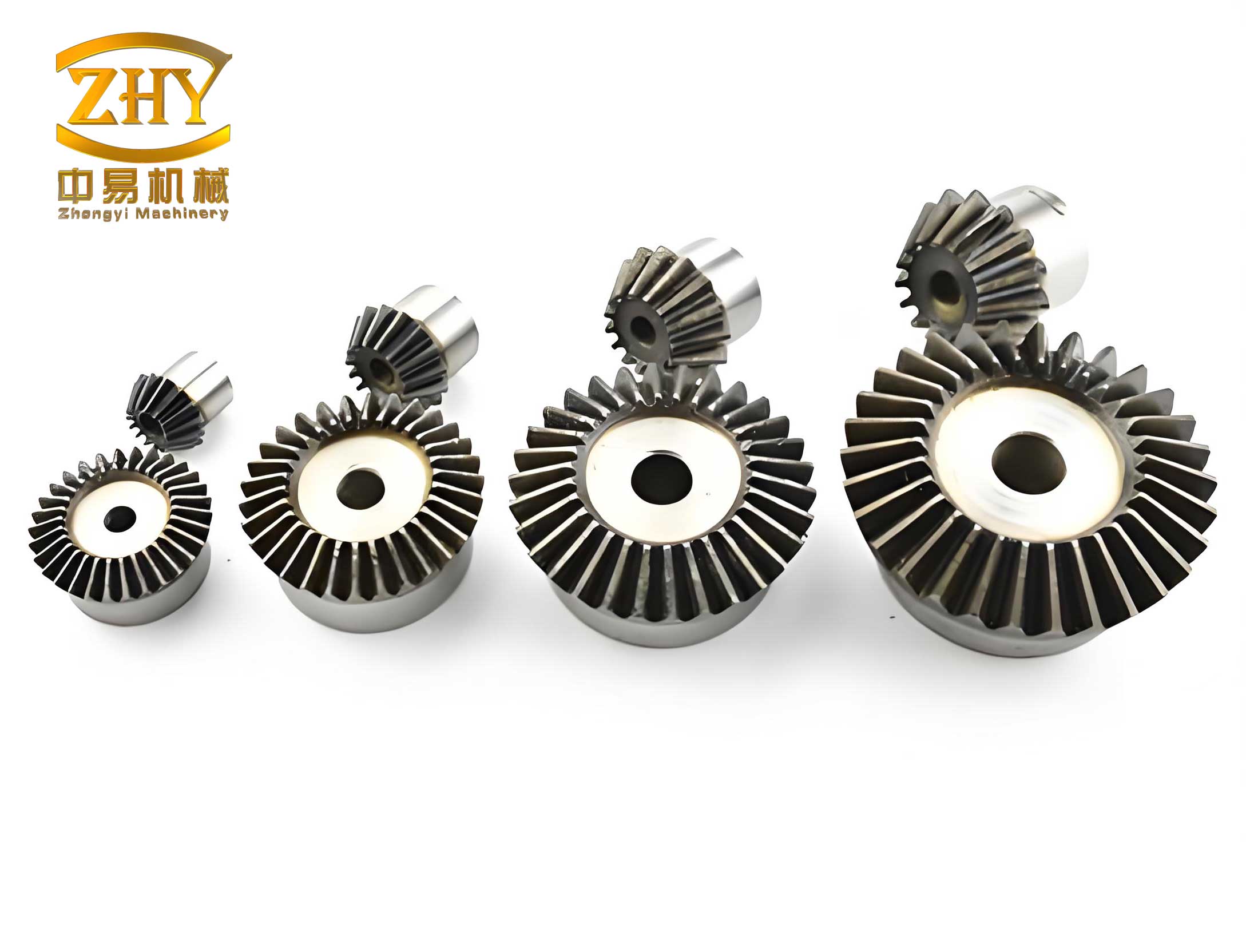
Defect detection is a vital step to ensure the quality of the bevel gear. Given the variability in raw material batches, which may lead to differences in strength, hardness, and toughness, we employ deep learning methods for accurate identification of flaws. The defect detection process, as illustrated in Figure 3 (though not explicitly referenced here), involves cascade classification, posterior probability computation, and decision-making based on weighted criteria. This approach enables the detection of subtle defects, such as pores, cracks, sand inclusions, and shape irregularities, which might be missed by manual inspection. The deep learning model is trained on image data of bevel gears, extracting features like texture and color variations to classify defects with high precision. For instance, Table 5 presents the detection results for random samples, showing alignment with actual defect conditions.
To evaluate the effectiveness of our machine learning-based plastic forming process, we conduct experiments on the produced bevel gears. Mechanical properties are tested, including Brinell hardness, tensile strength, yield strength, and elongation at break. The results are compared with the design expectations, as shown in Table 4. The bevel gears exhibit values close to or slightly higher than the design targets, indicating that the forming process maintains material integrity and meets specifications. For example, the tensile strength is 648 MPa versus an expected 652 MPa, a negligible difference that falls within acceptable tolerances. This consistency validates the parameter optimization achieved through PCA.
| Performance Indicator | Test Result of Formed Bevel Gear | Design Expectation |
|---|---|---|
| Brinell Hardness (N/mm²) | 228 | 232 |
| Tensile Strength (MPa) | 648 | 652 |
| Yield Strength (MPa) | 609 | 613 |
| Elongation at Break (%) | 16.0 | 15.8 |
Furthermore, we analyze the optimal strain rate control during forming, which is crucial for preventing material failure. The relationship between allowable maximum strain and strain rate is modeled to optimize forming time and thickness distribution. As the forming process progresses, the strain rate is adjusted dynamically: initially high to achieve rapid shaping, then gradually reduced to keep strain within limits. This control mechanism is expressed mathematically by monitoring the strain rate \( \dot{\epsilon} \) as a function of allowable strain \( \epsilon_{\text{max}} \). For the bevel gear, we observe that the actual strain rate peaks near 0.0015 and stabilizes around 0.0009 at higher strain levels, aligning with design curves that account for safety margins. This optimization enhances the forming success rate by minimizing risks of cracks or breaks in the bevel gear.
In terms of defect detection, we randomly select 10 bevel gear samples and apply our deep learning-based method. The results, summarized in Table 5, demonstrate accurate identification of various defects, such as porosity, cracks, sand inclusions, and cold shuts. The detection accuracy is high, with all identified defects matching the actual conditions, underscoring the reliability of the machine learning approach for quality assurance in bevel gear production.
| Sample ID of Bevel Gear | Detection Result: Defect Present? | Defect Type Identified | Actual Defect Condition |
|---|---|---|---|
| z-0001 | Yes | Porosity | Porosity |
| z-0013 | No | None | None |
| z-0042 | Yes | Crack | Crack |
| z-0054 | Yes | Sand Inclusion | Sand Inclusion |
| z-0075 | Yes | Sand Adhesion | Sand Adhesion |
| z-0079 | No | None | None |
| z-0092 | Yes | Porosity | Porosity |
| z-0108 | Yes | Shape Defect | Shape Defect |
| z-0139 | Yes | Cold Shut | Cold Shut |
| z-0160 | Yes | Insufficient Pouring | Insufficient Pouring |
The integration of machine learning into plastic forming offers several advantages for bevel gear manufacturing. By using PCA, we reduce the complexity of parameter selection, focusing on the most impactful variables. This not only speeds up the process but also improves consistency. The numerical simulations, guided by these parameters, allow for predictive adjustments, reducing trial-and-error cycles. Moreover, deep learning-based defect detection provides a robust quality control mechanism, ensuring that every bevel gear meets stringent standards. Compared to traditional methods, which often rely on operator experience and are prone to human error, our approach leverages data-driven insights to enhance precision and efficiency.
From a broader perspective, the application of machine learning in plastic forming aligns with Industry 4.0 trends, where smart manufacturing systems optimize production through real-time data analysis. For bevel gears, which are critical components in engines, achieving high quality and reliability is paramount. Our study demonstrates that machine learning can address key challenges, such as parameter optimization and defect detection, leading to improved product performance. Future work could involve expanding the dataset for training, incorporating more advanced algorithms like reinforcement learning for dynamic parameter adjustment, and exploring other forming techniques for bevel gears.
In conclusion, we have developed a machine learning-based plastic forming process for engine cylinder bevel gears that enhances production quality and efficiency. Through principal component analysis, we extract key process parameters, enabling optimized forming operations. Numerical simulations predict and mitigate issues, while deep learning methods accurately detect defects, ensuring that the final bevel gears meet design specifications. Experimental results confirm that the formed bevel gears exhibit mechanical properties aligned with expectations, and the forming success rate is significantly improved. This research contributes to the advancement of intelligent manufacturing in the automotive sector, offering a scalable framework for applying machine learning to complex forming processes. As the demand for high-performance bevel gears grows, such data-driven approaches will play an increasingly vital role in achieving sustainable manufacturing excellence.
To further elaborate on the mathematical foundations, the principal component analysis involves decomposing the covariance matrix of the standardized data. Let \( \Sigma \) be the covariance matrix, then the eigenvalues \( \lambda_i \) satisfy \( \Sigma \mathbf{v}_i = \lambda_i \mathbf{v}_i \), where \( \mathbf{v}_i \) are the eigenvectors. The principal components are linear combinations of the original parameters, weighted by these eigenvectors. For our bevel gear data, the first principal component might represent a combination of temperature and pressure effects, while the second could relate to speed and lubrication factors. By projecting the data onto these components, we reduce noise and highlight the underlying patterns that govern the forming process.
Additionally, the defect detection using deep learning can be formalized as a classification problem. Let \( y \) denote the defect label (e.g., 0 for no defect, 1 for porosity, etc.), and \( \mathbf{x} \) be the input image features. We train a convolutional neural network (CNN) to minimize the loss function \( \mathcal{L}(\theta) = -\sum_{i} y_i \log \hat{y}_i \), where \( \hat{y}_i \) is the predicted probability from the softmax output. The network architecture includes multiple layers for feature extraction, such as convolution, pooling, and fully connected layers, optimized through backpropagation. For bevel gears, this model achieves high accuracy by learning discriminative features from thousands of training images.
The strain rate control during forming is modeled using viscoplasticity theories. The strain rate \( \dot{\epsilon} \) is related to stress \( \sigma \) by a constitutive equation, such as \( \sigma = K \dot{\epsilon}^m \), where \( K \) is a material constant and \( m \) is the strain rate sensitivity. For the bevel gear material, we calibrate these parameters through experiments. The optimal strain rate path is determined by solving an optimization problem that minimizes forming time subject to constraints on maximum strain and defect formation. This ensures that the bevel gear is formed efficiently without compromising quality.
In summary, our machine learning-driven approach for bevel gear plastic forming integrates multiple techniques: PCA for dimensionality reduction, numerical simulation for process prediction, and deep learning for quality inspection. The synergy of these methods creates a robust pipeline that adapts to material variations and production conditions. As we continue to refine this process, we anticipate further improvements in the performance and reliability of bevel gears, contributing to the evolution of smart manufacturing systems worldwide.