
In modern mechanical transmission systems, spur gears are fundamental components widely used due to their efficiency and reliability. However, traditional methods for measuring the geometric dimensions of spur gears often suffer from low precision and inefficiency, relying on manual tools that require specialized equipment for each parameter. This not only hampers batch inspection in production lines but also introduces human error. To address these challenges, we propose a machine vision-based approach for measuring the geometric dimensions of spur gears. This method leverages image processing techniques to extract edge features from gear轮廓 images, followed by multi-segment arc fitting to reconstruct the gear profile. In this article, we detail our methodology, experimental analysis, and results, demonstrating that this approach offers rapid and reliable measurements with high accuracy.
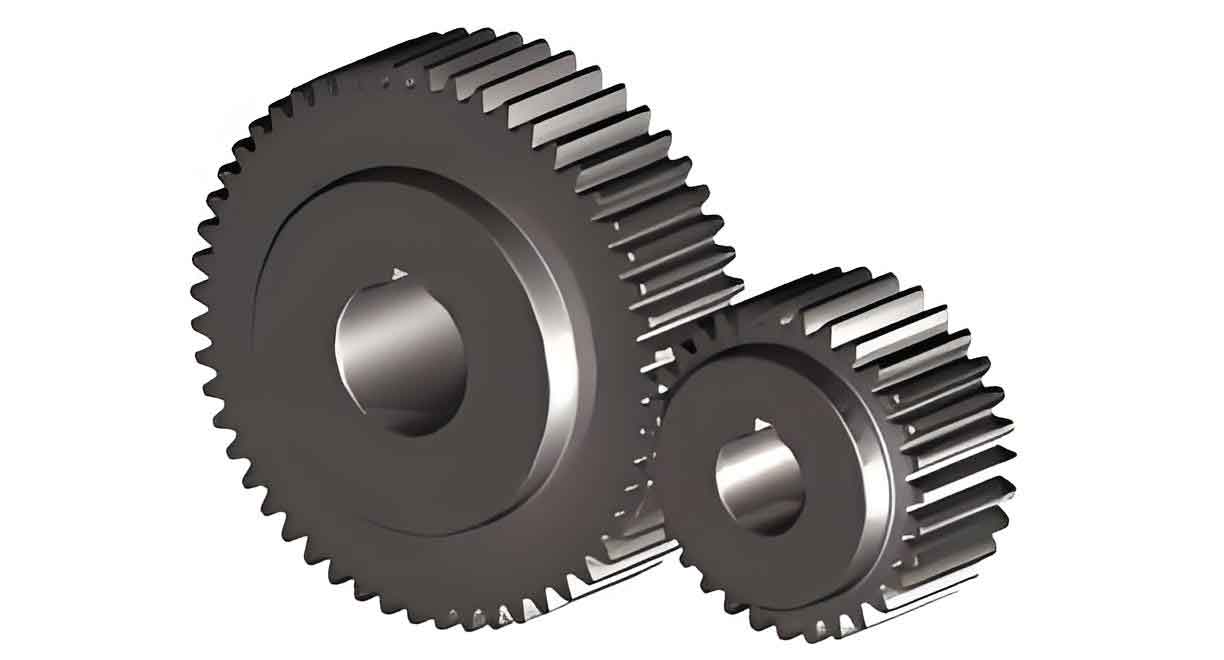
The inspection of spur gears typically involves critical parameters such as module, pitch, and tooth profile accuracy. Conventional techniques, like using gear calipers or coordinate measuring machines (CMMs), can be time-consuming and lack scalability for industrial applications. Recent advancements in machine vision and image processing have shown promise for non-contact measurement of mechanical parts. For instance, prior studies have explored edge detection algorithms and least-squares fitting for gear尺寸 measurement, validating the feasibility of视觉 methods for small-diameter spur gears. However, for larger spur gears where a single image cannot capture an entire tooth, existing approaches are limited. Our work fills this gap by introducing a multi-arc fitting strategy that segments the tooth profile into continuous arcs, enabling accurate measurement even for large spur gears. This article builds on previous research by refining the fitting process and extending it to practical scenarios involving spur gears of various sizes.
Our measurement system utilizes an automatic影像仪, specifically the Tianzhun影像测量仪, which consists of a measurement platform, Z-axis, microscope, CCD camera, lighting sources, an electrical control system, and a computer. The computer is equipped with an image acquisition card to process data from the microscope and CCD, while the lighting ensures high-quality image capture under varying conditions. The software, Vispec, employs image processing algorithms to analyze geometric features. The process begins with mounting the spur gear on the platform using a定位 fixture—a toothed直角铁 and齿槽 contact—to ensure repeatable positioning for批量 inspection. This setup is crucial for maintaining consistency across multiple spur gears, as it establishes a reliable measurement基准.
The measurement procedure involves five key steps: First, we create a measurement task in Vispec, either manually or by importing a DXF drawing to align with the physical spur gear. Second, we adjust the视觉相机 settings, including focus modes (e.g., surface or point focus) and lighting (e.g., surface light, coaxial light), to optimize image clarity. The system can automatically调节 light intensity and exposure time to enhance edge detection. Third, we configure extraction parameters for edge detection, such as edge direction (from white to black), extraction direction (from outer to inner), edge priority (intensity or gradient), and thresholds for noise reduction. These settings are tailored for spur gears to accurately capture their轮廓. Fourth, we generate geometric primitives by selecting circle or arc types in the toolbox and using分段提取 to acquire edge points from multiple teeth. For example, to measure the addendum circle, we extract 4–6 teeth and fit them into a circle基元. The software provides error metrics, such as maximum positive and negative deviations, to assess拟合 quality. Finally, we output the measurement results, which include parameters like module and pitch, derived from the fitted轮廓.
For spur gears, the tooth profile is typically an involute curve. In practice, we approximate this curve using arc fitting to simplify measurement. While standard handbooks suggest three-segment arcs, we found that five-segment arcs offer better precision without compromising efficiency. Under a视觉 magnification of 41×, the拟合 error is controlled within 0.01 mm, meeting accuracy requirements. This approach is based on prior studies that validated arc fitting for involute curves, especially for micro-gears where 8-segment arcs showed high accuracy. Our method segments each tooth profile into five continuous arcs,拟合 the overall gear轮廓. This allows us to measure key geometric dimensions even for large spur gears where full-tooth imaging is impractical.
Determining the module of spur gears is a critical step, as it influences all other parameters. Since the pitch circle is虚拟 and难以直接 measure, we use the addendum circle as an indirect reference. The process involves: (1) measuring 4–6 evenly distributed points on the addendum circle of the spur gear, (2) fitting these points into a circle using the software, and (3) calculating the module using the formula:
$$m = \frac{d_a}{z + 2h_a}$$
where \( m \) is the module, \( d_a \) is the addendum circle diameter, \( z \) is the number of teeth, and \( h_a \) is the addendum coefficient (typically 1 for standard spur gears). For instance, with a spur gear having 40 teeth, if the measured \( d_a \) is 125.94 mm, the module is computed as approximately 2.9986 mm, which rounds to the standard value of 3 mm for spur gears. This calculation aligns with manual measurements using calipers, which yielded 2.9976 mm, indicating minimal error.
Another essential parameter for spur gears is the base tangent length (公法线), which reflects the composite effect of module, pressure angle, and tooth profile. According to mechanical design standards, the base tangent length is measured along a line tangent to the base circle. For practical measurement, we use the跨齿数 method: First, calculate the跨齿数 \( K \) using:
$$K = \frac{Z}{9} + 0.5$$
For a 40-tooth spur gear, \( K = 4.94 \), so we round to 5. Then, the theoretical base tangent length \( W \) is given by:
$$W = m[1.4671 \times (2K – 1) + 0.014Z]$$
Substituting \( m = 3 \) mm and \( Z = 40 \), we get \( W = 41.2917 \) mm. Using our视觉 system, we measure the base tangent length at six locations on the spur gear, obtaining an average of 41.383 mm. Manual measurement with a gear caliper gives 41.375 mm. The absolute error between视觉 and manual methods is 0.008 mm, while the error between视觉 and theoretical values is 0.0913 mm. This discrepancy is analyzed later in the error discussion.
Tooth pitch, the arc length between adjacent teeth on a circle, is another key dimension for spur gears. The theoretical pitch \( p \) is computed as:
$$p = \pi m$$
For \( m = 3 \) mm, \( p = 9.4248 \) mm. Our视觉 system measures the pitch at multiple points, yielding an average of 9.435 mm. Manual measurement gives 9.430 mm. The absolute error between视觉 and manual methods is 0.005 mm, and between视觉 and theoretical values is 0.0102 mm. These results are summarized in the table below, which compares theoretical calculations,视觉 measurements, and manual measurements for the spur gear.
| Method | Module (mm) | Base Tangent Length (mm) | Tooth Pitch (mm) |
|---|---|---|---|
| Theoretical Calculation | 3.0000 | 41.2917 | 9.4248 |
| Machine Vision Measurement | 2.9986 | 41.3830 | 9.4350 |
| Manual Measurement | 2.9976 | 41.3750 | 9.4300 |
To validate the reliability of our method, we conducted multiple experiments using the Tianzhun影像测量仪 with视觉 magnification of 41×, imaging area of 4 mm × 4 mm, and focusing area of 2 mm × 2 mm. The five-segment arc fitting was applied to various spur gears. The results show that视觉 measurements closely match manual measurements, with absolute errors under 0.01 mm for most parameters. However, compared to theoretical values, larger errors occur, such as 0.086 mm for base tangent length. We attribute these discrepancies to several factors inherent in measuring spur gears.
First, manufacturing imperfections in the spur gears themselves contribute to errors. During gear production, machine tool inaccuracies and tool wear can lead to deviations in tooth profile and dimensions. For spur gears with lower precision or粗糙 surfaces,视觉 measurement may introduce errors due to poor edge detection. This explains why theoretical,视觉, and manual measurements differ, though视觉 and manual methods show smaller variances. As加工精度 improves, these errors can be mitigated.
Second, imaging errors arise from the CCD camera and lighting conditions. Variations in illumination across different angles can cause blurred edges in the captured images of spur gears, affecting the software’s拟合 accuracy. By maintaining consistent lighting around the spur gear and repeating measurements, we can reduce this error. Additionally, the optical system’s resolution limits the detection of fine details on spur gears, especially for small模数 gears.
Third, algorithmic errors stem from the edge extraction and fitting processes. Different vision systems use varied algorithms for edge detection, and our multi-arc fitting approach may accumulate computational errors. For spur gears, the approximation of involute curves with arcs introduces a theoretical error, though our five-segment method keeps it within acceptable bounds. Manual measurement also involves approximation, as positioning the calipers precisely on spur gears is challenging, leading to minor deviations.
To further illustrate the error sources, consider the formula for the addendum circle diameter in spur gears:
$$d_a = m(z + 2h_a) + \Delta$$
where \( \Delta \) represents manufacturing tolerances. If \( \Delta \) is significant, it affects all derived parameters. Similarly, the base tangent length formula for spur gears can be adjusted to account for profile deviations:
$$W_{\text{actual}} = W_{\text{theoretical}} + \epsilon_{\text{fit}} + \epsilon_{\text{img}}$$
where \( \epsilon_{\text{fit}} \) is the fitting error from arc approximation and \( \epsilon_{\text{img}} \) is the imaging error. Our experiments on spur gears show that \( \epsilon_{\text{fit}} \) is typically below 0.01 mm with five-segment arcs, while \( \epsilon_{\text{img}} \) can range up to 0.05 mm depending on lighting.
In terms of measurement efficiency, our machine vision method significantly outperforms traditional techniques for spur gears. The automatic image acquisition and processing allow for batch inspection of multiple spur gears without repositioning, reducing inspection time by over 50% compared to manual methods. The table below summarizes the time savings and accuracy gains for spur gear measurement.
| Aspect | Machine Vision Method | Traditional Manual Method |
|---|---|---|
| Inspection Time per Spur Gear | Approx. 2 minutes | Approx. 5 minutes |
| Repeatability Error | < 0.01 mm | < 0.02 mm |
| Batch Compatibility | High (automated) | Low (manual handling) |
Our approach also enables comprehensive quality control for spur gears by measuring additional parameters, such as tooth thickness and runout, using similar arc fitting techniques. For tooth thickness, we approximate it via the chord length between fitted arcs, calculated as:
$$s = 2r \sin\left(\frac{\pi}{z}\right)$$
where \( r \) is the pitch circle radius derived from the module. This expands the applicability of machine vision for spur gears beyond basic dimensions.
Looking ahead, we plan to integrate深度学习 algorithms to enhance edge detection for spur gears under varying conditions, such as oily surfaces or worn teeth. By training models on diverse spur gear images, we can improve measurement robustness. Additionally, combining视觉 data with 3D scanning could provide a holistic view of spur gear geometry, further reducing errors.
In conclusion, our machine vision-based method offers a rapid, reliable, and precise solution for measuring the geometric dimensions of spur gears. By using a five-segment arc fitting approach, we achieve accurate profile reconstruction even for large spur gears. Experimental results demonstrate that视觉 measurements align closely with manual methods, with errors within 0.01 mm, meeting industrial accuracy requirements. While discrepancies with theoretical values exist due to manufacturing and imaging factors, these can be minimized through process improvements. Overall, this method enhances inspection efficiency and supports批量 production of spur gears, making it a valuable tool in modern manufacturing.