
In the field of heavy-duty power transmission, the herringbone gear is widely recognized for its exceptional load-bearing capacity and ability to eliminate axial forces. Unlike conventional helical gears, the herringbone gear comprises two helical sections with opposite helix directions, which effectively cancels out the axial thrust during operation. However, this unique geometry introduces significant manufacturing and inspection challenges. One of the most critical geometric requirements for a herringbone gear is the symmetry of the tooth flanks on both sides with respect to the central transverse plane. This symmetry directly affects the gear’s dynamic performance, noise, and service life. Through my extensive practical experience in dimensional metrology, I have developed a reliable method for measuring this symmetry using a coordinate measuring machine (CMM). In this article, I present a comprehensive analysis of the symmetry error, the measurement principle, the detailed procedure, the evaluation of cosine errors, and the uncertainty budget.
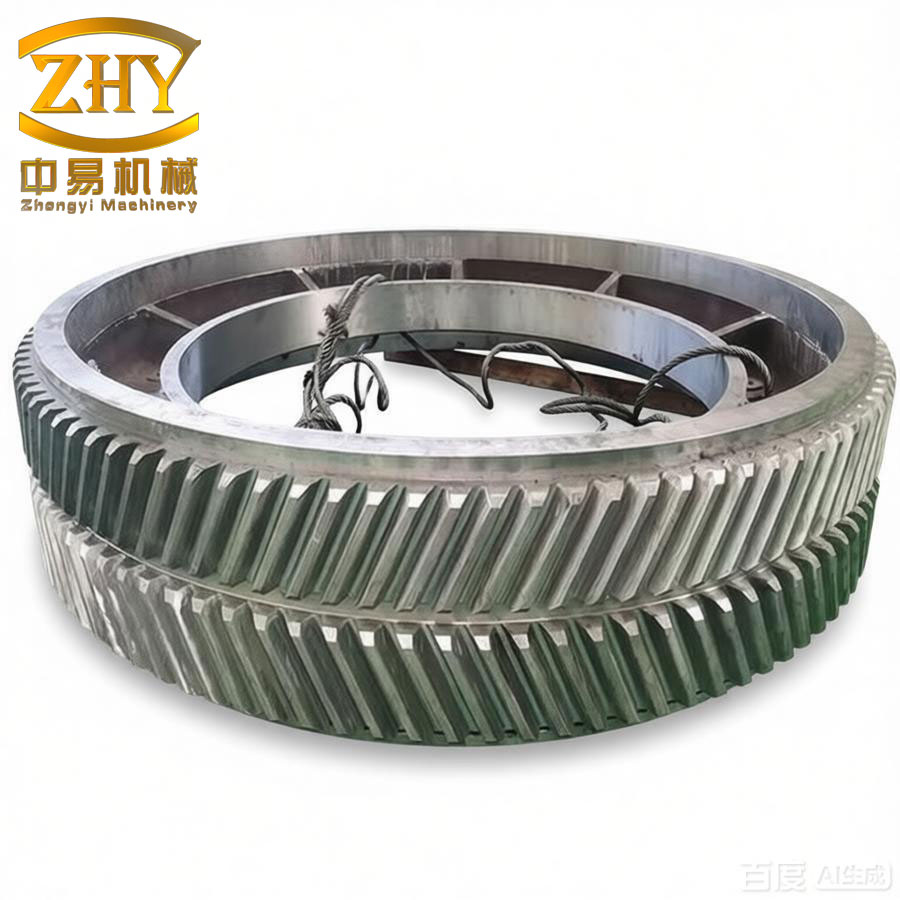
Figure 1 illustrates a typical herringbone gear assembly. The technical drawing usually specifies a tolerance for the symmetry of the corresponding tooth flanks on the left-hand and right-hand helical sections relative to a common central datum plane.
1. Problem Analysis
Understanding the symmetry requirement for a herringbone gear is fundamentally about interpreting the geometric tolerance as defined in ISO 1101 or GB/T 1182. The tolerance zone for symmetry of a center plane is the region between two parallel planes spaced at a distance equal to the tolerance value \( t \), symmetrically disposed about the datum plane. For the herringbone gear, this means that the actual center plane of the corresponding tooth flanks (the midpoints between pairs of opposite-handed flanks) must lie within that zone.
I can transform the problem into a more measurable form. If I consider any two corresponding points on the left-hand and right-hand tooth flanks that are located at the same radial distance and the same absolute axial height (one positive, one negative relative to the central plane), the midpoint of these two points should ideally lie exactly on the central datum plane. The deviation of this midpoint from the datum plane is half of the symmetry error. As shown in Figure 2, let points A and B be the corresponding points on the opposite flanks. The point C is the midpoint. The distance from C to the datum plane is \(\Delta T_h\). Then the symmetry error \( f \) is defined as \( f = 2\Delta T_h \). In the figure, \( \Delta T_s \) represents the circumferential deviation (chord length) between the two points along the gear’s pitch circle, which is caused by the polar angle deviation \( \xi_\alpha \). The helix angle of the gear is \( \beta \).
If I represent every point on the tooth flank by its three-dimensional coordinates \((X, Y, Z)\), with the normal to the central plane as the Z-axis, then the requirement is that for every point on the right-hand flank with coordinates \((X, Y, Z)\), there should be a corresponding point on the left-hand flank at \((X, Y, -Z)\) within a certain tolerance. In practice, I do not need to verify every point; I only need to sample a representative set of corresponding points.
2. Measurement Method
2.1 Selection of Measuring Equipment
To measure points on the involute curved surfaces of a herringbone gear, a CMM with a multi-directional probe is ideal. The typical symmetry tolerance for a herringbone gear ranges from 0.05 mm to 0.2 mm. For a gear with a size within 2000 mm, a modern CMM can achieve an accuracy of \((2 + 3L/1000)\ \mu\)m, which satisfies the rule that the measuring equipment’s uncertainty should be no worse than one quarter to one tenth of the tolerance. Therefore, a CMM is both accurate and flexible for this task.
2.2 Establishment of the Measurement Datum
Most herringbone gear components are axisymmetric, like the shaft shown in the assembly drawing. There is no natural radial datum feature, so using a Cartesian coordinate system would be impractical. Instead, I convert to a cylindrical (polar) coordinate system. The central transverse plane of the gear is used as the primary datum for axial positioning, and the axis of rotation (the center of the gear) serves as the origin. This approach avoids damaging the part by adding artificial datum features.
2.3 Control of Corresponding Point Locations
In the polar coordinate system, the radial coordinate (radius) and the axial coordinate (height) must be controlled to ensure the two points are truly corresponding. The main contributor to asymmetry is the polar angle deviation between the two flanks. Therefore, I fix the radius and the absolute height (with opposite signs) and then probe the surface. I iterate the probing until the radius difference between the two points is less than 0.001 mm and the heights are exactly opposite (e.g., +Z and -Z). At that point, the polar angle difference is recorded.
2.4 Measurement Procedure
I select a probe with a small tip diameter, typically 1 mm, and orient it appropriately (e.g., A90B180). I choose a specific tooth space on the herringbone gear. For the first point, I probe the right-hand flank at a chosen radius and height. I then move to the corresponding left-hand flank (same tooth space, opposite hand) and probe at the same radius and opposite height. Using the CMM’s iterative probing capability, I repeat the process 3 to 5 times until the conditions are met. The polar angle deviation \( \xi_\alpha \) is then read from the machine.
3. Measurement Results and Analysis
3.1 Influence of Cosine Error
Since the probe touches a curved surface, the actual contact point is not exactly at the nominal stylus center. This introduces a cosine error. In Figure 3, the contact deviations for the two flanks are \( \delta_1 \) and \( \delta_2 \), given by \( \delta = r – r\cos\alpha \), where \( r \) is the probe tip radius and \( \alpha \) is the angle between the probe axis and the surface normal. For a herringbone gear, the helix angles of the two flanks are nearly identical (difference within 30 arcminutes) because they are machined in one setup. Therefore, the difference in cosine errors is very small. In a typical case with helix angles of 30°5′ and 29°52′, and probe radius 0.5 mm, the difference \( |\delta_1 – \delta_2| \) is approximately 0.001 mm. This is negligible compared to the symmetry tolerance of 0.05 mm. Thus, cosine error can be ignored.
3.2 Calculation of Symmetry Error
After obtaining the polar angle deviation \( \xi_\alpha \) (in degrees), I convert it to a chord length \( S \) (or arc length, since the angle is very small):
$$ S = \Delta T_s = R \cdot \frac{\pi \xi_\alpha}{180} $$
where \( R \) is the radial distance (pitch radius or measurement radius). Then, the axial deviation \( \Delta T_h \) is related to the circumferential deviation by the helix angle \( \beta \):
$$ \Delta T_h = \frac{\Delta T_s}{\tan\beta} $$
Finally, the symmetry error \( f \) is twice this axial deviation:
$$ f = 2\Delta T_h = \frac{2R \pi \xi_\alpha}{180 \tan\beta} $$
For example, consider a herringbone gear with \( R = 300\ \text{mm} \), \( \beta = 30^\circ \), and measured \( \xi_\alpha = 0.002^\circ \). Then:
$$ \Delta T_s = 300 \times \frac{\pi \times 0.002}{180} \approx 0.011\ \text{mm} $$
$$ f = \frac{0.011}{\tan30^\circ} \approx 0.018\ \text{mm} $$
This value was compared with the result from an on-machine measurement using roll pins, and the difference in polar angle deviation was less than 0.002°. To verify the entire tooth flank, I sample four teeth evenly distributed around the circumference, and on each tooth I take three points (top, middle, bottom of the flank). The worst-case symmetry error among all points is reported as the final result.
3.3 Uncertainty Analysis
To ensure the measurement method is reliable, I performed a detailed uncertainty analysis following the GUM (Guide to the Expression of Uncertainty in Measurement). The sources of uncertainty are:
- Probing error of the CMM
- Measurement repeatability
- Form error of the workpiece (gear tooth surface quality)
- Probe force and orientation
- Thermal expansion differences between CMM and workpiece
- Temperature variation
Most of these are either negligible or already included in repeatability. The following table summarizes the evaluated standard uncertainties:
| Source | Type | Value (μm) | Distribution | Standard Uncertainty (μm) |
|---|---|---|---|---|
| \( u_1 \): CMM probing error | B | 1.3 | Uniform | 0.75 |
| \( u_2 \): Repeatability | A | 1.6 (from 6 measurements) | Normal | 1.6 |
| \( u_3 \): Form error of tooth surface | B | 2.0 | Uniform | 1.15 |
| \( u_4 \): Thermal expansion coefficient difference | B | Negligible | — | 0 |
| \( u_5 \): Temperature difference | B | Negligible | — | 0 |
| \( u_6 \): Probe force & orientation | B | Included in repeatability | — | 0 |
The combined standard uncertainty \( u_c \) is calculated as the root-sum-square of the independent components:
$$ u_c = \sqrt{u_1^2 + u_2^2 + u_3^2} = \sqrt{0.75^2 + 1.6^2 + 1.15^2} \approx 2.1\ \mu\text{m} $$
Taking a coverage factor \( k = 2 \), the expanded uncertainty \( U \) is:
$$ U = k \cdot u_c = 2 \times 2.1 = 4.2\ \mu\text{m} $$
This value (0.0042 mm) is well within the 1/3 to 1/10 rule for a tolerance of 0.05 mm, confirming that the method is capable of measuring the symmetry of a herringbone gear with high reliability.
4. Conclusion
In this work, I have presented a practical and accurate method for measuring the symmetry error of a herringbone gear using a coordinate measuring machine. By converting the problem into polar coordinates and controlling the probe positions through iterative sampling, I can directly obtain the polar angle deviation between corresponding tooth flanks. The symmetry error is then computed via a simple trigonometric formula. The influence of cosine error is negligible when using a small probe tip. The uncertainty analysis demonstrates that the method meets the required measurement capability for typical tolerances of 0.05 mm to 0.2 mm. This technique avoids damaging the part, is efficient, and provides traceable results. It has been successfully applied in my daily work for inspecting various herringbone gears, and I believe it offers a valuable reference for other metrologists and gear manufacturers.
Furthermore, the method can be extended to other types of double-helical gears or any symmetric features that require symmetry measurement relative to a central plane. The key is to properly define the datum and to use a coordinate system that aligns with the geometry. By following the procedure described here, engineers can ensure that the herringbone gear performs optimally in high-speed, heavy-load applications, minimizing axial vibration and extending the life of the transmission system.