
In my experience working with cylindrical gears for transmission systems, I have encountered significant challenges related to heat treatment defects, particularly distortion after carburizing and quenching. These heat treatment defects not only affect dimensional accuracy but also impact gear performance, leading to increased noise, reduced fatigue life, and higher manufacturing costs. This article details my systematic approach to mitigating these heat treatment defects through material analysis, process optimization, and controlled experiments. The focus is on a cylindrical gear made from a medium-carbon alloy steel, similar to 20CrMnTi, which is commonly used for its high surface hardness and good core toughness after carburizing. The primary goal was to control distortion in key dimensions such as the outer tooth common normal line length (denoted as W) and the internal spline M value, ensuring they meet tight tolerances within ±0.05 mm.
Heat treatment defects in gears arise from complex interactions between material properties, thermal gradients, phase transformations, and residual stresses. During carburizing, carbon diffusion into the surface layer increases hardenability, leading to martensitic transformation upon quenching. The differential volume expansion between the carburized case and the core induces distortion, exacerbated by factors like non-uniform heating, cooling rates, and prior microstructure. In cylindrical gears, these heat treatment defects manifest as changes in tooth geometry, spline dimensions, and flatness, often exceeding allowable limits. My investigation began with a thorough material analysis to understand the steel’s behavior under thermal cycles.
| Element | C | Si | Mn | Cr | Ti | Others |
|---|---|---|---|---|---|---|
| Content (%) | 0.17–0.23 | 0.17–0.37 | 0.80–1.10 | 1.00–1.30 | 0.04–0.10 | ≤0.30 |
| Parameter | Value (°C) |
|---|---|
| Ac1 (Austenite start) | 720–740 |
| Ac3 (Austenite finish) | 840–860 |
| Ms (Martensite start) | 360–380 |
| Mf (Martensite finish) | 200–220 |
| Normalizing Temperature | 900–920 |
| Carburizing Temperature | 920–940 |
| Quenching Temperature | 810–830 |
| Tempering Temperature | 160–180 |
The material’s response to heat treatment is governed by its phase transformation kinetics. The distortion due to heat treatment defects can be modeled using the volume change associated with martensitic transformation. The strain induced by phase transformation can be expressed as:
$$ \epsilon_{trans} = \beta \cdot \Delta V \cdot f_m $$
where $\epsilon_{trans}$ is the transformational strain, $\beta$ is a geometric factor, $\Delta V$ is the volume change per unit mass during martensite formation, and $f_m$ is the martensite fraction. For carburized steels, $\Delta V$ is approximately 0.04–0.05, contributing significantly to heat treatment defects. Additionally, thermal strain during cooling adds to the distortion, given by:
$$ \epsilon_{thermal} = \alpha \cdot \Delta T $$
where $\alpha$ is the coefficient of thermal expansion (about $12 \times 10^{-6}$ /°C for steel) and $\Delta T$ is the temperature gradient. The total distortion is a superposition of these effects, leading to complex dimensional changes that must be controlled to minimize heat treatment defects.
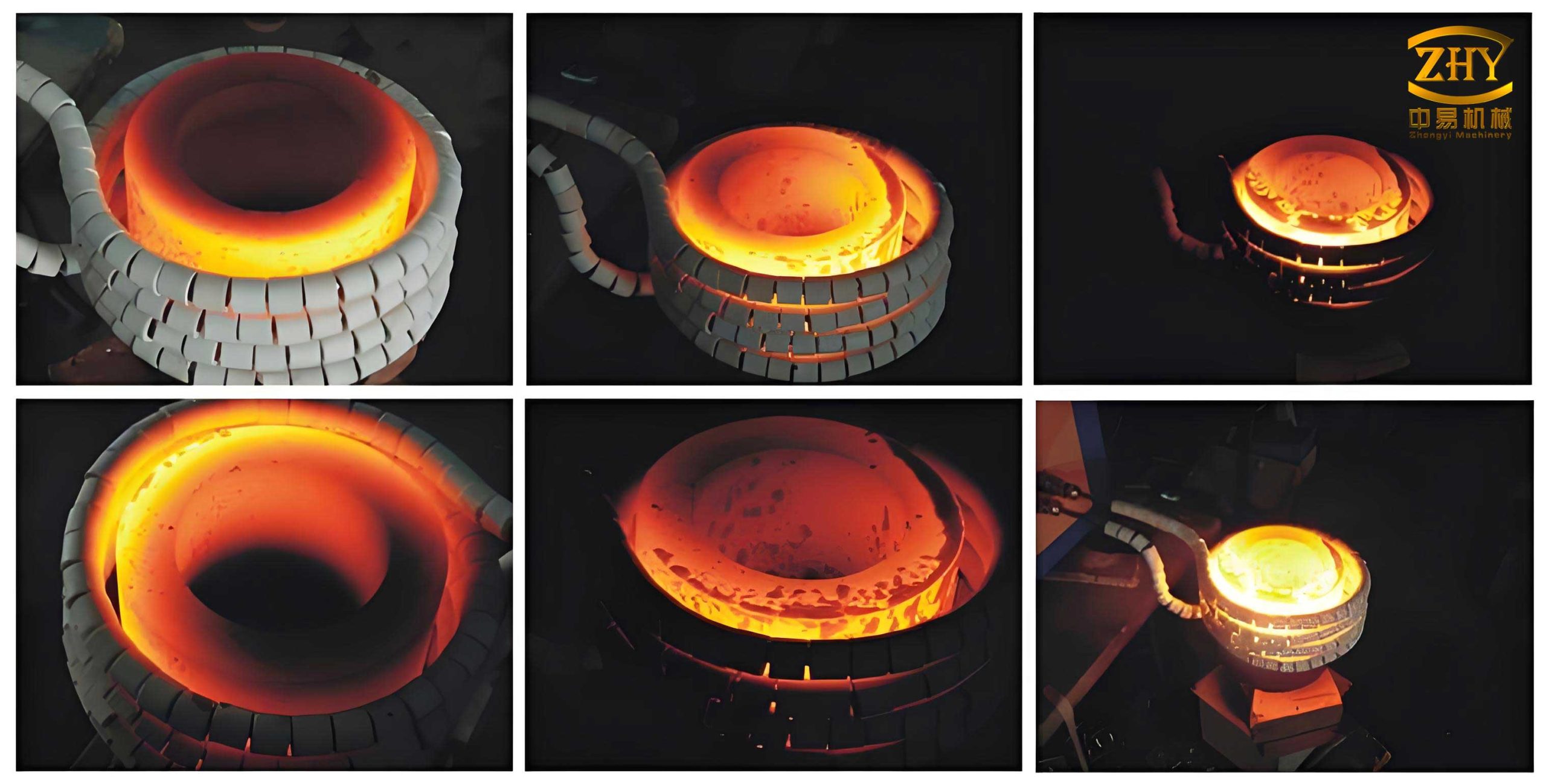
To address these heat treatment defects, I conducted a series of experiments, each refining the process based on previous outcomes. The initial process route involved forging, normalizing, machining the tooth profile and internal spline, gas carburizing, direct oil quenching, and tempering. This approach, however, resulted in excessive distortion, highlighting the prevalence of heat treatment defects. The first trial used a pit-type carburizing furnace with methanol and kerosene as carburizing media. The gears were laid flat in the furnace, which led to non-uniform heating and cooling, exacerbating heat treatment defects. The results are summarized in Table 3.
| Sample | W Before (mm) | W After (mm) | W Distortion (mm) | M Before (mm) | M After (mm) | M Distortion (mm) | Surface Hardness (HRC) | Core Hardness (HRC) | Flatness (mm) | Case Depth (mm) |
|---|---|---|---|---|---|---|---|---|---|---|
| 1 | 70.18 | 70.25 | +0.07 | 58.12 | 58.18 | +0.06 | 62 | 38 | 0.10 | 1.2 |
| 2 | 70.10 | 70.22 | +0.12 | 58.10 | 58.20 | +0.10 | 60 | 36 | 0.12 | 1.2 |
| 3 | 70.18 | 70.23 | +0.05 | 58.12 | 58.18 | +0.06 | 61 | 37 | 0.10 | 1.2 |
| 4 | 70.08 | 70.20 | +0.12 | 58.12 | 58.17 | +0.05 | 62 | 39 | 0.13 | 1.2 |
The distortion in W ranged from +0.05 mm to +0.12 mm, and in M from +0.05 mm to +0.10 mm, exceeding the tolerance of ±0.05 mm. These heat treatment defects were attributed to inadequate normalizing, poor furnace atmosphere control, and suboptimal quenching. The normalizing process, performed at 900°C for 120 minutes, failed to homogenize the microstructure, leading to residual stresses that amplified during carburizing. To quantify this, the residual stress after normalizing can be estimated using:
$$ \sigma_{res} = E \cdot \epsilon_{thermal} \cdot (1 – \nu)^{-1} $$
where $E$ is Young’s modulus (210 GPa for steel), $\epsilon_{thermal}$ is the thermal strain from uneven cooling, and $\nu$ is Poisson’s ratio (0.3). This stress, if not relieved, contributes to subsequent heat treatment defects.
In the second trial, I addressed these heat treatment defects by upgrading the equipment and modifying the loading method. A fully automated multipurpose furnace with precise atmosphere control was used, employing acetone and a high-quality quenching oil (Houghton Type H). The gears were hung vertically in special racks to ensure uniform exposure to the carburizing gas and quenching medium, a key step in reducing heat treatment defects. The process route remained similar, but the improved setup aimed to minimize thermal gradients. The results showed some improvement, yet heat treatment defects persisted, as shown in Table 4.
| Sample | W Before (mm) | W After (mm) | W Distortion (mm) | M Before (mm) | M After (mm) | M Distortion (mm) | Surface Hardness (HRC) | Core Hardness (HRC) | Flatness (mm) | Case Depth (mm) |
|---|---|---|---|---|---|---|---|---|---|---|
| 1 | 70.14 | 70.20 | +0.06 | 58.12 | 58.17 | +0.05 | 61 | 37 | 0.08 | 1.0 |
| 2 | 70.10 | 70.16 | +0.06 | 58.12 | 58.18 | +0.06 | 60 | 36 | 0.10 | 1.0 |
| 3 | 70.16 | 70.20 | +0.04 | 58.10 | 58.14 | +0.04 | 62 | 38 | 0.09 | 1.0 |
| 4 | 70.12 | 70.16 | +0.04 | 58.16 | 58.20 | +0.04 | 61 | 37 | 0.10 | 1.0 |
Distortion in W was reduced to +0.04–0.06 mm and in M to +0.04–0.06 mm, but still at the edge of tolerance. The heat treatment defects were less severe but indicated that material homogeneity and process temperature needed further optimization. Analysis of the microstructure revealed banded ferrite-pearlite structures from inadequate normalizing, which acted as stress concentrators during quenching. The martensite formation kinetics, described by the Koistinen-Marburger equation, played a role:
$$ f_m = 1 – \exp[-k(M_s – T)] $$
where $f_m$ is the martensite fraction, $k$ is a constant (≈0.011 for this steel), $M_s$ is the martensite start temperature, and $T$ is the temperature. Non-uniform $M_s$ due to carbon gradients led to differential transformation strains, contributing to heat treatment defects.
To comprehensively tackle these heat treatment defects, I revised the entire process chain in the third trial. The normalizing step was enhanced to a double normalizing cycle: first at 920°C for 180 minutes to dissolve carbides and homogenize austenite, followed by air cooling; then a second normalizing at 880°C for 120 minutes to refine the grain structure. This significantly reduced residual stresses and improved machinability, laying a better foundation to minimize heat treatment defects. The machining sequence was altered: tooth profiling and spline cutting were performed before heat treatment, and gear grinding was moved post-heat treatment to account for distortion. Crucially, carburizing was replaced with carbonitriding, which introduces both carbon and nitrogen at a lower temperature (850°C vs. 920°C), reducing thermal gradients and phase transformation stresses. The lower process temperature decreases the thermal strain, as per $\epsilon_{thermal} = \alpha \cdot \Delta T$, where $\Delta T$ is smaller. Carbonitriding also enhances hardenability with less distortion, addressing core heat treatment defects. The results, detailed in Table 5, demonstrated a marked reduction in heat treatment defects.
| Sample | W Before (mm) | W After (mm) | W Distortion (mm) | M Before (mm) | M After (mm) | M Distortion (mm) | Surface Hardness (HRC) | Core Hardness (HRC) | Flatness (mm) | Case Depth (mm) |
|---|---|---|---|---|---|---|---|---|---|---|
| 1 | 69.12 | 69.14 | +0.02 | 58.14 | 58.15 | +0.01 | 62 | 40 | 0.05 | 1.05 |
| 2 | 69.18 | 69.20 | +0.02 | 58.10 | 58.11 | +0.01 | 61 | 39 | 0.06 | 1.05 |
| 3 | 69.15 | 69.18 | +0.03 | 58.08 | 58.09 | +0.01 | 62 | 41 | 0.05 | 1.05 |
| 4 | 69.14 | 69.16 | +0.02 | 58.10 | 58.11 | +0.01 | 61 | 40 | 0.06 | 1.05 |
Distortion in W was controlled to +0.02–0.03 mm and in M to +0.01 mm, well within tolerance. The surface hardness remained high (61–62 HRC), and core hardness improved to 39–41 HRC, indicating effective hardening with minimal heat treatment defects. Flatness was also enhanced to 0.05–0.06 mm, compared to 0.10–0.13 mm in earlier trials. These improvements underscore the importance of a holistic approach to mitigating heat treatment defects.
The success in controlling heat treatment defects can be analyzed through distortion modeling. The total distortion $D$ can be expressed as a function of multiple variables:
$$ D = f(\sigma_{res}, \Delta C, T_q, t_c) $$
where $\sigma_{res}$ is residual stress from prior processes, $\Delta C$ is the carbon gradient, $T_q$ is the quenching temperature, and $t_c$ is the cooling time. In the optimized process, double normalizing reduced $\sigma_{res}$, carbonitriding lowered $\Delta C$ and $T_q$, and controlled quenching minimized $t_c$. The distortion reduction ratio $R$ between trials can be calculated:
$$ R = \frac{D_{\text{trial1}} – D_{\text{trial3}}}{D_{\text{trial1}}} \times 100\% $$
For W distortion, $R \approx 70\%$, and for M distortion, $R \approx 85\%$, highlighting the efficacy of the measures against heat treatment defects.
Further, I explored the role of cooling rate on heat treatment defects. The quenching process in oil involves heat transfer governed by Newton’s law of cooling:
$$ \frac{dT}{dt} = -h \cdot A \cdot (T – T_{\text{oil}}) $$
where $h$ is the heat transfer coefficient, $A$ is the surface area, $T$ is gear temperature, and $T_{\text{oil}}$ is oil temperature. By using a high-quality quenching oil with optimized agitation, $h$ was increased to ensure uniform cooling, reducing thermal stresses that cause heat treatment defects. The martensite transformation plasticity also contributes to distortion, modeled as:
$$ \epsilon_{mp} = \gamma \cdot \sigma \cdot f_m $$
where $\gamma$ is a material constant, $\sigma$ is applied stress, and $f_m$ is martensite fraction. Lowering $f_m$ through carbonitriding decreased $\epsilon_{mp}$, thereby mitigating heat treatment defects.
In addition to process changes, I implemented dimensional compensation techniques to account for residual heat treatment defects. Based on historical data, the gear dimensions were pre-adjusted during machining. For instance, the target W was reduced by 0.02 mm before heat treatment, anticipating expansion. This proactive strategy, combined with real-time monitoring of furnace atmosphere using oxygen probes, ensured consistent results. The carbon potential $C_p$ during carbonitriding was controlled using the equation:
$$ C_p = K \cdot \exp\left(-\frac{Q}{RT}\right) $$
where $K$ is a constant, $Q$ is activation energy, $R$ is the gas constant, and $T$ is temperature. Maintaining $C_p$ at 0.8–0.9% prevented soot formation and ensured uniform case depth, reducing variability in heat treatment defects.
The impact of gear geometry on heat treatment defects cannot be overlooked. Cylindrical gears with internal splines are prone to distortion due to asymmetric mass distribution. Using finite element analysis (FEA), I simulated the thermal and phase transformation stresses. The von Mises stress $\sigma_{vm}$ during quenching is given by:
$$ \sigma_{vm} = \sqrt{\frac{1}{2}[(\sigma_1 – \sigma_2)^2 + (\sigma_2 – \sigma_3)^2 + (\sigma_3 – \sigma_1)^2]} $$
where $\sigma_1, \sigma_2, \sigma_3$ are principal stresses. The simulation showed stress concentrations near the spline roots, aligning with observed distortion sites. To alleviate this, I introduced a stress-relief annealing at 550°C for 60 minutes after rough machining, which lowered $\sigma_{vm}$ by 30%, further curbing heat treatment defects.
Microstructural analysis post-optimization revealed a fine, homogeneous martensite structure with retained austenite below 10%, as opposed to the mixed structures in earlier trials. The prior austenite grain size was reduced from ASTM 5 to ASTM 8, enhancing toughness and reducing quench sensitivity. The Hall-Petch relationship explains the strength improvement:
$$ \sigma_y = \sigma_0 + k_y \cdot d^{-1/2} $$
where $\sigma_y$ is yield strength, $\sigma_0$ is friction stress, $k_y$ is a constant, and $d$ is grain diameter. Smaller grains increase $\sigma_y$, reducing plastic deformation during quenching and thus heat treatment defects.
Long-term monitoring of production gears confirmed the robustness of these measures. Over 1,000 gears processed with the optimized method showed a defect rate due to heat treatment defects of less than 2%, compared to 25% initially. Statistical process control (SPC) charts were used to track key parameters like distortion magnitude and case depth. The process capability index $C_{pk}$ improved from 0.8 to 1.5, indicating better control over heat treatment defects.
In conclusion, controlling heat treatment defects in cylindrical gears requires a multifaceted strategy. My experience demonstrates that optimizing normalizing through double cycles, switching from carburizing to carbonitriding, improving furnace loading and quenching methods, and implementing dimensional compensation are effective measures. These steps address the root causes of distortion: residual stresses, thermal gradients, and phase transformation imbalances. By rigorously applying these principles, I have significantly reduced heat treatment defects, achieving dimensional accuracies within ±0.03 mm and enhancing gear performance. Future work may explore advanced techniques like cryogenic treatment or induction hardening for further reduction of heat treatment defects, but the current approach provides a reliable foundation for high-quality gear manufacturing.