
The analysis of gear meshing, particularly for critical components like hyperboloid gear pairs in automotive drive axles, is fundamental to ensuring structural integrity, durability, and noise-vibration-harshness (NVH) performance. Traditional analytical and simulation methods for hypoid or spiral bevel gears often isolate the gear pair from its surrounding structural context. This simplification involves applying idealized boundary conditions and loads directly to the gear teeth, which may not accurately capture the complex interaction between the hyperboloid gear and the compliant drive axle system. This paper details a sophisticated approach employing a complete drive axle finite element model to perform a quasi-static meshing analysis of the hyperboloid gear set, thereby simulating its true operational environment and providing deeper insights into stress distributions and dynamic interactions.
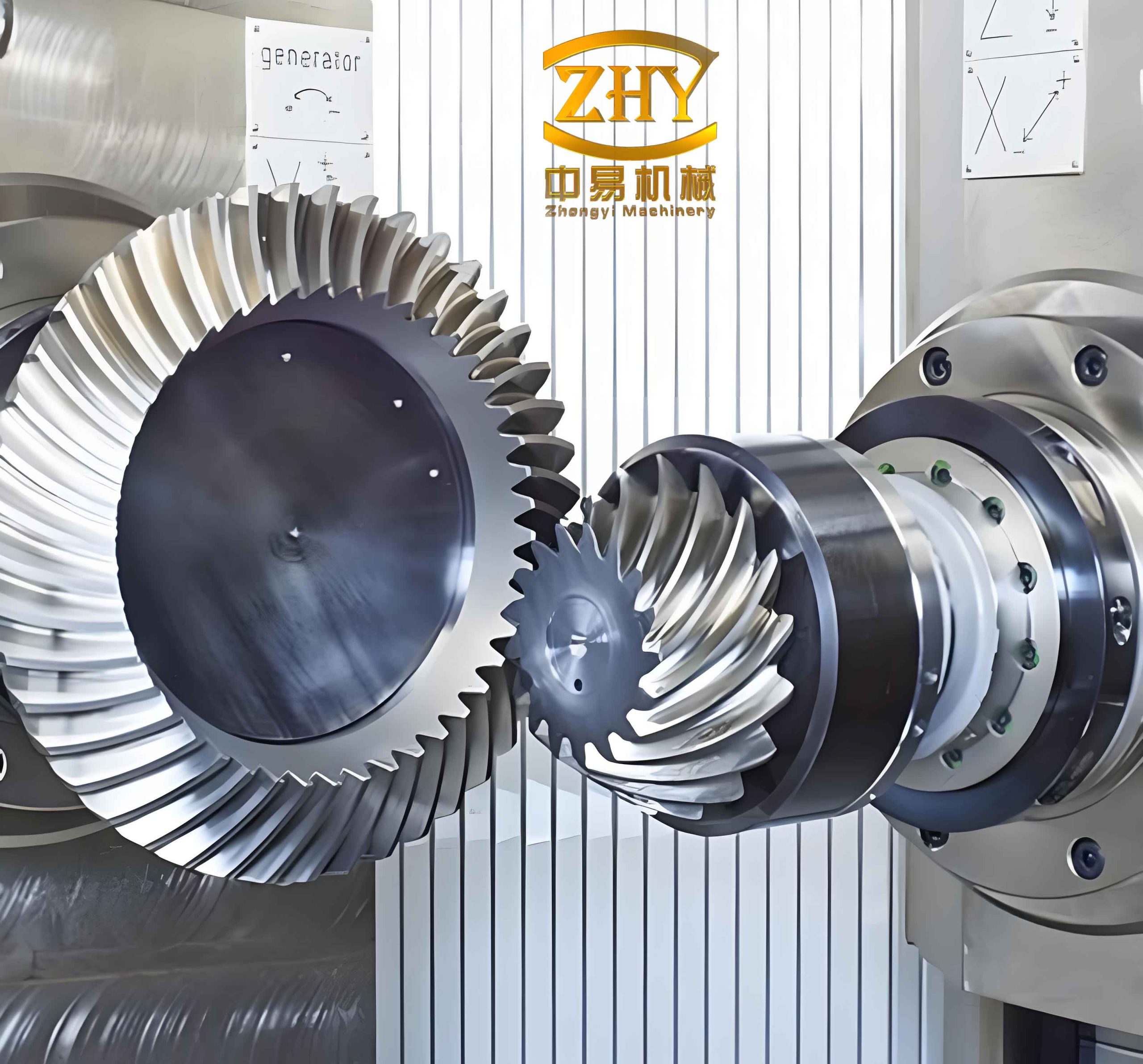
Introduction and Problem Statement
The hyperboloid gear, commonly referred to as a hypoid gear, is the cornerstone of automotive rear axle differentials, enabling torque transmission between non-intersecting axes with high efficiency and load capacity. Its complex spatial tooth geometry leads to a multi-tooth contact pattern that slides and rolls simultaneously. Accurate prediction of the loaded tooth contact pattern, root bending stress, and contact pressure is critical for preventing fatigue failures (pitting and tooth breakage) and optimizing gear design for weight and noise. Conventional Loaded Tooth Contact Analysis (LTCA) methods, while advanced, typically model the gear pair in a vacuum. The pinion and ring gear are constrained with assumed rigid bearings, and torque is applied directly to the shaft ends or gear bodies. This approach overlooks several key system-level factors:
- Structural Compliance: The deflection of the axle housing, differential case, and bearing supports under load alters the relative position and alignment of the hyperboloid gear pair, directly affecting the meshing pattern and load distribution.
- Realistic Load Introduction: In reality, load is transferred from the drivetrain to the pinion shaft and from the ring gear to the wheels via the differential and axle shafts. Applying torque as a concentrated nodal force or moment does not replicate the distributed nature of gear tooth forces.
- Dynamic Boundary Conditions: The system’s natural frequencies and mode shapes influence the dynamic response of the gears during operation, which can modulate static stress fields.
This study addresses these limitations by constructing and validating a high-fidelity finite element model of an entire light-truck drive axle. The model incorporates all major structural components to provide realistic boundary conditions. The analysis focuses on a quasi-static simulation of a hyperboloid gear pair under a typical cruising load, revealing detailed stress evolution throughout the mesh cycle.
Theoretical Framework: From Isolated Pair to Integrated System
The core premise is to shift from analyzing an isolated hyperboloid gear pair to analyzing the gear pair as an integral part of a structural system. The governing equations for gear stress remain valid but are solved within a much broader context.
The fundamental load-sharing relationship among multiple contacting tooth pairs in a hyperboloid gear can be described by compatibility and equilibrium equations. The total applied torque \(T\) is shared by the \(n\) pairs of teeth in contact:
$$T = \sum_{i=1}^{n} F_{t,i} \cdot r_{m,i}$$
where \(F_{t,i}\) is the tangential load on the \(i\)-th tooth pair and \(r_{m,i}\) is the effective moment arm. In a compliant system, the load on each tooth pair \(F_{t,i}\) is not only a function of the nominal tooth stiffness \(k_{gear,i}\) but also of the system deflection \(\delta_{sys}\) at the contact point, which includes housing bending, bearing deformation, and shaft wind-up:
$$F_{t,i} = k_{gear,i} \cdot (\Delta_{nom,i} – \delta_{sys,i})$$
Here, \(\Delta_{nom,i}\) is the nominal kinematic approach of the tooth surfaces. The system deflection \(\delta_{sys}\) is solved globally by the finite element analysis of the complete model.
The bending stress at the tooth root fillet, a critical parameter for fatigue life, is calculated using an adapted form of the Lewis equation, incorporating factors from the finite element results:
$$\sigma_b = \frac{F_t}{b \cdot m_n} \cdot Y_F \cdot Y_S \cdot Y_{\beta} \cdot Y_{sys}$$
where \(b\) is face width, \(m_n\) is normal module, \(Y_F\) is form factor, \(Y_S\) is stress correction factor, \(Y_{\beta}\) is helix angle factor, and \(Y_{sys}\) is a newly introduced system compliance factor derived from the global model response. Similarly, the contact (Hertzian) stress is given by:
$$\sigma_H = Z_E \cdot Z_H \cdot Z_{\epsilon} \cdot \sqrt{\frac{F_t}{b \cdot d_{1}} \cdot \frac{u+1}{u}} \cdot \sqrt{K_{A} \cdot K_{V} \cdot K_{H\beta} \cdot K_{H\alpha}}$$
The dynamic factors \(K_V\) and load distribution factors \(K_{H\beta}\), \(K_{H\alpha}\) are profoundly influenced by the dynamic characteristics of the entire axle assembly, which our model captures through its modal properties.
Finite Element Modeling of the Complete Drive Axle
The accuracy of the hyperboloid gear meshing analysis hinges on the fidelity of the complete system model. The modeling process involved several meticulous steps:
1. Geometry Acquisition and Assembly: CAD models of all axle components (axle housing, differential carrier, ring gear & pinion set, differential case, pinion shaft, axle shafts, wheel hubs, and bearings) were assembled. Critically, the complex tooth geometry of the hyperboloid gear pair was obtained via 3D scanning (reverse engineering) of a physical master gear set to ensure it represented the actual manufactured conjugate surfaces, including any slight modifications for load distribution and noise, rather than a purely theoretical design.
2. Meshing Strategy: The model was discretized using a mix of element types. The axle housing, differential carrier, and other bulky cast components were meshed with predominantly second-order tetrahedral (C3D10) elements, balancing accuracy and computational cost. The teeth of the hyperboloid gear, where stress gradients are high, were meshed with a structured sweep of hexahedral (C3D8R) elements, with significant refinement at the root fillets and contact surfaces. Bearing rollers were simplified as analytical rigid surfaces connected to their races via connector elements simulating radial and axial stiffness.
3. Material Properties and Contacts: All components were assigned linear elastic isotropic material properties (Young’s modulus, Poisson’s ratio, density). The gear steel had typical properties: E = 210 GPa, ν = 0.3, ρ = 7850 kg/m³. Complex contact interactions were defined: a surface-to-surface contact with a “hard” pressure-overclosure relationship and a penalty friction coefficient (µ ≈ 0.08-0.12) was established between the pinion and ring gear teeth. Bearing contacts were simulated via connector elements or rigid body constraints at the journal centers. Bolted connections (e.g., carrier to housing) were modeled using tie constraints or fasteners.
4. Boundary Conditions for Quasi-Static Analysis: To simulate a vehicle cruising at a constant speed, the following boundary conditions were applied, mirroring the dynamometer test:
- Input: A rotational velocity (e.g., 322 rad/s) was prescribed to the pinion shaft’s input end, representing the driveshaft speed.
- Output/Resistance: A resisting torque (e.g., 656 N·m) was applied to the surfaces of both wheel hubs, simulating the total road load.
- Constraints: The axle housing’s spring pad mounts were fixed in all degrees of freedom, simulating the connection to the vehicle’s suspension.
5. Solution Technique: A quasi-static analysis was performed using an explicit dynamics solver (Abaqus/Explicit). The rotational speed was applied smoothly over a period corresponding to several revolutions of the ring gear to achieve a steady-state meshing condition while minimizing dynamic inertia effects. This approach efficiently handles the complex, nonlinear contact conditions of the hyperboloid gear pair.
| Component | Element Type | Primary Material | Modeling Approach for Interfaces |
|---|---|---|---|
| Axle Housing & Carrier | C3D10 (Tetrahedral) | Nodular Cast Iron | Tied/Bolted Connections |
| Hyperboloid Gear Teeth | C3D8R (Hexahedral) | Case-Hardened Steel | Surface-to-Surface Contact (Frictional) |
| Pinion & Axle Shafts | C3D8R (Hexahedral) | Alloy Steel | Coupling to Bearings |
| Bearings (Roller) | Analytical Rigid Surface | Bearing Steel | Connector Elements (Radial/Axial Stiffness) |
| Differential Case | C3D10 (Tetrahedral) | Ductile Iron | Tied to Ring Gear & Bearings |
Model Validation: Ensuring Fidelity
Before proceeding to the hyperboloid gear meshing analysis, the global and local accuracy of the finite element model was rigorously validated through two methods: modal analysis and strain-gauge measurement of tooth-root stress.
1. Global Modal Validation: An experimental modal analysis was conducted on the physical drive axle assembly suspended with soft bungee cords to approximate free-free boundary conditions. An impact hammer and accelerometers were used to measure frequency response functions. The first 20 modal frequencies and shapes were extracted. The finite element model’s natural frequencies and mode shapes were calculated via a Lanczos eigensolver. A comparison of the first four bending modes showed excellent correlation, with errors under 6%. The slightly higher frequencies in the FE model were attributed to the use of tie constraints instead of more compliant contact definitions in some areas, which slightly increases overall stiffness. This close agreement validated the model’s dynamic mass and stiffness distribution.
2. Local Bending Stress Validation: To specifically validate the stress predictions for the hyperboloid gear, a bench test was conducted. Strain gauges were mounted at strategic locations on the tension-side fillet of a ring gear tooth—at the entry, mid-point, and exit regions of the anticipated contact path. The axle was installed in a powertrain test rig, and the same operational conditions (input speed, output torque) used in the simulation were applied. The measured dynamic strain history was converted to stress and compared with the FEA results at the corresponding nodes and time instances. The comparison, as shown in the derived data below, confirmed a strong agreement in both magnitude and trend throughout the meshing cycle, with maximum relative errors within 16%, lending high credibility to the stress output of the model.
| Measurement Point (On Ring Gear) | FEA Peak Stress (MPa) | Experimental Peak Stress (MPa) | Relative Error |
|---|---|---|---|
| Entry Region (A) | 348 | 315 | ~10.5% |
| Mid-Point (B) | 285 | 262 | ~8.8% |
| Exit Region (C) | 365 | 317 | ~15.1% |
Quasi-Static Meshing Analysis of the Hyperboloid Gear Pair
With the validated model, a detailed analysis of a complete meshing cycle for one ring gear tooth was performed. The simulation provided high-resolution data on contact pressure, bending stress, and system deformation.
1. Contact Pattern and Pressure Evolution: The analysis confirmed the characteristic rolling/sliding contact behavior of the hyperboloid gear. The instantaneous contact area migrated from the toe (inner end) towards the heel (outer end) of the ring gear tooth, ensuring smooth load transfer. Under load, the contact patch was a well-defined, near-elliptical area, not just a theoretical point or line. The maximum contact pressure \(\sigma_{H,max}\) for both gears was tracked. The pinion consistently exhibited higher contact pressure than the ring gear due to its smaller curvature radius at the contact point and higher rotational speed, which influences the effective load. The peak contact pressure for both gears occurred at the moment of “full engagement,” where the total transmitted load was shared by the minimum number of tooth pairs (often two or three), leading to the highest load per unit area.
2. Tooth Root Bending Stress Evolution: The bending stress at the critical fillet regions on both the tension and compression sides was monitored. Key observations include:
- Asymmetry and Magnitude: The tension-side stress was significantly higher than the compression-side stress, confirming it as the likely initiation site for bending fatigue cracks. The ring gear tooth experienced higher bending stress than the pinion tooth due to its role in transmitting a larger torque (considering the gear ratio).
- Edge Contact Effect: A pronounced finding was the stress concentration during “edge contact” at the entry and exit of mesh. As the pinion tooth first contacts the ring gear tooth near its toe (entry) or last contacts near its heel (exit), localized loading at the edge of the ring gear tooth occurs. This phenomenon, clearly captured by the system-compliant model, led to sharp increases in bending stress at the corresponding root fillet of the ring gear. This effect is often under-predicted in isolated gear pair models with perfect alignment.
- Stress Cycle: For a given ring gear tooth, the bending stress cycle showed a double-peak characteristic: a first peak during entry/toe contact, a reduction during mid-flank contact as load is shared with other teeth, and a second peak during exit/heel contact.
| Parameter | Pinion Gear | Ring Gear (Hyperboloid Crown Gear) | Critical Observation |
|---|---|---|---|
| Max Contact Pressure | ~1,850 MPa | ~1,620 MPa | Higher on pinion due to smaller curvature. |
| Location of Max Contact Pressure | Mid-flank during full engagement | Mid-flank during full engagement | Occurs when load per tooth is highest. |
| Max Tension-Side Bending Stress | ~302 MPa | ~398 MPa | Higher on ring gear; peak at entry/exit due to edge contact. |
| Bending Stress Cycle | Single broad peak | Double peak (entry & exit) | Ring gear stress cycle is more severe. |
Analysis of System-Induced Effects on Hyperboloid Gear Meshing
The integrated model uniquely revealed how the drive axle structure modulates hyperboloid gear meshing.
1. Influence of Housing Compliance on Load Sharing: Under the applied torque, the axle housing and differential carrier underwent elastic deformation. This deformation caused slight relative misalignment (pinion offset change, shaft angles) between the gear axes. This system-induced misalignment directly altered the load distribution across the face width of the hyperboloid gear. The contact pattern shifted and slightly distorted compared to a perfectly rigid mount scenario, potentially biasing the load towards one end of the teeth. This highlights the importance of considering housing stiffness in gear design optimization.
2. Dynamic Implications: Meshing Stiffness & Vibration Excitation: The time-varying meshing stiffness of the hyperboloid gear pair is a primary source of gear whine. The global model allows for the extraction of this parameter within its structural context. The total effective stiffness \(k_{mesh}(t)\) at the output is a combination of the tooth pair stiffnesses \(k_{gear,i}(t)\) and the series stiffness of the supporting structure \(k_{struct}\):
$$\frac{1}{k_{mesh}(t)} \approx \frac{1}{\sum_{i} k_{gear,i}(t)} + \frac{1}{k_{struct}}$$
The system stiffness \(k_{struct}\) dampens the fluctuation in \(k_{mesh}(t)\). Furthermore, the dynamic model identified system resonances that could be excited by the meshing frequency harmonics of the hyperboloid gear. For instance, a housing bending mode near a multiple of the gear mesh frequency would be prone to amplification, leading to elevated noise and vibration levels.
| System Effect | Impact on Hyperboloid Gear Meshing | Design Implication |
|---|---|---|
| Axle Housing Bending | Alters gear axis alignment, modifies contact pattern and face load distribution. | Housing stiffness targets should be co-optimized with gear macro-geometry. |
| Bearing Compliance | Allows for pinion “lift” and “roll,” affecting mesh preload and pattern centering. | Bearing selection and preload settings are critical for consistent meshing under load. |
| Global Dynamics | System modes can amplify gear mesh vibrations, affecting NVH. | Modal analysis of the full assembly is needed to avoid resonance conditions. |
| Realistic Load Path | Distributes reaction forces through the structure realistically, validating housing durability analysis. | Provides accurate boundary conditions for sub-modeling high-stress areas of the housing. |
Conclusion
This comprehensive study successfully demonstrates the significant advantages of employing a complete drive axle finite element model for the meshing analysis of hyperboloid gear pairs. By moving beyond the traditional isolated gear-pair approach, this methodology simulates the true operational environment, capturing critical system-level interactions that directly influence performance and durability. The model was rigorously validated against experimental modal and strain data, ensuring high confidence in its predictions.
The key findings specific to the hyperboloid gear meshing mechanics under a quasi-static load include:
- The ring gear (crown wheel) is subjected to higher tooth root bending stress than the pinion, with its maximum occurring during edge contact at the entry and exit points of the mesh cycle—a phenomenon clearly exposed by the system-compliant model.
- The pinion gear experiences higher surface contact pressure, which peaks during the phase of full tooth engagement when the load per contacting tooth is maximized.
- The compliance of the axle housing and bearings induces subtle misalignments that dynamically alter the contact pattern and load distribution across the face width of the hyperboloid gear teeth, a factor crucial for optimizing gear micro-geometry and surface treatments.
- The integrated model provides a direct pathway for analyzing gear-induced vibration by combining time-varying mesh stiffness with the dynamic characteristics of the entire axle assembly.
This approach provides automotive engineers with a powerful virtual prototyping tool. It enables more accurate prediction of fatigue life, facilitates system-level NVH optimization, and allows for the co-design of gears and their supporting structures, ultimately leading to more robust, efficient, and quieter drive axle systems centered around the reliable performance of the hyperboloid gear.