
In the realm of high-precision robotics and advanced mechanical systems, the rotary vector reducer plays a pivotal role due to its compact design, high torque capacity, and exceptional transmission accuracy. As a critical component within the rotary vector reducer, the cycloid gear must exhibit superior mechanical properties, including high hardness, wear resistance, and fatigue strength, to ensure long-term reliability and performance. The material of choice for these gears is often low-alloy steel, with 20CrMoH being a prevalent grade due to its favorable balance of strength and toughness after carburizing heat treatment. In this study, we undertake a comprehensive microstructural analysis of 20CrMoH steel sourced from different manufacturers, focusing on its chemical composition, banded structure, and response to vacuum carburizing heat treatment. Our aim is to elucidate the factors influencing the quality of cycloid gears for rotary vector reducers, thereby contributing to the advancement of domestic manufacturing capabilities in this high-stakes field.
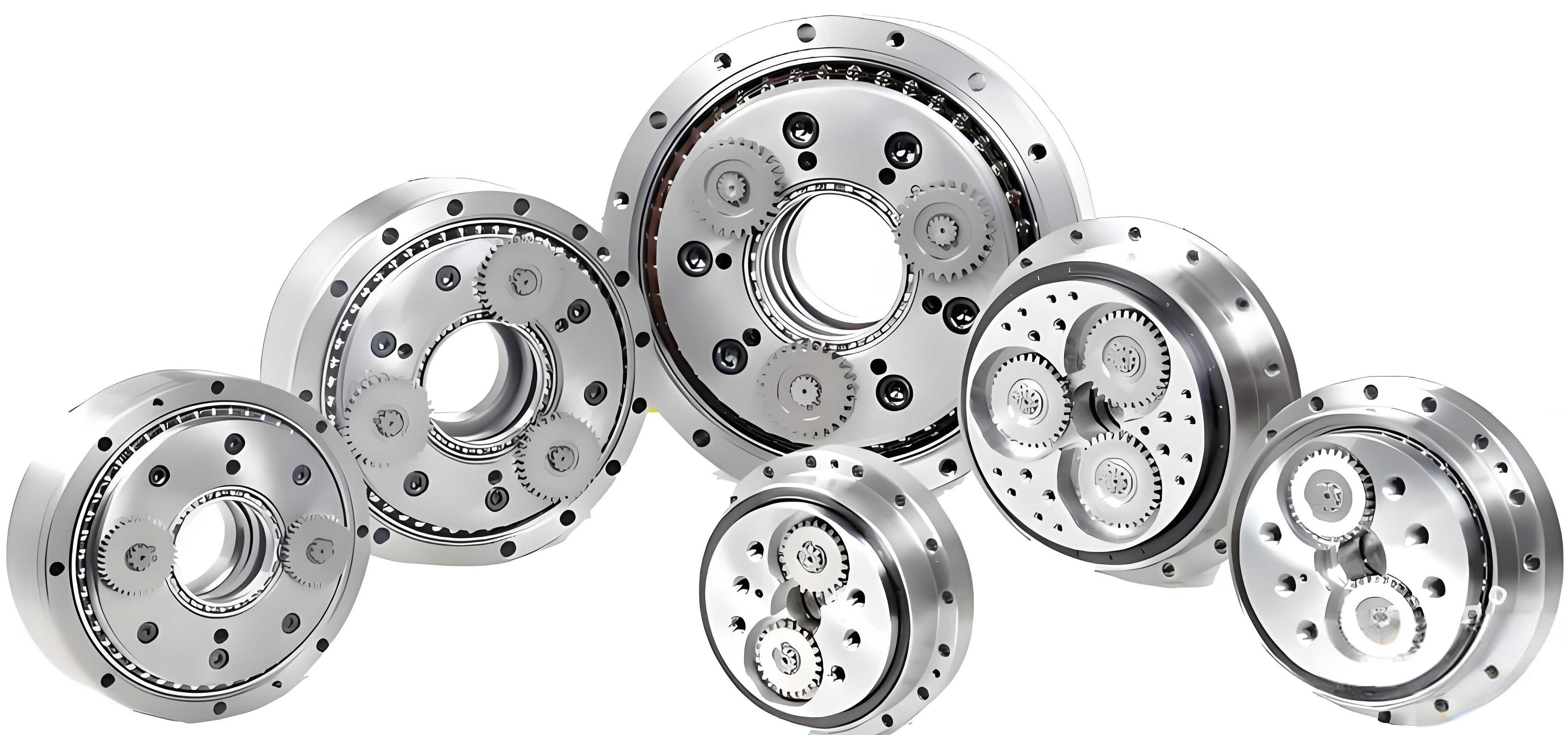
The rotary vector reducer, often abbreviated as RV reducer, is a sophisticated two-stage reduction device that combines planetary and cycloidal drives. It is extensively employed in industrial robots, machine tools, and satellite positioning systems where precision and durability are paramount. The cycloid gear, a key element in the RV reducer, undergoes significant cyclic stresses during operation, necessitating a material that can withstand such demands. 20CrMoH steel, a chromium-molybdenum low-alloy steel, is commonly used for this application due to its hardenability and capacity to develop a deep, hard carburized case while maintaining a tough core. However, variations in steelmaking practices and heat treatment processes can lead to microstructural inhomogeneities, such as banded structures, which may compromise the performance and longevity of the rotary vector reducer. Thus, a detailed examination of the microstructure before and after heat treatment is essential for quality assurance.
Our investigation begins with the chemical composition analysis of 20CrMoH steel samples obtained from three distinct sources: two domestic enterprises (designated as Steel A and Steel B) and a Japanese manufacturer (referred to as Japanese Steel). It is noteworthy that the Japanese Steel sample was already in the carburized state, so we analyzed its base material away from the carburized layer for a fair comparison. We utilized a direct reading spectrometer to quantify the elemental content, ensuring compliance with the standard specifications for 20CrMoH steel. The results are summarized in Table 1, which provides a clear comparison of the chemical constituents. This analysis sets the foundation for understanding the material’s inherent properties and potential behavior during subsequent processing.
| Element | Steel A | Steel B | Japanese Steel | Standard Range for 20CrMoH |
|---|---|---|---|---|
| C | 0.21 | 0.22 | 0.22 | 0.17–0.23 |
| Si | 0.25 | 0.24 | 0.24 | 0.17–0.37 |
| Mn | 0.72 | 0.82 | 0.79 | 0.55–0.90 |
| S | 0.015 | 0.005 | 0.01 | ≤0.030 |
| P | <0.005 | 0.009 | 0.012 | ≤0.030 |
| Cr | 1.05 | 1.05 | 1.15 | 0.85–1.25 |
| Mo | 0.16 | 0.16 | 0.20 | 0.15–0.35 |
| Ni | 0.19 | 0.02 | 0.023 | ≤0.25 |
| Cu | 0.088 | 0.008 | 0.009 | ≤0.30 |
From Table 1, we observe that all three steel samples conform to the standard chemical requirements for 20CrMoH. The carbon, silicon, and manganese contents are remarkably similar across the samples, indicating a consistent base composition. However, Steel B exhibits lower sulfur and phosphorus levels, suggesting a more refined steelmaking process with better impurity control. These trace elements can influence grain boundary cohesion and toughness, so their minimization is beneficial for the rotary vector reducer components subjected to dynamic loads. The chromium and molybdenum contents, which enhance hardenability and strength, are within the specified ranges, with Japanese Steel showing slightly higher values. This chemical parity implies that performance differences may arise primarily from microstructural features induced during solidification and heat treatment, rather than from compositional deviations.
Prior to heat treatment, we examined the microstructure of Steel A and Steel B in the as-received condition using optical microscopy. The samples were prepared by sectioning, grinding, polishing, and etching with a 4% nital solution. The micrographs revealed a ferrite-pearlite structure typical of low-carbon steels, but with a notable presence of banded structures. Banded structures are characterized by alternating layers of ferrite and pearlite aligned in the rolling direction, resulting from microsegregation of alloying elements during solidification. This inhomogeneity can lead to anisotropic mechanical properties, reduced ductility, and impaired impact toughness—factors that are critical for the reliable operation of a rotary vector reducer. The formation of banded structures can be described by the segregation coefficient $k$, defined as the ratio of solute concentration in the solid to that in the liquid during solidification: $$k = \frac{C_s}{C_l}$$ where $C_s$ is the solute concentration in the solid and $C_l$ is the solute concentration in the liquid. For elements with $k < 1$, such as manganese and chromium, segregation occurs, leading to banding. The extent of banding can be quantified using the index of banding, $I_b$, which relates to the difference in hardness between the bands: $$I_b = \frac{H_{max} – H_{min}}{H_{avg}}$$ where $H_{max}$, $H_{min}$, and $H_{avg}$ are the maximum, minimum, and average hardness values across the bands, respectively. In our samples, both Steel A and Steel B displayed banded structures, albeit to varying degrees, which could affect their response to carburizing and ultimate performance in the rotary vector reducer.
To assess the heat treatment response, we subjected Steel A and Steel B to vacuum carburizing followed by quenching and tempering. The heat treatment cycle, as illustrated in Figure 1, involves heating to a carburizing temperature of 930°C in a vacuum, introducing a hydrocarbon gas for carburizing, followed by diffusion, quenching in oil, and tempering at 180°C. Vacuum carburizing offers advantages such as reduced intergranular oxidation and better control of case depth, which are crucial for the precision components of a rotary vector reducer. The carburizing process is governed by Fick’s second law of diffusion: $$\frac{\partial C}{\partial t} = D \frac{\partial^2 C}{\partial x^2}$$ where $C$ is the carbon concentration, $t$ is time, $D$ is the diffusion coefficient of carbon in austenite, and $x$ is the distance from the surface. The diffusion coefficient $D$ is temperature-dependent and can be expressed by the Arrhenius equation: $$D = D_0 \exp\left(-\frac{Q}{RT}\right)$$ where $D_0$ is the pre-exponential factor, $Q$ is the activation energy for diffusion, $R$ is the gas constant, and $T$ is the absolute temperature. By controlling the carburizing time and temperature, we aim to achieve a desired case depth $d$, which often follows a parabolic relationship: $$d = k \sqrt{t}$$ where $k$ is a constant that depends on temperature and carbon potential.
To evaluate the uniformity of our heat treatment furnace, we placed identical samples of Steel B at three different locations: front, center, and rear of the furnace chamber, denoted as B_front, B_center, and B_rear, respectively. After heat treatment, we examined the core microstructure of these samples. The results showed a consistent microstructure of low-carbon tempered martensite across all positions, with no retained ferrite observed. This indicates that the gear sections were fully austenitized and quenched to martensite due to their thin cross-sections. The similarity in martensite morphology, distribution, and quantity among the samples suggests excellent temperature and atmosphere uniformity within the furnace, which is vital for reproducible heat treatment of rotary vector reducer components. The hardness of the core can be estimated using the relationship between carbon content and martensite hardness: $$H_v \approx 1667C + 926$$ where $H_v$ is the Vickers hardness and $C$ is the carbon content in weight percent. For a carbon content of approximately 0.22 wt%, the core hardness is expected to be around 450 HV, providing a tough substrate for the carburized case.
Following heat treatment, we compared the core microstructures of Japanese Steel, Steel A, and Steel B. All samples exhibited a core of low-carbon tempered martensite, but with discernible differences in uniformity and refinement. Japanese Steel displayed a more homogeneous and finer martensitic structure compared to the domestic steels, which likely translates to better mechanical properties and fatigue resistance in the rotary vector reducer. The grain size, a critical factor influencing toughness, can be quantified using the ASTM grain size number $G$, defined by: $$N = 2^{G-1}$$ where $N$ is the number of grains per square inch at 100× magnification. While the grain sizes were similar, the distribution of martensite laths and packets was more regular in Japanese Steel, minimizing stress concentrations. This superiority may be attributed to optimized steelmaking and heat treatment practices, such as controlled rolling and precise austenitizing cycles, which are essential for high-performance applications like the rotary vector reducer.
The carburized layer microstructure was examined next, as it directly affects the surface hardness and wear resistance of the cycloid gear. We observed that the carburized layer consisted of carbides, high-carbon martensite, and retained austenite. The depth of the carburized layer varied among the samples, with Japanese Steel exhibiting the deepest case. This can be rationalized by the presence of banded structures in Steel A and Steel B, which may hinder carbon diffusion due to localized variations in chemistry and microstructure. The effective diffusion coefficient in banded regions may be altered, leading to non-uniform case depths. The case depth $d$ can be measured from the surface to the point where the carbon content drops to 0.4 wt%, often using microhardness traverses. The hardness profile can be modeled by: $$H(x) = H_s – (H_s – H_c) \text{erf}\left(\frac{x}{2\sqrt{Dt}}\right)$$ where $H(x)$ is the hardness at distance $x$ from the surface, $H_s$ is the surface hardness, $H_c$ is the core hardness, and erf is the error function. Japanese Steel showed a more uniform carburized layer with fewer defects and lower retained austenite content. Retained austenite, while sometimes beneficial for toughness, can reduce surface hardness and promote dimensional instability under load. The volume fraction of retained austenite $V_\gamma$ can be estimated using X-ray diffraction or magnetic methods and is influenced by carbon concentration and quenching conditions: $$V_\gamma = f(C, T_q, \text{cooling rate})$$ where $T_q$ is the quenching temperature. Excessive retained austenite is often mitigated by sub-zero treatments or tempering, but Japanese Steel’s lower level suggests better process control, enhancing the durability of the rotary vector reducer.
To further analyze the microstructural features, we consider the impact of banded structures on carburizing kinetics. In banded steels, the diffusion of carbon may be faster in ferrite bands and slower in pearlite bands due to differences in carbon solubility and diffusion rates. This can lead to uneven case depths and localized soft spots, which are detrimental for the cycloid gear in a rotary vector reducer. The effective diffusion coefficient $D_{eff}$ in a banded microstructure can be approximated by a rule of mixtures: $$D_{eff} = V_f D_f + V_p D_p$$ where $V_f$ and $V_p$ are the volume fractions of ferrite and pearlite, and $D_f$ and $D_p$ are the diffusion coefficients of carbon in ferrite and pearlite, respectively. Since $D_f > D_p$ at typical carburizing temperatures, banded structures may cause accelerated carbon penetration in certain regions, resulting in a non-uniform case. This underscores the importance of eliminating or minimizing banding through improved steelmaking practices, such as electromagnetic stirring or soft reduction during continuous casting, and through appropriate pre-heat treatments like homogenization annealing.
In the context of the rotary vector reducer, the performance of the cycloid gear is critical for overall efficiency and longevity. The gear must withstand high contact stresses and cyclic loading, necessitating a hard, wear-resistant surface and a tough, fatigue-resistant core. The quality of the 20CrMoH steel, as evidenced by its microstructure, plays a decisive role. Our comparative analysis reveals that while domestic steels meet chemical specifications, they exhibit microstructural imperfections like banding that can compromise performance. Japanese Steel, with its superior microstructural homogeneity and deeper, more uniform carburized case, sets a benchmark for quality. To bridge this gap, domestic manufacturers could adopt advanced steelmaking techniques, such as vacuum degassing and ladle refining, to reduce impurities and segregation. Additionally, optimizing heat treatment parameters, including carburizing potential and quenching media, can enhance case properties. For instance, using high-pressure gas quenching instead of oil quenching may reduce distortion and retained austenite, which is advantageous for the precise geometries required in rotary vector reducers.
From a broader perspective, the development of high-quality materials for rotary vector reducers is integral to the advancement of robotics and automation. As demand for precision and reliability grows, so does the need for steels with consistent microstructures and properties. Future research could focus on alloy design modifications, such as microalloying with niobium or vanadium to refine grain size and mitigate banding. Moreover, non-destructive evaluation techniques, like ultrasonic testing or eddy current sensing, could be employed to detect microstructural anomalies in finished gears, ensuring the integrity of every rotary vector reducer. Computational modeling, including finite element analysis of stress distributions and phase transformation simulations, could further optimize heat treatment processes for cycloid gears.
In conclusion, our microstructural analysis of 20CrMoH steel for cycloid gears in rotary vector reducers highlights the significance of chemical composition, banded structures, and heat treatment uniformity. While all sampled steels met compositional standards, banding was prevalent in domestic products, potentially affecting carburizing response and mechanical performance. Japanese Steel demonstrated superior microstructural homogeneity and deeper carburized cases, underscoring the importance of refined manufacturing processes. The uniformity of our heat treatment furnace was confirmed, indicating that process control is achievable. To enhance the quality of domestic rotary vector reducer components, emphasis should be placed on steelmaking practices that minimize segregation and on heat treatment optimization to achieve desired microstructures. By addressing these factors, we can contribute to the production of more reliable and efficient rotary vector reducers, supporting the growth of high-precision industries worldwide.