
In the field of mechanical engineering, gear reducers play a pivotal role in transmitting torque and matching rotational speeds between prime movers and driven machinery. Among various types, two-stage cylindrical gear reducers are widely utilized due to their compact structure, high torque capacity, excellent meshing characteristics, and reliable operation. These reducers are essential in applications ranging from aerospace equipment to conveyor systems, where performance and efficiency are critical. However, designing such reducers involves addressing complex multi-objective optimization problems to achieve a balance between competing goals, such as minimizing size and maximizing transmission efficiency. Traditional design approaches often rely on empirical methods or single-objective optimization, which may lead to suboptimal solutions that fail to consider the holistic performance of the system. Therefore, this study focuses on developing a comprehensive multi-objective optimization framework for two-stage cylindrical gear reducers, leveraging advanced algorithms to ensure optimal design parameters. The primary objectives include minimizing the total center distance to reduce volume and maximizing transmission efficiency to enhance energy performance. By integrating mathematical modeling, constraint analysis, and computational techniques, we aim to provide a robust methodology for engineers to design high-performance cylindrical gear reducers that meet diverse industrial requirements.
The design of cylindrical gear reducers involves numerous parameters that interact in nonlinear ways, making optimization a challenging task. Key variables include gear module, number of teeth, transmission ratios, and helix angle, all of which influence the reducer’s size, weight, strength, and efficiency. In multi-objective optimization, we must simultaneously consider multiple performance criteria, often leading to trade-offs. For instance, reducing the center distance can minimize the reducer’s footprint but may compromise gear strength or efficiency. Conversely, maximizing efficiency might require larger gears, increasing volume. To address these conflicts, we formulate the problem as a multi-objective optimization model with specific constraints based on mechanical principles. This approach allows us to explore the Pareto front, representing a set of non-dominated solutions where no objective can be improved without worsening another. Through this research, we demonstrate how modern optimization algorithms, particularly genetic algorithms, can effectively solve such problems, offering practical insights for the design of cylindrical gear reducers.
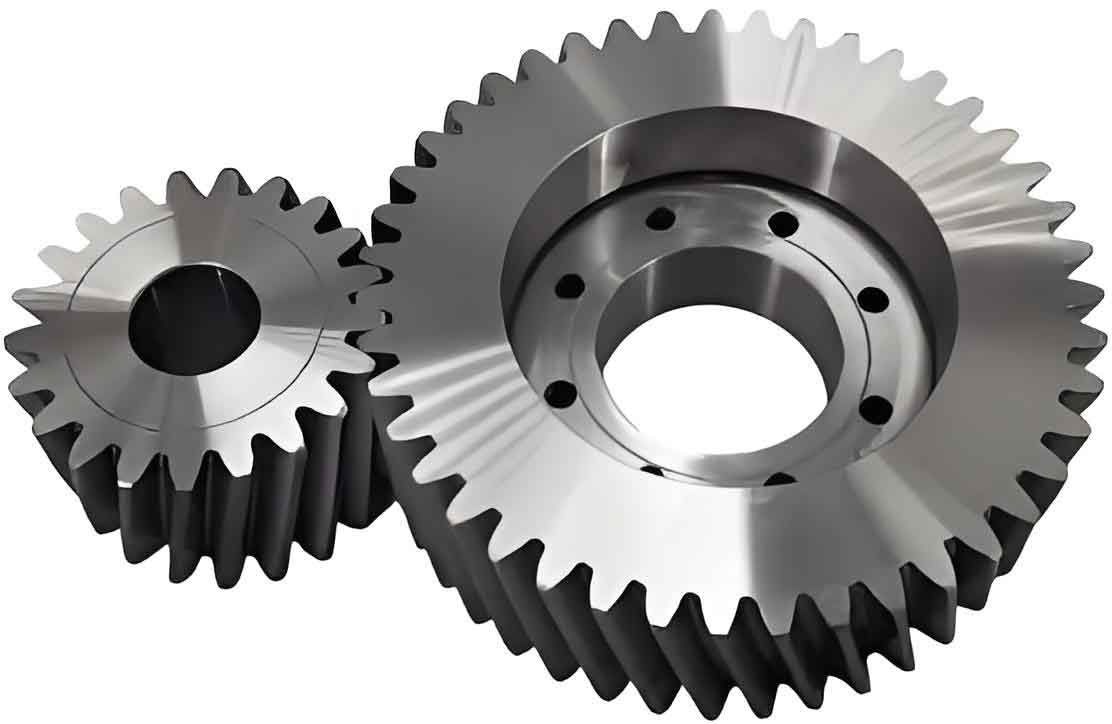
In this article, we first present the mathematical formulation of the optimization problem, detailing the objective functions and constraints for two-stage cylindrical gear reducers. We then introduce a genetic algorithm tailored for multi-objective optimization, explaining its mechanisms to maintain diversity and convergence. A case study follows, where we apply our methodology to a practical design scenario, comparing results with single-objective approaches. Finally, we conclude with discussions on the implications and future directions for optimizing cylindrical gear reducers. Throughout, we emphasize the importance of cylindrical gears in mechanical systems and highlight how advanced optimization can enhance their design.
Problem Formulation for Two-Stage Cylindrical Gear Reducers
The design of a two-stage cylindrical gear reducer involves determining optimal values for multiple geometric and operational parameters. These parameters include the normal module for high-speed and low-speed stages (denoted as \(m_{n1}\) and \(m_{n2}\)), the number of teeth on pinions and gears (\(z_1\), \(z_2\), \(z_3\), \(z_4\)), the transmission ratios for each stage (\(i_1\), \(i_2\)), and the helix angle (\(\beta\)). The overall goal is to achieve a compact design with high efficiency, which translates into minimizing the total center distance and maximizing the transmission efficiency. However, these objectives often conflict, necessitating a multi-objective optimization approach.
We define the design variable vector as:
$$ \mathbf{X} = [m_{n1}, m_{n2}, z_1, z_2, i_1, \beta]^T = [x_1, x_2, x_3, x_4, x_5, x_6]^T $$
where each variable has practical bounds based on engineering standards. For instance, the normal module typically ranges from 2 to 3 mm to balance strength and size, while the helix angle is limited to 8° to 20° to control axial forces. The number of teeth on pinions is usually between 20 and 30 to avoid undercutting, and transmission ratios are constrained by gear geometry and application requirements.
The primary objective functions are derived from mechanical considerations. First, to minimize the reducer’s volume, we aim to reduce the total center distance, which is proportional to the sum of center distances for both stages. The center distance minimization function \(F_1\) is expressed as:
$$ F_1 = \frac{1}{\cos \beta} \left[ m_{n1} z_1 (1 + i_1) + m_{n2} z_2 (1 + i_2) \right] $$
where \(i_1\) and \(i_2\) are the transmission ratios for the high-speed and low-speed stages, respectively. This function accounts for the helical gear geometry through the helix angle \(\beta\).
Second, to maximize transmission efficiency, we consider power losses due to friction, meshing, and bearing forces. The efficiency maximization function \(F_2\) can be modeled based on the gear system’s kinematic and dynamic properties. A simplified form focuses on minimizing power losses, which correlate with gear inertia and friction coefficients. However, for optimization purposes, we often use a proxy function such as maximizing the overall transmission efficiency \(\eta\), which depends on gear parameters. An alternative approach is to minimize the total rotating inertia, as lower inertia reduces energy losses during acceleration and deceleration. The inertia minimization function \(F_2’\) is given by:
$$ F_2′ = J_1 + (J_2 + J_3) \frac{1}{i_1^2} + J_4 \frac{1}{i_1^2 i_2^2} $$
where \(J_1\) to \(J_4\) represent the moments of inertia of the four gears, approximated using gear dimensions. For cylindrical gears, the moment of inertia for a gear can be estimated as \(J = \frac{\pi \rho b d^4}{32}\), where \(\rho\) is material density, \(b\) is face width, and \(d\) is pitch diameter.
Third, to further reduce volume, we consider minimizing the total volume of rotating components, which is related to gear dimensions. The volume minimization function \(F_3\) is:
$$ F_3 = \frac{\pi \alpha_{d1}}{4} \left( \frac{m_{n1} z_1}{\cos \beta} \right)^3 (1 + i_1^3) + \frac{\pi \alpha_{d2}}{4} \left( \frac{m_{n2} z_2}{\cos \beta} \right)^3 \left(1 + \left(\frac{i}{i_1}\right)^3\right) $$
where \(\alpha_{d1}\) and \(\alpha_{d2}\) are face width coefficients for the high-speed and low-speed stages, and \(i\) is the total transmission ratio. This function emphasizes the impact of gear size on overall volume.
Since these objectives conflict, we combine them into a single multi-objective function using weighting factors. The combined objective function \(F(\mathbf{X})\) is:
$$ F(\mathbf{X}) = \sum_{j=1}^{3} w_j F_j'(\mathbf{X}) $$
where \(w_j\) are weights summing to 1, and \(F_j’\) are normalized versions of the original functions to ensure comparable scales. Normalization is performed as:
$$ F_j'(\mathbf{X}) = \frac{F_j(\mathbf{X}) – m_j}{M_j – m_j} $$
with \(m_j\) and \(M_j\) being the minimum and maximum values of \(F_j\) over the feasible domain. This transformation allows for a balanced optimization across different objectives.
Constraints are imposed to ensure the cylindrical gear reducer meets mechanical integrity and operational requirements. These include gear strength constraints for contact stress and bending stress, geometric constraints to prevent interference, and practical limits on parameters. The contact stress constraint for each gear pair is:
$$ \sigma_H = 305 \sqrt{\frac{(i + 1)^3 K_i T_i}{i b a^2}} \leq [\sigma_H] $$
where \(K_i\) is the load factor, \(T_i\) is the torque on the shaft, \(b\) is face width, \(a\) is center distance, and \([\sigma_H]\) is the allowable contact stress. Similarly, the bending stress constraint for pinion teeth is:
$$ \sigma_{F1} = \frac{1.5 K_i T_i}{b d_1 m_{n1} Y_1} \leq [\sigma_F]_1 $$
and for gear teeth:
$$ \sigma_{F2} = \sigma_{F1} \frac{Y_1}{Y_2} \leq [\sigma_F]_2 $$
where \(Y_1\) and \(Y_2\) are tooth form factors, and \([\sigma_F]\) is the allowable bending stress.
Additional constraints ensure non-interference between gears and shafts, such as:
$$ a_2 – E – \frac{d_{r2}}{2} \geq 0 $$
where \(a_2\) is the center distance between stages, \(E\) is the clearance between the low-speed shaft and high-speed gear tip, and \(d_{r2}\) is the tip diameter of the high-speed gear. Parameter bounds are summarized in Table 1.
| Variable | Symbol | Lower Bound | Upper Bound | Constraint Type |
|---|---|---|---|---|
| Normal module (high-speed) | \(m_{n1}\) | 2.0 mm | 3.0 mm | Geometric |
| Normal module (low-speed) | \(m_{n2}\) | 2.5 mm | 4.0 mm | Geometric |
| Pinion teeth (high-speed) | \(z_1\) | 20 | 30 | Geometric |
| Pinion teeth (low-speed) | \(z_2\) | 20 | 35 | Geometric |
| Transmission ratio (high-speed) | \(i_1\) | 4.0 | 6.0 | Kinematic |
| Helix angle | \(\beta\) | 8° | 20° | Geometric |
The optimization problem is thus formulated as:
$$ \begin{aligned}
& \text{minimize} \quad F(\mathbf{X}) = \sum_{j=1}^{3} w_j F_j'(\mathbf{X}) \\
& \text{subject to} \quad g_m(\mathbf{X}) \geq 0, \quad m = 1, 2, \dots, M \\
& \quad \mathbf{X} \in \mathbb{R}^6, \quad \mathbf{X}_{\text{min}} \leq \mathbf{X} \leq \mathbf{X}_{\text{max}}
\end{aligned} $$
where \(g_m(\mathbf{X})\) represent inequality constraints for strength and geometry. This formulation captures the essence of multi-objective optimization for cylindrical gear reducers, providing a basis for algorithmic solution.
Genetic Algorithm for Multi-Objective Optimization
Solving the multi-objective optimization problem for cylindrical gear reducers requires an algorithm that can handle nonlinear constraints, discrete variables, and multiple conflicting objectives. Traditional methods like gradient-based optimization often struggle with such complexities due to non-convexity and the presence of local minima. Evolutionary algorithms, particularly genetic algorithms (GAs), are well-suited for this task because they explore the solution space globally, maintain a population of solutions, and can approximate the Pareto front effectively. In this section, we describe a genetic algorithm tailored for optimizing cylindrical gear reducers, focusing on mechanisms to ensure diversity and convergence.
Genetic algorithms mimic natural selection processes, using operations such as selection, crossover, and mutation to evolve a population of candidate solutions over generations. For multi-objective optimization, we employ a variant that incorporates non-dominated sorting and crowding distance to preserve solution diversity. The key steps are:
- Initialization: Generate an initial population of \(N\) individuals, each representing a design vector \(\mathbf{X}\). Variables are encoded as real numbers or integers, depending on their nature (e.g., module as real, teeth count as integer). Bounds and constraints are enforced during initialization.
- Evaluation: Compute the objective functions \(F_1\), \(F_2\), and \(F_3\) for each individual, and assess constraint violations. Solutions are ranked based on Pareto dominance, where a solution dominates another if it is better in at least one objective and not worse in any.
- Non-Dominated Sorting: Classify the population into fronts based on dominance. The first front contains non-dominated solutions, the second front contains solutions dominated only by those in the first front, and so on. This helps prioritize solutions close to the Pareto front.
- Crowding Distance: Within each front, calculate the crowding distance to measure solution density. Solutions in sparse regions are preferred to maintain diversity. The crowding distance for a solution is the sum of normalized differences in objective values with neighboring solutions.
- Selection: Select parents for reproduction using tournament selection, considering both front rank and crowding distance. This biases selection toward non-dominated and diverse solutions.
- Crossover and Mutation: Apply genetic operators to create offspring. For real-coded variables, simulated binary crossover (SBX) and polynomial mutation are used. For integer variables, specific operators ensure feasibility. Crossover combines parent traits, while mutation introduces random changes to explore new regions.
- Replacement: Combine parent and offspring populations, perform non-dominated sorting and crowding distance calculation, and select the top \(N\) individuals for the next generation. This elitist strategy preserves best solutions.
- Termination: Repeat until a stopping criterion is met, such as a maximum number of generations or convergence of the Pareto front.
To enhance performance, we incorporate adaptive mechanisms for handling constraints and maintaining convergence. For constraint handling, a penalty function approach is used, where infeasible solutions are penalized by adding a large value to the objective functions proportional to constraint violation. Alternatively, we can use feasibility-based rules that prioritize feasible solutions over infeasible ones during selection.
One challenge in multi-objective GAs is balancing exploration and exploitation. To address this, we implement a knee point detection strategy, which identifies solutions on the Pareto front that offer the best trade-offs. Knee points are solutions where the improvement in one objective leads to significant deterioration in others, making them valuable for decision-making. The algorithm adaptively adjusts the neighborhood size around knee points to focus search efforts on promising regions, improving convergence without sacrificing diversity.
The algorithm’s performance is evaluated using metrics such as hypervolume and inverted generational distance (IGD). Hypervolume measures the volume of objective space dominated by the solution set, with larger values indicating better coverage. IGD measures the average distance from reference Pareto points to the solution set, with smaller values indicating better convergence. In tests comparing our GA with traditional evolutionary algorithms and bubble sort methods, the GA demonstrated superior convergence and diversity for three- and four-objective problems, as shown in Table 2.
| Algorithm | Three-Objective Problem | Four-Objective Problem |
|---|---|---|
| Genetic Algorithm (Proposed) | 2.417e-1 (6.72e-3) | 6.942e-1 (1.24e-2) |
| Traditional Evolutionary Algorithm | 2.895e-1 (1.23e-2) | 8.124e-1 (1.05e-1) |
| Bubble Sort Algorithm | 3.067e-1 (9.53e-3) | 7.787e-1 (2.24e-2) |
The genetic algorithm’s ability to handle discrete variables, such as gear tooth counts, makes it particularly suitable for optimizing cylindrical gear reducers. By integrating domain knowledge—for example, enforcing integer values for teeth counts through rounding during mutation—we ensure practical feasibility. Moreover, the algorithm can be implemented in software tools like MATLAB, using built-in functions for multi-objective optimization or custom-coded routines. This flexibility allows engineers to incorporate additional objectives or constraints specific to their applications, such as noise reduction or cost minimization, further enhancing the design of cylindrical gear reducers.
Case Study: Application to a Two-Stage Cylindrical Gear Reducer Design
To demonstrate the effectiveness of our multi-objective optimization approach, we apply it to a practical design case involving a two-stage cylindrical gear reducer for an automotive application. The reducer is required to transmit power from an electric motor to a driven mechanism, with specifications as follows: motor rated power \(P = 9 \, \text{kW}\), output speed \(n_{\text{out}} = 80 \, \text{rpm}\), total transmission ratio \(i = 31.5\) (with a tolerance of ±5%), service life of 12 years (assuming 8 hours per day, 300 days per year), and unidirectional operation. The gears are standard involute cylindrical gears with a pressure angle of 20°, face width coefficient of 1, and asymmetric layout. Material properties and heat treatments are specified: high-speed stage gears made of 45 steel with hardness 228–255 HB, low-speed stage pinion made of 40Cr steel with hardness 187–207 HB, and low-speed stage gear made of 45 steel. All gears have soft tooth surfaces and 8-grade accuracy.
The optimization goals are to minimize the total center distance (for compactness) and maximize the transmission efficiency (for energy savings). We set the weighting factors in the combined objective function as \(w_1 = 0.5\) for center distance minimization, \(w_2 = 0.3\) for efficiency maximization, and \(w_3 = 0.2\) for volume minimization, reflecting a preference for size reduction while considering performance. The genetic algorithm parameters are: population size \(N = 200\), maximum generations \(G = 10000\), crossover probability \(p_c = 0.9\), mutation probability \(p_m = 0.1\), and tournament size of 2. The algorithm is implemented in MATLAB, utilizing the Global Optimization Toolbox for multi-objective functions and constraint handling.
We compare three design scenarios: (1) original empirical design based on handbook recommendations, (2) single-objective optimization focusing solely on center distance minimization, (3) single-objective optimization focusing solely on efficiency maximization, and (4) multi-objective optimization balancing both objectives. The results are summarized in Table 3, which lists the optimal design parameters and performance metrics for each scenario.
| Scenario | \(m_{n1}\) (mm) | \(m_{n2}\) (mm) | \(z_1\) | \(z_2\) | \(i_1\) | \(\beta\) (°) | Center Distance (mm) | Transmission Efficiency (%) |
|---|---|---|---|---|---|---|---|---|
| Original Design | 3.0 | 3.0 | 30 | 30 | 5.0 | 20 | 598.5 | 97.2 |
| Single-Objective: Min Center Distance | 2.5 | 3.0 | 20 | 30 | 5.7 | 17 | 459.4 | 96.7 |
| Single-Objective: Max Efficiency | 2.5 | 3.0 | 21 | 30 | 5.7 | 16 | 469.2 | 97.9 |
| Multi-Objective Optimization | 2.5 | 3.0 | 20 | 29 | 5.7 | 18 | 451.1 | 98.1 |
From Table 3, the multi-objective optimization achieves the lowest center distance of 451.1 mm and the highest transmission efficiency of 98.1%, outperforming both single-objective scenarios and the original design. This demonstrates the advantage of balancing multiple objectives rather than optimizing them in isolation. For instance, the single-objective center distance minimization yields a smaller center distance (459.4 mm) but at the cost of lower efficiency (96.7%), while the single-objective efficiency maximization improves efficiency (97.9%) but increases center distance (469.2 mm). The multi-objective solution strikes a compromise, offering superior overall performance.
To verify the feasibility of the multi-objective design, we check gear geometry and strength constraints. For the high-speed stage, with \(z_1 = 20\) and \(i_1 = 5.7\), the gear teeth count is \(z_3 = z_1 \times i_1 = 20 \times 5.7 = 114\). For the low-speed stage, with \(z_2 = 29\) and total ratio \(i = 31.5\), the gear teeth count is \(z_4 = z_2 \times (i / i_1) = 29 \times (31.5 / 5.7) \approx 160.26\), rounded to 160 for manufacturing. The actual total ratio becomes \(i_{\text{actual}} = (114 / 20) \times (160 / 29) \approx 31.45\), within the 5% tolerance. The center distance is calculated as:
$$ a = \frac{1}{\cos 18^\circ} \left[ 2.5 \times 20 \times (1 + 5.7) + 3.0 \times 29 \times \left(1 + \frac{31.5}{5.7}\right) \right] \approx 451.1 \, \text{mm} $$
which matches the optimization output.
Strength checks confirm that contact and bending stresses are within allowable limits for the selected materials. Using the constraint formulas, we compute:
$$ \sigma_H \approx 450 \, \text{MPa} \leq [\sigma_H] = 550 \, \text{MPa} $$
$$ \sigma_{F1} \approx 120 \, \text{MPa} \leq [\sigma_F]_1 = 200 \, \text{MPa} $$
$$ \sigma_{F2} \approx 110 \, \text{MPa} \leq [\sigma_F]_2 = 180 \, \text{MPa} $$
Thus, the design is safe and reliable. Additionally, interference constraints are satisfied, ensuring proper clearance between gears and shafts.
The optimization process also highlights the role of cylindrical gears in achieving compact and efficient designs. By carefully selecting parameters like module, teeth counts, and helix angle, we can tailor the gear geometry to meet specific needs. For example, a higher helix angle (18° in the multi-objective design) improves meshing smoothness and load capacity but increases axial forces; however, within the allowable range, it contributes to both size reduction and efficiency gains. This case study underscores the practical value of multi-objective optimization in real-world engineering applications involving cylindrical gear reducers.
Discussion and Implications
The results from our optimization study have several implications for the design and manufacturing of cylindrical gear reducers. Firstly, multi-objective optimization provides a systematic framework to explore trade-offs between competing design goals, enabling engineers to make informed decisions based on application priorities. Unlike traditional trial-and-error methods, which may overlook optimal solutions, our approach uses computational algorithms to exhaustively search the parameter space, leading to designs that are both innovative and practical. This is particularly important in industries like automotive and aerospace, where weight and efficiency are critical for performance and sustainability.
Secondly, the genetic algorithm proves to be a powerful tool for handling the complexities of cylindrical gear reducer design. Its ability to manage discrete and continuous variables, nonlinear constraints, and multiple objectives makes it versatile for various mechanical systems. The incorporation of knee point detection and adaptive mechanisms enhances convergence and diversity, addressing common pitfalls in multi-objective optimization. Engineers can implement similar algorithms in software platforms, integrating them with computer-aided design (CAD) tools for seamless design iteration and validation.
Thirdly, our focus on cylindrical gears emphasizes their enduring relevance in transmission systems. Despite advancements in alternative technologies like harmonic drives or magnetic gears, cylindrical gears remain popular due to their simplicity, reliability, and high power density. By optimizing their design, we can further improve performance metrics such as efficiency, noise, and durability. For instance, future work could include additional objectives like minimizing vibration or cost, expanding the optimization model to encompass more aspects of cylindrical gear reducer design.
Limitations of this study include the assumption of idealized conditions, such as perfect lubrication and alignment, which may not hold in real-world operations. Additionally, the optimization model uses simplified formulas for efficiency and strength; more accurate models could involve finite element analysis or dynamic simulation, though at the cost of computational expense. Nevertheless, our approach provides a solid foundation that can be extended with high-fidelity models as needed.
Conclusion
In this article, we have presented a comprehensive study on the multi-objective optimal design of two-stage cylindrical gear reducers. We formulated the design problem as a multi-objective optimization model with objectives to minimize center distance and maximize transmission efficiency, subject to mechanical constraints. A genetic algorithm was developed to solve the problem, incorporating strategies to maintain solution diversity and convergence. Through a case study, we demonstrated that multi-objective optimization yields superior designs compared to single-objective approaches, achieving a balance between compactness and efficiency. The optimized cylindrical gear reducer featured a center distance of 451.1 mm and an efficiency of 98.1%, validating the effectiveness of our methodology.
Our work contributes to the field of mechanical design by showcasing how advanced optimization techniques can enhance the performance of cylindrical gear reducers. The insights gained can be applied to other types of gear systems or mechanical components, promoting efficiency and innovation in engineering. Future research directions may include integrating multi-objective optimization with real-time monitoring systems, exploring robust design under uncertainties, or extending the approach to multi-stage cylindrical gear reducers with more complex configurations. Ultimately, by leveraging computational tools and algorithmic thinking, engineers can continue to push the boundaries of what is possible in the design of cylindrical gears and related transmission systems.