
In modern mechanical transmission systems, the helical gear is a fundamental and widely used component due to its superior load-carrying capacity and smoother, quieter operation compared to spur gears. The inherent design of helical gears, with their angled teeth, allows for a more gradual engagement process, leading to higher contact ratios. However, despite these advantages, gear systems can still be significant sources of vibration and noise, commonly manifested as gear whine. This issue is primarily driven by the fluctuation of transmission error (TE), which acts as a primary dynamic excitation within the gear mesh. Transmission error arises from deviations between the theoretical and actual positions of driven gear teeth relative to the driver, caused by manufacturing inaccuracies, assembly errors, and elastic deflections under load.
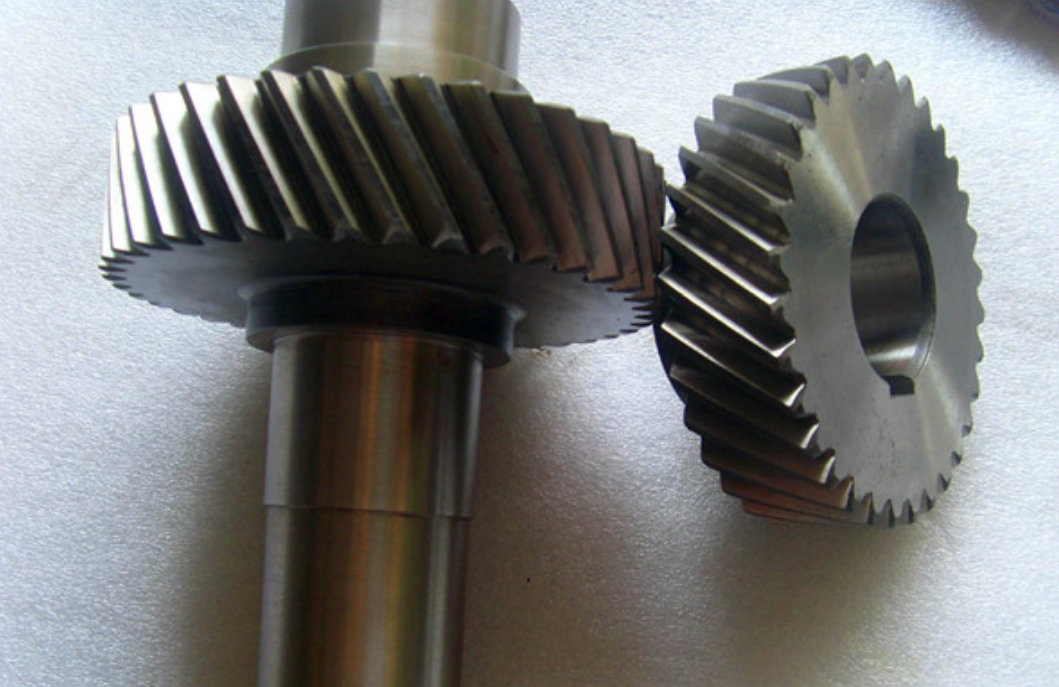
To mitigate these vibration and noise concerns, optimization strategies are typically employed at two levels: micro-geometry modifications (tooth profile and lead crowning) and macro-parameter optimization. While micro-geometry tuning is excellent for refining loaded tooth contact, the foundational dynamic behavior is largely dictated by the macro-geometric parameters selected during the initial design phase. An optimal set of macro-parameters can establish a superior starting point, potentially reducing the reliance on extensive and sensitive micro-modifications. This work focuses on the crucial initial stage: the multi-objective optimization of helical gear macro-parameters to simultaneously enhance meshing smoothness, minimize excitation, and consider economic efficiency.
Excitation Analysis and Transmission Error Calculation for Helical Gears
The dynamic response of a helical gear system is governed by several internal excitation mechanisms. Understanding these is key to formulating effective optimization goals.
- Stiffness Excitation: The time-varying mesh stiffness of a helical gear pair is a fundamental source of excitation. As the number of tooth pairs in contact changes within a mesh cycle (due to non-integer contact ratio), the overall mesh stiffness fluctuates periodically. Under constant torque, this stiffness variation generates dynamic mesh forces, which propagate through the shafts and bearings to the housing, causing vibration and noise.
- Error Excitation: This originates from geometric deviations, including manufacturing tolerances, assembly misalignments, and deflections under load. These deviations manifest as Transmission Error, defined as the difference between the actual angular position of the output gear and its theoretical position based on a perfect, rigid gear pair. The fluctuating component of TE is a direct kinematic excitation for the gear system.
- Mesh Impact Excitation: Due to TE and system compliance, the initial contact between a new tooth pair often does not occur at the ideal point on the line of action. This results in a momentary impact (mesh-in impact). A similar phenomenon can occur at mesh-out. These impulsive forces contribute significantly to high-frequency vibration content.
Among these, the transmission error, particularly its peak-to-peak fluctuation, is a dominant excitation for gear whine. Therefore, accurately calculating the static transmission error of a helical gear pair under load is essential for predicting and optimizing its NVH performance.
Analytical Calculation of Mesh Stiffness and Transmission Error
The calculation for a helical gear begins with modeling a spur gear slice. The potential energy method is employed, where a single gear tooth is modeled as a non-uniform cantilever beam rooted on the gear’s base circle.
The total energy stored in the deflected tooth includes Hertzian contact energy, bending energy, shear energy, axial compressive energy, and the foundation (gear body) deflection energy. The corresponding stiffness components for a single tooth pair are: Hertzian contact stiffness \(K_h\), bending stiffness \(K_b\), shear stiffness \(K_s\), axial compressive stiffness \(K_a\), and foundation stiffness \(K_f\). The formulas for a spur gear tooth are given below. For a tooth segment at a distance \(x\) from the base circle, with a tooth thickness of \(2h_x\), the area moment of inertia \(I_x\) and cross-sectional area \(A_x\) are:
$$I_x = \frac{1}{12}(2h_x)^3 L = \frac{2}{3} R_b^3 L \left[ (\theta_2 – \theta)\cos\theta + \sin\theta \right]^3$$
$$A_x = 2h_x L = 2 R_b L \left[ (\theta_2 – \theta)\cos\theta + \sin\theta \right]$$
where \(R_b\) is the base circle radius, \(L\) is the facewidth, and \(\theta\), \(\theta_2\) are angular parameters defining the tooth geometry.
The stiffness components can be expressed as integrals over the angular coordinate \(\theta\):
$$\frac{1}{K_b} = \int_{-\theta_1}^{\theta_2} \frac{3(\theta_2 – \theta)\cos\theta \left[1 + (\theta_2 – \theta)\sin\theta\cos\phi_1 – \cos\theta\cos\phi_1\right]^2}{2EL\left[(\theta_2 – \theta)\cos\theta + \sin\theta\right]^3} d\theta$$
$$\frac{1}{K_s} = \int_{-\theta_1}^{\theta_2} \frac{1.2(1+\nu)(\theta_2 – \theta)\cos\theta \cos^2\phi_1}{EL\left[(\theta_2 – \theta)\cos\theta + \sin\theta\right]} d\theta$$
$$\frac{1}{K_a} = \int_{-\theta_1}^{\theta_2} \frac{(\theta_2 – \theta)\cos\theta \sin^2\phi_1}{2EL\left[(\theta_2 – \theta)\cos\theta + \sin\theta\right]} d\theta$$
$$\frac{1}{K_f} = \frac{\cos^2\phi_1}{EL} \left[ L^*\left(\frac{u_f}{S_f}\right)^2 + M^*\left(\frac{u_f}{S_f}\right) + P^*(1 + Q^*\tan^2\phi_1) \right]$$
where \(E\) is Young’s modulus, \(\nu\) is Poisson’s ratio, \(G=E/(2(1+\nu))\) is the shear modulus, \(\phi_1\) is the pressure angle at the load application point, and \(L^*, M^*, P^*, Q^*\) are polynomial coefficients for foundation stiffness.
The mesh stiffness for a single spur gear tooth pair \(K_{\text{STP}}\) is the series combination of the stiffnesses from both the pinion and gear teeth:
$$K_{\text{STP}} = \left[ \left( \frac{1}{K_h} + \frac{1}{K_{b1}} + \frac{1}{K_{s1}} + \frac{1}{K_{a1}} + \frac{1}{K_{f1}} \right) + \left( \frac{1}{K_{b2}} + \frac{1}{K_{s2}} + \frac{1}{K_{a2}} + \frac{1}{K_{f2}} \right) \right]^{-1}$$
For \(N\) tooth pairs in simultaneous contact, the total mesh stiffness \(K_{\text{MTP}}\) is the sum of individual pair stiffnesses.
$$K_{\text{MTP}} = \sum_{i=1}^{N} \left[ \left( \frac{1}{K_{h,i}} + \frac{1}{K_{b1,i}} + \frac{1}{K_{s1,i}} + \frac{1}{K_{a1,i}} + \frac{1}{K_{f1,i}} \right) + \left( \frac{1}{K_{b2,i}} + \frac{1}{K_{s2,i}} + \frac{1}{K_{a2,i}} + \frac{1}{K_{f2,i}} \right) \right]^{-1}$$
A critical correction is applied when the base circle radius \(R_b\) is not equal to the root circle radius \(R_f\). This depends on the number of teeth \(z\) and the tool parameters. For \(z < 42\), \(R_b > R_f\) and the integrals for \(K_b, K_s, K_a\) must be extended from the root circle to the base circle. For \(z > 42\), \(R_b < R_f\) and a portion of the tooth between the base and root circles is considered rigid, requiring a subtraction from the standard integral. This correction improves the accuracy of the calculated stiffness for a wide range of gear designs.
The analysis for a helical gear is performed using the “slicing method.” The helical gear is virtually divided into a finite number of thin slices along its face width. Each slice is treated as a spur gear with a small face width. The total mesh stiffness \(K_{\text{helical}}\) is then the sum of the mesh stiffnesses of all individual slices that are in contact at a given rotational position.
$$K_{\text{helical}} = \sum_{j=1}^{n_{\text{slices}}} k_{s,j}$$
where \(n_{\text{slices}}\) is the number of slices in contact and \(k_{s,j}\) is the stiffness of the \(j\)-th slice calculated using the corrected spur gear method. Finally, the static transmission error \(TE\) of the helical gear pair under a static load \(F\) is calculated as:
$$TE = \frac{F}{K_{\text{helical}}}$$
The peak-to-peak fluctuation \(\Delta TE\) is the primary metric of interest for excitation:
$$\Delta TE = \max(TE) – \min(TE)$$
Multi-Objective Optimization Model for Helical Gear Macro-Parameters
The core of this work is to establish a systematic model for optimizing the macro-parameters of a helical gear pair, balancing multiple, often conflicting, design objectives.
Definition of Objective Functions
Three key objectives are identified to comprehensively address performance, NVH, and cost.
- Maximize Total Contact Ratio (\(\epsilon\)): The total contact ratio of a helical gear is the sum of the transverse contact ratio (\(\epsilon_{\alpha}\)) and the axial (face) contact ratio (\(\epsilon_{\beta}\)). A higher contact ratio promotes smoother load transfer, reduces load per tooth, and generally leads to lower vibration and noise levels. It is a direct indicator of meshing smoothness.
$$\epsilon = \epsilon_{\alpha} + \epsilon_{\beta}$$
$$\epsilon_{\alpha} = \left[ 1.88 – 3.2\left(\frac{1}{z_1} + \frac{1}{z_2}\right) \right] \cos \beta$$
$$\epsilon_{\beta} = \frac{B \sin \beta}{\pi m_n}$$
Thus, the first objective function \(f_1\) is formulated as the minimization of the negative total contact ratio:
$$f_1 = \min (-\epsilon)$$ - Minimize Transmission Error Fluctuation (\(\Delta TE\)): As derived, the peak-to-peak fluctuation of the loaded static transmission error is the primary kinematic excitation for gear whine. Minimizing \(\Delta TE\) directly targets the root cause of NVH issues. The second objective function is:
$$f_2 = \min (\Delta TE)$$ - Minimize Gear Pair Volume (\(V_{\text{pair}}\)): From an economical and lightweight design perspective, minimizing the material volume of the gear pair is desirable, provided performance criteria are met. The volume is approximated using the pitch cylinders:
$$V_{\text{pair}} = \frac{\pi B m_n^2 (z_1^2 + z_2^2)}{4 \cos^2 \beta}$$
The third objective function is:
$$f_3 = \min (V_{\text{pair}})$$
Selection of Design Variables and Constraints
The optimization seeks the best combination of key macro-geometric parameters. For a typical helical gear pair design, the gear ratio is usually predetermined. Parameters like pressure angle (\(\alpha_n\)) and addendum/correction coefficients (\(h_a^*\), \(c^*\)) are often standardized. Therefore, the primary design variables chosen for optimization are:
- Normal Module (\(m_n\))
- Helix Angle (\(\beta\))
- Pinion Addendum Modification (Profile Shift) Coefficient (\(x_1\))
- Gear Addendum Modification (Profile Shift) Coefficient (\(x_2\))
These variables significantly influence all three objective functions. The design variable vector is:
$$\mathbf{X} = [m_n, \beta, x_1, x_2]^T$$
The optimization is subject to practical engineering constraints:
- Center Distance Constraint: The center distance \(a\) is often fixed by the system layout.
$$a = \frac{m_n (z_1 + z_2)}{2 \cos \beta} = \text{Constant}$$ - Minimum Profile Shift to Avoid Undercut: The profile shift coefficient must be greater than a minimum value to prevent undercutting during generation.
$$x \geq x_{\min} = h_a^* – \frac{z \sin^2 \alpha}{2}$$ - Tip Thickness Constraint: To ensure sufficient tooth tip strength and avoid sharp edges, the tooth tip thickness \(s_a\) should not be less than a fraction of the module (e.g., \(0.4m_n\)).
$$s_a = d_a \left( \frac{\pi}{2z} + \frac{2x \tan \alpha}{z} + \text{inv} \alpha – \text{inv} \alpha_a \right) \geq 0.4 m_n$$
where \(d_a\) is the tip diameter, \(\alpha_a\) is the pressure angle at the tip circle, and \(\text{inv}(x) = \tan x – x\).
Optimization Algorithm: NSGA-II
This problem involves three competing objectives, leading to a set of optimal solutions rather than a single unique answer. The Non-dominated Sorting Genetic Algorithm II (NSGA-II) is a powerful and efficient multi-objective evolutionary algorithm well-suited for this task. Its key features include:
- Fast Non-dominated Sorting: Classifies solutions into Pareto fronts based on dominance.
- Crowding Distance Estimation: Promotes diversity among solutions by favoring individuals that are less “crowded” in the objective space.
- Elitist Strategy: Combines parent and offspring populations to preserve the best solutions across generations.
NSGA-II does not require pre-assigned weights for the objectives. Instead, it finds a Pareto-optimal frontier—a set of solutions where no objective can be improved without worsening at least one other objective. The designer can then make an informed choice from this set based on higher-level priorities (e.g., prioritizing NVH over cost).
Summary of the Optimization Model Framework
The complete optimization framework is summarized in the table below:
| Component | Description |
|---|---|
| Objectives |
1. Maximize Helical Gear Total Contact Ratio (\(f_1 = \min(-\epsilon)\)) 2. Minimize Transmission Error Fluctuation (\(f_2 = \min(\Delta TE)\)) 3. Minimize Gear Pair Volume (\(f_3 = \min(V_{\text{pair}})\)) |
| Design Variables (X) | Normal Module (\(m_n\)), Helix Angle (\(\beta\)), Pinion Shift Coeff. (\(x_1\)), Gear Shift Coeff. (\(x_2\)) |
| Constraints |
1. Fixed Center Distance. 2. Minimum Profile Shift to avoid undercut. 3. Minimum Tip Thickness for strength. 4. Practical bounds on variables (e.g., \(5^\circ \leq \beta \leq 25^\circ\)). |
| Algorithm | Fast Elitist Non-dominated Sorting Genetic Algorithm (NSGA-II) |
Case Study: Optimization of a Two-Stage Helical Gear Reduction System
To demonstrate the efficacy of the proposed model, it is applied to a two-stage helical gear reduction system, a common configuration in drivetrains. The initial macro-parameters for both gear pairs are listed in the following table.
| Parameter | 1st Stage (Pinion/Gear) | 2nd Stage (Pinion/Gear) |
|---|---|---|
| Number of Teeth, \(z\) | 15 / 42 | 13 / 40 |
| Face Width, \(B\) (mm) | 12 / 12 | 20 / 20 |
| Normal Module, \(m_n\) (mm) | 1.5 | 1.75 |
| Helix Angle, \(\beta\) (deg) | 15 | 5 |
| Pressure Angle, \(\alpha_n\) (deg) | 20 | 20 |
| Profile Shift Coefficient, \(x\) | 0.30 / 0.22 | 0.40 / 0.47 |
| Center Distance, \(a\) (mm) | 45 | 48 |
| Transverse Contact Ratio, \(\epsilon_{\alpha}\) | ~1.76 | ~1.88 |
| Axial Contact Ratio, \(\epsilon_{\beta}\) | ~1.04 | ~0.20 |
| Total Contact Ratio, \(\epsilon\) | ~2.80 | ~3.08 |
| Young’s Modulus, \(E\) (GPa) | 207 | |
| Poisson’s Ratio, \(\nu\) | 0.3 | |
The NSGA-II algorithm is applied separately to each gear pair, respecting their fixed center distances and other constraints. For each stage, the algorithm generates a Pareto-optimal frontier. From these frontiers, specific optimization strategies are selected, prioritizing improvements in contact ratio and TE fluctuation while giving reasonable consideration to volume. The selected optimal macro-parameters are shown below.
| Gear Stage | Strategy | \(m_n\) (mm) | \(\beta\) (deg) | \(x_1\) / \(x_2\) | Est. Total \(\epsilon\) |
|---|---|---|---|---|---|
| 1st Stage | A1 | 1.75 | 18 | 0.37 / 0.17 | 3.14 |
| B1 | 1.75 | 18 | 0.38 / 0.18 | 3.10 | |
| C1 | 1.75 | 20 | 0.36 / 0.16 | 3.11 | |
| 2nd Stage | A2 | 2.00 | 8 | 0.34 / 0.40 | 3.22 |
| B2 | 2.00 | 8 | 0.36 / 0.42 | 3.21 | |
| C2 | 2.00 | 10 | 0.35 / 0.39 | 3.19 |
The optimization results in significant increases in the total contact ratio for both stages, primarily by increasing the helix angle (1st stage) and the normal module/helix angle (2nd stage). The profile shift coefficients are also adjusted to maintain proper tooth geometry and strength.
Dynamic Performance Validation
To validate the improvements, a detailed multi-body dynamics model of the complete two-stage gear system, including shafts and bearings, is built using specialized simulation software. The initial and optimized (using strategy combination A1/A2) macro-parameters are imported. The system is analyzed under a static load condition (e.g., 10 Nm input torque).
The key dynamic metrics compared are:
- Mesh Static Transmission Error (per pair): The fluctuation of TE for each helical gear pair.
- System Transmission Error: The cumulative TE reflected at the output of the two-stage system.
- Bearing Vibration Response: The displacement amplitude at key bearing locations in the frequency domain, indicative of radiated noise potential.
The results for the nominal load case show clear improvements:
| Dynamic Metric | Initial Design | Optimized Design (A1/A2) | Reduction |
|---|---|---|---|
| 1st Stage Helical Gear Pair \(\Delta TE\) | 2.05 μm | 1.75 μm | 14.6% |
| 2nd Stage Helical Gear Pair \(\Delta TE\) | 4.67 μm | 2.20 μm | 52.9% |
| System \(\Delta TE\) (mrad) | 0.16 | 0.12 | 25.0% |
| Bearing Housing Vibration Amplitude | 4.95 μm | 4.35 μm | 12.1% |
The effectiveness of the helical gear macro-parameter optimization is further tested under varying load conditions. The results consistently demonstrate improvement across the board.
| Dynamic Metric | Load Case | Initial Design | Optimized Design | Reduction |
|---|---|---|---|---|
| 1st Stage \(\Delta TE\) | 20 Nm | 3.10 μm | 3.05 μm | 1.6% |
| 30 Nm | 4.31 μm | 3.93 μm | 8.8% | |
| 40 Nm | 6.22 μm | 5.36 μm | 13.8% | |
| 2nd Stage \(\Delta TE\) | 20 Nm | 4.08 μm | 3.65 μm | 10.5% |
| 30 Nm | 3.57 μm | 2.71 μm | 24.1% | |
| 40 Nm | 18.04 μm | 13.34 μm | 26.1% | |
| System \(\Delta TE\) | 20 Nm | 0.21 mrad | 0.15 mrad | 28.6% |
| 30 Nm | 0.45 mrad | 0.32 mrad | 28.9% | |
| 40 Nm | 0.61 mrad | 0.46 mrad | 24.6% |
Conclusion
This work presents a comprehensive methodology for the multi-objective optimization of helical gear macro-parameters during the initial design phase. The foundation is an analytical model for calculating the loaded static transmission error of a helical gear pair, incorporating a corrected potential energy method for mesh stiffness and the slicing technique.
The core optimization model simultaneously targets three objectives: maximizing the total contact ratio of the helical gear pair for smoothness, minimizing the transmission error fluctuation to reduce primary excitation, and minimizing the gear pair volume for economic efficiency. The model intelligently handles practical engineering constraints such as fixed center distance and tooth strength requirements. The NSGA-II algorithm is effectively employed to navigate this multi-objective space, producing a Pareto-optimal set of design solutions.
The application to a two-stage helical gear reduction system demonstrates the practical value of this approach. The optimization successfully identified new sets of macro-parameters (normal module, helix angle, and profile shift coefficients) that significantly improved the system’s predicted dynamic performance. Under various load conditions, the optimized helical gear system showed substantial reductions in mesh and system transmission error fluctuations, as well as in bearing vibration response. This confirms that a carefully executed macro-parameter optimization, as facilitated by the proposed model, provides a solid foundation for designing quieter, smoother-running helical gear transmissions, potentially reducing the need for corrective micro-geometry modifications later in the design process.