
In the realm of automotive powertrains, hypoid gears are indispensable components for final drive axles. Their defining characteristic—the offset between the pinion and gear axes—enables significant design advantages, including higher torque density, smoother meshing, and the ability to lower the vehicle’s center of gravity. However, these very gears, especially the larger gear (often called the ring gear or simply the hypoid gear), operate under severe conditions of high speed and heavy load. A predominant failure mode in such scenarios is tooth breakage, which can lead to catastrophic driveline failure. This underscores an urgent industrial need for advanced manufacturing techniques that enhance the fatigue life and structural integrity of these critical components.
Traditional manufacturing of hypoid gears often involves a sequence of forging, rough machining, and finish grinding. While effective, grinding can induce surface tensile stresses and micro-cracks, which are detrimental to fatigue performance. This study explores an innovative alternative: Cold Rotary Forging (CRF) as a finishing process for forged hypoid gear blanks. The CRF process, characterized by incremental local plastic deformation, offers potential benefits such as the introduction of beneficial compressive residual stresses, improved surface finish, and enhanced material strength through work-hardening—all aligned with the principles of anti-fatigue manufacturing.
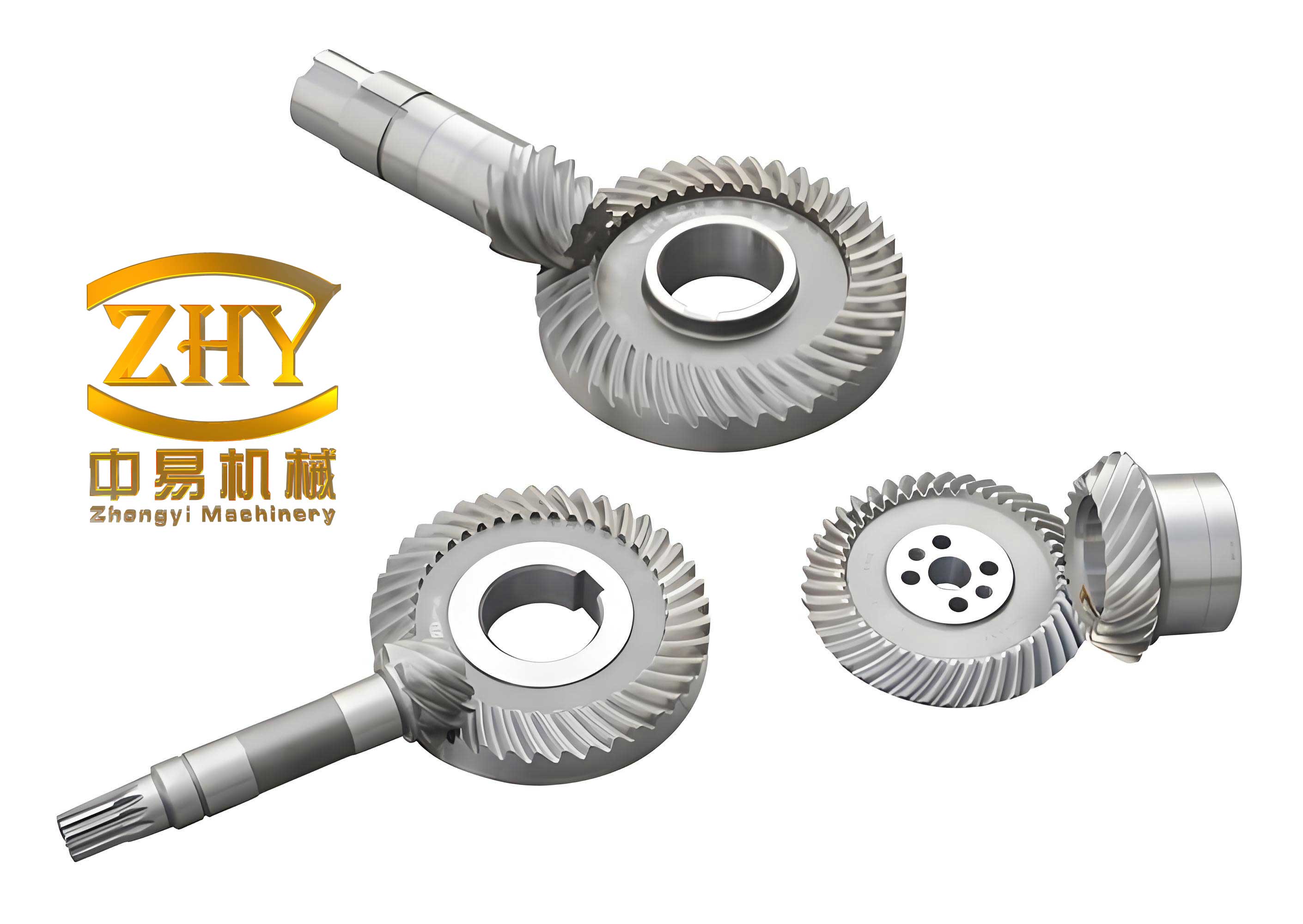
The core challenge in implementing cold rotary forging for complex geometries like hypoid gears lies in the intricate control of process parameters. These parameters directly govern the forming mechanics, influencing final part quality, tool life, energy consumption, and production efficiency. Therefore, a systematic optimization of the cold rotary forging process for hypoid gears is not merely beneficial but essential for its successful industrial adoption. This article details a comprehensive methodology for multi-objective process optimization, focusing on minimizing two critical response variables: the maximum forming force and the maximum elastic springback of the tooth surface.
Problem Statement and Optimization Objectives
The specific cold rotary forging scheme proposed for hypoid gears deviates from conventional full-die forging. To simplify die structure, reduce forming load, and extend die life, a novel incremental forming approach is employed. The process involves a forming die that performs a planetary motion: it revolves around the machine’s central axis (public revolution) while simultaneously rotating about its own geometric axis (self-rotation). This motion creates a localized line-contact plastic deformation zone that traverses the tooth flank. After one tooth is fully formed, the workpiece is indexed to the next tooth position, and the process repeats until all teeth of the hypoid gear are finished.
Two primary output metrics are selected for optimization:
- Maximum Forming Force (F): This is a crucial parameter for machine tool design, determining the required capacity and stiffness of the press. A lower forming force reduces energy consumption, minimizes elastic deflection of the tooling system, and contributes to higher dimensional accuracy of the forged hypoid gears.
- Maximum Tooth Surface Springback ($\delta_{max}$): After the forming load is released, elastic recovery occurs, causing the deformed tooth geometry to deviate from the intended die profile. In a precision finishing operation like this, excessive springback directly translates to geometrical error, adversely affecting the final meshing quality and transmission error of the hypoid gear pair. Minimizing springback is therefore paramount for achieving the required gear accuracy.
The goal is to find a set of process parameters that simultaneously minimizes both the forming force and the springback, which can often be competing objectives.
Finite Element Modeling and Process Parameters
To investigate the complex thermomechanical interactions during the cold rotary forging of hypoid gears, a 3D coupled thermo-mechanical finite element analysis (FEA) is conducted. This virtual approach significantly reduces the cost and time associated with physical prototyping and experimentation. A representative 10-tooth segment of the hypoid gear is modeled to balance computational efficiency with result accuracy, avoiding boundary condition artifacts that might arise in a single-tooth model. The mesh is locally refined in the anticipated deformation zones to capture detailed stress and strain fields accurately.
The workpiece material is 20CrMnTiH, a low-carbon alloy steel commonly used for automotive gears due to its excellent hardenability and good cold-forming characteristics. The material is modeled as an elastic-plastic body. The die is modeled as a rigid body. The friction at the die-workpiece interface is described using a shear friction model. The key controllable process parameters (input factors) identified for this study are:
- A: Upper Die Rotation Speed (n) [rpm]: Governs the rate at which the deformation zone moves across the tooth surface.
- B: Upper Die Inclination Angle ($\gamma$) [°]: Defines the tilt of the die’s axis relative to the workpiece axis, influencing the contact condition and stress distribution.
- C: Friction Factor (m): A dimensionless parameter representing the friction condition at the interface, affecting material flow and forming load.
The ranges for these parameters, based on practical machine capabilities and process feasibility, are defined as follows:
| Parameter | Symbol | Level 1 | Level 2 | Level 3 |
|---|---|---|---|---|
| Rotation Speed (rpm) | n (A) | 120 | 40 | 240 |
| Inclination Angle (°) | $\gamma$ (B) | 15 | 2 | 6 |
| Friction Factor | m (C) | 0.05 | 0.14 | 0.4 |
Orthogonal Numerical Simulation Design
To efficiently study the effects of the three parameters at three levels each, a design of experiments (DOE) based on an orthogonal array is employed. The $L_9(3^4)$ orthogonal array is perfectly suited for this purpose, requiring only 9 simulation runs instead of the full factorial $3^3=27$. This method allows for a statistically sound analysis of the main effects of each parameter on the response variables. The assignment of factors to the columns of the $L_9$ array and the resulting simulation matrix are shown below.
| Run No. | A: n (rpm) | B: $\gamma$ (°) | C: m | Empty Column | Forming Force, F (kN) | Max Springback, $\delta$ (mm) |
|---|---|---|---|---|---|---|
| 1 | 120 (1) | 15 (1) | 0.05 (1) | 1 | 155.09 | 0.0636 |
| 2 | 120 (1) | 2 (2) | 0.14 (2) | 2 | 185.67 | 0.0857 |
| 3 | 120 (1) | 6 (3) | 0.40 (3) | 3 | 188.52 | 0.0924 |
| 4 | 40 (2) | 15 (1) | 0.14 (2) | 3 | 159.77 | 0.0698 |
| 5 | 40 (2) | 2 (2) | 0.40 (3) | 1 | 195.72 | 0.1010 |
| 6 | 40 (2) | 6 (3) | 0.05 (1) | 2 | 177.63 | 0.0735 |
| 7 | 240 (3) | 15 (1) | 0.40 (3) | 2 | 172.38 | 0.0807 |
| 8 | 240 (3) | 2 (2) | 0.05 (1) | 3 | 179.35 | 0.0712 |
| 9 | 240 (3) | 6 (3) | 0.14 (2) | 1 | 178.43 | 0.0757 |
Analysis of Simulation Results
The results from the 9 FE simulations are analyzed using both range analysis (also known as the Taguchi method or direct observation) and analysis of variance (ANOVA). Range analysis provides a quick assessment of the factor influence, while ANOVA quantifies the statistical significance of each factor’s effect.
Range Analysis
For each factor at each level, the average response value ($K_i$, $k_i$) is calculated. The range ($R$) for a factor is the difference between the maximum and minimum $k_i$ values. A larger range indicates a greater influence of that factor on the response. The analysis for both forming force and springback is summarized below.
| Response / Metric | Average Response by Factor Level ($k_i$) | Range (R) | Factor Ranking (Primary -> Secondary) | Preliminary Optimal Level | ||
|---|---|---|---|---|---|---|
| A (n) | B ($\gamma$) | C (m) | ||||
| Forming Force, F (kN) | $k_1=176.43$ $k_2=177.71$ $k_3=176.72$ |
$k_1=162.41$ $k_2=186.91$ $k_3=181.53$ |
$k_1=170.69$ $k_2=174.62$ $k_3=185.54$ |
$R_A=1.28$ $R_B=24.50$ $R_C=14.85$ |
B > C > A | B1, C1, A1 |
| Max Springback, $\delta$ (mm) | $k_1=0.0806$ $k_2=0.0814$ $k_3=0.0759$ |
$k_1=0.0714$ $k_2=0.0859$ $k_3=0.0805$ |
$k_1=0.0694$ $k_2=0.0771$ $k_3=0.0914$ |
$R_A=0.0055$ $R_B=0.0145$ $R_C=0.0220$ |
C > B > A | C1, B1, A3 |
Analysis for Forming Force: The inclination angle (B) has the most dominant effect ($R_B=24.5$), followed by the friction factor (C) and then the rotation speed (A), which has a negligible effect. Lower forming force is favored by a large inclination angle (B1=15°), low friction (C1=0.05), and a mid-level rotation speed (A1=120 rpm).
Analysis for Springback: The friction factor (C) is the most influential parameter ($R_C=0.022$), followed by the inclination angle (B). The rotation speed (A) again has a minor effect. Minimum springback is achieved with low friction (C1=0.05), a large inclination angle (B1=15°), and a high rotation speed (A3=240 rpm).
Comprehensive Optimization: Since minimizing forming force is critical for equipment load and energy, and minimizing springback is critical for the accuracy of the finished hypoid gears, a balanced optimal condition must be found. Both responses strongly favor a low friction factor (C1) and a large inclination angle (B1). For rotation speed (A), its effect is minimal on both outputs. Considering a slight preference for lower force at A1 and lower springback at A3, and given the minor overall influence, A3 (240 rpm) can be selected to potentially benefit the process cycle time. Thus, the comprehensively optimized parameter set is: B1C1A3, i.e., $\gamma = 15°$, $m = 0.05$, $n = 240$ rpm.
A confirmation simulation run with these optimized parameters yielded a forming force of 152.75 kN and a maximum springback of 0.0642 mm, validating the improvement over the initial experimental array results.
Analysis of Variance (ANOVA)
ANOVA is performed to statistically separate the variance caused by each factor from the experimental error. The F-ratio (Factor Mean Square / Error Mean Square) is calculated for each factor. A larger F-ratio indicates a more significant effect. The results for both responses are shown below.
| Response | Factor | Sum of Squares (SS) | Degrees of Freedom (df) | Mean Square (MS) | F-Ratio | Significance (α=0.05) |
|---|---|---|---|---|---|---|
| Forming Force (F) | B ($\gamma$) | 1004.80 | 2 | 502.40 | 124.22 | Highly Significant |
| C (m) | 344.45 | 2 | 172.22 | 41.11 | Highly Significant | |
| A (n) | 3.36 | 2 | 1.68 | 0.42 | Not Significant | |
| Error | 16.76 | 4 | 4.19 | – | – | |
| Max Springback ($\delta$) | C (m) | 7.438e-4 | 2 | 3.719e-4 | 74.37 | Highly Significant |
| B ($\gamma$) | 3.267e-4 | 2 | 1.634e-4 | 32.66 | Significant | |
| A (n) | 0.538e-4 | 2 | 0.269e-4 | 5.38 | Less Significant | |
| Error | 0.100e-4 | 2 | 0.050e-4 | – | – |
The ANOVA conclusively supports the findings from the range analysis. For forming force, factors B and C are highly significant, while A is not. For springback, C is highly significant, B is significant, and A shows much lower significance. This statistical validation strengthens the decision to focus on optimizing B and C for the cold rotary forging of hypoid gears.
Development of Regression Models
To provide a predictive tool for engineers, mathematical models relating the input process parameters to the output responses are developed using multiple regression analysis. Assuming a power-law relationship common in metal forming processes, the proposed model forms are:
$$ F = C_1 \cdot n^a \cdot \gamma^b \cdot m^c $$
$$ \delta = C_2 \cdot n^d \cdot \gamma^e \cdot m^f $$
where $C_1, C_2, a, b, c, d, e, f$ are constants to be determined from the simulation data.
Applying least-squares regression to the data in Table 2 yields the following empirical models for the cold rotary forging of hypoid gears:
$$ F = 217.117 \cdot n^{-0.0018} \cdot \gamma^{-0.0702} \cdot m^{0.404} $$
$$ \delta = 0.1363 \cdot n^{-0.0304} \cdot \gamma^{-0.0886} \cdot m^{0.3131} $$
The validity ranges for the models are: $n \in [40, 240]$ rpm, $\gamma \in [2, 15]$°, $m \in [0.05, 0.4]$.
Statistical Validation of Regression Models
The goodness-of-fit and statistical significance of the regression models are tested using the F-test (ANOVA for regression). The null hypothesis is that the model does not explain the variation in the data. A calculated F-ratio much larger than the critical F-value from statistical tables leads to rejection of the null hypothesis, confirming the model’s significance.
| Response Model | Source | Sum of Squares (SS) | df | Mean Square (MS) | F-Ratio | Critical $F_{0.05}(3,5)$ | Significance |
|---|---|---|---|---|---|---|---|
| Forming Force (F) | Regression | 0.0406 | 3 | 0.0135 | 11.06 | 5.41 | Significant |
| Residual | 0.0061 | 5 | 0.0012 | ||||
| Total | 0.0467 | 8 | – | – | – | – | |
| Springback ($\delta$) | Regression | 0.1638e-4 | 3 | 0.0546e-4 | 33.85 | 5.41 | Highly Significant |
| Residual | 0.0081e-4 | 5 | 0.0016e-4 | ||||
| Total | 0.1718e-4 | 8 | – | – | – | – |
For the forming force model, $F_{calc} (11.06) > F_{crit} (5.41)$, so the regression is significant at the 95% confidence level. For the springback model, $F_{calc} (33.85) >> F_{crit} (5.41)$, indicating the regression is highly significant. Therefore, both derived models are statistically valid predictors within the studied parameter space for the cold rotary forging process of hypoid gears.
Model Verification and Discussion
To further demonstrate the utility of the optimization study and the regression models, a set of verification runs within the parameter space (but not part of the original orthogonal array) were conducted via FEM. The results are compared with the model predictions in the table below.
| Run | n (rpm) | $\gamma$ (°) | m | FEM Force (kN) | Predicted Force (kN) | Error (%) | FEM Springback (mm) | Predicted Springback (mm) | Error (%) |
|---|---|---|---|---|---|---|---|---|---|
| V1 | 80 | 10 | 0.10 | 168.2 | 170.5 | 1.37 | 0.0721 | 0.0738 | 2.36 |
| V2 | 200 | 8 | 0.20 | 182.9 | 179.8 | -1.70 | 0.0863 | 0.0841 | -2.55 |
| V3* | 240 | 15 | 0.05 | 152.8 | 154.1 | 0.85 | 0.0642 | 0.0655 | 2.02 |
*V3 is the confirmation run for the optimized parameter set B1C1A3.
The close agreement between the FEM results and the model predictions, with errors consistently below 3%, validates the accuracy and practical usefulness of the regression models. This provides process engineers with a powerful tool for estimating key outcomes like forming load and springback error for hypoid gears without running time-consuming simulations for every new parameter combination.
Conclusion
This study presents a systematic framework for the multi-objective optimization of the cold rotary forging process applied to hypoid gears, a critical component in automotive axles. By integrating finite element simulation with statistical design of experiments, the complex influence of key process parameters—upper die inclination angle, rotation speed, and interfacial friction—on forming force and tooth surface springback was successfully deciphered.
The major findings are:
- The die inclination angle ($\gamma$) and the friction factor (m) are the two dominant factors, both highly significant for controlling the forming force and the springback in hypoid gear manufacturing. The rotation speed (n) has a comparatively minor effect within the studied range.
- The comprehensively optimized parameter set for simultaneously minimizing forming force and springback is: a large inclination angle of 15°, a low friction factor of 0.05, and a high rotation speed of 240 rpm. This combination was confirmed to yield a low forming force of ~152.8 kN and a minimal springback of ~0.064 mm.
- Empirical power-law regression models were developed and statistically validated. These models offer a quick and reliable method for predicting process outcomes, facilitating efficient process design and parameter selection for the cold rotary forging of hypoid gears.
The proposed cold rotary forging technique, coupled with the optimization methodology outlined here, represents a promising advanced manufacturing route for hypoid gears. It aligns with anti-fatigue manufacturing goals by utilizing cold working to improve surface integrity and potentially introduce beneficial compressive stresses. The results provide a valuable reference for process design in actual production, aiming to enhance the performance, durability, and manufacturing efficiency of these essential power transmission components.