
As an engineer deeply involved in the design and analysis of precision mechanical transmissions, I have always been fascinated by the elegance and complexity of strain wave gearing. The unique operating principle of the strain wave gear, relying on the controlled elastic deformation of a thin-walled flexspline, offers unparalleled advantages in compactness, high reduction ratios, and zero-backlash performance. These attributes make the strain wave gear indispensable in robotics, aerospace, and precision instrumentation. However, the relentless push for miniaturization and higher power density presents a significant challenge: reducing the axial length of the flexspline. In ultra-short configurations, where the length-to-diameter ratio falls below 0.5, stresses in the diaphragm or bottom of the flexspline escalate dramatically, often becoming the limiting factor for fatigue life rather than the tooth mesh stresses. This article presents a comprehensive, first-person investigation into the stress sensitivity of key geometric parameters for two primary ultra-short flexspline configurations: the cup-shaped and the hat-shaped designs.
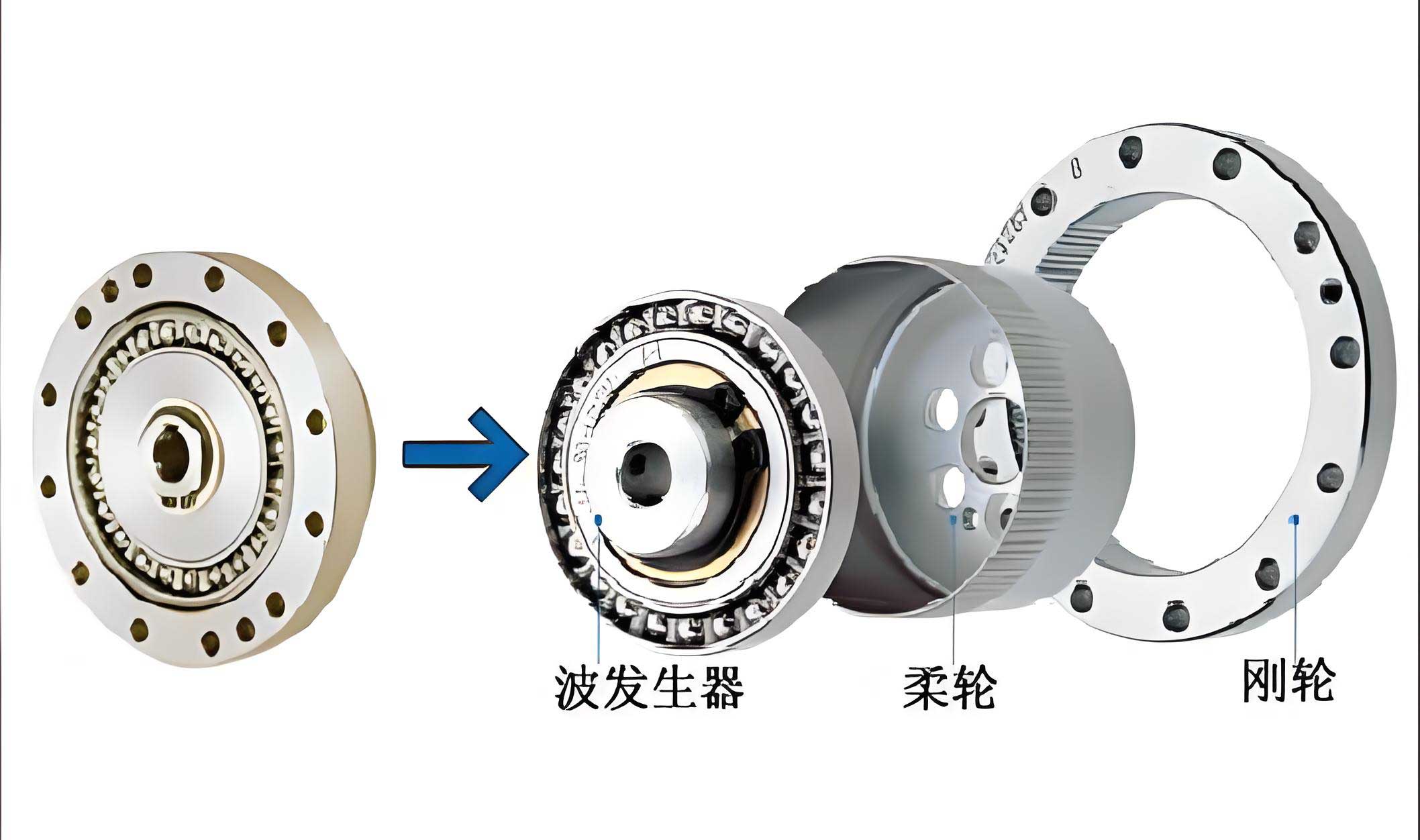
The core function of a strain wave gear depends on the flexspline’s ability to undergo a predictable elliptical deformation. This is typically induced by a wave generator (an elliptical ball bearing or a cam). The deformed flexspline then meshes with a rigid circular spline at two diametrically opposite regions, enabling speed reduction and torque multiplication. The flexspline itself is a complex, axisymmetric thin-walled structure. In the traditional cup-shaped design, it resembles a cup with a diaphragm bottom. The hat-shaped design is essentially an inverted version, where the diaphragm is mirrored upwards. While both serve the same kinematic purpose, their load paths and stress distributions under deformation differ significantly, especially when the cylindrical section (the “cup” wall) is made very short. The primary objective of this analysis is to quantify how specific geometric features of these ultra-short strain wave gear flexsplines influence the peak von Mises stress in the critical diaphragm region under both assembly (deformation-only) and loaded operating conditions.
Analytical Framework and Model Definition
To systematically study this problem, I developed a parametric finite element modeling approach. The goal was to isolate and understand the influence of diaphragm geometry, separate from the complexities of the tooth engagement. The analysis follows a structured methodology encompassing geometry parameterization, finite element model setup, and the definition of load cases.
Geometric Parameterization
I focused on the stress-concentrating features of the diaphragm area. The tooth ring, which experiences primarily membrane stresses due to radial deformation, was simplified as an equivalent-thickness cylindrical shell. This allows the computational resources to focus on the bending-dominated stress fields in the diaphragm. The key geometric parameters for both the cup-shaped and hat-shaped strain wave gear flexsplines are defined in the figure and summarized in the table below. The baseline dimensions are derived from a typical size 25 strain wave gear with a 100:1 reduction ratio.
| Symbol | Description | Baseline Value (mm) |
|---|---|---|
| $d_0$ | Inner diameter of cylindrical wall | 61.32 |
| $l$ | Length of cylindrical wall | Variable (defines $l/d_0$ ratio) |
| $t_1$ | Wall thickness | 0.48 |
| $t_h$ | Equivalent tooth ring thickness | 0.81 |
| $l_1$ | Diaphragm width | 10.14 |
| $r_1$ | Wall-to-diaphragm fillet radius (primary fillet) | Variable |
| $r_2$ | Diaphragm-to-flange fillet radius (secondary fillet) | Variable |
| $r_3$ | Inner radius of cup bottom / flange hole | 10.00 |
The two most critical parameters for stress sensitivity are the fillet radii ($r_1$, $r_2$) and the diaphragm width ($l_1$). The length-to-diameter ratio $l/d_0$ is the primary variable defining the “ultra-short” condition, studied from 0.1 to 0.6.
Finite Element Modeling Strategy
I constructed the models using a high-order 20-node hexahedral solid element (SOLID95 in the ANSYS environment), which is well-suited for modeling complex geometries and stress gradients. Leveraging axisymmetry, a 90-degree sector model was initially built for the assembly stress analysis. The material was defined as steel with an elastic modulus $E = 207$ GPa and a Poisson’s ratio $\nu = 0.3$. The mounting surfaces (bottom of the cup for the cup-shaped design, and the outer flange cylinder for the hat-shaped design) were fully constrained.
The elliptical deformation imposed by the wave generator is the fundamental loading condition. The radial displacement $w$ of the neutral surface of the cylindrical wall is given by:
$$ w(\theta) = \frac{a_w b_w}{\sqrt{a_w^2 \cos^2\theta + b_w^2 \sin^2\theta}} – r_0 $$
where $\theta$ is the angular coordinate, $r_0 = d_0/2$, and $a_w$ and $b_w$ are the semi-major and semi-minor axes of the deformed neutral curve. To satisfy the condition of no mid-surface elongation, these axes are determined by:
$$ a_w = r_0 + m, \quad b_w = \frac{5r_0 – 7m + \sqrt{12r_0(r_0+m) – 3( r_0+m )^2}}{9} $$
Here, $m$ is the gear module, and the maximum radial deflection $w_0$ is set equal to $m$. This displacement field was applied to the nodes on the mid-surface of the tooth ring equivalent shell.
Load Case Definitions
The analysis was conducted for two distinct operational states of the strain wave gear:
- Assembly Stress State: This simulates the condition where the wave generator is inserted into the flexspline, elastically deforming it into an ellipse, but no torque is being transmitted. The stresses are purely due to this forced deformation. This state is critical for assessing fatigue during start-up and reversal.
- Maximum Load Stress State: This simulates the transmission of the rated torque. For this, a full 360-degree model is necessary. The load is applied as a distributed tangential force on the nodes at the pitch circle of the tooth ring equivalent shell. The force distribution follows a harmonic pattern over the engagement arc, typically spanning approximately $\pm 37.5^\circ$ from the major axis of the ellipse. The peak force $F_{max}$ is calculated based on the maximum instantaneous torque rating (e.g., 369 Nm for a size 25 strain wave gear) and the geometry.
The primary output metric for comparison is the peak von Mises equivalent stress occurring anywhere in the diaphragm region (including the fillets) for each configuration and load case.
Results and Parametric Sensitivity Analysis
The following sections detail the systematic investigation into how the peak diaphragm stress responds to changes in the key geometric parameters. The findings reveal distinct behavioral differences between the cup-shaped and hat-shaped strain wave gear flexsplines.
1. Influence of Length-to-Diameter Ratio ($l/d_0$)
The most fundamental parameter for an ultra-short strain wave gear is the relative length of its cylindrical section. As expected, reducing $l/d_0$ increases the stiffness of the cylindrical wall against the axial bending required to accommodate the elliptical deformation. This forces more of the deformation energy to be absorbed by the diaphragm, leading to higher stresses.
The plot below summarizes the dramatic effect. For both designs, the peak diaphragm stress under assembly and load increases monotonically as $l/d_0$ decreases below 0.6. However, the rate of increase and the comparative behavior are strikingly different.
• Assembly Condition: The hat-shaped flexspline exhibits consistently higher assembly stresses than the cup-shaped version. At $l/d_0 = 0.4$, the hat-shaped diaphragm stress is 2.75 times that of the cup-shaped one. The stress gradient for the hat-shaped design is also steeper, indicating higher sensitivity to shortening.
• Loaded Condition: The behavior crosses over. For very short ratios ($l/d_0 < 0.33$), the hat-shaped design still shows higher stress. However, for $l/d_0 > 0.33$, the cup-shaped design suffers from higher loaded stress. Critically, for the cup-shaped design, increasing the length beyond this point does little to reduce the maximum loaded stress, which appears to plateau. For the hat-shaped design, the loaded stress remains closely tied to the assembly stress, with the load adding only a modest increment.
Key Insight: This leads to a fundamental design guideline. The ultra-short cup-shaped strain wave gear flexspline is more suitable for applications with smaller loads, as its loaded stress is high and not easily reduced by increasing length. The ultra-short hat-shaped strain wave gear flexspline, while sensitive to length, shows a smaller increase from assembly to loaded stress, making it more robust and suitable for high-torque transmission in compact spaces, provided its assembly stress can be managed.
2. Sensitivity to the Primary Fillet Radius ($r_1$)
The fillet radius $r_1$ connects the cylindrical wall to the diaphragm. In conventional static design, a larger fillet reduces stress concentration. In the dynamically deformed flexspline of a strain wave gear, the effect is more nuanced because the fillet size directly affects the effective length of the flexible diaphragm.
I varied $r_1/r_0$ from 0.033 to 0.163 while keeping other parameters at their baseline. The results show divergent trends for the two designs:
| Design | Assembly Stress Trend | Loaded Stress Trend | Physical Rationale |
|---|---|---|---|
| Cup-shaped | Linear increase with $r_1$. | Near-linear, slight increase. | Increasing $r_1$ shortens the effective diaphragm length $l_1$, reducing its compliance and its ability to absorb axial bending from the wall, thus raising stress. |
| Hat-shaped | Parabolic: Decreases to a minimum (~$r_1/r_0=0.114$), then increases. | Parabolic: Similar decrease to a minimum (~$r_1/r_0=0.130$), then increases. | Very small $r_1$ causes a sharp geometric discontinuity and high local stress. An optimal radius provides a smooth transition that maximizes compliance. Too large a radius again shortens the diaphragm, increasing stress. |
The presence of a clear minimum stress point for the hat-shaped strain wave gear flexspline is a crucial finding. It indicates that for this design, $r_1$ is not merely a manufacturing detail but a critical optimization parameter. For the cup-shaped design, the rule is simpler: a smaller $r_1$ is generally better for reducing diaphragm stress, as it preserves diaphragm length.
3. Sensitivity to the Secondary Fillet Radius ($r_2$)
The secondary fillet $r_2$ is located at the junction of the diaphragm and the rigid mounting flange (or the central hub in the cup-shaped design). This parameter primarily influences the local stiffness and stress at the inner boundary of the diaphragm.
Holding $r_1$ at its respective optimal value for each design and load case, I analyzed the effect of varying $r_2/r_0$ from approximately 0.013 to 0.147. The results reveal another contrasting behavior pattern.
| Design | Assembly Stress Trend | Loaded Stress Trend | Physical Rationale |
|---|---|---|---|
| Cup-shaped | Monotonic increase with $r_2$. | Monotonic decrease with $r_2$. | Assembly: Larger $r_2$ thickens the inner edge, making it stiffer and less able to accommodate bending, raising stress. Load: The same thickening provides more cross-sectional area to carry the transmitted torque, reducing shear and bending stress. |
| Hat-shaped | Monotonic increase with $r_2$. | Monotonic increase with $r_2$. | For both cases, increasing $r_2$ reduces the effective width of the thin, compliant diaphragm section ($l_1$), making the structure stiffer and increasing stress. The load does not significantly benefit from the local thickening in this configuration. |
This divergence is significant. For the cup-shaped strain wave gear, there is a trade-off: a small $r_2$ minimizes assembly stress but maximizes loaded stress, and vice-versa. The designer must choose based on the dominant fatigue driver for the application. For the hat-shaped strain wave gear, the guideline is consistent: a smaller $r_2$ is preferable for minimizing stress in both operational states.
4. The Dominant Role of Diaphragm Width ($l_1$)
The width of the thin, flexible diaphragm section $l_1$ is perhaps the most powerful geometric parameter for controlling stress in an ultra-short strain wave gear flexspline. It represents the “lever arm” available to accommodate the axial bending curvature imposed by the shortening of the wall. I analyzed the normalized width $l_1/l$ over a wide range.
The results are unequivocal and dramatic for both designs. As $l_1$ increases, the peak von Mises stress in the diaphragm plummets. The relationship is highly non-linear. When $l_1/l$ is very small (e.g., < 0.2), stresses are extremely high (>900 MPa in some cases) due to severe curvature and constraint. As $l_1$ increases, the diaphragm can deform more gently, distributing the strain over a larger volume and drastically reducing peak stress. The stress reduction curve eventually flattens as the diaphragm becomes sufficiently compliant.
However, a critical practical limitation emerges. In the cup-shaped strain wave gear design, the maximum possible diaphragm width is severely constrained by the internal geometry—the central hub and the need to house the wave generator bearing. There is a hard limit on how much $l_1$ can be increased. In contrast, the hat-shaped strain wave gear design offers much greater freedom. The diaphragm can extend radially outward, allowing for significantly larger values of $l_1/l$, often exceeding 1.0. This is its single greatest advantage in ultra-short applications.
This analysis quantifies the benefit: For a hat-shaped design, increasing $l_1/l$ from 0.1 to 0.6 can reduce peak loaded stress from over 940 MPa to around 310 MPa—a reduction of about 67%. The cup-shaped design simply cannot achieve such a wide, low-stress diaphragm within the same envelope size.
Conclusions and Design Synthesis
This detailed first-principles investigation into the stress sensitivity of ultra-short strain wave gear flexsplines yields several concrete conclusions and design guidelines:
- Critical Failure Location: In ultra-short strain wave gears ($l/d_0 < 0.44$), the peak stress governing fatigue life shifts from the tooth ring to the diaphragm region. Design focus must, therefore, prioritize diaphragm stress management.
- Cup-shaped vs. Hat-shaped Selection Guideline:
- The cup-shaped flexspline is more suitable for applications with lower torque demands. Its loaded stress is high and relatively insensitive to increases in length. Its main diaphragm stress can be reduced by minimizing both fillet radii ($r_1$ and $r_2$) and maximizing the diaphragm width $l_1$, though the latter is geometrically limited.
- The hat-shaped flexspline is superior for high-torque transmission in compact spaces. Its loaded stress closely tracks its assembly stress and can be driven to much lower absolute values by exploiting its capacity for a large diaphragm width ($l_1$). It requires careful optimization of the primary fillet radius $r_1$ to find the stress-minimizing value and favors a small secondary fillet $r_2$.
- Parametric Sensitivity Hierarchy: The influence of geometric parameters on peak diaphragm stress can be ranked. For both designs, diaphragm width ($l_1$) is the most powerful parameter, followed by the primary fillet radius ($r_1$). The secondary fillet radius ($r_2$) has a significant but more complex effect, often involving a trade-off between assembly and loaded states. The length-to-diameter ratio ($l/d_0$) is a primary design driver that sets the baseline stress level, especially for the hat-shaped design.
- Optimization Pathway for Hat-shaped Designs: The clear strategy for an ultra-short hat-shaped strain wave gear flexspline is to: a) Allow for the largest possible radial diaphragm width $l_1$, b) Optimize the wall-to-diaphragm fillet radius $r_1$ around the identified minimum (typically $r_1/r_0 \approx 0.12$), and c) Keep the diaphragm-to-flange fillet radius $r_2$ as small as manufacturing allows.
In summary, navigating the stress landscape of an ultra-short strain wave gear requires a nuanced understanding of the complex interplay between geometry, stiffness, and load path. The choice between cup and hat shapes is not trivial and must be aligned with the application’s torque and space constraints. By applying the sensitivity insights developed here—prioritizing diaphragm compliance, strategically sizing fillets, and selecting the appropriate configuration—engineers can more effectively design robust and durable ultra-short strain wave gear transmissions that meet the demanding needs of modern compact machinery.