
In the field of mechanical engineering, the noise generated by gearboxes, particularly those employing helical gears, has always been a critical concern affecting overall system performance and comfort. As a researcher focused on tribology and gear dynamics, I have extensively studied how modifications to gear tooth profiles can mitigate vibration and noise. This article presents a detailed analysis of short tooth profile modification for involute helical gears, emphasizing its impact on noise reduction through changes in transverse and overlap contact ratios. The goal is to identify the optimal modification method under specific operating conditions, using advanced simulation tools and theoretical insights.
Helical gears are widely used in transmissions and reducers due to their smooth operation and high load-carrying capacity. However, their inherent design can lead to noise issues, primarily stemming from gear meshing dynamics. Noise in gear systems is generally classified into whining noise, caused by periodic meshing excitations, and knocking noise, resulting from impacts due to backlash and tooth separation. The vibration originates from forces such as mesh stiffness variations and impacts, which transmit through shafts, bearings, and housings to radiate sound. In this context, tooth profile modification has emerged as a key technique to enhance performance by reducing transmission errors, contact stresses, and dynamic loads. My research builds on this by exploring how short profile modifications—specifically targeting the tooth tip and root—alter the contact ratios of helical gears, thereby influencing the acoustic output of a gearbox.
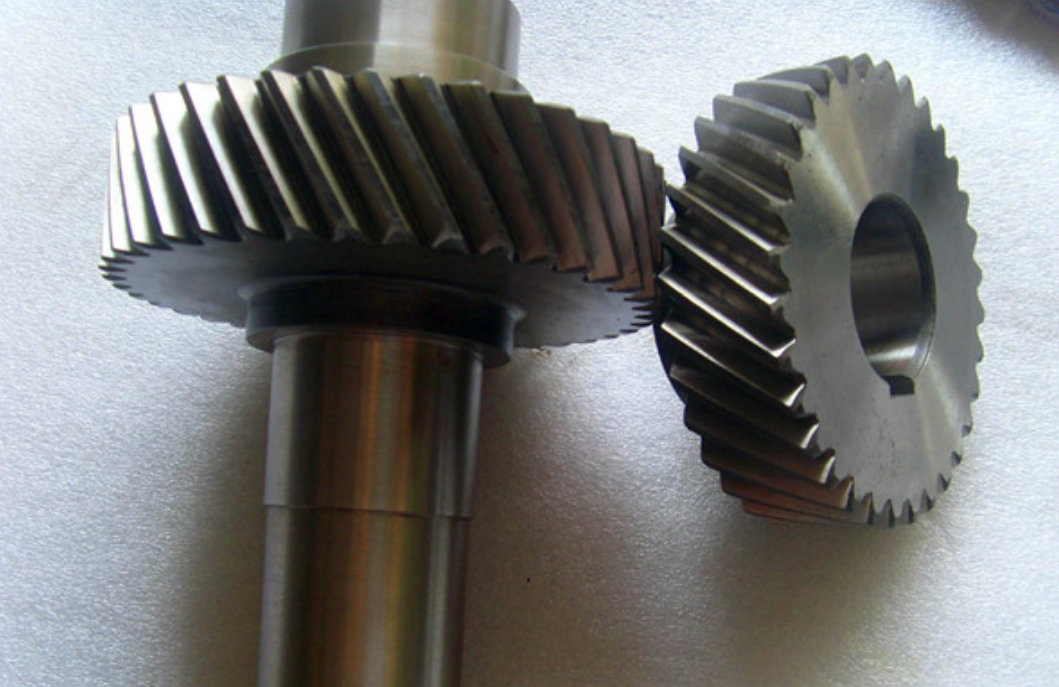
The fundamental mechanism behind gear noise involves the dynamic interaction between meshing teeth. For helical gears, the contact pattern is more complex than for spur gears due to the helical angle, which introduces an axial component. The total contact ratio, a critical parameter, is composed of the transverse contact ratio (related to the profile) and the overlap contact ratio (related to the helix). These ratios determine the number of teeth in contact simultaneously, affecting load distribution and vibration. Mathematically, the transverse contact ratio, $\epsilon_{\alpha}$, and the overlap contact ratio, $\epsilon_{\beta}$, for helical gears can be expressed as:
$$ \epsilon_{\alpha} = \frac{\sqrt{r_{a1}^2 – r_{b1}^2} + \sqrt{r_{a2}^2 – r_{b2}^2} – a \sin\alpha_t}{\pi m_t \cos\alpha_t} $$
$$ \epsilon_{\beta} = \frac{b \sin\beta}{\pi m_n} $$
where $r_a$ and $r_b$ are the tip and base radii, $a$ is the center distance, $\alpha_t$ is the transverse pressure angle, $m_t$ is the transverse module, $b$ is the face width, $\beta$ is the helix angle, and $m_n$ is the normal module. The total contact ratio, $\epsilon_{\gamma}$, is the sum: $\epsilon_{\gamma} = \epsilon_{\alpha} + \epsilon_{\beta}$. Higher contact ratios generally lead to smoother torque transmission and reduced noise, but excessive values can cause other issues. Short tooth profile modification involves trimming the tip or root of the tooth, which directly alters $\epsilon_{\alpha}$ and indirectly affects $\epsilon_{\beta}$ by changing the effective tooth geometry. This modification aims to minimize edge contact, reduce stress concentrations, and dampen meshing impacts.
In my study, I utilized a combination of specialized software to model and analyze the effects of various short profile modifications. The gear design and modification parameters were developed using Kisssoft, a professional gear engineering tool, while the dynamic and acoustic simulations were performed with LMS Virtual Lab, a multi-platform integration software for noise, vibration, and harshness (NVH) analysis. The baseline involute helical gear pair had the following parameters, which are typical for industrial reducers:
| Parameter | Pinion | Gear |
|---|---|---|
| Module (mm) | 5 | 5 |
| Face Width (mm) | 35 | 35 |
| Number of Teeth | 49 | 55 |
| Pressure Angle (°) | 20 | 20 |
| Helix Angle (°) | 20 | 20 |
| Transverse Contact Ratio | 1.905 | 1.905 |
| Overlap Contact Ratio | 0.812 | 0.812 |
The gearbox assembly included these helical gears, input and output shafts, and a housing. To accurately capture the vibro-acoustic behavior, I created a flexible multibody dynamics model in LMS Virtual Lab Motion. The housing was meshed and treated as a flexible component using Craig-Bampton modal reduction, while the gears and shafts were modeled as rigid bodies with appropriate joints and forces. Bearings were simulated with bushing elements, and a constant load of 2940.054 N·m was applied to the output shaft. The input shaft was driven at speeds ranging from 500 to 3000 r/min, and dynamic responses were extracted for acoustic post-processing. In LMS Virtual Lab Acoustics, the boundary element method (BEM) was employed to compute the sound power level radiated from the housing surface, with field points placed according to ISO standards for sound power measurement.
Several short tooth profile modification methods were applied to the helical gears using Kisssoft, each designed to achieve specific contact ratios under high-load conditions. These modifications included: short tip relief (involute curve), short root relief (involute curve), combined short tip and root relief (involute, linear, and polyline-arc curves), pressure angle modification, and tooth crowning (drum shape). The resulting transverse and overlap contact ratios for each modification are summarized below, which formed the basis for comparing noise performance.
| Modification Type | Transverse Contact Ratio, $\epsilon_{\alpha}$ | Overlap Contact Ratio, $\epsilon_{\beta}$ |
|---|---|---|
| Unmodified | 1.905 | 0.812 |
| Short Tip Relief (Involute) | 1.716 | 0.833 |
| Short Root Relief (Involute) | 1.884 | 0.812 |
| Short Tip-Root Relief (Involute) | 1.800 | 0.812 |
| Short Tip-Root Relief (Linear) | 1.779 | 0.812 |
| Short Tip-Root Relief (Polyline-Arc) | 1.779 | 0.812 |
| Pressure Angle Modification | 1.884 | 0.833 |
| Tooth Crowning (Drum Shape) | 1.516 | 0.864 |
Note that for linear and polyline-arc tip-root relief, the contact ratios are identical, leading to similar acoustic outcomes. The modifications were optimized to reduce peak loads and improve load sharing among the helical gears, thereby lowering excitation forces. After applying each modification, the gear models were imported into the dynamic simulation, and sound power level frequency responses were computed across the speed range. The results were analyzed in terms of overall sound power level and frequency-domain characteristics, particularly at mesh frequencies and their harmonics.
The acoustic simulations revealed significant noise reduction for the modified helical gears at speeds between 500 and 2000 r/min. The sound power level, denoted as $L_W$ in decibels (dB), showed notable decreases across a broad frequency band, especially around the mesh frequency and its multiples. For instance, at 500 r/min, the mesh frequency for the driven gear is approximately 458.3 Hz, calculated as $f_m = \frac{N \cdot n}{60}$, where $N$ is the number of teeth and $n$ is the speed in r/min. The unmodified gearbox exhibited high $L_W$ peaks at these frequencies, indicating strong tonal noise. After modification, these peaks were attenuated, with some methods achieving reductions of up to 3.8 dB at specific frequencies. The table below provides a summary of the average sound power level reduction over the 500-2000 r/min range for each modification, computed as the difference in $L_W$ averaged across frequencies and speeds.
| Modification Type | Average $L_W$ Reduction (dB, 500-2000 r/min) |
|---|---|
| Short Tip Relief (Involute) | 0.4 |
| Short Root Relief (Involute) | 0.6 |
| Short Tip-Root Relief (Involute) | 1.3 |
| Short Tip-Root Relief (Linear/Polyline-Arc) | 1.3 |
| Pressure Angle Modification | 1.6 |
| Tooth Crowning (Drum Shape) | 1.9 |
As evident, tooth crowning yielded the highest average noise reduction of 1.9 dB, followed by pressure angle modification at 1.6 dB. The poorer performance of short tip relief alone suggests that modifying only the tip may not sufficiently address the dynamic issues in helical gears. To understand these trends, it is essential to examine how the contact ratios influence the gear dynamics. The overlap contact ratio, $\epsilon_{\beta}$, increased most significantly with tooth crowning (from 0.812 to 0.864), indicating a longer axial contact length. This likely enhanced load distribution and reduced per-tooth deflection, thereby damping vibrations. Moreover, crowning introduces a symmetrical profile that compensates for misalignments and manufacturing errors, further smoothing the meshing process.
Mathematically, the relationship between contact ratios and dynamic response can be explored through the meshing stiffness, $k_m(t)$, which varies periodically with tooth engagement. For helical gears, the time-varying meshing stiffness can be approximated as:
$$ k_m(t) = k_0 + \sum_{i=1}^{n} k_i \cos(i\omega_m t + \phi_i) $$
where $k_0$ is the mean stiffness, $k_i$ are harmonic amplitudes, $\omega_m$ is the mesh frequency in rad/s, and $\phi_i$ are phase angles. Modifications that increase $\epsilon_{\beta}$ tend to flatten the stiffness variation, reducing the harmonic amplitudes $k_i$ and thus lowering vibration excitation. Additionally, the transmission error, $TE(t)$, defined as the deviation from ideal motion transfer, is a key noise indicator. It can be expressed as:
$$ TE(t) = \frac{F(t)}{k_m(t)} + \delta(t) $$
where $F(t)$ is the dynamic tooth force and $\delta(t)$ represents geometric errors. Profile modifications minimize $\delta(t)$ by eliminating edge contacts, leading to smaller $TE(t)$ and consequently less noise. My simulations confirmed that modified helical gears exhibited smoother transmission error curves, particularly at lower speeds.
However, at higher speeds of 2500 and 3000 r/min, the noise reduction from short profile modifications was less pronounced, and in some cases, noise levels even increased slightly. This phenomenon can be attributed to the increased dynamic forces and resonance effects at elevated speeds. As the speed rises, the excitation frequencies approach natural modes of the gear-shaft-bearing system, amplifying vibrations. At these speeds, factors such as tooth separation due to backlash and nonlinear stiffness effects become dominant, which short profile modifications alone may not adequately address. For high-speed helical gears, more comprehensive modifications, such as lead crowning or topological optimizations, might be necessary to control noise. This aligns with existing literature suggesting that profile modifications are most effective for low to medium-speed applications, while combined profile and lead modifications are needed for high-speed regimes.
To delve deeper into the frequency-domain results, let’s consider the sound power level spectra at 1500 r/min as a representative case. The unmodified gearbox showed prominent peaks at the mesh frequency (1375 Hz) and its harmonics. After applying short tip-root relief (linear), these peaks were reduced by up to 7.2 dB, with an average reduction of 4.1 dB across the 0-4000 Hz range. Similarly, tooth crowning provided broad-band attenuation, with reductions exceeding 5 dB at multiple frequencies. This underscores the effectiveness of these modifications in mitigating tonal noise from helical gears. The improvement can be quantified using the sound power reduction index, $\Delta L_W$, defined as:
$$ \Delta L_W = L_{W,\text{unmodified}} – L_{W,\text{modified}} $$
Positive values indicate noise reduction. For tooth crowning, $\Delta L_W$ averaged 1.9 dB over 500-2000 r/min, which corresponds to a significant decrease in acoustic energy, as a 3 dB reduction represents a halving of sound power. Thus, the crowning modification achieved more than a 30% reduction in radiated sound power, highlighting its practical benefits.
In terms of practical implementation, the choice of modification should balance noise reduction with other performance metrics like strength and efficiency. For the studied helical gears, tooth crowning with $\epsilon_{\alpha}=1.516$ and $\epsilon_{\beta}=0.864$ emerged as the optimal configuration. This modification not only lowered noise but also likely improved load capacity by reducing stress concentrations. It is worth noting that the helix angle plays a crucial role in determining $\epsilon_{\beta}$; for instance, a higher helix angle increases $\epsilon_{\beta}$ but also raises axial thrust forces. Therefore, designers must consider trade-offs when specifying helical gears for noise-critical applications.
Future work could explore combined modifications for both profile and lead, as well as the effects of different load conditions. Additionally, experimental validation would strengthen these findings, though numerical simulations provide a robust foundation for design optimization. The methodology presented here—integrating Kisssoft for gear design and LMS Virtual Lab for NVH analysis—offers a comprehensive approach for developing quieter helical gear systems.
In conclusion, this study demonstrates that short tooth profile modification is an effective strategy for reducing gearbox noise from helical gears, particularly at speeds up to 2000 r/min. By altering the transverse and overlap contact ratios, modifications such as tooth crowning can significantly attenuate sound power levels, with average reductions nearing 2 dB. The key insight is that increasing the overlap contact ratio, as achieved through crowning, enhances load sharing and dampens vibrations, leading to superior acoustic performance. These results provide valuable guidance for engineers seeking to optimize helical gears for low-noise applications, contributing to advancements in gear technology and mechanical system design.