
In the realm of mechanical power transmission, while cylindrical gears are the undisputed champions for constant-ratio motion transfer, their non-circular counterparts unlock a world of specialized, variable-ratio kinematics. These gears, with their carefully designed non-circular pitch curves, are indispensable for generating complex, non-uniform output motions such as reciprocation, oscillation, or speed variation from a constant input. They find critical applications in printing presses, packaging machinery, flow meters, and notably, in the reversing mechanisms of pumping units, where they efficiently convert rotary motion into the linear, reciprocating action required for oil extraction.
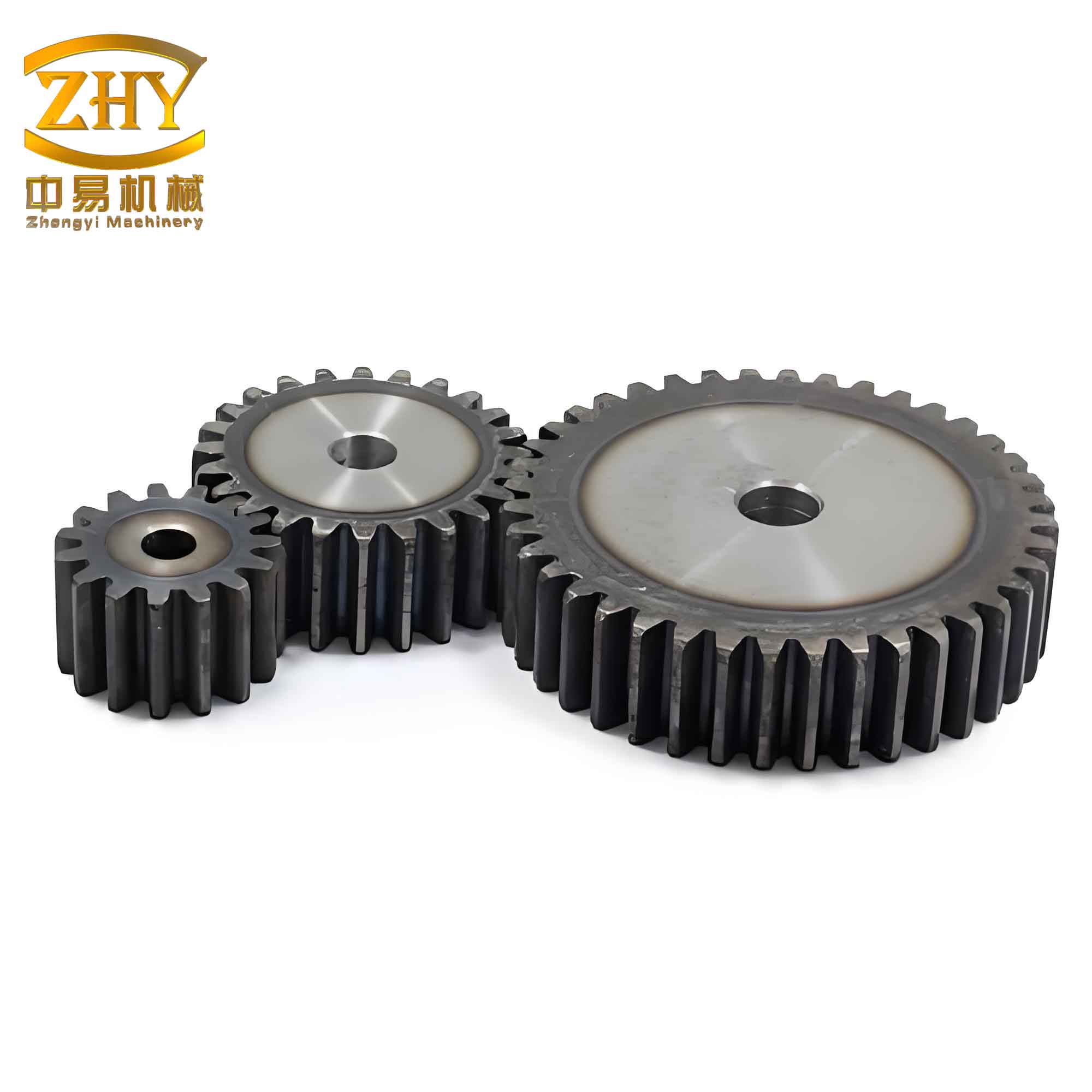
Despite their advantages, the broader adoption of non-circular gears in precision applications has been hampered by challenges in accurately modeling their unique dynamic behavior. A primary concern is the characterization of transmission error and backlash. Unlike standard cylindrical gears, where transmission error models are well-established, the time-varying nature of non-circular gear engagement, dictated by the instantaneous curvature of their pitch curves, makes modeling significantly more complex. Furthermore, backlash, the intentional clearance between mating teeth, exhibits a complex, time-varying behavior that is difficult to predict but crucial for smooth operation and dynamic performance, especially in applications requiring frequent direction reversal.
This article addresses these challenges by developing a comprehensive analytical model for the transmission error and backlash of non-circular gear pairs, explicitly considering manufacturing and assembly imperfections such as eccentricity errors. The model is grounded in the meshing line increment method, a powerful technique that translates geometric deviations into angular errors at the output. We then conduct systematic numerical simulations to investigate the influence of key parameters and validate our findings through dedicated transmission experiments.
Theoretical Modeling of Transmission Error and Backlash
The foundation of our analysis is the meshing line increment method. This approach elegantly maps the combined effects of manufacturing errors—primarily gear eccentricity—onto the instantaneous line of action between the meshing teeth. For a non-circular gear pair, unlike in standard cylindrical gears, the base radius \(r_b\) and pressure angle at the pitch point are not constant but are functions of the rotation angle \(\theta_1\) of the driving gear, as defined by the pitch curve equation \(r_1(\theta_1)\). The equivalent base radius for calculation is given by \(r_b = r(\theta) \cos \alpha\).
We consider a pair of non-circular gears where each gear has an eccentricity error, denoted as \(e_1\) and \(e_2\), with corresponding initial phase angles \(\phi_1\) and \(\phi_2\). The pressure angle at the instantaneous pitch point is \(\alpha\).
For the case of counter-clockwise (CCW) rotation of the driving gear, the increments in the meshing line length due to the eccentricities of the driving and driven gears, \(\Delta L_1^+\) and \(\Delta L_2^+\), are derived from kinematic geometry:
$$
\Delta L_1^+ = e_1 \sin(\theta_1 + \phi_1 – \alpha)
$$
$$
\Delta L_2^+ = e_2 \sin(\theta_2 + \phi_2 – \alpha)
$$
Similarly, for clockwise (CW) rotation of the driving gear, the increments are:
$$
\Delta L_1^- = -e_1 \sin(\theta_1 + \phi_1 – \alpha)
$$
$$
\Delta L_2^- = -e_2 \sin(\theta_2 + \phi_2 – \alpha)
$$
The initial meshing line deviations at the start of engagement (\(\theta_1=0\)) are:
$$
\Delta L_{10}^\pm = \pm e_1 \sin(\phi_1 – \alpha)
$$
$$
\Delta L_{20}^\pm = \pm e_2 \sin(\phi_2 – \alpha)
$$
The total transmission error, expressed as the angular deviation \(\Delta \varphi\) of the driven gear, is the conversion of the net change in meshing line length from its initial value into an equivalent rotation. For CCW drive rotation, the transmission error \(\Delta \varphi_n\) is:
$$
\Delta \varphi_n = \frac{180}{\pi} \times \frac{1}{r_b(\theta_1)} \left[ e_1 \left( \sin(\theta_1 + \phi_1 – \alpha) – \sin(\phi_1 – \alpha) \right) + e_2 \left( \sin(\theta_2 + \phi_2 – \alpha) – \sin(\phi_2 – \alpha) \right) \right]
$$
For CW drive rotation, the transmission error \(\Delta \varphi_s\) is:
$$
\Delta \varphi_s = \frac{180}{\pi} \times \frac{1}{r_b(\theta_1)} \left[ -e_1 \left( \sin(\theta_1 + \phi_1 – \alpha) + \sin(\phi_1 – \alpha) \right) – e_2 \left( \sin(\theta_2 + \phi_2 – \alpha) + \sin(\phi_2 – \alpha) \right) \right]
$$
For non-circular gears, the kinematic relationship \(\theta_2 = f(\theta_1)\) is derived from the pitch curve design and is not linear, adding complexity to these equations compared to the simpler case of cylindrical gears.
The total gear backlash \(b_v\) consists of a constant part (from designed tooth thinning or center distance error) and a time-varying periodic part induced by eccentricities. A key insight is that the periodic component of the backlash for a gear pair with eccentricity can be obtained from the difference between the unloaded transmission errors in the two rotational directions. Therefore, the time-varying backlash can be approximated as:
$$
b_v \approx \frac{180 \times 2 \tan \alpha}{\pi \cdot r_b(\theta_1)} \left[ e_2 \cos(\theta_2 + \phi_2) – e_1 \cos(\theta_1 + \phi_1) \right]
$$
This establishes a direct and valuable link between measurable bidirectional transmission errors and the difficult-to-measure dynamic backlash.
Numerical Simulation and Parametric Analysis
We performed numerical simulations using a pair of elliptic gears, a common type of non-circular gear. The primary parameters are listed in the table below. The pitch curve equation for the driving gear is \( r_1 = \frac{64.667}{1 \pm 0.3287 \cos \theta_1} \) mm, where the eccentricity \(k\) is 0.2, 0.4, or 0.6 in our studies.
| Parameter | Value |
|---|---|
| Module, \(m\) (mm) | 3 |
| Center Distance, \(a\) (mm) | 150 |
| Number of Teeth, \(Z\) | 47 |
| Face Width, \(B\) (mm) | 30 |
| Addendum Coefficient, \(h_a^*\) | 1 |
| Dedendum Coefficient, \(C^*\) | 0.25 |
| Pressure Angle, \(\alpha\) (deg) | 20 |
The influence of design eccentricity \(k\) on transmission error is profound. Unlike cylindrical gears (where \(k=0\)), as \(k\) increases, the amplitude of both CCW and CW transmission error grows significantly. The errors exhibit a complex periodic pattern over one revolution of the elliptic gear, closely tied to the changing radius of curvature.
Manufacturing and assembly eccentricity errors \(e_1, e_2\) have a direct and predictable impact. The simulation results show that increasing these error values linearly amplifies the peak-to-peak magnitude of the periodic transmission error in both rotation directions. This underscores the critical importance of precision in the production and mounting of non-circular gears to achieve high transmission accuracy.
The initial phase angles \(\phi_1\) and \(\phi_2\) determine the starting point of the eccentricity vectors relative to the meshing point. Our analysis reveals that these phases significantly affect the waveform and magnitude of the backlash \(b_v\). By taking derivatives of the transmission error equations with respect to the phases, optimal values can be found to minimize the amplitude of the varying backlash. The theoretical optimal phases are \(\phi_1 = \pi – \alpha \pm n\pi\) and \(\phi_2 = \alpha \pm n\pi\). Numerical comparison confirms that adjusting the assembly to these optimal phases can substantially reduce the operational backlash compared to arbitrary initial mounting, a tuning strategy less critical for symmetric cylindrical gears.
Experimental Validation and Load Effects
To validate the theoretical models, a dedicated transmission test rig was constructed. The rig featured a horizontal layout with a precision non-circular gear pair, an AC servo motor drive, high-resolution rotary encoders on both input and output shafts for angular position measurement, and a programmable magnetic powder brake to apply controlled loading. Data was acquired via a National Instruments data acquisition card and processed using custom LabVIEW software.
The non-circular gear pair was assembled with optimized initial phases according to the theoretical prescription. Under no-load and light-load conditions, the measured bidirectional transmission errors showed excellent agreement with the simulated curves in terms of periodicity and trend. The experimentally obtained backlash, calculated as the difference \(\Delta \varphi_s – \Delta \varphi_n\), matched the predicted time-varying pattern from the model. This confirms the core premise that backlash can be derived from bidirectional transmission error measurements, even for complex non-circular geometries, just as it can be for cylindrical gears, albeit with a time-varying signature.
A crucial investigation involved studying the effect of applied load \(T\). The tests were conducted at a constant low speed (5 rpm) with loads ranging from 5 N·m to 15 N·m. The results demonstrated that increasing load leads to an increase in the magnitude of both CCW and CW transmission errors. This is attributed to elastic deformation of the teeth, shafts, and bearings under load, which effectively modifies the instantaneous center distance and tooth compliance. Interestingly, the *fluctuation* in the transmission error signal decreased with higher load, suggesting a damping effect on gear mesh vibration.
The most significant finding from the load tests pertains to backlash. The dynamic backlash calculated from the loaded transmission errors showed a persistent, cumulative offset over consecutive revolutions, which increased with the load level. This phenomenon, not predicted by the purely geometric unloaded model, is a direct consequence of the systemic elastic deformation within the drive train (gears, shafts, bearings). As load increases, the mean contact position shifts, creating a larger effective clearance. This highlights a critical difference between the nominal geometric backlash and the operational dynamic backlash under load—a distinction equally important but differently manifested in heavily loaded cylindrical gears.
Conclusion
This work successfully developed and validated a comprehensive framework for analyzing the transmission error and backlash of non-circular gear pairs. By extending the meshing line increment method to account for eccentricity errors in bidirectional rotation, we established a direct and practical link between measurable transmission errors and the dynamic tooth clearance.
The numerical simulations elucidated the sensitive dependence of transmission accuracy on design parameters (eccentricity \(k\)) and manufacturing quality (eccentricity error \(e\)). They also demonstrated the viability of optimizing the initial assembly phase to minimize operational backlash. The experimental tests confirmed the validity of the theoretical models under no-load conditions and revealed the profound influence of applied load. Load not only increases the mean transmission error but also induces a cumulative component in the dynamic backlash due to systemic elastic deformations, a critical factor for the design of high-precision, heavily loaded non-circular gear drives.
These findings provide essential insights and tools for improving the transmission performance and accuracy of non-circular gears, helping to bridge the gap between their unique kinematic capabilities and the stringent requirements of modern precision mechanical systems. While the analysis is more complex than for standard cylindrical gears, the underlying principles of error mapping and load-deformation interaction provide a unified perspective on gear transmission quality.