
The reliable operation of power transmission systems is paramount across numerous engineering disciplines. Within these systems, spur gear pairs remain a fundamental and widely utilized component for motion and torque transfer. However, the dynamic behavior of spur gear systems is inherently complex and highly nonlinear. While factors such as time-varying mesh stiffness, tooth surface friction, backlash, and manufacturing errors have been extensively studied, the influence of tooth surface contact temperature on system dynamics represents a critical and often underexplored facet. During operation, especially under high-speed and heavy-load conditions, friction at the meshing interfaces generates significant localized heat. This leads to a rise in the instantaneous contact temperature, which can induce thermal deformation of the tooth profile and alter the effective mesh stiffness. In extreme cases, this phenomenon can precipitate failure modes such as scuffing or thermal scoring. Therefore, developing a comprehensive dynamic model that incorporates the effects of contact temperature is essential for accurate performance prediction, durability assessment, and optimal design of spur gear transmissions. This work focuses on establishing a nonlinear dynamic model for a two-stage spur gear system that explicitly accounts for the tooth surface contact temperature and its subsequent effects.
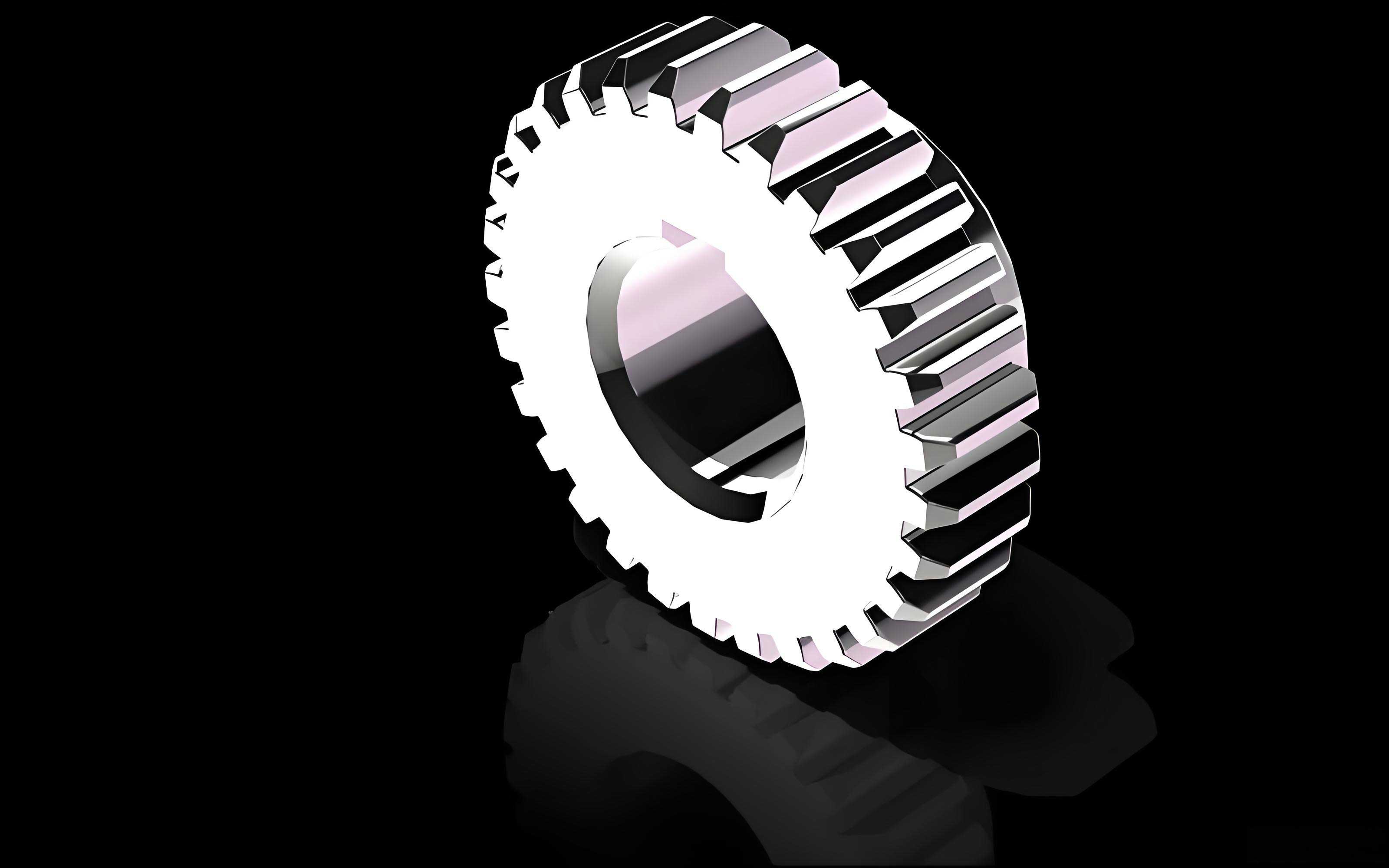
Modeling the Thermal-Dynamic Interaction
The foundation of our analysis lies in accurately characterizing the temperature at the spur gear tooth contact interface. The total contact temperature rise, $\Delta_B$, is considered to be the sum of the bulk temperature, $\Delta_M$, and the transient flash temperature, $\Delta_f$. The bulk temperature represents the steady-state temperature of the gear body, while the flash temperature is the highly localized, instantaneous temperature spike caused by frictional energy dissipation at the sliding contact.
Calculation of Tooth Surface Flash Temperature
Based on Block’s flash temperature theory, the instantaneous flash temperature for a spur gear pair can be expressed as a function of the meshing position and time. The formula is given by:
$$ \Delta_f(t) = u \cdot \frac{f_m \cdot f_e \cdot |v_1(t) – v_2(t)|}{(g_1 \sqrt{\rho_1 c_1 v_1(t)} + g_2 \sqrt{\rho_2 c_2 v_2(t)}) \sqrt{B(t)}} $$
where $u$ is a temperature rise coefficient (taken as 0.83 for spur gears), $f_m$ is the coefficient of friction, and $f_e$ is the normal load per unit face width. The terms $v_i(t)$, $g_i$, $\rho_i$, and $c_i$ represent the tangential velocity, thermal conductivity, density, and specific heat capacity of gear $i$ (i=1 for driving, i=2 for driven), respectively. A key parameter is $B(t)$, the half-width of the Hertzian contact band, which is itself time-varying and calculated as:
$$ B(t) = \eta \sqrt{ \frac{2(1-\mu^2)}{E} \cdot \frac{F}{b} \cdot \frac{R_1(t) R_2(t)}{R_1(t) + R_2(t)} } $$
Here, $\eta$ is a calculation coefficient, $\mu$ is Poisson’s ratio, $E$ is the elastic modulus, $F$ is the total normal load, $b$ is the face width, and $R_i(t)$ is the radius of curvature at the contact point on gear $i$. The tangential velocities $v_i(t)$ and radii of curvature $R_i(t)$ are geometric functions that change continuously as the contact point moves from the start to the end of the meshing cycle along the line of action. This makes $\Delta_f(t)$ a highly dynamic variable during a single mesh period.
Thermal Deformation and Resultant Stiffness Variation
The rise in contact temperature, $\Delta(t) = \Delta_B(t) – \Delta_0$ (where $\Delta_0$ is the initial temperature), causes thermal expansion. This expansion is not uniform, leading to a deviation of the actual tooth profile from its ideal involute form. The resultant profile deformation, $\sigma_i(t)$, for gear $i$ can be derived considering the thermal state of the gear body. This deformation directly impacts the local compliance at the contact point. According to Hertzian contact theory, the change in local stiffness due to this thermal deformation, $k_{wi}(t)$, can be expressed as the load divided by the deformation over the face width:
$$ k_{wi}(t) = \frac{F}{b \cdot \sigma_i(t)} $$
For a meshing spur gear pair, the two teeth in contact act like springs in series. Therefore, the equivalent mesh stiffness component arising solely from thermal effects, termed the “temperature stiffness” $k_w(t)$, is computed by combining the individual tooth stiffness changes:
$$ k_w(t) = \frac{k_{w1}(t) \cdot k_{w2}(t)}{k_{w1}(t) + k_{w2}(t)} $$
The total effective time-varying mesh stiffness, $k(t)$, for the spur gear pair is then the superposition of the traditional stiffness due to changing contact conditions and load sharing (denoted $k_t(t)$) and the temperature-induced stiffness:
$$ k(t) = k_t(t) + k_w(t) $$
Nonlinear Dynamic Model of a Two-Stage Spur Gear System
We now integrate the thermal-contact model into the dynamic framework of a two-stage spur gear system. A discrete physical model is established with the following key assumptions: gears are treated as rigid bodies with lumped inertias; only torsional vibrations are considered; shafts and bearings are assumed to be rigid; and input/output torque fluctuations are neglected. The system is driven by an input torque $T_1$ and loaded by an output torque $T_2$. The model includes essential nonlinear factors: time-varying mesh stiffness $k_{12}(t)$ and $k_{34}(t)$ for the first and second stages (each now containing a thermal component), damping $c_{12}$ and $c_{34}$, static transmission error excitations $e_{12}(t)$ and $e_{34}(t)$, and tooth backlash $b_{12}$ and $b_{34}$.
Applying Newton’s second law, the equations of motion for the four-gear system are derived. These are then non-dimensionalized to generalize the analysis. The non-dimensional dynamic transmission error (DTE) coordinates $q_1$ and $q_3$ are defined for the two meshing interfaces, representing the relative displacement of the gear teeth from their ideal kinematic position. The final state-space equations governing the system are:
$$
\begin{aligned}
\dot{x}_1 &= x_2 \\
\dot{x}_2 &= F_{m1} + F_{e1}\omega_1^2 \cos(\omega_1 t + \phi_1) – 2\xi_{11}x_2 + 2\xi_{12}x_4 – K_{11}(t) f_{12}(x_1, D_{12}) + K_{12}x_3 \\
\dot{x}_3 &= x_4 \\
\dot{x}_4 &= -2(\xi_{22}+\xi_{32})x_4 + 2\xi_{21}x_2 + 2\xi_{22}x_6 – (K_{21}+K_{23})x_3 + K_{21} f_{12}(x_1, D_{12}) + K_{22} f_{34}(x_5, D_{34}) \\
\dot{x}_5 &= x_6 \\
\dot{x}_6 &= F_{m2} + F_{e2}\omega_2^2 \cos(\omega_2 t + \phi_2) – 2\xi_{31}x_6 + 2\xi_{32}x_4 – K_{31}(t) f_{34}(x_5, D_{34}) + K_{32}x_3
\end{aligned}
$$
Here, $\xi$ and $K$ terms are non-dimensional damping and stiffness coefficients, $F_{mi}$ and $F_{ei}$ are related to mean load and error excitation, $\omega_i$ are non-dimensional mesh frequencies, and $D_{12}$, $D_{34}$ are non-dimensional backlash values. The stiffness terms $K_{11}(t)$ and $K_{31}(t)$ encapsulate the combined time-varying and thermal stiffness. The nonlinear backlash functions $f_{12}()$ and $f_{34}()$ are piecewise linear, representing the loss of contact when the DTE is within the backlash region and elastic contact outside it.
Analysis of Flash Temperature Characteristics
To understand the thermal behavior, we first analyze the flash temperature in isolation. The base parameters for the spur gear system, primarily using 45 steel, are summarized in the table below.
| Parameter | Gear 1 | Gear 2 | Gear 3 | Gear 4 |
|---|---|---|---|---|
| Number of Teeth, $z$ | 30 | 60 | 30 | 90 |
| Module, $m$ (mm) | 3 | 3 | 3 | 3 |
| Pressure Angle, $\alpha$ (°) | 20 | 20 | 20 | 20 |
| Face Width, $b$ (mm) | 100 | 95 | 100 | 95 |
| Thermal Conductivity, $g$ (J/m·s·°C) | 46.47 | 46.47 | 46.47 | 46.47 |
| Density, $\rho$ (kg/m³) | 7833 | 7833 | 7833 | 7833 |
| Elastic Modulus, $E$ (GPa) | 210 | 210 | 210 | 210 |
| Specific Heat, $c$ (J/kg·°C) | 481.48 | 481.48 | 481.48 | 481.48 |
The flash temperature exhibits distinct patterns over a mesh cycle. At a moderate load (e.g., 10 kN), the temperature peaks sharply near the regions of tooth root engagement and tooth tip disengagement. This corresponds to points where the sliding velocity between the contacting surfaces is highest. Conversely, as the contact point passes through the pitch point—where pure rolling theoretically occurs—the sliding velocity and, consequently, the flash temperature approach zero. This pattern validates the model’s ability to reflect the fundamental kinematic and tribological behavior of a meshing spur gear pair.
The relationship between operating conditions and peak flash temperature is critical. As both the mesh frequency (related to speed) and the transmitted load increase, the generated flash temperature rises significantly. Under a heavy load of 100 kN, the absolute temperature values are dramatically higher than at 10 kN, although the pattern of peaking at the root and tip remains. This highlights the heightened risk of thermal distress (like scuffing) at the root and tip regions under high-speed, high-torque conditions for spur gears. Notably, the second-stage spur gear pair in the transmission often experiences higher flash temperatures than the first stage for equivalent parameter changes, due to its different operating conditions and geometry.
Coupling Effects of Temperature on System Dynamics
The integration of contact temperature into the dynamic model reveals complex coupling phenomena. The system’s response, characterized by the maximum amplitude of the dynamic transmission error, is investigated across parameter planes defined by mesh frequency and bulk (body) temperature, while other parameters like stiffness fluctuation, backlash, and error are varied.
Influence of Bulk Temperature, Frequency, and Stiffness Fluctuation
When analyzing the response of the two spur gear mesh interfaces, the system exhibits multiple regions of sudden amplitude jumps (bifurcations). As the mesh frequency increases, the response becomes highly volatile. The influence of bulk temperature is particularly pronounced at lower frequencies, where increases in temperature lead to clear jumps in vibration amplitude. However, the effect is strongly coupled with the amplitude of the periodic stiffness fluctuation. For instance, with a low stiffness fluctuation amplitude (e.g., $k=0.1$), the regions of chaotic or high-amplitude response are more extensive. As the stiffness fluctuation is increased (e.g., to $k=0.3$), these regions shrink and the amplitude map appears somewhat more organized, though still nonlinear. The second-stage spur gear mesh consistently shows more severe and widespread amplitude jumps compared to the first stage, indicating its greater susceptibility to dynamic instability.
Influence of Bulk Temperature, Frequency, and Backlash
The amount of tooth backlash in the spur gear pairs significantly alters the thermal-dynamic landscape. For small backlash values (e.g., $D=0.5$), the first mesh shows generally lower amplitudes at low bulk temperatures, but amplitudes escalate sharply as temperature rises. For the second mesh, frequency becomes a dominant factor above a certain threshold, with high temperatures triggering strong responses. Conversely, with large backlash (e.g., $D=1.5$), the system’s behavior becomes markedly more chaotic across a broader parameter space. Time-domain simulations confirm this, showing irregular patterns, repeated tooth separations (loss of contact), and severe back-side impacts. This demonstrates that both excessively small and large backlash values, when coupled with temperature effects, can degrade the dynamic performance of a spur gear system.
Influence of Bulk Temperature, Frequency, and Transmission Error
The system’s sensitivity to static transmission error, an inevitable manufacturing and assembly imperfection in real spur gears, is profoundly affected by temperature coupling. With small error amplitude ($e=0.1$), the response amplitudes are relatively contained, though the first mesh shows higher vibration levels. When the error amplitude is increased ($e=0.2$), a dramatic change occurs: for frequencies above approximately 1.2 times the natural frequency, the system enters large regions of extremely high and erratic response, which intensify with rising bulk temperature. At a high error level ($e=0.3$), the dynamic behavior becomes intensely volatile. Time-domain plots reveal severe alternating periods of normal contact, back-side contact, and loss of contact, indicating a highly unstable operating regime. This underscores that transmission error is a potent destabilizing factor whose negative impact is greatly amplified by the thermal state of the spur gear system.
Conclusion
This study establishes a comprehensive nonlinear dynamic model for a two-stage spur gear transmission system that incorporates the critical effect of tooth surface contact temperature. The model synthesizes Block’s flash temperature theory with Hertzian contact mechanics to derive a temperature-dependent mesh stiffness, which is then integrated with other classic nonlinearities like time-varying stiffness, backlash, and transmission error. The analysis confirms that the flash temperature in spur gears peaks at the points of initial engagement (root) and final disengagement (tip), corresponding to areas of high sliding velocity, and approaches zero near the pitch point, accurately reflecting fundamental gear tribology.
More significantly, the results demonstrate that the contact temperature is not merely a secondary effect but a primary parameter that couples strongly with other dynamic factors. The bulk temperature of the spur gears interacts with mesh frequency, stiffness variations, backlash, and transmission errors to govern the system’s dynamic stability. Increases in bulk temperature can trigger amplitude jumps and exacerbate chaotic responses, particularly when combined with larger backlash or transmission error amplitudes. The second-stage spur gear pair is often more vulnerable to these thermally-induced instabilities. The findings emphasize that for the accurate design and analysis of high-performance spur gear systems, especially those operating under heavy loads or high speeds, a coupled thermal-dynamic modeling approach is indispensable. This model provides a foundational framework for predicting complex behaviors, optimizing design parameters, and improving the reliability of spur gear-based transmissions.