
In the realm of power transmission, the selection and application of lubrication for worm gears is not merely a supplementary consideration but a fundamental determinant of system efficiency, load capacity, and operational lifespan. From my extensive experience in the design and analysis of worm gears, I have observed that improper lubricant selection is a primary contributor to premature failure, often overshadowing errors in geometric design. This article delves deeply into the critical role of lubricant viscosity, focusing on its profound impact on both the meshing tooth surfaces of cylindrical worm gears and the supporting bearing systems. I will present a detailed analytical framework, supported by formulas and empirical data, to guide the optimal selection of lubricant viscosity.
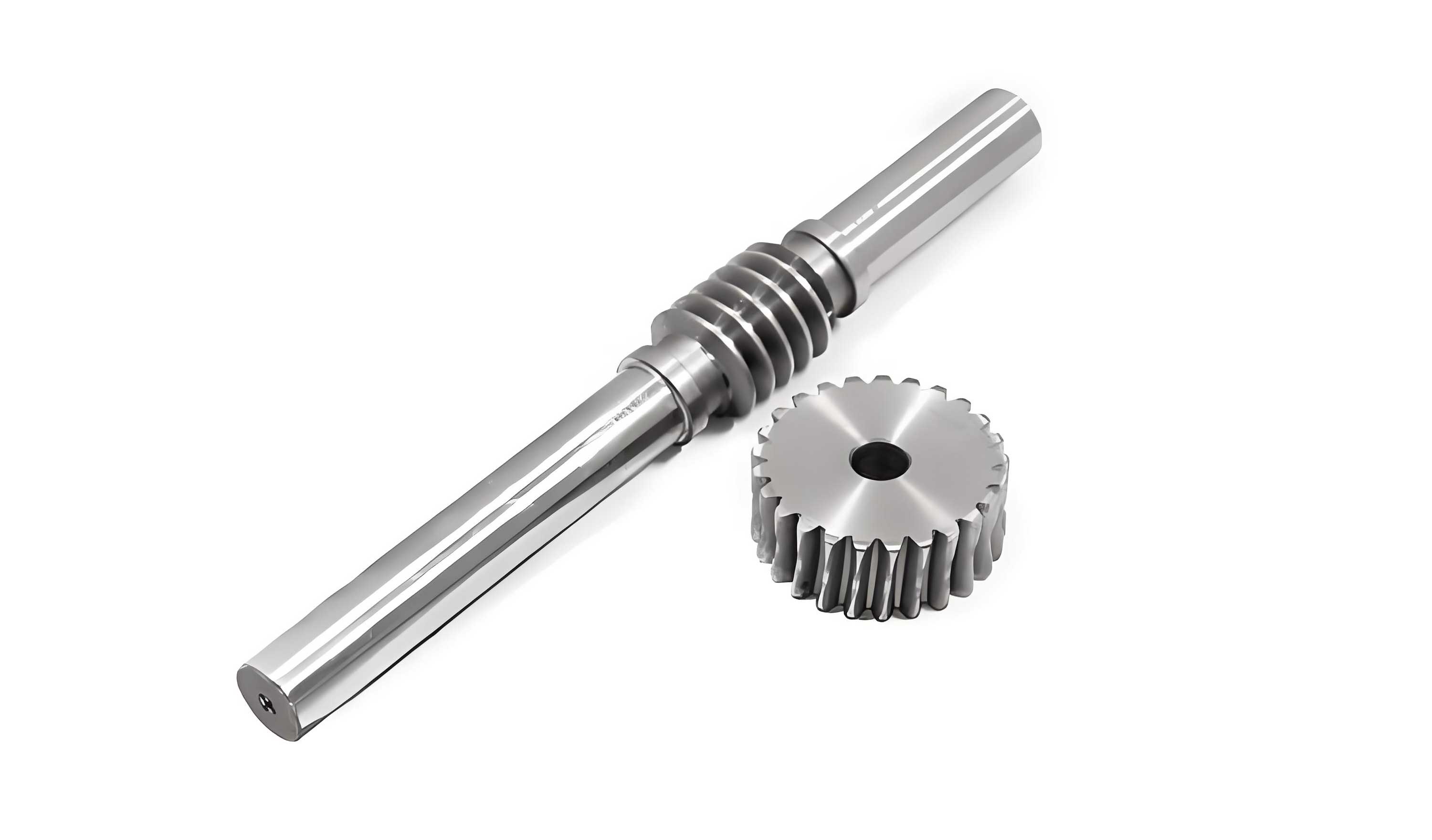
The unique sliding-dominant contact in worm gears generates significant friction and heat. An effective lubricant must therefore perform multiple duties: it must separate the metal surfaces to prevent wear and adhesion, carry away frictional heat, and protect components from corrosion. The single most important property governing the first and most critical function—surface separation—is the lubricant’s viscosity. The following sections will dissect the relationship between viscosity, film formation, and component life.
1. The Influence of Lubricant Viscosity on Worm Gear Tooth Surface Durability
The primary failure modes for worm gears—pitting, scuffing (adhesive wear), and abrasive wear—are intimately linked to the condition of the lubricating film between the worm thread and the worm wheel tooth. The key parameter is the specific film thickness, or Lambda ratio (λ), defined as the ratio of the minimum elastohydrodynamic lubrication (EHL) film thickness ($h_{\text{min}}$) to the composite surface roughness ($\sigma$).
$$ \lambda = \frac{h_{\text{min}}}{\sigma} $$
Extensive research and field data confirm that when $\lambda \geq 3$, the surfaces are effectively separated, drastically reducing the probability of pitting and scuffing. While surface finish ($\sigma$) is a manufacturing given, the film thickness ($h_{\text{min}}$) is dynamically influenced by operating conditions and, most significantly, lubricant viscosity.
For standard cylindrical worm gears under dip lubrication, the minimum film thickness can be estimated using a derived formula that encapsulates the major influencing factors:
$$ h_{\text{min}} = h^* \cdot a_c \cdot \eta^{0.7} \cdot n_1^{0.43} \cdot a^{-0.057} \cdot E_{\text{red}}^{0.03} \cdot T_2^{0.13} $$
Where:
$h^*$ = Gear geometry factor (dependent on tooth profile, number of starts, number of teeth, center distance, etc.)
$a_c$ = Lubricant type coefficient
$\eta$ = Dynamic viscosity at operating temperature [mPa·s]
$n_1$ = Worm rotational speed [rpm]
$a$ = Center distance [mm]
$E_{\text{red}}$ = Reduced modulus of elasticity [N/mm²]
$T_2$ = Output torque [Nm]
The dynamic viscosity ($\eta$) is the product of the kinematic viscosity ($\nu$) and the density ($\rho$) at the operating temperature: $\eta = \nu \cdot \rho$. The coefficients $a_c$ highlight the performance difference between common lubricant types:
| Lubricant Type | Coefficient $a_c$ |
|---|---|
| Mineral Oil | $1.7 \times 10^{-8}$ |
| Polyglycol (PAG) | $1.3 \times 10^{-8}$ |
The exponent of 0.7 on the dynamic viscosity term ($\eta^{0.7}$) is crucial. It demonstrates a strong, non-linear relationship; for instance, doubling the viscosity increases the film thickness by a factor of $2^{0.7} \approx 1.62$. This directly underscores why selecting a lubricant with an appropriately high viscosity grade is paramount for achieving a protective $\lambda$ ratio, especially for worm gears which typically have higher composite roughness compared to precision-ground gears.
2. The Critical Role of Viscosity in Bearing Life Adjacent to Worm Gears
The influence of lubricant viscosity extends beyond the gear mesh to the life of the supporting bearings, particularly those on the high-speed worm shaft. The latest international standard for bearing life calculation (ISO 281:2007) introduces a systems-based approach that formally accounts for lubrication conditions through a life modification factor ($a_{\text{ISO}}$).
The modified rating life is calculated as:
$$ L_{nm} = a_1 \cdot a_{\text{ISO}} \cdot L_{10} $$
$$ L_{10} = \left( \frac{C}{P} \right)^p $$
Where:
$L_{nm}$ = Modified rating life for reliability (100-n)% [million revolutions]
$a_1$ = Reliability factor (see Table 2)
$a_{\text{ISO}}$ = Life modification factor
$L_{10}$ = Basic rating life (90% reliability) [million revolutions]
$C$ = Basic dynamic load rating [N]
$P$ = Equivalent dynamic bearing load [N]
$p$ = Exponent (3 for ball bearings, 10/3 for roller bearings)
| Reliability % | $L_{nm}$ Designation | $a_1$ |
|---|---|---|
| 90 | $L_{10m}$ | 1.00 |
| 95 | $L_{5m}$ | 0.64 |
| 96 | $L_{4m}$ | 0.55 |
| 97 | $L_{3m}$ | 0.47 |
| 98 | $L_{2m}$ | 0.37 |
| 99 | $L_{1m}$ | 0.25 |
The factor $a_{\text{ISO}}$ integrates influences from lubrication, contamination, and material fatigue limits. Lubrication is quantified via the viscosity ratio ($\kappa$):
$$ \kappa = \frac{\nu}{\nu_1} $$
Where:
$\nu$ = Actual kinematic viscosity of the lubricant at the operating temperature [mm²/s]
$\nu_1$ = Reference kinematic viscosity, dependent on bearing mean diameter ($d_m$) and speed ($n$):
$$ \nu_1 = 45000 \cdot n^{-0.83} \cdot d_m^{-0.5} \quad \text{(for $n < 1000$ rpm)} $$
$$ \nu_1 = 4500 \cdot d_m^{-0.5} \quad \text{(for $n \geq 1000$ rpm)} $$
The life modification factor $a_{\text{ISO}}$ is then derived from $\kappa$ and a pollution factor ($e_c$), which accounts for the cleanliness of the lubricant. The pollution factor $e_c$ values are selected based on the level of filtration and sealing.
| Contamination Level | $e_c$ for $d_m < 100$ mm | $e_c$ for $d_m \geq 100$ mm |
|---|---|---|
| Extremely Clean | 1 | 1 |
| High Cleanliness | 0.8 – 0.6 | 0.9 – 0.8 |
| Normal Cleanliness | 0.6 – 0.5 | 0.8 – 0.6 |
| Light Contamination | 0.5 – 0.3 | 0.6 – 0.4 |
| Typical Contamination | 0.3 – 0.1 | 0.4 – 0.2 |
For common roller bearings used in worm gear units (e.g., cylindrical, tapered), the formula for $a_{\text{ISO}}$ can be expressed in a piecewise manner based on the viscosity ratio:
For $0.1 \leq \kappa < 0.4$:
$$ a_{\text{ISO}} = 0.1 \cdot \left[ 1 – \left( 1.5859 – 1.2348 \cdot e_c \right) \cdot \left( \frac{C_u}{P} \right)^{0.4} \right]^{\frac{-1}{0.1859}} \cdot \left( \kappa^{0.05438} \right) $$
For $0.4 \leq \kappa < 1$:
$$ a_{\text{ISO}} = 0.1 \cdot \left[ 1 – \left( 1.5859 – 1.2348 \cdot e_c \right) \cdot \left( \frac{C_u}{P} \right)^{0.4} \right]^{\frac{-1}{0.1859}} \cdot \left( \kappa^{0.19087} \right) $$
For $1 \leq \kappa \leq 4$:
$$ a_{\text{ISO}} = 0.1 \cdot \left[ 1 – \left( 1.5859 – 1.2348 \cdot e_c \right) \cdot \left( \frac{C_u}{P} \right)^{0.4} \right]^{\frac{-1}{0.1859}} \cdot \left( \kappa^{0.071739} \right) $$
Where $C_u$ is the bearing’s fatigue load limit. For $\kappa > 4$, use $\kappa = 4$ in calculation. In practice, $a_{\text{ISO}}$ is capped at a maximum value of 50.
These equations reveal a powerful insight: achieving a viscosity ratio ($\kappa$) of 1 or greater significantly boosts $a_{\text{ISO}}$, thereby multiplicatively extending the calculated bearing life. This provides a quantitative basis for selecting a lubricant whose viscosity at operating temperature meets or exceeds the reference viscosity $\nu_1$.
3. Practical Application and Selection Guidelines for Worm Gear Lubricants
3.1 Compensating for Surface Finish in Worm Gears
Manufacturing processes for worm gears, particularly the worm wheel which is often hobbed rather than ground, result in a higher surface roughness compared to precision gear systems. A typical high-quality hobbed worm wheel might achieve $R_a = 1.6 \mu m$, leading to a composite roughness $\sigma$ that demands a substantial $h_{\text{min}}$ to reach $\lambda \geq 3$. From practical application, I strongly recommend a minimum initial viscosity grade of ISO VG 220 for synthetic or high-quality mineral oils dedicated to worm gear service. This higher base viscosity is essential to generate an adequate EHL film during the critical run-in period and throughout operation, directly countering the effects of surface asperities and preventing initial adhesive wear and scuffing.
3.2 A Comparative Bearing Life Calculation
To illustrate the dramatic impact of viscosity selection, consider a common scenario: a worm shaft supported by an SKF NU2210ECP cylindrical roller bearing. Operating parameters are:
$C = 90 \text{ kN}$, $P = 20 \text{ kN}$, $n = 600 \text{ rpm}$, $C_u = 11.4 \text{ kN}$, $d_m \approx 85 \text{ mm}$.
Operating oil temperature: $100^\circ\text{C}$. Cleanliness: Normal ($e_c = 0.6$). Reliability: 90% ($a_1=1$).
Case A: Using ISO VG 220 oil. At $100^\circ\text{C}$, $\nu_{220} \approx 22 \text{ mm²/s}$.
First, calculate reference viscosity:
$$ \nu_1 = 45000 \cdot (600)^{-0.83} \cdot (85)^{-0.5} \approx 27.6 \text{ mm²/s} $$
$$ \kappa = \frac{22}{27.6} \approx 0.80 $$
Since $0.4 \leq \kappa < 1$, we use the corresponding formula:
$$ a_{\text{ISO}} = 0.1 \cdot \left[ 1 – \left( 1.5859 – 1.2348 \cdot 0.6 \right) \cdot \left( \frac{11.4}{20} \right)^{0.4} \right]^{-5.38} \cdot \left( 0.80^{0.19087} \right) \approx 1.14 $$
Basic life: $L_{10} = \left( \frac{90}{20} \right)^{10/3} \approx 150 \text{ million revs (4167 h)}$.
Modified life: $L_{10m} = 1 \cdot 1.14 \cdot 150 \approx 171 \text{ million revs (4750 h)}$.
Case B: Using ISO VG 460 oil. At $100^\circ\text{C}$, $\nu_{460} \approx 42 \text{ mm²/s}$.
$$ \kappa = \frac{42}{27.6} \approx 1.52 $$
Since $1 \leq \kappa \leq 4$, we use the third formula:
$$ a_{\text{ISO}} = 0.1 \cdot \left[ 1 – \left( 1.5859 – 1.2348 \cdot 0.6 \right) \cdot \left( \frac{11.4}{20} \right)^{0.4} \right]^{-5.38} \cdot \left( 1.52^{0.071739} \right) \approx 1.75 $$
Modified life: $L_{10m} = 1 \cdot 1.75 \cdot 150 \approx 262.5 \text{ million revs (7292 h)}$.
Conclusion: Simply increasing the lubricant viscosity grade from VG220 to VG460 under these conditions increased the calculated bearing life by over 50% (from 4750 to 7292 hours). This vividly demonstrates the integral role viscosity plays in the total system life of a worm gear drive.
3.3 Comprehensive Viscosity Selection Framework
Selecting the optimal viscosity is a balancing act. While higher viscosity benefits film thickness and bearing life, it also increases churning and drag losses, reducing mechanical efficiency and potentially raising operating temperatures, which in turn lowers viscosity. The following table provides a generalized starting point for selecting mineral or synthetic worm gear oils based on common operating parameters.
| Center Distance (a) [mm] | Worm Speed (n1) [rpm] | Expected Oil Sump Temp. | Recommended ISO VG (Mineral) | Recommended ISO VG (Synthetic PAG) | Primary Justification |
|---|---|---|---|---|---|
| 50 – 100 | < 500 | Moderate (60-70°C) | VG 220 – 320 | VG 150 – 220 | Adequate film for moderate loads/speeds. |
| 50 – 100 | > 1000 | High (80-100°C) | VG 150 – 220 | VG 100 – 150 | High shear, need for thermal stability; lower viscosity offsets temp. |
| 100 – 200 | 100 – 1000 | Moderate to High | VG 320 – 460 | VG 220 – 320 | Higher loads, larger gears; need for robust film formation. |
| > 200 | < 250 | Moderate | VG 460 – 680 | VG 320 – 460 | Very high torque, low speed; extreme pressure (EP) additives often essential. |
| Any (Severe Duty) | Any | Very High (>100°C) | VG 680+ (Synthetic PAO/Ester) | VG 460+ (Synthetic PAG) | Thermal stability and film strength are critical; synthetics mandatory. |
Additional Critical Considerations:
- Additive Package: Worm gears inherently experience high sliding friction. Lubricants must contain effective anti-wear (AW) and extreme pressure (EP) additives, typically based on sulfur-phosphorus chemistry, to protect surfaces during boundary lubrication conditions (start-up, shock loads).
- Base Oil Type: Synthetic oils (Polyalkylene Glycols – PAGs, Polyalphaolefins – PAOs) offer superior viscosity-temperature characteristics, higher thermal stability, and often naturally lower friction compared to mineral oils. They are strongly recommended for high-speed, high-temperature, or highly loaded worm gear applications.
- Run-in Procedures: A controlled run-in period with the selected lubricant is non-negotiable. It allows mating surfaces to conform smoothly, improving the $\lambda$ ratio over time and establishing a stable wear pattern.
- Viscosity Monitoring: Lubricant viscosity degrades over time due to thermal stress, oxidation, and shearing. Regular oil analysis to monitor viscosity change is a key predictive maintenance practice for critical worm gear drives.
4. Conclusion
The selection of lubricant viscosity for cylindrical worm gears is a foundational engineering decision with direct, quantifiable consequences for system performance and longevity. As I have detailed, viscosity is the primary driver for establishing a protective elastohydrodynamic film between the worm and wheel teeth, directly combating wear, pitting, and scuffing. Simultaneously, through the viscosity ratio ($\kappa$), it serves as a key input for calculating the modified life of the critically important supporting bearings.
A systematic approach is essential: first, ensure the selected viscosity grade is sufficient to promote a favorable specific film thickness ($\lambda$) for the gear mesh, considering the inherent surface roughness of worm gears. Second, verify that the operational viscosity at the bearing nodes meets or exceeds the ISO reference viscosity ($\nu_1$) to maximize the life modification factor $a_{\text{ISO}}$. This often, though not always, leads to the selection of a higher viscosity grade than might be initially presumed.
It is vital to remember that this pursuit of higher viscosity for protection must be tempered by an understanding of its trade-offs—mainly increased churning losses and the potential for higher operating temperatures. The optimal choice, therefore, lies at the intersection of sufficient film-forming capability, acceptable efficiency, and thermal management. By applying the principles and calculations outlined here, engineers can move beyond generic recommendations and make scientifically grounded lubricant selections that unlock the full durability and reliability potential of cylindrical worm gear drives.