
In the rapidly evolving landscape of industrial automation and robotics, the rotary vector reducer stands as a pivotal component, enabling precise motion control and torque transmission. As demand for industrial robots grows, the need for efficient, large-scale production of rotary vector reducers becomes critical. However, many manufacturing facilities, particularly in domestic settings, struggle with mixed-flow assembly lines that suffer from production imbalances and overall inefficiency. These issues manifest as bottlenecks, uneven workstation loads, and suboptimal throughput, hindering the ability to meet market demands. In this article, I address these challenges by developing a mathematical model for production line balancing and proposing an enhanced genetic algorithm tailored for mixed-flow assembly optimization. Through simulation using Flexsim software, I validate the effectiveness of this approach, demonstrating significant improvements in production cycle time, balance rate, and smoothness index. This work aims to provide a practical framework for enhancing the manufacturing efficiency of rotary vector reducers, thereby supporting advancements in robotics technology.
The core problem in mixed-flow assembly lines for rotary vector reducers lies in the uneven distribution of tasks across workstations, leading to idle time, congestion, and reduced overall productivity. Traditional approaches often focus solely on minimizing cycle time without adequately considering the stability and smoothness of the workflow. Previous research has explored various optimization techniques, such as integer programming and standard genetic algorithms, but these methods can fall short due to tendencies to converge on local optima or neglect precedence constraints among processes. For instance, while some studies have improved balance rates by reassigning tasks, they may overlook the impact of process difficulty on cycle time stability. In contrast, my approach integrates multiple objectives—minimizing production cycle time, maximizing balance rate, and minimizing smoothness index—into a cohesive model. By incorporating precedence constraints into a genetic algorithm with swap mutation, I aim to overcome the limitations of conventional methods and achieve a more robust optimization for rotary vector reducer production lines.
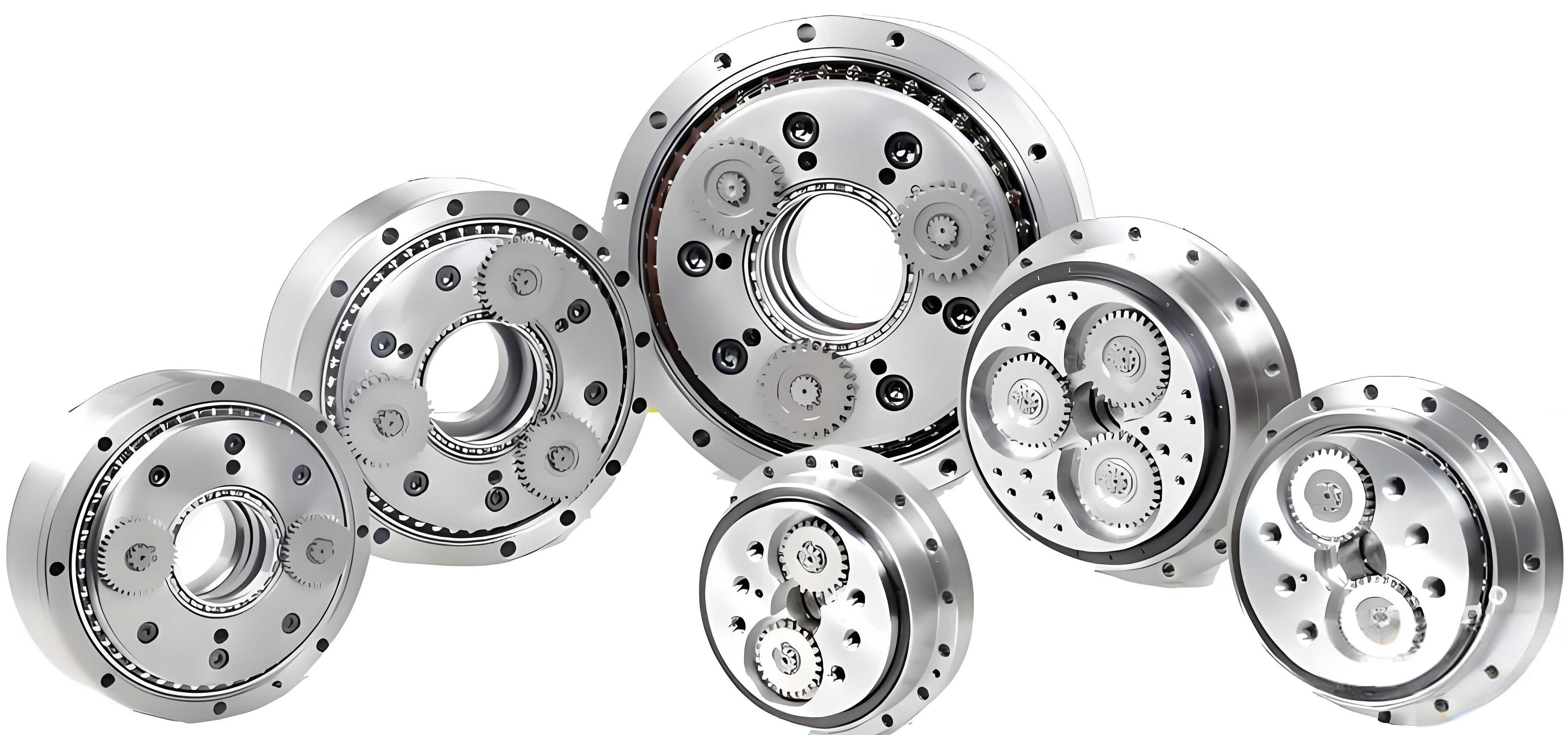
To systematically address the production line balancing issue, I first establish a mathematical model that captures the essential dynamics of a mixed-flow assembly line for rotary vector reducers. This model considers multiple product types flowing through a series of workstations, each with specific processing times and precedence relationships. The primary goal is to optimize the allocation of tasks to workstations while satisfying operational constraints. The key performance metrics include production cycle time, smoothness index, and balance rate, which collectively determine the efficiency and stability of the line. Let me define these objectives formally. The production cycle time, denoted as $$T_c$$, represents the maximum time taken by any workstation and dictates the pace of production. It is expressed as: $$T_c \leq \max(T_{n1}, T_{n2}, \dots, T_{nm})$$ where $$T_{ni}$$ is the operation time at workstation $$i$$ for product type $$n$$, with $$i = 1, 2, \dots, m$$. Minimizing $$T_c$$ ensures that the line operates at the fastest possible rate without overloading any station.
The smoothness index, $$S$$, measures the dispersion of operation times across workstations, reflecting the line’s stability. A lower value indicates a more balanced distribution, reducing variability and potential disruptions. It is defined as: $$S = \min \sqrt{\frac{\sum_{k=1}^{K} (T_c – T_a)^2}{K}}$$ where $$K$$ is the number of workstations, $$T_a$$ is the total operation time at workstation $$a$$, and $$a = 1, 2, \dots, m$$. This index penalizes deviations from the cycle time, encouraging uniformity. The balance rate, $$B$$, quantifies the overall utilization of workstations, calculated as: $$B = \frac{\sum_{i=1}^{k} T_i}{k \cdot \max(T_i)} \times 100\%$$ where $$T_i$$ is the operation time at workstation $$i$$, and $$k$$ is the number of workstations. A higher balance rate, closer to 100%, signifies that all stations are equally loaded, minimizing idle time and maximizing efficiency.
In addition to these objectives, the model incorporates several constraints to ensure feasibility and adherence to production logic. For instance, each product must be assigned to exactly one workstation, and at any given time, a workstation can process only one product. Precedence constraints ensure that tasks are performed in the correct order, based on the assembly sequence of the rotary vector reducer. Mathematically, these constraints can be expressed as follows. Let $$x_{i,k}$$ be a binary variable indicating whether product $$i$$ is of type $$k$$ (where $$i = 1, 2, \dots, m$$ and $$k = 1, 2, \dots, K$$), with $$x_{i,k} = 1$$ if true and 0 otherwise. The assignment constraint is: $$\sum_{k=1}^{K} x_{i,k} = 1, \quad \text{for all } i = 2, 3, \dots, m$$. For processing times, let $$T_{i,j}$$ denote the theoretical processing time of product $$i$$ at workstation $$j$$, and $$t_{i,j}$$ be the actual required time. The constraints ensure that processing does not start until preceding tasks are completed: $$T_{1,1} \geq \sum_{k=1}^{K} x_{i,k} \cdot t_{i-1,j}$$ for $$i = 2, 3, \dots, m$$ and $$j = 2, 3, \dots, o$$, and similarly for subsequent products and stations. Additionally, all processing times must be non-negative: $$T_{i,j} \geq 0$$. These constraints collectively form a mixed-integer programming model that is complex to solve directly, necessitating the use of heuristic methods like genetic algorithms.
To solve this optimization problem, I propose an improved genetic algorithm that enhances the traditional approach by incorporating swap mutation with consideration of preceding processes. Genetic algorithms are evolutionary techniques inspired by natural selection, involving populations of candidate solutions that evolve through selection, crossover, and mutation. However, standard genetic algorithms can suffer from premature convergence to local optima and sensitivity to parameter settings. My enhanced algorithm addresses these issues by using adaptive crossover and mutation probabilities, along with a swap mutation operator that respects precedence constraints, thereby maintaining solution diversity and improving global search capability. The algorithm begins with chromosome encoding, where each chromosome represents a potential sequence of tasks for the mixed-flow assembly line of rotary vector reducers. The tasks are numbered from 1 to 40, corresponding to various assembly operations, and the chromosome is a permutation of these numbers, indicating the order of execution. This encoding allows for flexible representation of the production schedule.
The selection process employs a roulette wheel method combined with elite retention strategy. In each generation, individuals are selected based on their fitness scores, which evaluate how well they meet the objectives. The fitness function is designed to integrate the three goals: minimizing cycle time, maximizing balance rate, and minimizing smoothness index. I define the fitness $$f$$ as a composite measure: $$f = \frac{1}{T_c + \alpha S + \beta (1 – B)}$$ where $$\alpha$$ and $$\beta$$ are weighting factors that balance the importance of each objective. This formulation encourages solutions that simultaneously reduce cycle time and smoothness index while increasing balance rate. To prevent stagnation, I implement adaptive crossover and mutation probabilities. Let $$P_c$$ be the crossover probability and $$P_m$$ the mutation probability. These are adjusted based on the fitness of individuals: $$P_c = \begin{cases} p_{c1} – \frac{(P_{c1} – P_{c2})(f’ – f_{avg})}{f_{max} – f_{avg}}, & \text{if } f’ \geq f_{avg} \\ P_{c1}, & \text{if } f’ < f_{avg} \end{cases}$$ and $$P_m = \begin{cases} P_{m1} – \frac{(P_{m1} – P_{m2})(f’ – f_{avg})}{f_{max} – f_{avg}}, & \text{if } f’ \geq f_{avg} \\ P_{m1}, & \text{if } f’ < f_{avg} \end{cases}$$ where $$f’$$ is the higher fitness of two parents, $$f_{max}$$ is the maximum fitness in the population, and $$f_{avg}$$ is the average fitness. This adaptive mechanism increases exploration for individuals with below-average fitness and exploitation for those above average, enhancing convergence efficiency.
Crossover is performed using a multi-point crossover operator. Two parent chromosomes are selected, and segments from each are combined to produce offspring. For example, if parent chains are represented as sequences of task numbers, the crossover might take the first 8 tasks from one parent and the last 8 from another, with the middle portion filled by eliminating duplicates from the alternate parent. This method preserves useful schemata while introducing diversity. Mutation involves swapping two randomly selected tasks in the chromosome, but with a key enhancement: the swap only occurs if it does not violate precedence constraints among processes. This ensures that the mutated solution remains feasible for the assembly sequence of rotary vector reducers. The algorithm iterates for a predetermined number of generations, continuously improving the population until an optimal or near-optimal solution is found. The overall flowchart of the improved genetic algorithm includes initialization, fitness evaluation, selection, crossover, mutation, and termination checks, forming a robust optimization cycle.
To validate the proposed method, I apply it to a case study involving a company that manufactures rotary vector reducers through a mixed-flow assembly line. This line consists of 18 workstations and 31 processes, with varying operation times for different product types. The current production data indicates a daily output target of 1,600 units over an 8-hour shift, leading to a theoretical cycle time of 18 seconds, calculated as: $$T_c = \frac{T}{Q} = \frac{8 \times 3600}{1600} = 18 \text{ seconds}$$ where $$T$$ is the daily working time and $$Q$$ is the total quantity. However, due to imbalances, the actual performance is suboptimal. The initial smoothness index and balance rate are computed from the given operation times. Let me summarize the process data in a table to clarify the current state.
| Workstation | Process IDs | Operation Time per Process (s) | Total Time per Workstation (s) |
|---|---|---|---|
| 1 | 1, 2, 3, 4, 5 | 2.2, 4.5, 6.1, 5.2, 8.0 | 12.8 |
| 2 | 6, 7, 8, 9 | 8.4, 4.1, 4.3, 7.1 | 13.2 |
| 3 | 10 | 13.8 | 13.8 |
| 4 | 11 | 15.5 | 15.5 |
| 5 | 12 | 10.1 | 10.1 |
| 6 | 13 | 11.1 | 11.1 |
| 7 | 14, 15, 16 | 4.5, 3.2, 7.9 | 15.6 |
| 8 | 17 | 9.6 | 9.6 |
| 9 | 18, 19, 20 | 2.3, 6.0, 4.5 | 12.8 |
| 10 | 21 | 8.5 | 8.5 |
| 11 | 22, 23 | 3.3, 10.4 | 13.7 |
| 12 | 24 | 12.9 | 12.9 |
| 13 | 25 | 11.4 | 11.4 |
| 14 | 26, 27 | 3.5, 8.6 | 17.9 |
| 15 | 28 | 5.8 | 15.3 |
| 16 | 29 | 15.3 | 15.3 |
| 17 | 30 | 10.7 | 10.7 |
| 18 | 31 | 3.5 | 14.2 |
From this data, the initial smoothness index is calculated as: $$S = \min \sqrt{\frac{(18-12.8)^2 + (18-13.2)^2 + \dots + (18-14.2)^2}{18}} \approx 1.32$$ and the balance rate is: $$B = \frac{232.3}{18 \times 17.9} \times 100\% \approx 72\%$$. These values highlight the inefficiencies, with a high smoothness index indicating uneven workloads and a low balance rate showing poor utilization. The precedence relationships among processes are illustrated through a directed graph, but for brevity, I note that tasks must follow a specific order, such as process 1 before process 2, etc., which is incorporated into the algorithm’s constraints.
Applying the improved genetic algorithm with parameters set as follows: target cycle time $$T_t = 18$$ seconds, initial population size of 80 for two subpopulations, crossover probabilities of 0.9 and 0.1, mutation probability of 0.1, and 300 iterations. The algorithm optimizes the task allocation to workstations, aiming to reduce the number of workstations while meeting the cycle time constraint. After optimization, the best solution results in 15 workstations, with tasks reassigned as shown in the table below. This reorganization reduces the cycle time to 17.2 seconds, improves balance rate, and lowers smoothness index. The optimized allocation demonstrates how the genetic algorithm effectively balances the load across workstations for rotary vector reducer assembly.
| Workstation Number | Assigned Processes | Total Operation Time (s) |
|---|---|---|
| 1 | 1, 2, 26, 3 | 16.3 |
| 2 | 5, 6 | 16.4 |
| 3 | 4, 8, 9 | 16.6 |
| 4 | 16, 27 | 16.5 |
| 5 | 15, 10 | 17.0 |
| 6 | 7, 13 | 15.2 |
| 7 | 11 | 15.5 |
| 8 | 14, 12 | 14.6 |
| 9 | 17, 19 | 15.6 |
| 10 | 20, 18, 21 | 15.3 |
| 11 | 22, 23 | 13.7 |
| 12 | 24 | 12.9 |
| 13 | 25, 28 | 17.2 |
| 14 | 29 | 15.3 |
| 15 | 30, 31 | 14.2 |
With this new allocation, the production cycle time becomes $$T_c = 17.2$$ seconds, which is a reduction of 0.8 seconds from the original. The smoothness index is recalculated as: $$S = \min \sqrt{\frac{(17.2-16.3)^2 + (17.2-16.4)^2 + \dots + (17.2-14.2)^2}{15}} \approx 0.72$$ and the balance rate is: $$B = \frac{232.3}{15 \times 17.2} \times 100\% \approx 90\%$$. These improvements signify a more efficient and stable production line for rotary vector reducers. The reduction in smoothness index indicates better workload distribution, while the increased balance rate reflects higher utilization of resources. This optimization directly addresses the core issues of mixed-flow assembly, enabling faster throughput and reduced waste.
To further validate these results, I conduct a simulation using Flexsim software, a powerful tool for modeling and analyzing production systems. The simulation model replicates the optimized assembly line for rotary vector reducers, with 15 workstations configured according to the genetic algorithm’s output. Each workstation is assigned its respective processes and operation times, and the generator is set to produce products at a cycle time of 17.2 seconds. The simulation runs for one workday, producing 1,600 units, and tracks key performance metrics such as workstation utilization, queue lengths, and throughput. The model includes entities representing different product types, resources for workstations, and conveyors for material flow, creating a realistic environment to assess the line’s behavior. The Flexsim dashboard provides visualizations and statistics, allowing for in-depth analysis of the production dynamics.
The simulation results confirm the effectiveness of the optimization. Workstation utilization rates are analyzed using pie charts from the Flexsim dashboard, showing an average utilization of 82.68%, with the highest reaching 91.82%. This indicates that workstations are actively engaged most of the time, minimizing idle periods. Compared to the initial state, where utilization was uneven due to imbalances, the optimized line demonstrates a more consistent workload distribution. The table below summarizes the key performance indicators before and after optimization, highlighting the gains achieved through the genetic algorithm approach. These metrics underscore the practical benefits of the proposed method for enhancing rotary vector reducer production.
| Parameter | Before Optimization | After Optimization | Improvement |
|---|---|---|---|
| Production Cycle Time (s) | 18 | 17.2 | 0.8 |
| Number of Workstations | 18 | 15 | 3 |
| Balance Rate (%) | 72 | 90 | 18 |
| Smoothness Index | 1.3 | 0.72 | 0.58 |
The reduction in the number of workstations from 18 to 15 not only saves physical space and resources but also simplifies line management, reducing complexity and potential points of failure. The balance rate improvement of 18% translates to better resource allocation, while the smoothness index drop from 1.3 to 0.72 indicates a smoother workflow with fewer disruptions. These changes collectively enhance the overall efficiency of the rotary vector reducer assembly line, enabling higher productivity and lower operational costs. The simulation also reveals that queue lengths are minimized, and throughput matches the target output, validating that the optimized line can meet production demands without bottlenecks. This empirical evidence supports the robustness of the mathematical model and genetic algorithm in real-world scenarios.
In conclusion, the optimization of mixed-flow assembly lines for rotary vector reducers is crucial for advancing manufacturing capabilities in the robotics industry. By developing a comprehensive mathematical model that integrates multiple objectives—cycle time minimization, balance rate maximization, and smoothness index minimization—I address the core challenges of production imbalance and inefficiency. The proposed improved genetic algorithm, with its adaptive crossover and mutation probabilities and swap mutation considering precedence constraints, effectively overcomes the limitations of traditional methods, providing a reliable solution for task allocation. The case study and Flexsim simulation demonstrate significant performance gains, including a reduced cycle time of 17.2 seconds, an increased balance rate of 90%, and a lowered smoothness index of 0.72. These improvements directly contribute to higher throughput, better resource utilization, and enhanced stability in rotary vector reducer production. This work not only offers a practical framework for manufacturers but also paves the way for future research into more advanced optimization techniques, such as hybrid algorithms or real-time adaptive control, to further push the boundaries of industrial efficiency. As demand for rotary vector reducers continues to grow, such innovations will be key to achieving scalable, high-quality production in the era of smart manufacturing.