
In the field of industrial robotics, the rotary vector reducer stands as a pivotal component, renowned for its compact size, high transmission ratio, and precision. However, the longevity and reliability of these reducers are often compromised by the failure of integrated crank bearings, particularly due to issues like needle roller cracking, excessive wear, and lubrication breakdown. As an engineer specializing in mechanical systems, I have dedicated significant effort to addressing these challenges through a holistic optimization approach. This article presents a comprehensive study on the multi-objective optimization of the crank bearing within a rotary vector reducer, with a keen focus on enhancing lubrication reliability alongside dynamic load capacity. By integrating a thermo-elastohydrodynamic lubrication model with a genetic algorithm-based optimization framework, we aim to derive design parameters that not only boost the bearing’s fatigue life but also ensure robust lubricant film formation under operational stresses. The following sections delve into the mathematical modeling, optimization strategy, and empirical validation, underscoring the critical role of lubrication reliability in the performance of rotary vector reducers.
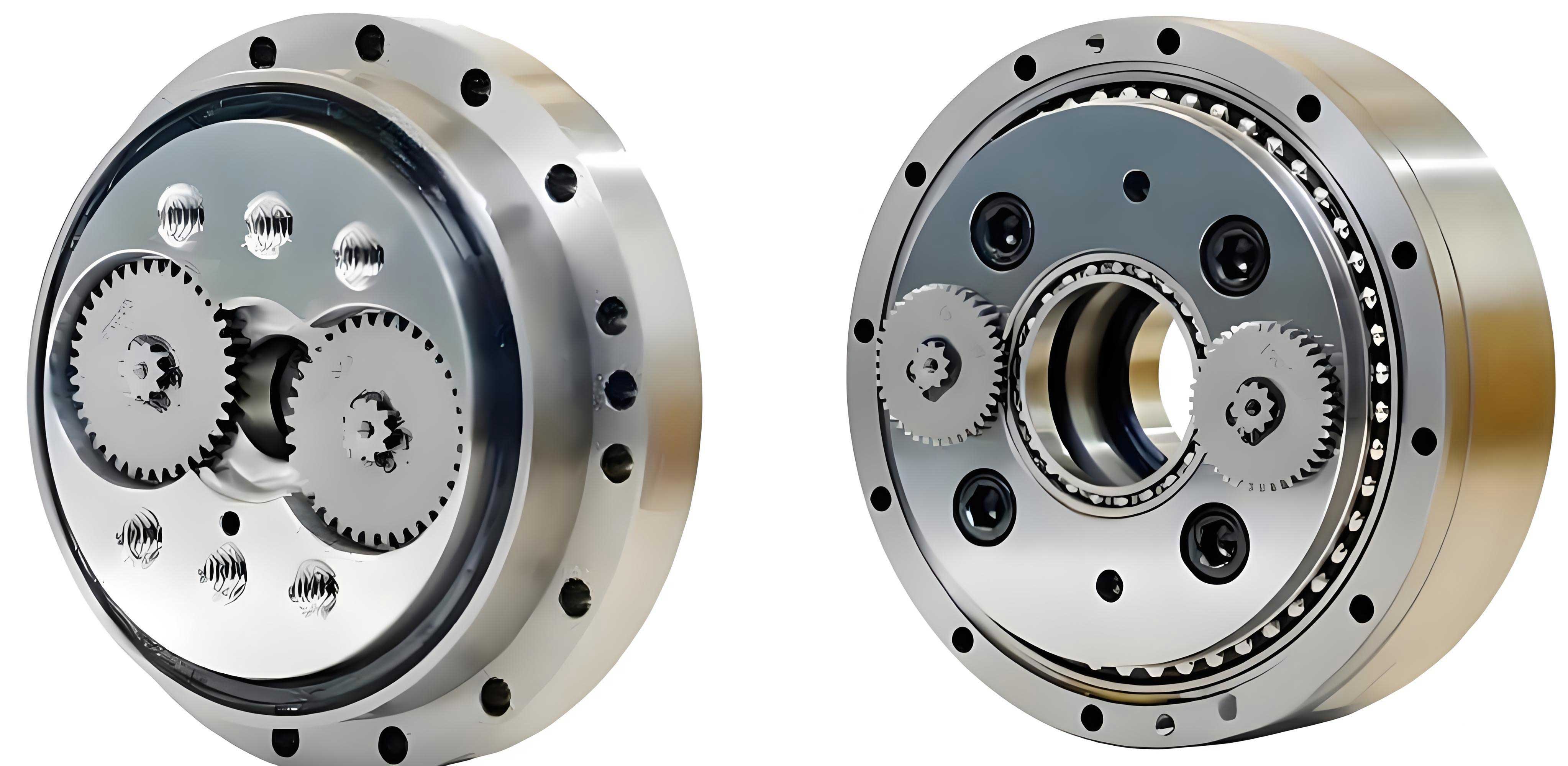
The core of a rotary vector reducer lies in its ability to transmit motion with minimal backlash and high torque density. The crank bearing, which is often integrated into the crankshaft as a unified structure, supports the cycloidal gears and experiences complex loading conditions. In practice, failures in these bearings—such as pitting, spalling, or adhesive wear—are frequently traced to inadequate lubrication, leading to metal-to-metal contact and accelerated degradation. To mitigate this, a thorough understanding of the lubrication regime is essential. For the crank bearing in a rotary vector reducer, the contact between the needle rollers and the inner raceway is typically modeled as a line contact problem, where Hertzian pressures can exceed 2000 MPa, necessitating an elastohydrodynamic lubrication (EHL) analysis. This approach accounts for the interplay between elastic deformation, lubricant rheology, and pressure-viscosity effects, which are crucial for accurately predicting film thickness and ensuring reliability.
To model the lubrication behavior, we adopt an isothermal grease EHL formulation for line contacts. Grease, commonly used in rotary vector reducers for its sealing properties and longevity, exhibits non-Newtonian behavior, described here using the Ostwald model. The governing equations include the Reynolds equation, film thickness equation, load balance equation, and constitutive relations for viscosity and density. The Reynolds equation for grease lubrication, derived from the Ostwald constitutive law, is expressed as:
$$\frac{n}{2n+1} \left( \frac{12}{n+1} \right)^{n} \frac{d}{dx} \left[ \rho h^{\frac{2n+1}{n}} \left( \frac{1}{\phi} \frac{dp}{dx} \right)^{\frac{1}{n}} \right] = U \frac{d(\rho h)}{dx}$$
where \( h \) is the lubricant film thickness, \( \bar{h} \) is the film thickness where \( \frac{dp}{dx} = 0 \), \( U \) is the entrainment velocity (average of surface velocities \( u_1 \) and \( u_2 \)), \( x \) is the coordinate along the lubricant flow direction, \( n \) is the flow behavior index (typically \( n \leq 1 \) for grease), \( \rho \) is the density, and \( \phi \) is the plastic viscosity. The film thickness equation incorporates elastic deformation:
$$h(x) = h_0 + \frac{x^2}{2R} – \frac{2}{\pi E’} \int_{x_0}^{x_e} p(s) \ln(x-s)^2 \, ds + C$$
Here, \( h_0 \) is the central film thickness, \( R \) is the equivalent radius of curvature (\( R = \frac{R_1 R_2}{R_1 – R_2} \), with \( R_1 \) and \( R_2 \) as the radii of the roller and raceway), \( E’ \) is the reduced Young’s modulus, \( p(s) \) is the pressure distribution, \( x_0 \) and \( x_e \) define the contact zone, and \( C \) is an integration constant. The load balance equation ensures equilibrium:
$$\int_{x_0}^{x_e} p(x) \, dx = w$$
where \( w \) is the applied load per unit length. The viscosity-pressure relation for grease follows an exponential law:
$$\phi = \phi_0 \exp \left\{ (\ln \phi_0 + 9.67) \left[ (1 + 5.1 \times 10^{-9} p)^z – 1 \right] \right\}$$
with \( z \approx 0.68 \) and \( \phi_0 \) as the ambient viscosity. Density is often treated as constant (\( \rho = \rho_0 \)) for simplification. Solving these coupled equations numerically—using methods like the multigrid technique—yields the minimum film thickness \( h_{\min} \), which is a key metric for lubrication reliability in the rotary vector reducer’s crank bearing.
Moving to the mechanical analysis, the crank bearing in a rotary vector reducer is subjected to radial forces derived from the transmission torque. For a typical RV reducer, the radial force on each crank bearing can be approximated as:
$$F_r = \frac{T}{6 R_0}$$
where \( T \) is the total output torque and \( R_0 \) is the distance from the bearing bore center to the cycloidal gear center. Under this radial load, the maximum load on a single needle roller is given by:
$$Q_{\max} = \frac{4.08 \cdot F_r}{Z}$$
with \( Z \) representing the number of rollers. This load directly influences the contact stress and, consequently, the lubrication conditions. To achieve optimal performance, we formulate a multi-objective optimization problem that balances the basic dynamic load rating (a proxy for fatigue life) and the minimum lubricant film thickness (a measure of lubrication reliability). The design variables are selected based on the bearing geometry: \( X = [D_0, D_w, Z, L_w] \), where \( D_0 \) is the outer raceway diameter (at the interface with the cycloidal gear), \( D_w \) is the roller diameter, \( Z \) is the number of rollers, and \( L_w \) is the effective roller length. The objective functions are defined as:
1. Maximize the basic dynamic load rating \( C \):
$$C = \min(-C) = \min\left( -b_m f_c (i L_w \cos \alpha)^{7/9} Z^{3/4} D_w^{29/27} \right)$$
where \( b_m = 1.1 \), \( i \) is the number of roller rows (usually 1), \( \alpha \) is the nominal contact angle (often zero for radial bearings), and \( f_c \) is a geometry factor computed as:
$$f_c = 207.9 \lambda_\nu \left\{ 1 + \left[ 1.04 \left( \frac{1 – r}{1 + r} \right)^{143/108} \right]^{9/2} \right\}^{-2/9} \frac{r^{2/9} (1 – r)^{29/27}}{(1 + r)^{1/4}}$$
with \( r = \frac{D_w \cos \alpha}{D_m} \), \( D_m \) as the pitch diameter, and \( \lambda_\nu = 0.45 \times 1.36 \).
2. Maximize the minimum film thickness \( h \):
$$H = \min(-h)$$
where \( h \) is derived from the EHL model above, incorporating the load \( Q_{\max} \) and geometric parameters.
These objectives are subject to several constraints stemming from design guidelines and reliability requirements. The constraints ensure practical manufacturability and operational safety for the rotary vector reducer:
| Constraint | Mathematical Expression | Description |
|---|---|---|
| Roller diameter bounds | \( g_1(X) = D_w – 0.33(D_0 – F_w) \geq 0 \) | Lower limit based on empirical ratio |
| \( g_2(X) = 0.40(D_0 – F_w) – D_w \geq 0 \) | Upper limit to prevent overcrowding | |
| Roller length limits | \( g_3(X) = L_w + 2r_s – B + 2.2D_w \geq 0 \) | Ensures roller fits within bearing width \( B \) |
| \( g_4(X) = B – L_w – 2r_s \geq 0 \) | Prevents excessive overhang | |
| Roller count range | \( g_5(X) = Z – \frac{\pi D_m}{1.9 D_w} \geq 0 \) | Minimum number for load distribution |
| \( g_6(X) = \frac{\pi D_m}{1.0 D_w} – Z \geq 0 \) | Maximum number to avoid interference | |
| Lubrication reliability | \( g_7(X) = n \cdot R_a – h_{\min} \geq 0 \) | Ensures film thickness exceeds surface roughness |
In the lubrication constraint, \( n \) is a safety factor (typically \( n \geq 3 \) for full-film EHL), and \( R_a \) is the composite surface roughness. Meeting \( g_7(X) \) guarantees that the crank bearing operates in a protective lubrication regime, reducing wear and extending life in the rotary vector reducer.
To solve this multi-objective optimization problem, we employ a genetic algorithm (GA), which is well-suited for handling non-linear, constrained, and multi-modal objectives. GAs mimic natural selection by evolving a population of candidate solutions over generations, using operators like selection, crossover, and mutation. In our implementation, we use a real-coded GA with a population size of 100, maximum generations of 100, crossover probability of 0.8, and mutation probability of 0.1. The fitness function combines the objectives \( C \) and \( H \) with penalty terms for constraint violations. The Pareto front is generated to visualize trade-offs between dynamic load capacity and film thickness, allowing designers to select an optimal balance for the rotary vector reducer. The algorithm steps are:
- Encoding: Each chromosome represents a design vector \( X = [D_0, D_w, Z, L_w] \), with genes bounded by the constraints.
- Initialization: A random population is created within feasible ranges.
- Evaluation: For each individual, compute \( C \) and \( h \) using the EHL model and load equations.
- Selection: Tournament selection picks individuals based on dominance and crowding distance.
- Crossover and Mutation: Simulated binary crossover and polynomial mutation generate offspring.
- Termination: The process repeats until convergence or generation limit.
We apply this methodology to a specific case study: the RV20E rotary vector reducer, with initial parameters as listed below. The goal is to optimize its crank bearing for improved reliability. The pre-optimization design serves as a baseline for comparison.
| Parameter | Symbol | Initial Value |
|---|---|---|
| Outer raceway diameter | \( D_0 \) | 0.0265 m |
| Roller diameter | \( D_w \) | 0.003 m |
| Number of rollers | \( Z \) | 14 |
| Effective roller length | \( L_w \) | 0.00773 m |
| Crankshaft diameter | \( F_w \) | 0.0205 m |
| Bearing width | \( B \) | 0.010 m |
| Reducer torque | \( T \) | 80.74 N·m |
| Radius to gear center | \( R_0 \) | 0.055 m |
| Rotational speed | \( N \) | 9.75 rev/s |
Using the GA optimization, we obtain a set of Pareto-optimal solutions, representing the best compromises between dynamic load rating and film thickness. The Pareto front illustrates the trade-off: increasing one objective often requires sacrificing the other. For the rotary vector reducer, we select two representative points from the front to demonstrate the improvements. The results are summarized in the following table, comparing pre- and post-optimization values.
| Design Aspect | Pre-Optimization | Optimized Solution 1 | Optimized Solution 2 |
|---|---|---|---|
| \( D_0 \) (m) | 0.0265 | 0.030329 | 0.030389 |
| \( D_w \) (m) | 0.003 | 0.004695 | 0.004699 |
| \( Z \) | 14 | 17 | 17 |
| \( L_w \) (m) | 0.00773 | 0.008985 | 0.008958 |
| Basic dynamic load rating \( C \) (N) | 1.3866 × 10⁶ | 3.1155 × 10⁶ | 3.1110 × 10⁶ |
| Minimum film thickness \( h_{\min} \) (m) | 7.9469 × 10⁻⁸ | 1.0064 × 10⁻⁷ | 1.0071 × 10⁻⁷ |
The optimization yields significant enhancements. For instance, in Optimized Solution 1, the dynamic load rating increases from approximately 1.39 × 10⁶ N to 3.12 × 10⁶ N, which translates to a theoretical fatigue life improvement by a factor of \( (C_{\text{new}} / C_{\text{old}})^{10/3} \approx 5.5 \) for roller bearings. Concurrently, the minimum film thickness rises from 0.0795 µm to 0.1006 µm, a 26.6% increase that substantially boosts lubrication reliability. This thickness exceeds the typical surface roughness (around 0.02 µm) by a factor of 5, ensuring full-film lubrication and reducing direct asperity contact. Such improvements are crucial for the durability of the rotary vector reducer, especially in demanding robotic applications where continuous operation and precision are paramount.
Further analysis reveals the sensitivity of the objectives to design variables. For example, increasing \( D_w \) and \( Z \) generally raises \( C \) due to greater load-sharing capacity, but it also affects the film thickness through changes in contact pressure and entrainment velocity. The EHL model captures these interactions: higher loads reduce film thickness, but larger roller diameters can mitigate this by lowering Hertzian pressure. The genetic algorithm effectively navigates these trade-offs, as seen in the Pareto front where no single solution dominates in both objectives. This underscores the importance of a multi-objective approach for the crank bearing in a rotary vector reducer, as solely maximizing load capacity might compromise lubrication and vice versa.
In practice, implementing these optimized parameters requires consideration of manufacturing tolerances and assembly constraints. For instance, the increased roller diameter and count may necessitate adjustments in the crankshaft and housing design. However, the benefits—extended service life, reduced maintenance, and enhanced reliability—justify these modifications. Moreover, the lubrication model assumes isothermal conditions; incorporating thermal effects could refine film thickness predictions, as frictional heating in high-speed rotary vector reducers can alter grease viscosity. Future work could explore thermal EHL models or experimental validation to further bolster the optimization framework.
In conclusion, this study demonstrates a robust methodology for optimizing the crank bearing in rotary vector reducers by integrating lubrication reliability with dynamic performance. Through a detailed elastohydrodynamic model and genetic algorithm optimization, we achieve substantial gains in both basic dynamic load rating and minimum film thickness. The results highlight that a holistic design approach, which accounts for lubricant behavior and mechanical constraints, is essential for advancing the reliability and longevity of rotary vector reducers in robotic systems. By repeatedly emphasizing the rotary vector reducer context, we underscore its significance in industrial automation and the critical role of bearing optimization. This research provides a foundational guideline for engineers seeking to enhance the performance of these indispensable components, paving the way for more durable and efficient robotic drivetrains.