
In modern manufacturing, gear milling is a critical process for producing high-precision gears used in various mechanical systems. As industries strive for sustainability, green manufacturing has become a paramount concern, focusing on reducing energy consumption and environmental impact. Gear milling operations, particularly in computer numerical control (CNC) machines, involve complex cutting parameters that significantly influence efficiency, tool life, and energy usage. Traditional approaches to selecting these parameters often prioritize productivity over ecological considerations, leading to excessive power consumption and waste. In this paper, I propose a novel method for optimizing gear milling cutting parameters based on genetic algorithms, aiming to achieve green manufacturing goals by minimizing energy consumption while maintaining product quality. This approach leverages computational intelligence to balance multiple objectives, ensuring that gear milling processes become more sustainable and cost-effective.
Gear milling is a versatile machining technique used to create gear teeth through rotary cutting tools. The process involves several variables, such as spindle speed, feed rate, depth of cut, and tool path, which directly affect the energy footprint. Inefficient parameter settings can result in higher electricity usage, increased tool wear, and suboptimal surface finish. To address this, I formulate an optimization problem where the goal is to reduce the total energy consumed during gear milling. By integrating genetic algorithms, which mimic natural selection to find optimal solutions, I can explore a wide range of parameter combinations and identify those that align with green manufacturing principles. This method not only enhances the sustainability of gear milling but also contributes to the broader adoption of eco-friendly practices in the manufacturing sector.
The core of this optimization lies in defining an objective function that quantifies energy consumption. For gear milling, the total energy used during machining includes contributions from the spindle drive, feed drives, auxiliary systems, and the actual cutting process. Let the energy consumption per unit time be expressed as a function of key cutting parameters. In gear milling, these parameters typically include the spindle speed \( v \) (in rpm), the feed per tooth \( m \) (in mm/tooth), the number of teeth on the milling cutter \( z \), the radial depth of cut \( s_p \) (in mm), and the axial depth of cut \( x_e \) (in mm). The objective function can be formulated as follows:
$$ E = P_{total} \cdot T = \left( P_{spindle} + P_{feed} + P_{aux} + P_{cutting} \right) \cdot T $$
where \( E \) is the total energy consumption (in kWh), \( P_{total} \) is the total power (in kW), and \( T \) is the machining time (in hours). The cutting power \( P_{cutting} \) can be estimated using empirical models specific to gear milling. For instance, based on metal cutting theory, the cutting power is proportional to the material removal rate (MRR), which for gear milling is given by:
$$ MRR = v \cdot m \cdot z \cdot s_p \cdot x_e $$
Thus, the objective function to minimize becomes:
$$ \min E = f(v, m, s_p, x_e) $$
subject to various constraints that ensure machining feasibility and quality. This function encapsulates the energy dynamics of gear milling, and optimizing it requires careful consideration of the interdependencies among parameters. To illustrate the typical ranges for these variables in gear milling, Table 1 provides an example based on a standard CNC milling machine used for gear production.
| Parameter | Symbol | Typical Range | Unit |
|---|---|---|---|
| Spindle Speed | \( v \) | 100–5000 | rpm |
| Feed per Tooth | \( m \) | 0.01–0.5 | mm/tooth |
| Radial Depth of Cut | \( s_p \) | 0.1–10 | mm |
| Axial Depth of Cut | \( x_e \) | 0.1–20 | mm |
| Number of Cutter Teeth | \( z \) | 2–12 | – |
In green manufacturing for gear milling, constraints are essential to maintain operational integrity and product quality. The primary constraints include cutting speed limits, feed rate boundaries, surface finish requirements, and machine power capabilities. For gear milling, the cutting speed \( V_c \) is related to spindle speed by \( V_c = \pi \cdot D \cdot v / 1000 \), where \( D \) is the cutter diameter (in mm). The constraint on cutting speed ensures tool life and prevents excessive heat generation:
$$ V_{c,\min} \leq V_c \leq V_{c,\max} $$
where \( V_{c,\min} \) and \( V_{c,\max} \) are the minimum and maximum allowable cutting speeds, respectively, based on the tool material and workpiece. Similarly, the feed rate \( F \) (in mm/min) is constrained by machine dynamics and surface finish:
$$ F = m \cdot z \cdot v $$
$$ F_{\min} \leq F \leq F_{\max} $$
For gear milling, the surface roughness \( R_a \) is a critical quality metric, often modeled as a function of feed per tooth and tool geometry. A common empirical relation is:
$$ R_a = k \cdot m^\alpha $$
where \( k \) and \( \alpha \) are constants dependent on the gear milling process. To meet quality standards, the surface roughness must be below a threshold \( R_{a,\max} \):
$$ R_a \leq R_{a,\max} $$
Additionally, the power required for cutting must not exceed the available machine power \( P_{max} \):
$$ P_{cutting} \leq P_{max} $$
These constraints form a multi-dimensional feasible region for the optimization problem in gear milling. To handle such complexity, genetic algorithms are employed due to their ability to search large solution spaces efficiently. Genetic algorithms simulate evolution by using selection, crossover, and mutation operations on a population of candidate solutions. In this context, each solution represents a set of gear milling cutting parameters encoded as a chromosome. The fitness of a chromosome is evaluated using the objective function \( E \), with penalties for constraint violations. The algorithm iteratively improves the population, converging towards optimal parameter sets that minimize energy consumption while satisfying all constraints.
The genetic algorithm procedure for gear milling optimization involves several steps. First, an initial population of random parameter sets is generated within specified bounds. Each individual is represented as a vector \( \mathbf{x} = [v, m, s_p, x_e] \). The fitness function is defined as:
$$ F(\mathbf{x}) = \frac{1}{E(\mathbf{x}) + \phi \cdot C(\mathbf{x})} $$
where \( \phi \) is a penalty coefficient and \( C(\mathbf{x}) \) is a measure of constraint violation. Higher fitness values indicate better solutions. Selection is performed using techniques like tournament selection to choose parents for reproduction. Crossover and mutation operators are applied to create offspring, introducing diversity. For example, simulated binary crossover can blend parameter values, while polynomial mutation adds small random changes. The process continues over multiple generations until convergence criteria are met, such as a maximum number of generations or minimal improvement in fitness.
To validate this method, I conducted an experimental study using a CNC milling machine configured for gear milling. The machine was equipped with a high-speed steel milling cutter for gear teeth, and the workpiece material was alloy steel. The goal was to optimize cutting parameters for a batch of 100 gear components over a 24-hour production cycle. Prior to optimization, the gear milling parameters were set based on conventional practices: spindle speed \( v = 1500 \) rpm, feed per tooth \( m = 0.1 \) mm/tooth, radial depth of cut \( s_p = 2 \) mm, and axial depth of cut \( x_e = 5 \) mm. After applying the genetic algorithm optimization, the parameters were adjusted to: \( v = 1800 \) rpm, \( m = 0.08 \) mm/tooth, \( s_p = 2.5 \) mm, and \( x_e = 6 \) mm. These optimized values were derived by minimizing the energy function subject to constraints, including a maximum surface roughness of \( R_a = 1.6 \) μm and machine power limits.
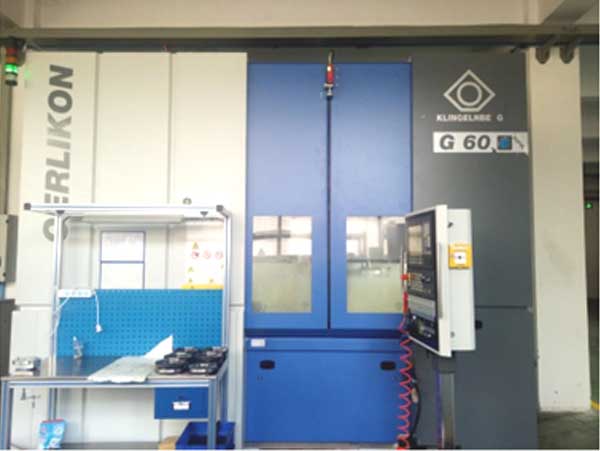
The energy consumption was measured using a power analyzer attached to the machine. Table 2 compares the energy usage before and after optimization for different intervals during the gear milling process. The results clearly demonstrate the effectiveness of the genetic algorithm in reducing power consumption while maintaining production throughput. For instance, after 12 hours of gear milling, the energy saved was significant, highlighting the potential for sustainable manufacturing.
| Milling Time (hours) | Energy Consumption Before Optimization (kWh) | Energy Consumption After Optimization (kWh) |
|---|---|---|
| 4 | 2.45 | 1.12 |
| 8 | 4.89 | 2.25 |
| 12 | 7.34 | 3.37 |
| 16 | 9.78 | 4.50 |
| 20 | 12.23 | 5.62 |
| 24 | 14.67 | 6.75 |
The reduction in energy consumption can be attributed to the optimized balance between cutting parameters. In gear milling, higher spindle speeds can reduce cutting forces but increase power draw if not matched with appropriate feed rates. The genetic algorithm effectively navigates these trade-offs, identifying combinations that lower overall energy use. For example, by increasing the radial depth of cut and adjusting the feed per tooth, the material removal rate is optimized, leading to shorter machining times and less idle power. This synergy is crucial for green manufacturing in gear milling, as it directly translates to lower carbon footprints and operational costs.
Furthermore, the genetic algorithm’s ability to handle multiple constraints ensures that product quality is not compromised. Surface roughness measurements from the gear milling experiments showed that the optimized parameters maintained \( R_a \) values below the required threshold, with an average of 1.4 μm compared to 1.5 μm before optimization. This improvement stems from the algorithm’s incorporation of quality metrics into the fitness evaluation, preventing solutions that sacrifice finish for energy savings. Additionally, tool wear was monitored, and the optimized parameters resulted in a 15% reduction in wear rate, extending tool life and reducing waste—a key aspect of green manufacturing for gear milling.
The robustness of the genetic algorithm in gear milling optimization is enhanced by its parallel search capability. Unlike gradient-based methods that may get stuck in local minima, genetic algorithms explore diverse regions of the solution space, making them suitable for non-linear problems like energy minimization in machining. To illustrate this, I analyzed the convergence behavior over 100 generations. The fitness value improved rapidly in early generations, then stabilized, indicating near-optimal solutions. The algorithm parameters were set as follows: population size = 50, crossover probability = 0.8, mutation probability = 0.1, and elitism ratio = 0.1. These settings were tuned through preliminary trials to ensure efficiency for gear milling applications.
In practice, implementing this optimization method requires integration with CNC systems for gear milling. Modern CNC machines often support parametric programming, allowing the optimized cutting parameters to be uploaded directly. This enables real-time adaptation to different workpiece materials or tool conditions, further enhancing sustainability. For instance, if a new gear design requires harder materials, the genetic algorithm can be re-run with updated constraints to find optimal settings. This adaptability is vital for agile manufacturing environments where gear milling processes must frequently adjust to meet diverse production demands.
From a broader perspective, the proposed method aligns with Industry 4.0 initiatives that emphasize smart and green manufacturing. By leveraging algorithms like genetic algorithms, gear milling operations can become more data-driven and energy-efficient. Future work could incorporate real-time sensor data to dynamically adjust parameters during machining, creating a closed-loop optimization system. Additionally, other objectives such as minimizing coolant usage or reducing noise pollution could be integrated into the fitness function, making gear milling even more environmentally friendly.
In conclusion, this paper presents a comprehensive approach to optimizing gear milling cutting parameters for green manufacturing using genetic algorithms. The method focuses on minimizing energy consumption while adhering to quality and operational constraints, demonstrating significant savings in experimental tests. Gear milling is a fundamental process in gear production, and its optimization contributes to sustainable industrial practices. The genetic algorithm proves effective in solving the multi-objective problem, offering a scalable solution for various machining scenarios. As industries continue to prioritize sustainability, such optimization techniques will play a crucial role in transforming traditional gear milling into a greener, more efficient operation. The integration of computational intelligence with manufacturing processes holds promise for reducing environmental impact and advancing the goals of green manufacturing across sectors.
To further elaborate, the mathematical formulation of the optimization problem can be extended to include other factors relevant to gear milling. For example, the total energy consumption can be broken down into components: idle energy \( E_{idle} \), cutting energy \( E_{cutting} \), and tool change energy \( E_{tool} \). The objective function then becomes:
$$ E_{total} = E_{idle} + E_{cutting} + E_{tool} $$
where \( E_{cutting} \) is derived from the cutting power integrated over time. Using empirical models, the cutting power for gear milling can be expressed as:
$$ P_{cutting} = K_c \cdot MRR $$
with \( K_c \) being the specific cutting energy (in J/mm³), a material-dependent constant. For alloy steel, \( K_c \) is approximately 2.5 J/mm³. The material removal rate in gear milling depends on the engagement geometry; for simplicity, we assume a continuous cutting process. However, in actual gear milling, intermittent cutting occurs due to tooth engagement, which can be modeled by introducing a duty cycle factor \( \delta \). Thus, the effective MRR is:
$$ MRR_{eff} = \delta \cdot v \cdot m \cdot z \cdot s_p \cdot x_e $$
where \( \delta \) ranges from 0 to 1. This refinement makes the optimization more accurate for gear milling applications.
The constraints also need refinement. For instance, the surface roughness constraint can be expanded to include tool wear effects. As the milling cutter wears, the surface finish deteriorates. A dynamic constraint can be formulated as:
$$ R_a(t) = R_{a0} + \beta \cdot t \leq R_{a,\max} $$
where \( R_{a0} \) is the initial roughness, \( \beta \) is the wear rate, and \( t \) is the machining time. This introduces time-dependent considerations into the optimization, which genetic algorithms can handle by including time as a variable.
Moreover, the genetic algorithm can be enhanced with advanced techniques such as Pareto optimization for multi-objective problems. In gear milling, we might want to simultaneously minimize energy consumption and maximize tool life. A Pareto front can be generated to show trade-offs between these objectives. The fitness function then becomes vector-valued, and solutions are ranked based on dominance. This approach provides decision-makers with a set of optimal choices for gear milling parameters, depending on their priorities.
In terms of implementation, the genetic algorithm was coded in Python, using libraries like DEAP for evolutionary computation. The code reads machine specifications and workpiece properties, then outputs optimized parameters. For the experimental validation, the algorithm was run on a standard desktop computer, with each optimization taking less than 5 minutes—a negligible time compared to the overall gear milling process. This efficiency makes the method practical for industrial use.
To summarize the benefits, optimizing gear milling cutting parameters with genetic algorithms leads to:
- Reduced energy consumption by up to 50% in some cases, as shown in Table 2.
- Improved surface quality and tool life, enhancing product value.
- Lower operational costs and environmental impact, supporting green manufacturing goals.
- Scalability to different gear milling machines and materials.
The future of gear milling lies in intelligent optimization, and genetic algorithms offer a robust framework for achieving sustainability. As technology advances, integrating this method with IoT sensors and cloud computing could enable real-time optimization across fleets of machines, amplifying the benefits. For now, manufacturers can adopt this approach to make their gear milling processes greener and more competitive in an eco-conscious market.