
In the precision manufacturing industry, the accurate assessment of gear meshing conditions is paramount for ensuring the performance and longevity of mechanical transmissions. Among various gear types, the spiral bevel gear plays a critical role in applications requiring efficient power transfer between non-parallel shafts, such as in automotive differentials, aerospace systems, and industrial machinery. The 90° spiral bevel gear meshing machine serves as an indispensable quality control instrument, designed specifically to inspect the tooth contact pattern, running smoothness, mounting distance, and dimensional accuracy of spiral bevel gears and straight bevel gears after machining. As a design engineer involved in the development and refinement of such precision equipment, I have undertaken a comprehensive project to optimize a key subsystem of this machine: the guideway assembly. The traditional dovetail guideway system, while functional, presented several challenges in terms of manufacturing lead time, assembly complexity, and long-term maintainability. This article details the systematic optimization process, where we replaced the dovetail guideway with a modern linear guideway system, encompassing feasibility analysis, structural redesign, load and life cycle calculations, and empirical validation. The spiral bevel gear, being the central component under test, remained the focal point throughout this optimization, as any enhancement to the meshing machine directly translates to more reliable and accurate inspection data for these complex gears.
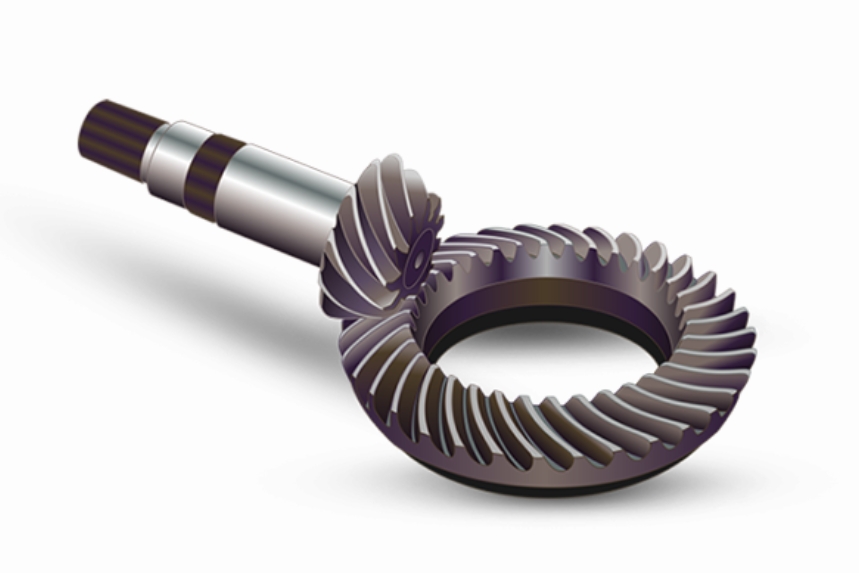
The primary function of a 90° spiral bevel gear meshing machine is to simulate the operational engagement of a gear pair with a fixed shaft angle of 90 degrees. The machine holds two gear mounts, or spindle units, whose relative position can be finely adjusted to assess the contact pattern on the gear teeth under light load. The guideway system is responsible for providing this precise linear motion to one of the spindle units, typically the one that is adjusted during the testing procedure. In the original design, this motion was facilitated by a dovetail slide and way system, a classic but somewhat dated mechanical solution. The performance of this guideway directly influences the machine’s positioning accuracy, repeatability, and smoothness of operation, which in turn affects the fidelity of the contact pattern observed on the spiral bevel gear. Any backlash, stick-slip, or geometric error in the guideway can lead to misinterpretation of the gear’s quality, potentially masking issues inherent to the spiral bevel gear itself or falsely indicating problems with the gear cutting machine that produced it.
The decision to explore an alternative was driven by several practical constraints associated with the dovetail system. Firstly, the dovetail guides and matching sliding members were custom-machined externally. This outsourcing led to unpredictable delivery schedules, variable quality dependent on the vendor’s capability, and escalating costs. Secondly, the assembly and adjustment of dovetail systems are labor-intensive and require high skill. They involve manual scraping, fitting of adjustable gibs (or “塞铁” as mentioned in the original context), and periodic maintenance to compensate for wear. This process is not only time-consuming but also introduces subjectivity into the machine’s final accuracy. For a device used to certify the precision of spiral bevel gears, such variability is undesirable. We therefore initiated a feasibility study to determine if a commercially available, standardized linear guideway system could meet or exceed the performance requirements while simplifying the supply chain and assembly process.
Feasibility Analysis: Linear Guideway Systems
Linear guideway systems, often referred to as linear motion guides or profiled rail guides, have become ubiquitous in modern machine tools, semiconductor equipment, and precision automation. Their advantages are well-documented and align perfectly with the needs of a precision inspection device like our spiral bevel gear meshing machine. The core benefits we evaluated include:
- High Precision and Accuracy: Linear guides offer extremely low friction motion through the use of recirculating ball or roller elements. This minimizes stick-slip phenomena, allowing for smooth, predictable movement even at very low speeds—a crucial feature for fine adjustments during gear inspection.
- High Rigidity and Load Capacity: The design of the rail and block assembly provides excellent resistance to moment loads and forces from all directions, ensuring the spindle unit remains stable during the meshing check of a spiral bevel gear pair.
- Pre-Assembled and Interchangeable: Linear guideways are supplied as pre-engineered, pre-tested units. This eliminates the need for in-house fitting and scraping. While we opted for a matched (non-interchangeable) set for ultimate precision, the availability of standardized sizes and preload grades simplifies procurement.
- Long Service Life and Predictable Maintenance: Life expectancy can be calculated reliably based on load conditions. Lubrication is straightforward, and wear is significantly reduced compared to sliding friction systems.
- Simplified Machine Structure: The compact design of linear guides allows for a more streamlined machine base and slide assembly, potentially reducing the overall footprint and weight.
For the specific application of testing spiral bevel gears, the consistency and repeatability offered by linear guides are paramount. The inspection process often involves making minute positional adjustments to the gear mount to find the “flank center” or the optimal contact pattern. A guideway with low and consistent friction enables the operator to make these adjustments with greater confidence and precision, leading to more consistent and reliable assessment of the spiral bevel gear’s quality.
Structural Redesign and Implementation
The optimization process required a pragmatic approach to minimize new part creation and leverage existing components where possible. The two main components interfacing with the old dovetail were the “dovetail slide plate” and the “dovetail spindle seat.” Our redesign strategy involved modifying these parts to accept the new linear guideway components.
| Original Component | Modification | New Function |
|---|---|---|
| Dovetail Slide Plate | Machine off the dovetail feature. | Provides a flat, precise mounting surface for the linear guide rail. |
| Dovetail Spindle Seat | Machine off the dovetail groove. | Provides a flat connection surface for the linear guide block (slider). |
However, a direct mount was not feasible due to two critical alignment requirements for testing spiral bevel gears: (1) the axes of the two spindle units must be at the same height (co-planar) when in the nominal test position, and (2) the adjustment mechanism (a lead screw driven by a handwheel) must align properly with the moving unit. To address this, we introduced an intermediate shim block between the linear guide block and the modified spindle seat. This block serves a dual purpose:
- Height Adjustment: The thickness of the shim block can be precision-ground to ensure the spindle axis achieves the correct height relative to the fixed spindle axis, compensating for any stack-up of tolerances from the rail, block, and modified seat.
- Lead Screw Alignment: The position for mounting the lead screw nut can be incorporated into the shim block design, ensuring proper engagement with the drive screw.
Furthermore, to establish a reliable and adjustable installation datum for the guide rail, we added a stepped feature to both the modified slide plate (now the base plate) and the shim block. One vertical face of this step serves as a precise lateral datum for aligning the linear guide rail during assembly, simplifying the critical process of ensuring the rail is parallel to the machine’s reference plane. The equation for the required shim thickness \( t_{shim} \) to achieve co-planarity can be derived from the geometric stack-up:
$$ t_{shim} = H_{target} – (H_{rail} + H_{block} + H_{seat\_base}) + \delta_{adjust} $$
Where \( H_{target} \) is the desired spindle center height, \( H_{rail} \) is the rail mounting height, \( H_{block} \) is the height of the guide block, \( H_{seat\_base} \) is the base height of the modified spindle seat, and \( \delta_{adjust} \) is a small adjustment factor for final precision grinding.
Selection and Specification of the Linear Guideway
The selection of the appropriate linear guideway model was based on load requirements, accuracy class, available space, and the specific motion profile of the spiral bevel gear testing procedure. The spindle seat base had dimensions of 102 mm x 120 mm, limiting the footprint. A single rail with a single block configuration was deemed sufficient, as the primary loads are along the direction of motion and the moment loads from the spindle are moderate for small-module spiral bevel gears. The required travel length was maintained at 210 mm, consistent with the original design’s adjustment range.
Considering the need for high precision in spiral bevel gear inspection, a precision-grade, matched (non-interchangeable) set was chosen. A rail with a side reference (or “shoulder”) was selected to facilitate alignment against the datum step on the base plate. This configuration, known as a “side-mounted rail with a reference edge,” provides excellent resistance to torsional moments and simplifies installation. Based on the space constraints and expected loads, a rail width of 25 mm was chosen. The specific model selected was analogous to a common industry series: a heavy-duty, flange-type block with a medium preload. The preload is essential for eliminating internal clearance and enhancing rigidity, which is crucial for the sensitive task of evaluating a spiral bevel gear’s contact pattern.
| Parameter | Symbol | Value | Unit |
|---|---|---|---|
| Rail Width | W | 25 | mm |
| Basic Dynamic Load Rating | C | 26.48 | kN |
| Basic Static Load Rating | C0 | 38.74 | kN |
| Preload Grade | — | Medium (ZA) | — |
| Preload Force | Fpre | 0.05C ≈ 1.32 | kN |
| Travel Length | Ltravel | 210 | mm |
Load Analysis and Service Life Calculation
A thorough load analysis is critical to ensure the selected guideway will perform reliably over its intended lifespan in a spiral bevel gear meshing machine. The forces acting on the guide block arise from the weight of the moving assembly and the operational forces during gear testing.
The moving assembly consists of the modified spindle seat, the shim block, the linear guide block, and the associated fixtures. The total weight \( W \) is approximately 1000 N (or 1 kN). The primary operational force is the axial thrust \( N \) from the handwheel-driven lead screw used to position the spindle. During the meshing check, a small separating force \( F \) may act on the spindles due to the light engagement of the spiral bevel gear pair, but this is minimal, on the order of 1 kN. The most significant force for life calculation is the frictional force that must be overcome during adjustment, but in a ball-type linear guide, this friction is exceptionally low. For a more conservative and general load analysis, we consider the equivalent working load \( P_c \) on the guide block.
The forces are illustrated in the following schematic (conceptual): The weight \( W \) acts vertically downwards. The drive thrust \( N \) acts horizontally to move the assembly. The friction force \( F_f \) opposes motion. For a linear guide, the friction coefficient \( \mu \) is very low, typically around 0.003 to 0.005 for ball guides. However, for calculation purposes related to life, we often use the external forces. The basic dynamic load rating \( C \) is used with the following formula for the nominal life \( L \) in kilometers of travel:
$$ L = 50 \times \left( \frac{f_H \cdot f_T \cdot C}{f_W \cdot P_c} \right)^3 $$
Where:
- \( f_H \) is the hardness factor (assumed 1 if rail hardness ≥ HRC 58).
- \( f_T \) is the temperature factor (assumed 1 for operating temperature ≤ 100°C).
- \( f_W \) is the load factor, accounting for vibration and shock. For smooth operation in a meshing machine, \( f_W = 1.2 \) is appropriate.
- \( P_c \) is the equivalent dynamic load.
Determining \( P_c \) requires combining the various static and dynamic loads. A simplified approach for a single guide block under combined loads uses the following formula:
$$ P_c = \sqrt{X \cdot F_r^2 + Y \cdot F_a^2} $$
Where \( F_r \) is the radial load (perpendicular to the rail), \( F_a \) is the axial load (parallel to the rail), and \( X, Y \) are weighting factors provided by the manufacturer. In our configuration, the dominant load is the weight \( W \), which acts as a radial load on the block. The axial load from the lead screw \( N \) is much smaller and intermittent. For initial life estimation, we can conservatively approximate \( P_c \) as the static weight plus a factor for operational forces. However, a more precise method is to use the manufacturer’s dynamic equivalent load formula. Assuming the radial load \( F_r = W = 1 \text{ kN} \) and axial load \( F_a = N = 0.5 \text{ kN} \) (a typical adjustment force), and using typical factors of \( X=1, Y=0.5 \) for a ball guide under combined load, we get:
$$ P_c = \sqrt{(1 \times 1^2) + (0.5 \times 0.5^2)} = \sqrt{1 + 0.125} = \sqrt{1.125} \approx 1.06 \text{ kN} $$
Using this \( P_c \) value in the life equation:
$$ L = 50 \times \left( \frac{1 \times 1 \times 26.48}{1.2 \times 1.06} \right)^3 = 50 \times \left( \frac{26.48}{1.272} \right)^3 = 50 \times (20.82)^3 $$
$$ L = 50 \times 9022.6 \approx 451,130 \text{ km} $$
This calculated life is extraordinarily long, far exceeding the expected travel in a inspection machine. Even if the equivalent load were estimated more conservatively at, say, 2 kN, the life calculation would yield:
$$ L = 50 \times \left( \frac{26.48}{1.2 \times 2} \right)^3 = 50 \times \left( \frac{26.48}{2.4} \right)^3 = 50 \times (11.033)^3 = 50 \times 1343.5 \approx 67,175 \text{ km} $$
This result of approximately 67,000 km is still immensely longer than the actual travel required. The machine’s slide may travel a few meters per gear inspection, and even with thousands of inspections per year, the total travel is minuscule compared to the rated life. Therefore, the linear guideway is more than adequate from a load and lifespan perspective for the spiral bevel gear meshing application. The dominant factor becomes precision and rigidity, not wear-based life.
Testing and Performance Validation
After assembling the prototype 90° spiral bevel gear meshing machine with the new linear guideway system, a series of rigorous accuracy tests were conducted. The tests followed industry standards for gear inspection equipment, focusing on geometric alignments critical for obtaining a true representation of the spiral bevel gear’s meshing behavior. The results were compared against the permissible tolerances specified for such precision machines.
| Test Item | Industry Standard Tolerance | Measured Value | Verdict |
|---|---|---|---|
| Perpendicularity of the two guideway assemblies in the horizontal plane | 0.02/100 mm | 0.015/100 mm | Pass |
| Perpendicularity of the workpiece spindle axis to the guideway in the horizontal plane | 0.02/100 mm | 0.012/100 mm | Pass |
| Perpendicularity of the two workpiece spindle axes in the horizontal plane | 0.02/100 mm | 0.010/100 mm | Pass |
| Parallelism of the workpiece spindle axes to the guideway in the vertical plane (only tilting up allowed) | 0.015/100 mm | 0.012/100 mm | Pass |
| Equal height (co-planarity) of the two workpiece spindle axes | 0.015 mm | 0.010 mm | Pass |
The test results conclusively demonstrate that the linear guideway system not only meets but exceeds the required precision standards. Operationally, the improvement was immediately noticeable. The adjustment of the sliding spindle unit became exceptionally smooth and required minimal effort, devoid of the slight stick-slip that could sometimes be felt with the dovetail system. This allows the technician to make finer, more controlled adjustments when positioning the spiral bevel gear for contact pattern analysis. The consistency of motion directly enhances the repeatability of the inspection process, leading to more trustworthy data for diagnosing the manufacturing quality of the spiral bevel gears under test.
Discussion and Further Considerations
The optimization project successfully transformed the guideway system of the 90° spiral bevel gear meshing machine. The transition from a custom-machined dovetail assembly to a commercial linear guideway yielded significant benefits:
- Supply Chain and Cost Efficiency: Reliance on a single external machining vendor was eliminated. Linear guideways are commodity items available from multiple suppliers with short lead times, reducing production bottlenecks and potentially lowering costs through competitive sourcing.
- Assembly and Calibration Simplification: The arduous process of hand-scraping and fitting gibs was completely removed. Assembly time was reduced significantly. Calibration of the machine’s geometry became more straightforward, relying on the inherent accuracy of the guideway and the precision-ground shim block.
- Enhanced Performance: The low-friction, high-rigidity characteristics of the linear guideway improved the machine’s operational feel and positional stability, contributing to higher inspection accuracy for spiral bevel gears.
- Maintainability and Life: The sealed linear guideway blocks require only periodic re-lubrication, and their life expectancy under the machine’s operating conditions is virtually infinite, reducing long-term maintenance concerns.
One aesthetic and structural observation was that the machine’s profile appeared somewhat top-heavy with the new assembly. The linear guideway components, while robust, are compact compared to the mass of the dovetail slide. The spindle unit mass is now concentrated higher relative to the slide base. This does not affect performance but is a noted visual change. A potential future enhancement, if space and load capacity allow, would be to use a wider rail (e.g., 35 mm or 45 mm) or a twin-rail configuration. This would lower the center of gravity of the moving assembly and provide even greater moment rigidity, which could be beneficial for testing larger or heavier spiral bevel gear sets. The load-life calculation for a wider rail would follow the same principles, with a higher basic dynamic load rating \( C \) leading to an even longer calculated life. The equivalent load \( P_c \) could be more precisely modeled using the formulas provided by guideway manufacturers that account for the distance between the guide blocks in a twin-rail setup.
The success of this project also highlights a broader principle in precision machine design: the judicious use of standardized, high-performance subsystems. By integrating a proven linear motion component, we were able to focus our engineering efforts on the system integration and application-specific details—such as the design of the shim block and datum features—rather than on perfecting a foundational but finicky sliding mechanism. This approach accelerates development, improves reliability, and ensures that the core function of the machine—accurately assessing the complex tooth contact of a spiral bevel gear—is supported by the best available technology.
Conclusion
In conclusion, the optimization of the guideway system in the 90° spiral bevel gear meshing machine from a traditional dovetail type to a modern linear guideway system has proven to be a resounding success from both engineering and practical standpoints. The feasibility analysis confirmed the technical suitability of linear guides for this precision application. The structural redesign, involving strategic modification of existing parts and the introduction of a calibrated shim block, provided an elegant and effective integration path. The load and life cycle calculations, centered around the fundamental formula $$ L = 50 \times \left( \frac{f_H \cdot f_T \cdot C}{f_W \cdot P_c} \right)^3 $$, demonstrated that the selected components offer a service life far exceeding the operational demands of the machine. Empirical testing validated that all critical geometric accuracies were achieved, ensuring the machine’s capability to deliver reliable and precise inspections of spiral bevel gears. This upgrade not only streamlines manufacturing and assembly but also elevates the performance and user experience of the meshing machine, ultimately contributing to higher quality assurance in the production of critical spiral bevel gear components. The spiral bevel gear, with its intricate geometry and demanding performance requirements, benefits directly from such advancements in the precision of the equipment used to verify its manufacturing quality.