
In the automotive industry, gear shafts are critical components widely used in power transmission systems, particularly in transmissions and drivetrains. With the release of the “Technology Roadmap for Energy-Saving and New Energy Vehicles 2.0,” the strategic focus has shifted toward energy-efficient and new energy vehicles, including electric and hybrid systems. By 2035, new energy vehicles are expected to dominate the market, with production and sales exceeding 3.5 million units in 2021 alone, representing a 1.6-fold year-on-year growth. In new energy vehicle powertrains, the drive unit transitions from traditional internal combustion engines to electric motors, resulting in quieter operation and higher demands for noise, vibration, and harshness (NVH) performance. To achieve superior NVH characteristics, high-precision grinding processes are commonly employed for gear shaft manufacturing. However, even with advanced equipment, issues such as dimensional deviations and inadequate process capability can lead to abnormal noises in powertrain systems. This study addresses these challenges by optimizing grinding parameters to ensure dimensional accuracy and process stability, thereby enhancing product quality and performance.
The root cause of abnormal noises in transmissions was traced to unqualified roundness of gear shafts, which directly impacts NVH performance. Roundness error refers to the deviation between the actual circular trajectory of a rotating gear shaft and an ideal circle, as illustrated in the following representation: if a gear shaft rotates about an axis, the roundness error $\Delta R$ can be expressed as the maximum radial deviation from the ideal circle. Mathematically, for a point $P_i$ on the gear shaft surface with coordinates $(x_i, y_i)$ or polar coordinates $(r_i, \theta_i)$, the roundness error is defined as:
$$\Delta R = \max(r_i) – \min(r_i)$$
where $r_i$ is the radial distance from the center of rotation. This error introduces transmission errors in the rotational direction, contributing to NVH issues. Fourier analysis of faulty gear shafts revealed specific harmonic orders that exceeded acceptable thresholds, indicating roundness deficiencies. Further investigation localized the problem to the high-precision grinding process of the gear shaft outer diameter, where process parameters significantly influence roundness.
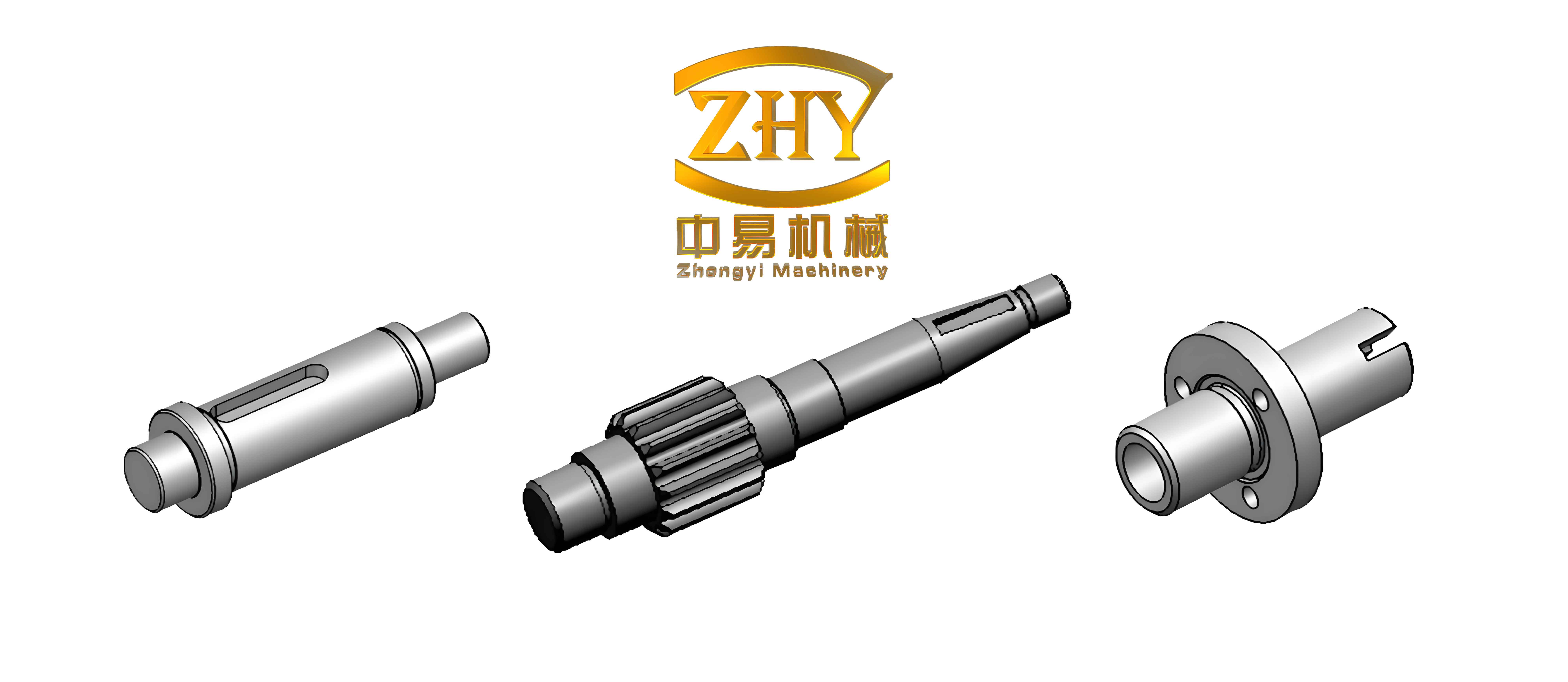
To address this, we identified five key factors affecting roundness in the gear shaft grinding process: fine grinding feed rate, fine grinding allowance, superfinishing feed rate, Marposs gauge controlled dwell time, and Marposs gauge uncontrolled dwell time. Initial screening using Plackett-Burman design highlighted these factors as statistically significant. The response surface methodology (RSM) was employed to model and optimize these parameters, as it effectively captures nonlinear relationships and curvature in responses, unlike traditional factorial designs. For instance, a single-factor RSM model includes quadratic terms:
$$y = ax^2 + bx + c$$
where $y$ is the response (e.g., roundness), and $x$ is the factor. This allows for identifying global optima, such as maximum or minimum points, which linear models might miss. In multi-factor scenarios, for two factors $x_1$ and $x_2$, the RSM model becomes:
$$y = a + b_1x_1 + b_2x_1^2 + b_3x_2 + b_4x_2^2 + b_5x_1x_2$$
Here, the inclusion of squared terms ($x_1^2$, $x_2^2$) and interaction terms ($x_1x_2$) enables the detection of弯曲 and nonlinear effects.
We utilized a central composite response surface design, which extends two-level factorial designs by adding center points and axial points. This design is orthogonal and rotatable, ensuring consistent prediction variance across the experimental region. The five factors and their levels are summarized in Table 1. The low and high levels, along with axial points, were determined based on preliminary studies and process constraints. For example, fine grinding allowance ranges from 0.006 mm to 0.054 mm, with a center point at 0.03 mm. Using Minitab software, a central composite design with 5 factors, 54 runs per replicate, and 2 replicates was generated, resulting in a total of 108 randomized experiments. This design included blocks to account for potential variability over time, enhancing the robustness of the model.
| Factor | Type | Low Axial | Low | Center | High | High Axial |
|---|---|---|---|---|---|---|
| Fine Grinding Allowance (mm) | Continuous | 0.006 | 0.02 | 0.03 | 0.04 | 0.054 |
| Fine Grinding Feed Rate (mm/min) | Continuous | 0.260 | 0.400 | 0.500 | 0.600 | 0.740 |
| Superfinishing Feed Rate (mm/min) | Continuous | 0.036 | 0.050 | 0.060 | 0.070 | 0.084 |
| Marposs Gauge Controlled Dwell Time (s) | Continuous | 0.634 | 2 | 3 | 4 | 5.366 |
| Marposs Gauge Uncontrolled Dwell Time (s) | Continuous | 0.634 | 2 | 3 | 4 | 5.366 |
The response variable was roundness, measured in micrometers, with the goal of minimizing it to eliminate gear shaft-related noises. The experiments were conducted on a high-precision grinding machine, and roundness was evaluated using coordinate measuring machines. The data from 108 runs were analyzed using analysis of variance (ANOVA) to assess the significance of factors and their interactions. The ANOVA results, presented in Table 2, show that the model accounts for 77.47% of the variation in roundness, with a p-value of less than 0.05 for most terms, indicating statistical significance. Specifically, the first-order linear effects and second-order quadratic terms are significant, while second-order interactions are not, suggesting that the factors act independently without synergistic effects.
| Source | Degrees of Freedom | Seq SS | Contribution (%) | Adj SS | Adj MS | F-Value | P-Value |
|---|---|---|---|---|---|---|---|
| Model | 21 | 0.000200 | 77.47 | 0.000200 | 0.000009 | 14.10 | 0.000 |
| Block | 1 | 0.000029 | 11.56 | 0.000030 | 0.000029 | 44.10 | 0.000 |
| Linear | 5 | 0.000066 | 25.85 | 0.000070 | 0.000013 | 19.70 | 0.000 |
| Fine Grinding Allowance | 1 | 0.000020 | 7.73 | 0.000020 | 0.000020 | 29.50 | 0.000 |
| Fine Grinding Feed Rate | 1 | 0.000016 | 6.17 | 0.000020 | 0.000016 | 23.50 | 0.000 |
| Superfinishing Feed Rate | 1 | 0.000013 | 5.01 | 0.000010 | 0.000013 | 19.10 | 0.000 |
| Marposs Controlled Dwell Time | 1 | 0.000003 | 1.15 | 0.000003 | 0.000003 | 4.39 | 0.039 |
| Marposs Uncontrolled Dwell Time | 1 | 0.000015 | 5.79 | 0.000020 | 0.000015 | 22.10 | 0.000 |
| Square | 5 | 0.000098 | 38.52 | 0.000100 | 0.000020 | 29.40 | 0.000 |
| Fine Allowance × Fine Allowance | 1 | 0.000008 | 3.28 | 0.000010 | 0.000014 | 20.70 | 0.000 |
| Fine Feed Rate × Fine Feed Rate | 1 | 0.000013 | 5.02 | 0.000020 | 0.000018 | 27.00 | 0.000 |
| Superfinishing Feed Rate × Superfinishing Feed Rate | 1 | 0.000029 | 11.57 | 0.000030 | 0.000034 | 51.40 | 0.000 |
| Marposs Controlled Dwell × Marposs Controlled Dwell | 1 | 0.000037 | 14.50 | 0.000040 | 0.000039 | 58.10 | 0.000 |
| Marposs Uncontrolled Dwell × Marposs Uncontrolled Dwell | 1 | 0.000011 | 4.14 | 0.000010 | 0.000011 | 15.80 | 0.000 |
| Two-Way Interactions | 10 | 0.000004 | 1.54 | 0.000004 | 0.000000 | 0.59 | 0.821 |
| Error | 86 | 0.000057 | 22.53 | 0.000060 | 0.000001 | ||
| Total | 107 | 0.000250 | 100.00 |
Residual analysis was performed to validate the model assumptions. The residuals—the differences between observed and predicted roundness values—were examined for normality, constant variance, and independence. The normal probability plot of residuals showed a straight-line distribution, indicating normality. The plot of residuals versus fitted values displayed random scatter around zero, confirming constant variance. The histogram of residuals was symmetric and bell-shaped, and the sequence plot revealed no trends, supporting the independence assumption. Thus, the model is adequate and fits the data well.
Based on the ANOVA, nonsignificant interaction terms were removed to simplify the model. The resulting regression equation for roundness ($y$) in terms of the coded factors is:
$$y = 0.04357 – 0.25121x_1 – 0.03454x_2 – 0.68070x_3 – 0.003599x_4 – 0.002193x_5 – 3.39300x_1^2 – 0.03879x_2^2 – 5.35300x_3^2 – 0.005690x_4^2 – 0.00297x_5^2$$
where $x_1$ is fine grinding allowance, $x_2$ is fine grinding feed rate, $x_3$ is superfinishing feed rate, $x_4$ is Marposs gauge controlled dwell time, and $x_5$ is Marposs gauge uncontrolled dwell time. This equation highlights the quadratic relationships, emphasizing the curvature in the response surface.
Contour plots of roundness for pairs of factors, with other factors held constant, revealed closed regions indicating potential optima. For example, the contour plot for fine grinding allowance and fine grinding feed rate showed a minimum roundness area near the center, confirming the presence of an optimal setting. Using Minitab’s response optimizer, we sought to minimize roundness. The desirability function approach was applied, where desirability $d$ ranges from 0 to 1, with 1 indicating ideal response. For minimization, $d$ is defined as:
$$d = 0 \quad \text{if} \quad y > U$$
$$d = \left( \frac{U – y}{U – T} \right)^r \quad \text{if} \quad T \leq y \leq U$$
$$d = 1 \quad \text{if} \quad y < T$$
where $T$ is the target, $U$ is the upper limit, and $r$ is the shape parameter. The optimal solution achieved a desirability of 1.000, with predicted roundness of -0.0001 μm, though this is practically zero. The optimal parameters were: fine grinding allowance of 0.0369 mm, fine grinding feed rate of 0.4450 mm/min, superfinishing feed rate of 0.0636 mm/min, Marposs controlled dwell time of 3.1673 s, and Marposs uncontrolled dwell time of 3.6953 s.
Considering practical constraints, such as production efficiency, we adjusted the dwell times to 2.5000 s each, as they directly impact cycle time. The revised solution maintained a desirability of 1.000 with a predicted roundness of 0.0005 μm. These parameters were implemented in the gear shaft grinding process, and subsequent production batches showed qualified roundness and eliminated abnormal noises, demonstrating the effectiveness of the optimization.
In conclusion, response surface methodology proved highly effective for optimizing high-precision grinding parameters of gear shafts. The model captured significant linear and quadratic effects, revealing independent factor actions without interactions. The regression equation provided a reliable basis for parameter adjustment, leading to improved roundness and NVH performance. This approach can be extended to other manufacturing processes, offering a structured method for parameter optimization that reduces experimental costs and enhances product quality. Future work could explore real-time monitoring and adaptive control to further refine gear shaft manufacturing.