
In the demanding environment of aerospace applications, the reliability and longevity of every subsystem are paramount. As a lead engineer specializing in actuation systems, I have encountered and resolved a critical failure mode related to the primary drive stage of an airborne reducer. This component, integrating a high-temperature motor with a worm gear drive, experienced catastrophic fracture during system integration testing. The following document details a comprehensive first-person analysis of the failure mechanism, the systematic redesign process, and the validation of an optimized motor and worm gear drive assembly. The solutions presented directly address the challenges of limited space, extreme thermal cycles, and high vibration, with a core design philosophy centered on extending operational life.
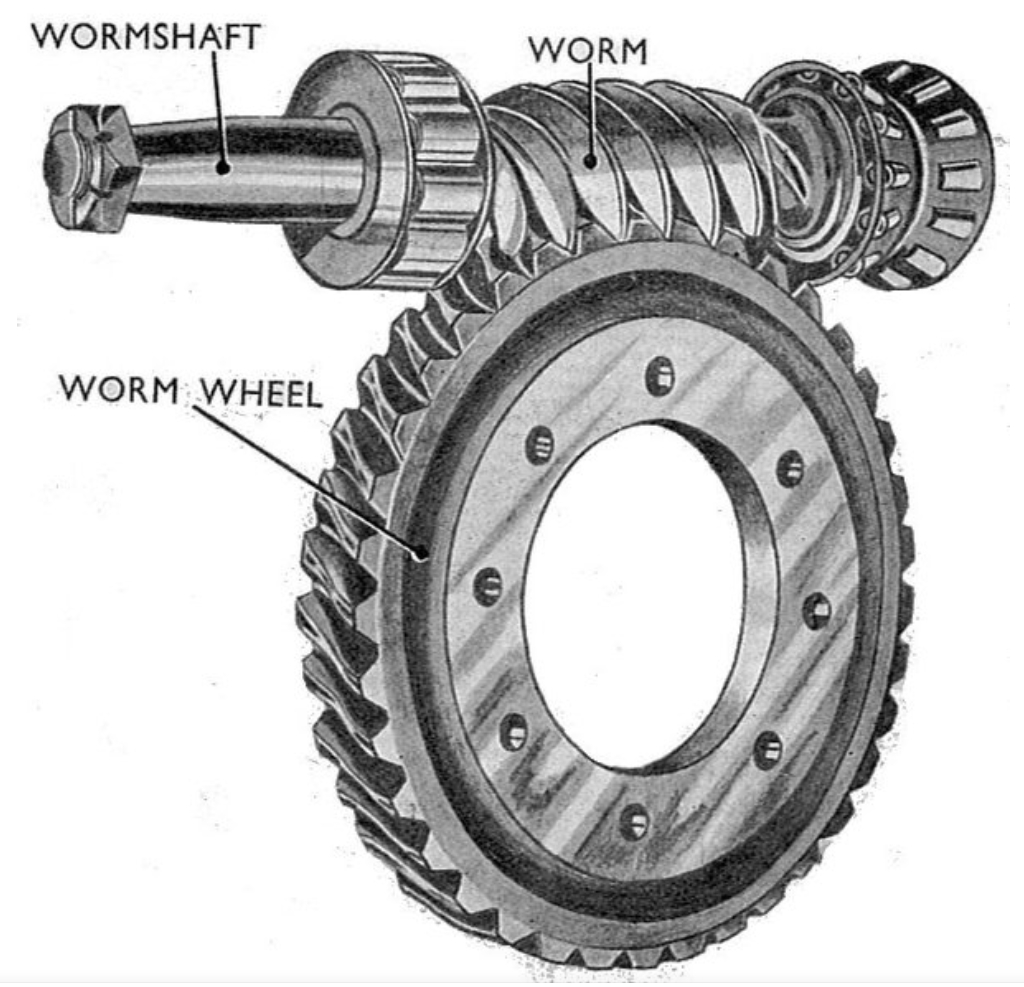
The initial design followed a conventional approach for compactness. A high-temperature motor, rated for continuous operation at up to 200°C, was selected. Its output shaft was designed to insert directly into a bore on the worm shaft with a sliding fit (H7/g6 tolerance). The worm gear drive assembly was constrained at one end by a pair of angular contact ball bearings in a back-to-back configuration, providing axial location and preload. Thermal management was addressed by ensuring full contact between the motor housing and the actuator cavity, filled with thermally conductive grease. Despite seemingly adequate design margins, this configuration failed during rigorous testing.
The failure was evident during a closed-loop test with the flight control system. The reducer’s output became intermittent, accompanied by significant, irregular noise indicative of severe wear and binding. Post-test teardown revealed the root cause: a clean fracture of the motor shaft at the stress concentration point near the shoulder adjacent to the motor’s front bearing. Fractography under low magnification showed features characteristic of high-cycle fatigue, initiating at the surface. This was not a simple overload but a progressive failure.
In-Depth Analysis of the Failure Mechanism
The fracture prompted a thorough investigation into the load environment of the motor shaft within the worm gear drive. The shaft was subjected to a complex, multi-axial stress state:
- Torsional Shear Stress: A fundamental load from transmitting torque to the worm gear drive.
$$ \tau_{torsion} = \frac{16 T_m}{\pi d^3} $$
where $T_m$ is the motor torque and $d$ is the shaft diameter. - Bending Stress from Misalignment: This was identified as the primary driver of fatigue. Any angular or offset misalignment between the motor shaft and the worm shaft bore, arising from machining tolerances or assembly stack-up, induces a rotating bending moment.
$$ \sigma_{bending} = \frac{32 M_b}{\pi d^3} $$
where $M_b$ is the bending moment. This stress is fully reversed with each shaft rotation, creating an ideal condition for fatigue initiation. - Radial Force from the Worm Gear Drive: The worm’s axial force, derived from driving the wheel, creates a radial reaction force on the worm shaft, which is partially transferred to the motor shaft interface.
$$ F_{r,worm} \approx F_{a,worm} \cdot \frac{\tan(\alpha_n)}{\cos(\gamma)} $$
where $F_{a,worm}$ is the worm axial force, $\alpha_n$ is the normal pressure angle, and $\gamma$ is the worm lead angle.
A quantitative load analysis for the specific worm gear drive was performed:
| Loading Component | Worm Shaft | Worm Wheel |
|---|---|---|
| Tangential Force, $F_t$ (N) | 3.09 | 25.24 |
| Axial Force, $F_a$ (N) | 25.24 | 3.09 |
| Radial Force, $F_r$ (N) | 9.23 | – |
While the calculated radial force on the motor shaft was below the motor’s specified limit of 25N, the compounding effect of the continuous rotating bending stress from even minor misalignment led to a classic fatigue failure at the sharp corner of the shaft shoulder—a significant stress concentrator with a theoretical stress concentration factor $K_t > 2$.
Furthermore, the bearing arrangement was problematic. The concentrated support at one end of the worm created a long, overhanging cantilever. This magnified deflection under load, exacerbating misalignment issues. The fixed-position preload of the angular contact bearings was also sensitive to thermal expansion. The operational range of -60°C to 150°C caused significant dimensional changes in the aluminum housing and steel shaft, altering the preload from its optimally set value. An increase in preload generates excess heat and wear, while a decrease leads to axial play, vibration, and noise—precisely the symptoms observed initially.
A Systematic Redesign of the Worm Gear Drive Assembly
The redesign targeted the two root causes: 1) the rigid coupling inducing bending fatigue, and 2) the thermally sensitive, unbalanced bearing support.
1. Implementation of a Flexible Coupling
The rigid joint was replaced with a miniature disc-type flexible coupling. The motor shaft and the worm shaft were each fitted with a coupling hub. A thin, axially compliant metallic disc with integral pins or a spider element connects the two hubs. This coupling accommodates parallel offset, angular misalignment, and axial motion while transmitting torque efficiently. The critical achievement is that it decouples the motor shaft from the bending moments generated by the worm gear drive. The motor now only experiences pure torque and a negligible fraction of the reaction loads. The allowable misalignment for the selected coupling was ±0.5mm parallel offset and ±2° angular, well within our assembly tolerances.
2. Bearing System Optimization
The bearing configuration was completely revised to support the worm gear drive properly. Two angular contact ball bearings were placed at both ends of the worm shaft, mounted in a common, precisely machined housing bracket. This “straddle mount” configuration provides statically determinate support, greatly increasing the radial and axial stiffness of the worm shaft, reducing deflection under load, and improving the meshing alignment of the worm gear drive.
More importantly, the preload method was changed from fixed position to constant pressure. A Belleville washer (disc spring) stack was integrated behind the bearing at the non-locating end. The nut applying axial preload now compresses this spring stack rather than locking directly against the bearing outer ring. The preload force $F_p$ is now determined by the spring characteristics and compression, not by dimensional fits.
$$ F_p = k \cdot \delta $$
where $k$ is the combined spring rate of the washer stack and $\delta$ is the deflection. This system maintains a nearly constant preload force across the entire temperature range, as thermal expansion is absorbed by a slight change in the spring deflection $\delta$, not by a destructive increase in bearing compression.
The target preload force was calculated based on the applied loads to ensure sufficient stiffness without excessive heat generation. For an angular contact bearing ($\alpha = 15°$) under combined radial ($F_r$) and axial ($F_a$) load from the worm gear drive, a common estimation for minimum required preload is:
$$ F_{p,min} \approx 1.58 F_r \tan \alpha + 0.5 F_a $$
Substituting our worm gear drive loads ($F_r = 4.61N$, $F_a = 25.24N$), the calculated $F_{p,min} \approx 14.6N$. An empirical tuning process during assembly, measuring rotational torque and acoustic noise, confirmed the optimal preload range.
| Nut Position (mm) | Estimated Preload (N) | Running Current (mA) | Acoustic Signature | Assessment |
|---|---|---|---|---|
| 0.10 | 40.9 | 196 | High-pitched whine | Excessive, high friction |
| 0.20 | 17.1 | 185 | Smooth, quiet | Optimal Zone |
| 0.30 | 12.0 | 179 | Smooth, quiet | Optimal Zone |
| 0.40 | 8.6 | 175 | Intermittent rattle | Insufficient, bearing play |
Structural and Performance Validation
The optimized assembly was subjected to comprehensive Finite Element Analysis (FEA) and physical qualification testing.
Finite Element Analysis (FEA)
A 3D model of the new motor and worm gear drive assembly was constructed. A static structural analysis was performed with the following boundary conditions and loads representing a 40g shock event, a critical design driver in airborne applications:
- Fixed constraints on the mounting flange.
- A 40g inertial load applied to the entire model.
- Operational torque and worm gear drive reaction forces applied at the relevant interfaces.
The von Mises stress results were profoundly different from the original design. The motor shaft showed a maximum stress well below the yield strength of its material (e.g., 300 MPa vs. a yield strength of 650 MPa for managing steel), with no significant stress concentrations. The worm shaft and housing bracket also exhibited uniform stress distributions, confirming the effectiveness of the straddle-mount bearing support in managing the worm gear drive loads. Modal analysis further confirmed the first natural frequency of the assembly was above 2000 Hz, safely away from any expected excitation frequencies from the motor or aircraft structure.
Life and Environmental Testing
Prototype units were built and subjected to accelerated life testing. The test profile consisted of:
- Thermal Cycling: 500 cycles between -60°C and 150°C.
- Vibration: Random vibration per DO-160 standards for airborne equipment.
- Endurance Run: Continuous operation at maximum rated torque and speed for a duration equivalent to 4x the required service life.
Post-test inspection revealed no measurable wear on the coupling elements, no change in bearing preload or smoothness, and no degradation in the worm gear drive backlash or efficiency. The constant-pressure preload system successfully maintained performance across the temperature extremes. The motor shaft showed no signs of cracking or distress.
Conclusion
The fracture failure of the original motor shaft was a direct consequence of a design that did not adequately account for the compounded stresses inherent in a compact, high-performance worm gear drive system within a thermally dynamic environment. The optimization process yielded two critical innovations for this class of airborne actuator:
- Decoupling of Bending Moments: The integration of a miniature flexible coupling between the motor and the worm shaft is the single most effective change. It isolates the precision motor from geometric misalignments and reaction loads of the worm gear drive, transforming its stress state from complex multi-axial fatigue to benign pure torsion.
- Thermally Stable Bearing Preload: The combination of a straddle-mount bearing arrangement with a Belleville washer-based constant-pressure preload system creates a robust, stiff, and predictable support for the worm gear drive. It ensures consistent performance, low noise, and long bearing life across the entire operational temperature profile by eliminating preload relaxation or over-constraint.
This case study underscores that in aerospace actuation, particularly for critical components like a primary reducer’s worm gear drive, a holistic view of the system—encompassing structural dynamics, thermal effects, assembly tolerances, and life-cycle loads—is essential. The redesigned assembly has successfully passed all qualification tests and is now in service, demonstrating that targeted, physics-based optimization is key to achieving the reliability and longevity demanded by the aerospace industry.