
In my experience with precision mechanical systems, I have often encountered challenges with worm gear transmissions operating under extreme temperature conditions. Specifically, I have observed that worm gear drives in certain applications exhibit sluggish rotation or even complete seizure when exposed to low temperatures around -40°C. This phenomenon severely compromises the performance and reliability of the overall system. Through direct testing and measurement, I confirmed that the root cause is a significant increase in the internal resistance torque of the transmission assembly at low temperatures, not an issue with the driving motor. This article details my investigation into the underlying mechanisms and presents a comprehensive optimization design methodology for the support structures of such worm gear systems, validated through simulation.
The transmission assembly in question utilizes a worm and worm wheel set housed within a lightweight aluminum alloy casting. The primary function is to provide precise angular positioning. The housing, with wall thicknesses as low as 3 mm in some areas, is designed with mass constraints in mind. My initial hypothesis centered on differential thermal contraction between the aluminum housing and the steel components of the worm gears and bearings.
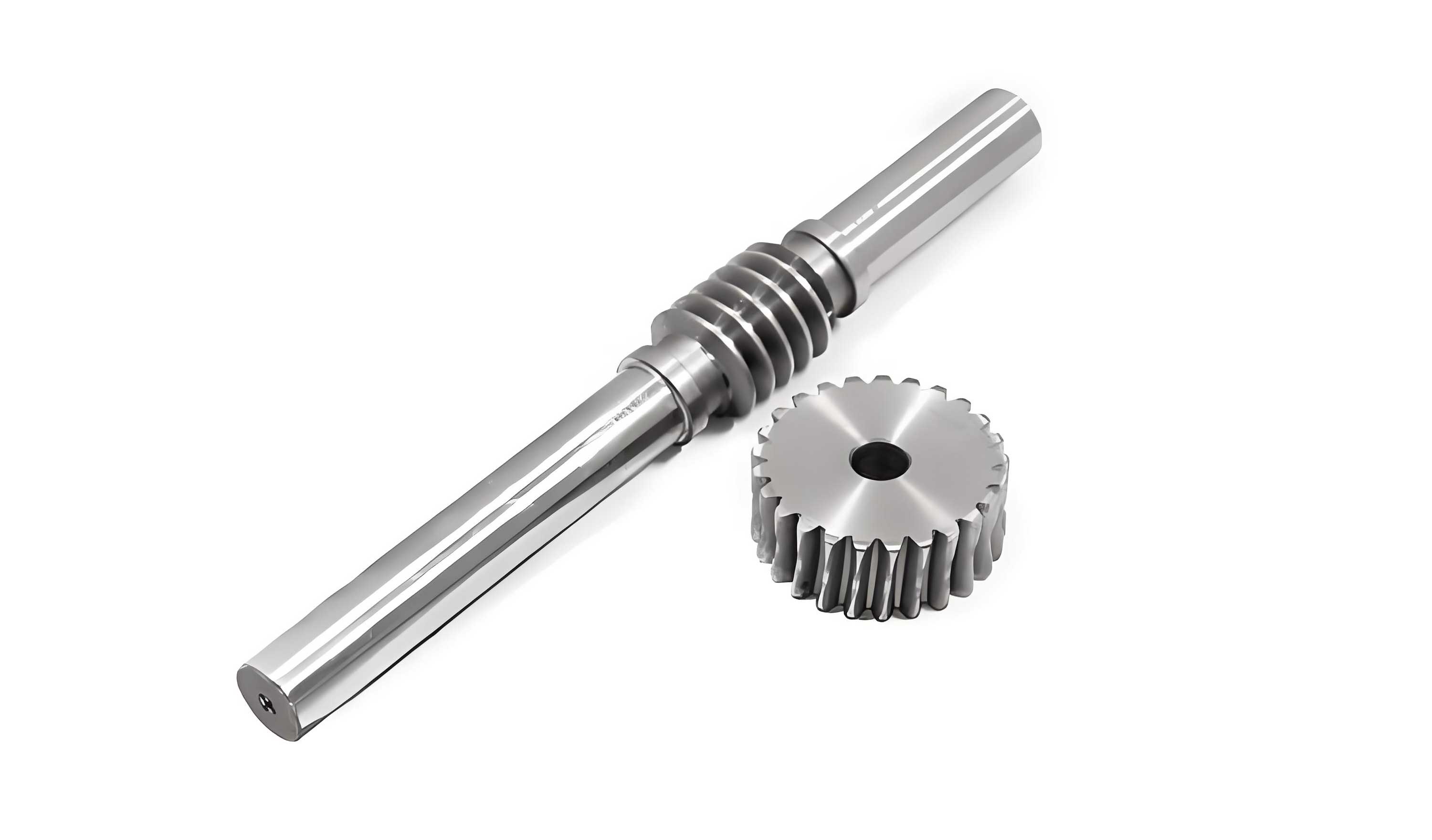
To quantify this effect, I conducted dimensional measurements on the housing at both room temperature (18°C) and the target low temperature (-40°C). The data revealed critical insights, which I have summarized in the table below. The key dimensions measured include distances between bearing bores and the bore diameters themselves.
| Dimension Description | Symbol | Value at 18°C (mm) | Value at -40°C (mm) | Change Δ (mm) |
|---|---|---|---|---|
| Distance between worm shaft bores | L1 | 160.02 | 159.70 | -0.32 |
| Overall housing length (one side) | L2 | 270.04 | 269.60 | -0.44 |
| Bore offset distance | L3 | 18.94 | 18.96 | +0.02 |
| Housing base length | L4 | 312.84 | 312.60 | -0.24 |
| Worm shaft bore diameter | X1 | 41.99 | 41.96 | -0.03 |
| Intermediate bore diameter | X2 | 39.98 | 39.96 | -0.02 |
| Worm wheel shaft bore diameter | X3 | 62.98 | 62.96 | -0.02 |
The most telling data points are the contraction of bore diameters (X1, X2, X3) and the significant axial shrinkage (L1, L2). The linear coefficient of thermal expansion for the cast aluminum housing (α_Al) is approximately $2.3 \times 10^{-5} /°C$, while that for the steel worm shaft and bearings (α_Fe) is about $1.12 \times 10^{-5} /°C$. For a temperature drop ΔT of 58°C (from 18°C to -40°C), the theoretical contraction for a length L can be calculated as:
$$ \Delta L = \alpha \cdot L \cdot \Delta T $$
For the axial distance L1 (160.02 mm):
$$ \Delta L_{1,Al} = (2.3 \times 10^{-5}) \times 160.02 \times 58 \approx 0.214 \text{ mm} $$
$$ \Delta L_{1,Fe} = (1.12 \times 10^{-5}) \times 160.02 \times 58 \approx 0.104 \text{ mm} $$
The measured contraction of 0.32 mm is in a reasonable ballpark, considering assembly constraints and measurement points. The critical issue is the differential contraction:
$$ \Delta L_{1,diff} = \Delta L_{1,Al} – \Delta L_{1,Fe} \approx 0.110 \text{ mm} $$
This differential means the aluminum housing contracts more than the steel shaft assembly along the axis, effectively reducing or eliminating designed axial clearances and applying a compressive preload on the bearings. Similarly, the radial contraction of the bore (ΔX1 ≈ 0.03 mm) directly reduces the radial clearance for the bearing outer ring, potentially inducing a hoop stress on the bearing.
The original design for the worm shaft employed a “fixed-fixed” support configuration at both ends. Each end used deep groove ball bearings, with one end designed to have axial clearance via shims and a gap between the bearing outer ring and the end cap. This arrangement was intended to accommodate thermal expansion. However, in low-temperature operation, the excessive axial contraction of the housing relative to the shaft eliminates this clearance. Despite attempts to adjust shims, the variable and unpredictable nature of the contraction often leads to a condition where the housing “clamps down” on the worm shaft assembly, increasing friction torque dramatically. The bearing outer ring, constrained by the shrinking aluminum bore, experiences elastic deformation which reduces the internal bearing clearance, further elevating the rotational resistance of the worm gears.
The worm wheel shaft assembly presented another set of challenges. It also used a fixed-fixed support but incorporated two separate eccentric end-caps for adjusting the mesh clearance between the worm and the worm wheel. Achieving perfect synchronization during adjustment of these two independent eccentrics is notoriously difficult. Misalignment leads to non-orthogonality between the worm and worm wheel axes, poor contact patterns, and consequently, increased and uneven transmission torque. Furthermore, this assembly suffers from the same low-temperature contraction issue as the worm shaft, exacerbating the resistance problem for the entire set of worm gears.
My optimization strategy addresses both the thermal contraction issue and the alignment challenge. For the worm shaft, I propose replacing the fixed-fixed support with a “fixed-floating” support configuration. This design fundamentally reduces the area of contact between the bearings and the housing wall, mitigating the effect of radial contraction. The fixed end consists of a steel housing (fixed seat) containing a pair of angular contact thrust ball bearings and a deep groove ball bearing. This arrangement handles combined radial and bidirectional axial loads. Since the fixed seat is steel, its thermal expansion coefficient closely matches that of the shaft, minimizing differential axial movement over the short distance between the two thrust bearings. The axial clearance within this bearing pair can be set during assembly and remains relatively stable with temperature changes. The deep groove ball bearing provides radial location but is now housed in steel, insulating it from direct radial compression by the aluminum housing.
The floating end uses a cylindrical roller bearing with no ribs on the outer ring. This allows the bearing inner ring and roller assembly to move axially relative to the outer ring, compensating for changes in the effective distance between bearing seats caused by housing contraction and manufacturing tolerances. The required axial float can be calculated based on the differential contraction. For dimension L1, the net axial movement needed for the shaft relative to the housing is approximately the differential contraction calculated earlier, about 0.11 mm. Providing a float of 0.2 mm is more than sufficient.
The radial compression effect is alleviated by reducing the contact area. The pressure exerted by the housing on the bearing outer ring, assuming the housing acts as a thin ring, can be expressed as:
$$ p = \frac{2T}{D} \sigma $$
Where \( p \) is the contact pressure, \( T \) is the housing wall thickness, \( D \) is the housing bore diameter, and \( \sigma \) is the hoop stress induced by thermal contraction (which is relatively constant for a given temperature drop). The total radial force \( F_r \) compressing the bearing is \( F_r = p \cdot A_c \), where \( A_c \) is the contact area between the bearing outer ring and the housing. By designing the floating end bearing seat to have a shorter axial contact length (effectively halving \( A_c \) compared to a full-width seat), the radial force is proportionally reduced. If the original radial deformation of the bearing outer ring was estimated at 0.016 mm, halving the contact area could theoretically reduce this deformation to around 0.008 mm, which is likely to be less than the radial internal clearance of the bearing, thus preventing preload and maintaining smooth operation of the worm gears.
For the worm wheel shaft, my optimization replaces the two eccentric end-caps with a single, unified eccentric housing (eccentric seat). This component has an outer cylindrical surface that fits into the main housing’s bore and an inner bore that is offset by a precise eccentricity δ. The worm wheel shaft, with its pair of tapered roller bearings, is assembled inside this eccentric seat. The entire eccentric seat can be rotated as a single unit within the main housing to adjust the center distance between the worm and worm wheel, thereby setting the mesh backlash. This design guarantees that the axis of the worm wheel shaft remains straight and its orientation relative to the worm shaft is maintained during adjustment, eliminating the misalignment issue inherent in the two-cap design. Furthermore, since the eccentric seat is a single steel component, differential thermal contraction between it and the steel worm wheel shaft is minimal, avoiding the low-temperature binding problem.
To verify the structural integrity of this new worm wheel shaft assembly supported by the eccentric seat, I performed a finite element analysis (FEA) using ANSYS software. I modeled the worm wheel shaft as a cantilever beam, with constraints applied at the bearing locations on the shaft (simulating the support from the tapered roller bearings within the eccentric seat). A representative load of 500 N was applied to the section where the worm wheel is mounted, simulating the operational forces from the worm mesh. The primary concern was excessive bending deflection (sag) at the worm wheel location, which could affect the mesh quality and precision of the worm gears.
| Component | Material | Young’s Modulus (E) | Poisson’s Ratio (ν) |
|---|---|---|---|
| Worm Wheel Shaft | Alloy Steel | 210 GPa | 0.3 | Eccentric Seat | Alloy Steel | 210 GPa | 0.3 |
The simulation results were clear and positive. The maximum deformation (displacement) occurred at the free end of the shaft where the load was applied. The stress contour plot showed von Mises stress levels well within the yield strength of the material. The key result was the magnitude of the shaft deflection. The FEA model predicted a maximum deformation under load of approximately 0.00083 mm. This extremely small deflection confirms that the proposed support structure using the single eccentric seat provides ample rigidity for the worm wheel shaft. Such minimal deformation ensures that the precise alignment and mesh of the worm gears are maintained during operation, which is critical for low-torque, high-precision applications. The performance of the worm gears is thus not compromised by the structural flexibility of the new design.
The mathematical basis for understanding the thermal stresses and deformations in these assemblies is crucial. The general formula for linear thermal strain is ε_th = α ΔT. The resulting stress in a constrained component, assuming uniaxial constraint, is σ = E α ΔT, where E is the Young’s modulus. For the thin-walled housing applying radial pressure on the bearing, a simplified Lamé equation for thick-walled cylinders under internal pressure can be adapted. The interference fit caused by thermal contraction is equivalent to an internal pressure. The radial displacement u_r at the inner radius (bearing outer ring interface) of the housing is given by:
$$ u_r(a) = a \frac{p}{E} \left( \frac{b^2 + a^2}{b^2 – a^2} + \nu \right) $$
For a thin-wall approximation where the wall thickness t = b – a is small compared to radius a, this simplifies. The hoop stress σ_θ is approximately:
$$ \sigma_\theta \approx \frac{p a}{t} $$
And the radial displacement is related to the strain. However, the more practical approach I used considers the pressure p as derived from the thermal interference δ (the difference in contraction):
$$ \delta = \Delta D_{housing} – \Delta D_{bearing} = (α_{Al} – α_{Fe}) D \Delta T $$
This interference creates a contact pressure p. For a bearing outer ring pressed into a housing, the pressure can be estimated from the interference fit formulas. Reducing the contact length L_contact directly reduces the total normal force F_N = p π D L_contact, and consequently the frictional torque T_friction = μ F_N r, where μ is the friction coefficient and r is the radius. This directly links my design change to a reduction in resistance torque for the worm gears.
In summary, the challenges faced by worm gear transmissions in low-temperature environments are primarily mechanical, stemming from differential thermal contraction in multi-material assemblies. The traditional fixed-fixed support structures and multi-component adjustment mechanisms are susceptible to this phenomenon, leading to increased friction and potential failure. The optimization design I developed addresses these issues systematically. The fixed-floating support for the worm shaft accommodates axial differential movement and mitigates radial compression by reducing bearing-housing contact area. The single eccentric seat for the worm wheel shaft ensures precise, synchronized adjustment and eliminates thermal binding. My finite element analysis confirms the structural adequacy of the new worm wheel shaft support. These modifications provide a robust theoretical foundation and a practical engineering solution for ensuring reliable, low-torque operation of worm gear drives across a wide temperature range, particularly in demanding applications where consistent performance of worm gears is non-negotiable. The principles explored here—managing differential expansion, minimizing constrained contact areas, and simplifying alignment mechanisms—are broadly applicable to the design of precision mechanical systems involving worm gears and other power transmission elements operating in thermally challenging conditions.
Further considerations for implementing this design would include careful selection of bearing internal clearances (e.g., opting for C3 or greater clearance for low-temperature operation), precise calculation of the eccentricity δ on the worm wheel seat to provide sufficient adjustment range for backlash, and potential surface treatments or lubricants optimized for low-temperature operation to complement the mechanical improvements. Prototype testing under thermal cycling conditions would be the final step to validate the complete system performance, but the analytical and simulation results presented here strongly support the viability of this optimized support structure for worm gear transmissions.
Throughout this investigation, the central role of the worm gears as the precision motion control element necessitated a holistic view of the entire transmission assembly. Every component, from the main housing to the smallest bearing, influences the final performance of the worm gears. By re-engineering the support structures to be thermally compliant and precisely alignable, the inherent advantages of worm gear systems—high reduction ratios, compactness, and self-locking capability—can be fully realized even in extreme environments. This work underscores the importance of a systems-level approach to mechanical design, where thermal effects are analyzed with the same rigor as static and dynamic loads, especially for critical components like worm gears.