
The Electric Power Steering (EPS) system has become a standard feature in modern vehicles, offering improved fuel efficiency and enhanced steering feel compared to traditional hydraulic systems. At the heart of its reduction mechanism lies a critical component pair: the worm gears. The performance, durability, and acoustic behavior of an EPS system are profoundly influenced by the meshing quality of these worm gears. A key parameter governing this meshing is the center distance between the worm and the gear. Manufacturing tolerances, assembly errors, and operational wear can cause deviations from the nominal center distance, leading to changes in backlash. Excessive backlash can induce gear rattle and impact noise, degrading the driver’s experience, while insufficient backlash may cause binding and elevated stress. Therefore, understanding the precise relationship between center distance, resultant backlash, and the induced contact stress is paramount for optimal EPS design.
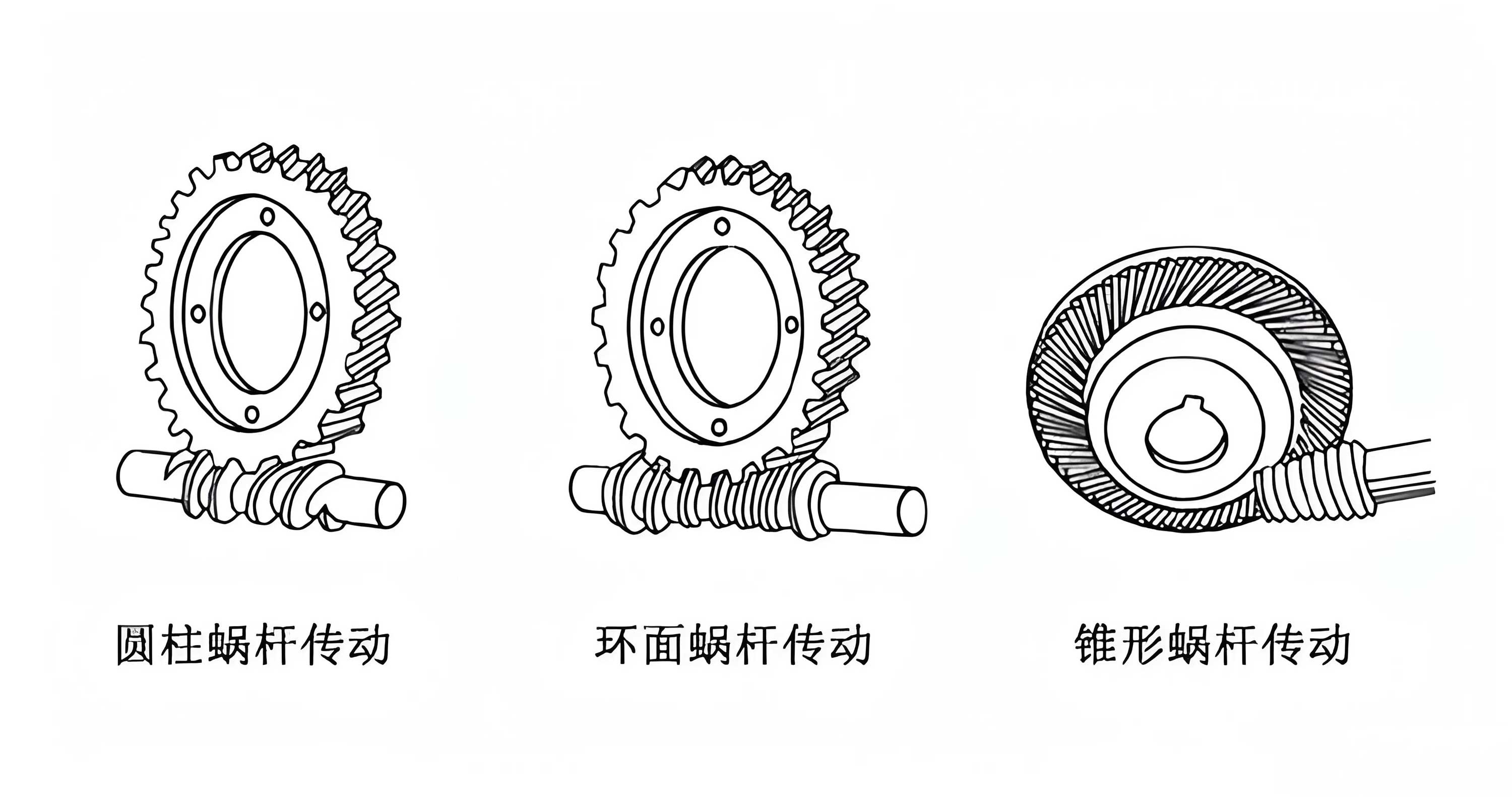
This article delves into a detailed investigation of the contact strength within an automotive EPS worm gears pair under varying center distances. The primary goal is to establish a mathematical relationship that predicts the maximum contact stress on the worm wheel as a function of the assembly center distance. The study employs a dual-methodology approach: an analytical model based on Hertzian contact theory and a dynamic non-linear finite element analysis (FEA). The focus is placed on the critical instant when the worm wheel tooth exits the meshing zone, as this is often the point of highest stress concentration due to unloading dynamics. The findings aim to provide a predictive tool for assessing worm gears durability and optimizing design parameters to minimize stress and extend service life.
1. Analytical Modeling of Contact Stress in Worm Gears
To develop a foundational understanding, an analytical model for the contact stress in the worm gears pair is constructed. This model simplifies the complex contact mechanics into a tractable form based on several key assumptions. The worm wheel material is modeled as a homogeneous, isotropic polymer, the worm is considered a rigid steel body, deformations are assumed to be purely elastic at the contact point, and the load distribution along the contact line is initially considered uniform. While these are simplifications, they allow for the derivation of a closed-form equation that highlights the primary geometric and load factors.
1.1 Key Geometric and Load Parameters
The analysis begins with the basic parameters of the EPS worm gears under study. The gear pair features an involute helicoid profile. The primary specifications are summarized below:
| Component | Number of Teeth | Face Width (mm) | Profile Shift Coefficient | Lead Angle at Ref. Circle (°) | Center Distance (Nominal) (mm) | Normal Pressure Angle (°) | Transverse Module (mm) |
|---|---|---|---|---|---|---|---|
| Worm Wheel | 36 | 15 | 0.3036 | 17.73 | 45 | 14.5 | 2.0997 |
| Worm | 2 | 36 | 0 | 17.73 |
The material properties are crucial for stress calculation. The worm wheel is made from a high-performance polyamide (PA46), while the worm is made from steel.
| Component | Material | Density (kg/m³) | Tensile Strength (MPa) |
|---|---|---|---|
| Worm Wheel | PA46 | 1100 | 140 |
| Worm | Steel | 7850 | 1080 |
The nominal operating condition for the analysis is defined by a constant output torque. The torque on the worm wheel, $T_2$, is set at 60 N·m. The transmission efficiency, $\eta$, accounting for friction losses in the worm gears, is taken as 0.7.
1.2 Derivation of the Contact Stress Formula
The contact stress between two curved elastic bodies is classically described by the Hertzian contact theory. The maximum contact pressure at the center of the contact ellipse is given by:
$$ \sigma_{H0} = Z_E \sqrt{ \frac{F_n}{L \rho_n} } $$
where:
- $\sigma_{H0}$ is the maximum Hertzian contact stress (MPa).
- $Z_E$ is the elasticity factor, which depends on the material properties of both contacting bodies. For a steel-polymer gear pair, a typical value is $Z_E = 50.3 \, \text{MPa}^{1/2}$.
- $F_n$ is the normal force acting on the tooth (N).
- $L$ is the effective length of the contact line (mm).
- $\rho_n$ is the equivalent radius of curvature at the contact point (mm).
The normal force $F_n$ is derived from the transmitted torque. For worm gears, considering the lead angle $\gamma$ and the normal pressure angle $\alpha_n$, it is:
$$ F_n = \frac{2000 \, \eta \, T_2}{d_2 \cos \alpha_n \cos \gamma} $$
where $d_2$ is the reference diameter of the worm wheel.
Determining the contact length $L$ and the equivalent curvature $\rho_n$ requires geometric analysis of the meshing worm gears. For an involute helicoid worm, the contact line sweeps across the tooth flank. The minimum possible length of this contact line, $L_{min}$, is critical for the highest stress scenario. It can be approximated using the wrap angle of the worm wheel around the worm, $\theta$ (where $2\theta = 150^\circ$), and the worm’s reference diameter $d_1$:
$$ L_{min} = \frac{2\pi d_1 \theta}{360^\circ \cos \gamma} $$
The equivalent radius of curvature, $\rho_n$, in the normal section is a key parameter. For a worm gear pair, which resembles a gear-and-rack meshing in the normal plane, the worm thread can be approximated as having an infinite radius at the contact point. The primary curvature thus comes from the worm wheel tooth. The formula simplifies to:
$$ \rho_n = \frac{d_2 \sin \alpha}{2 \cos \gamma} $$
where $\alpha$ is the transverse pressure angle.
Substituting the expressions for $F_n$, $L_{min}$, and $\rho_n$ into the core Hertzian equation yields the final analytical formula for the maximum contact stress in the worm gears pair:
$$ \sigma_{H0} = Z_E \sqrt{ \frac{ 2000 \, \eta \, T_2 }{ \frac{\pi \theta d_1 d_2^2 \sin \alpha \cos \alpha_n}{360^\circ \cos \gamma} } } $$
This equation succinctly relates the contact stress to the fundamental geometric parameters ($d_1$, $d_2$, $\gamma$, $\alpha_n$, $\theta$), the material property ($Z_E$), and the operational load ($T_2$). It serves as the baseline for the analytical investigation into the effect of center distance variation.
2. Finite Element Analysis of the Worm Gears System
While the analytical model provides valuable insight, it incorporates significant simplifications. To capture the complex, transient, and non-linear nature of the meshing process—including precise contact evolution, dynamic effects, and material deformation—a detailed 3D finite element analysis is conducted. The objective is to simulate the actual engagement and disengagement of a single tooth pair to accurately determine the time-history and peak value of contact stress.
2.1 Model Preparation and Meshing
Given the high computational cost of transient dynamic contact analysis, the model is judiciously simplified. Only one complete tooth of the worm wheel and the corresponding section of the worm thread are modeled, as shown in the accompanying figure. This simplification maintains the essential contact mechanics while drastically reducing the number of elements and computation time.
A critical step is the discretization of the geometry. To ensure accuracy and convergence in the dynamic analysis, a structured hexahedral mesh is generated for both components. This type of mesh is preferred over tetrahedral meshes for non-linear problems due to lower discretization error and better numerical stability. The mesh is refined in the contact regions to resolve the high stress gradients. The final mesh consists of approximately 137,800 elements and 479,600 nodes, ensuring a detailed spatial resolution.
2.2 Material Models, Contacts, and Boundary Conditions
The material behavior is defined using elastic-plastic models. The steel worm is modeled as linear elastic with high yield strength, assuming no plastic deformation occurs. The PA46 worm wheel is modeled with an elastic-plastic curve derived from its tensile properties to account for potential yielding at high contact pressures.
The interaction between the worm and worm wheel teeth is the core of the simulation. A surface-to-surface contact formulation is used. The friction between the steel worm and polymer worm wheel is a significant factor; a kinetic friction coefficient of $\mu = 0.05$ is applied, based on empirical measurements for such pairings under lubricated conditions. The “Augmented Lagrangian” contact algorithm is selected for its robustness in handling complex, evolving contact conditions and its superior convergence behavior compared to the pure penalty method.
The boundary conditions are applied to replicate the operational constraints. The worm shaft is fixed in all translational degrees of freedom at its supports, but allowed to rotate about its axis. The worm wheel is constrained from translating but is free to rotate about its axis. A rotational velocity is applied to the worm shaft to achieve the desired input speed. Crucially, a constant resisting torque of $T_2 = 60$ N·m is applied to the worm wheel, simulating the steering column load.
2.3 Transient Dynamic Analysis Setup
The simulation is set up as a transient dynamic analysis. The total simulation time is set to capture several cycles of the single-tooth engagement and disengagement process, specifically 0.013 seconds. The time domain is divided into 200 increments, with an adaptive time-stepping algorithm to ensure convergence during the rapid changes in contact status. This setup allows for the observation of the stress evolution throughout the meshing cycle, with particular attention paid to the moment of tooth exit.
3. Results: The Interplay of Center Distance, Backlash, and Stress
The core of the investigation involves systematically varying the center distance of the worm gears assembly. The nominal center distance is 45.00 mm. Considering typical manufacturing tolerances of $\pm0.15$ mm, the center distance, $a$, is varied in small increments: 44.97, 44.98, 44.99, 45.00, 45.01, 45.02, and 45.03 mm. For each configuration, two key outputs are recorded: the resulting theoretical circumferential backlash (calculated from the geometric model), and the maximum contact stress on the worm wheel tooth at the exit-meshing instant (extracted from the FEA).
The results are consolidated in the table below, providing a clear quantitative relationship.
| Center Distance, $a$ (mm) | Theoretical Backlash, $j$ (mm) | Max. Contact Stress (FEA), $\sigma_{H}^{FEA}$ (MPa) | Max. Contact Stress (Analytical), $\sigma_{H}^{Analytical}$ (MPa) | Deviation ($\sigma_{H}^{Analytical} – \sigma_{H}^{FEA}$) (MPa) |
|---|---|---|---|---|
| 44.97 | 0.2128 | 96.22 | 112.62 | 16.41 |
| 44.98 | 0.2199 | 92.18 | 106.71 | 14.54 |
| 44.99 | 0.2270 | 90.13 | 101.84 | 11.71 |
| 45.00 | 0.2342 | 89.71 | 99.16 | 9.45 |
| 45.01 | 0.2413 | 90.96 | 99.50 | 8.53 |
| 45.02 | 0.2485 | 92.49 | 102.66 | 10.18 |
| 45.03 | 0.2556 | 92.98 | 104.36 | 11.38 |
Trend Analysis: Several critical trends are immediately apparent from the data:
- Backlash vs. Center Distance: The backlash increases almost linearly with increasing center distance, as expected from the fundamental geometry of worm gears.
- Contact Stress vs. Center Distance/Backlash: The maximum contact stress exhibits a distinct non-linear relationship. It decreases as the center distance increases from 44.97 mm to the nominal 45.00 mm, reaching a clear minimum value of approximately 89.71 MPa at the nominal setting. Beyond this point, as the center distance continues to increase to 45.03 mm, the contact stress increases again.
- Analytical vs. FEA Comparison: The analytical model predicts the same qualitative trend—a stress minimum near the nominal center distance. However, it consistently overestimates the stress magnitude by approximately 9.5% to 14.6%. This discrepancy is attributed to the simplifying assumptions in the analytical model: the assumption of a perfectly uniform load distribution along a fixed contact line and the neglect of load-sharing from potential multi-tooth contact and system compliance, which are captured by the FEA.
3.1 Mathematical Characterization of the Relationship
To create a predictive tool, the relationship between the theoretical backlash $j$ (the directly controllable geometric outcome of center distance change) and the maximum FEA contact stress $\sigma_{H}^{max}$ is fitted with a polynomial function. A high-order polynomial is required to capture the subtle non-linearity of the curve. A 6th-degree polynomial provides an excellent fit, with a coefficient of determination of $R^2 = 1$ for the given data points:
$$ \sigma_{H}^{max}(j) = 3.507 \times 10^{10}j^6 – 4.935 \times 10^{10}j^5 + 2.890 \times 10^{10}j^4 – 9.018 \times 10^{9}j^3 + 1.581 \times 10^{9}j^2 – 1.477 \times 10^{8}j + 5.744 \times 10^{6} $$
where $j$ is in meters and $\sigma_{H}^{max}$ is in Pascals. This fitted function allows engineers to estimate the peak contact stress for any backlash value within the studied range, providing a direct link between assembly tolerance (center distance) and a key durability metric for the worm gears.
3.2 Mechanistic Explanation of the Observed Trend
The U-shaped stress curve can be explained by the interplay between two competing effects governed by the center distance in worm gears:
- Effect of Reduced Backlash (Center Distance < Nominal): When the center distance is smaller than nominal, the backlash is reduced. During meshing, this can lead to a “tight” or “pre-loaded” condition. The tooth entering the mesh may experience interference or an earlier-than-ideal load pick-up, while the exiting tooth may be forced out under higher constraint. This can cause shock loading and an unfavorable shift of the contact pattern towards the tip or root, increasing localized stress.
- Effect of Increased Backlash (Center Distance > Nominal): When the center distance is larger than nominal, backlash increases significantly. The increased clearance allows for greater angular free play between the worm gears. During reversal or under dynamic torsional vibrations from the steering input, the driving tooth can impact the flank of the driven tooth with higher kinetic energy. This impactive loading at the moment of contact re-establishment (or during disengagement shocks) generates higher dynamic contact stresses.
The nominal center distance (and its corresponding backlash of ~0.234 mm) appears to represent an optimal compromise. It provides sufficient clearance to avoid interference and smooth entry/exit, while minimizing the free play enough to prevent severe impact loads. This balance results in the lowest observed contact stress.
4. Discussion and Engineering Implications
The study successfully establishes a clear, non-linear relationship between the assembly center distance of EPS worm gears and the maximum contact stress on the polymer worm wheel. The finite element analysis, which accounts for transient dynamics and non-linear contact, reveals that the stress is minimized at the designed nominal center distance. Deviations in either direction increase the stress, forming a classic “optimum” curve.
The high-fidelity polynomial fit derived from the FEA data is a practical outcome. For the specific worm gears pair studied, this equation serves as a transfer function. An engineer, knowing the manufactured center distance (and thus the theoretical backlash), can use this function to predict the associated peak contact stress without running a new, computationally expensive simulation for every tolerance variant. This is invaluable for performing statistical tolerance analysis and assessing the durability risk associated with the natural variation in mass production.
Furthermore, the consistent over-prediction of the analytical model highlights the importance of advanced simulation tools in the design of highly loaded polymer-metal worm gears. While analytical formulas are excellent for initial sizing and understanding parameter sensitivities, final validation and precise stress prediction require methods like FEA that can model the complex real-world behavior.
From a system design perspective, these findings underscore the critical importance of precise manufacturing and strict control of the housing bore centers for the worm gears in an EPS system. Tighter tolerances on center distance not only reduce noise and vibration by controlling backlash but also directly contribute to enhanced durability by maintaining contact stress near its minimum value. This research provides a quantitative basis for setting those tolerances, linking a geometric control parameter directly to a performance and life metric.
5. Conclusion
This investigation into the contact strength of automotive EPS worm gears under varying center distances has yielded significant insights. Through a combined analytical and finite element approach, it was demonstrated that the maximum contact stress on the worm wheel during the critical exit phase of meshing follows a distinct U-shaped curve relative to the center distance. The stress reaches a minimum at the designed nominal center distance (45.00 mm for the studied case) and increases for both smaller and larger center distances. The increase with smaller center distance is attributed to interference and constrained meshing, while the increase with larger center distance is due to impactive loading caused by excessive backlash.
A high-degree polynomial function was successfully fitted to the finite element results, establishing a direct predictive relationship between theoretical backlash (a function of center distance) and maximum contact stress. This mathematical model serves as a valuable tool for engineers to optimize tolerance specifications and predict the durability implications of assembly variations in worm gears systems.
The work confirms that maintaining the center distance as close to the nominal design value as possible is paramount not only for acoustic performance but also for maximizing the contact fatigue life of the polymer worm wheel. Future work could expand this study to include the effects of temperature on material properties, lubrication film effects, and a full dynamic system analysis including the motor and steering column to capture even broader operational conditions for EPS worm gears.