
Gear grinding is a critical process in the manufacturing of high-precision cylindrical gears, which are essential components in aerospace, rail transportation, and marine engineering. Among various gear grinding techniques, worm wheel grinding stands out due to its high efficiency, stability, and ability to produce superior quality gears, making it ideal for mass production. However, the precision of gear grinding heavily relies on the accuracy of the diamond grinding roller used for dressing the worm wheel. This roller, made from the hardest known material, presents significant challenges in profile trimming, often leading to severe tool wear and compromised accuracy. Traditional methods, such as optical guidance and manual intervention, result in low manufacturing precision, typically around ±5 μm, which falls short of modern demands for high-precision gear profile grinding. In this article, I analyze the tool wear behavior during gear grinding roller trimming and propose a CNC-based method utilizing origin offset compensation. Through engineering practice, I validate the feasibility of this approach, demonstrating its potential to enhance gear grinding accuracy and reduce grinding cracks.
The wear of tool wheels during gear grinding roller trimming is a major concern, as it directly impacts the final gear quality. In gear profile grinding, the tool wheel experiences directional wear, characterized by arc wear and linear wear. The linear wear, in particular, dominates the inaccuracies in the gear profile, as it affects the straight sections of the roller profile that correspond to the gear teeth. Traditional compensation methods, such as arc wear compensation, often lead to over-cutting or under-cutting, resulting in contours that deviate from the desired specifications. Moreover, the hard nature of diamond materials exacerbates tool wear, making it difficult to maintain consistency in gear grinding processes. This issue is compounded in high-speed applications, where grinding cracks can form due to excessive thermal and mechanical stresses. Therefore, a more controlled compensation strategy is necessary to address these challenges in gear grinding.
I propose an origin offset method for CNC trimming of gear grinding rollers, which involves shifting the workpiece coordinate system to compensate for tool wear. This approach differs from conventional arc compensation by allowing for a more uniform distribution of wear effects, thereby reducing the risk of grinding cracks and improving profile accuracy. The theoretical basis for this method lies in the geometric relationship between the tool wheel and the roller profile. By applying a small offset in the origin, the cutting depth is controlled, preventing sudden changes in cutting forces that could cause tool chipping or profile deviations. This method is particularly effective for near-straight profiles common in gear grinding rollers, where traditional techniques struggle to achieve micron-level precision.
To understand the origin offset method, consider the geometric model of the tool wheel and roller interaction. Let the tool wheel have a radius $$ R_t $$, and the roller profile be defined by a series of linear segments with an angle $$ \alpha $$ corresponding to the gear’s pressure angle. The wear on the tool wheel can be modeled as a reduction in effective radius, denoted by $$ \Delta R $$. In the origin offset approach, the workpiece origin is shifted by a distance $$ \Delta $$ in the X-direction, altering the relative position between the tool and roller. The new contact points can be derived using the following equations:
$$ x’ = x + \Delta $$
$$ y’ = y $$
where $$ (x, y) $$ are the original coordinates and $$ (x’, y’) $$ are the offset coordinates. The effective cutting depth $$ d_e $$ is then given by:
$$ d_e = d_0 – \Delta \cdot \tan(\alpha) $$
where $$ d_0 $$ is the nominal cutting depth. This equation shows that by adjusting $$ \Delta $$, the cutting depth can be controlled to minimize wear-induced errors. For instance, if $$ \Delta $$ is set to a value less than the maximum wear amount, the tool contacts the roller at two points, leaving a slight under-cut in the middle that can be beneficial for forming a crown shape in the gear profile. This controlled under-cut helps in reducing stress concentrations and preventing grinding cracks in the final gear product.
The benefits of this method are evident in its ability to handle the near-straight profiles of gear grinding rollers. Unlike arc compensation, which requires frequent adjustments and can lead to inaccuracies, origin offset provides a stable and predictable wear compensation. Additionally, this approach aligns well with CNC systems, allowing for automated implementation through program nesting and dynamic coordinate shifts. In the following sections, I will detail the experimental validation of this method, including the setup, parameters, and results.
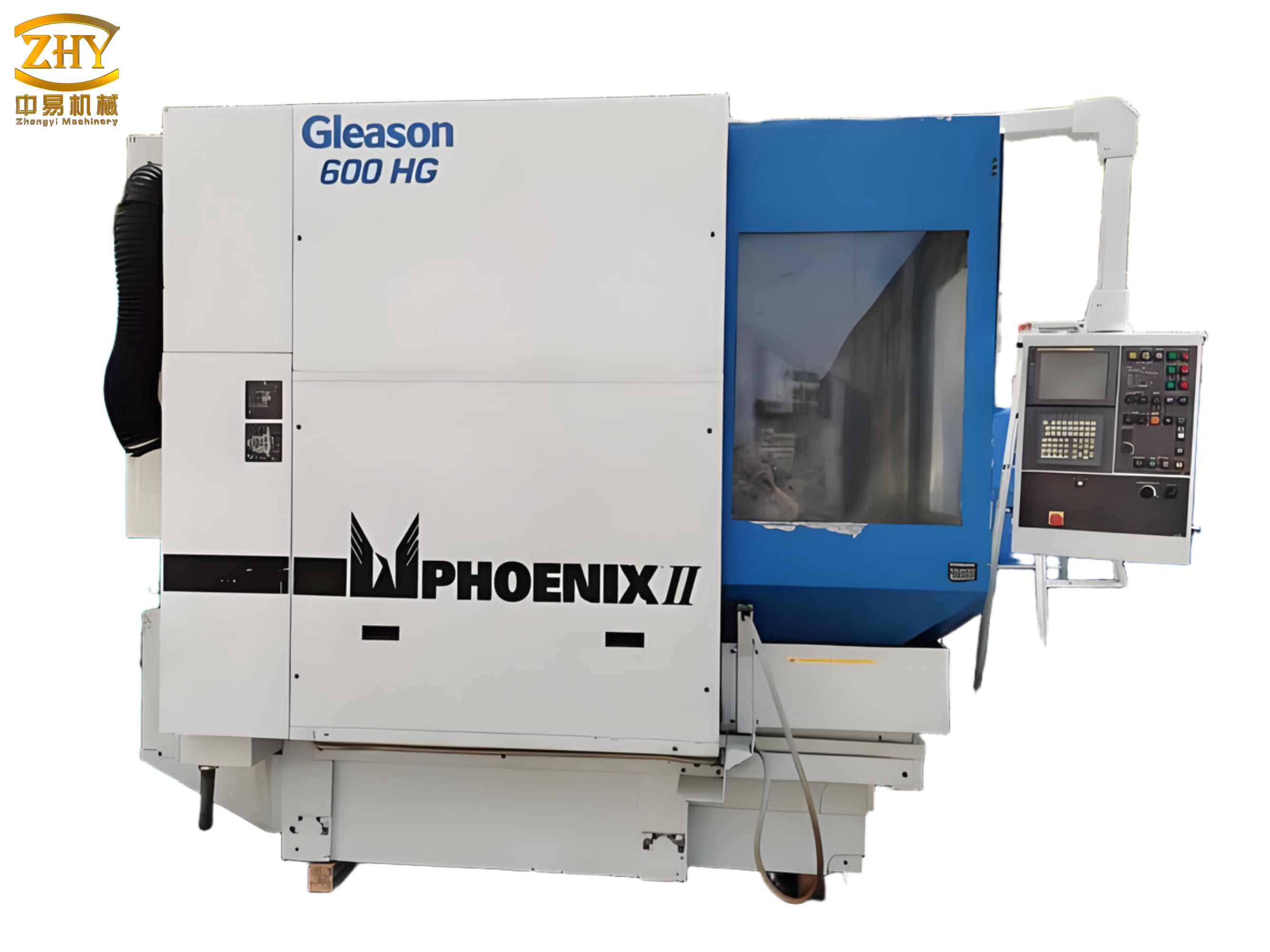
Experiments were conducted on an imported optical profile grinding machine, using a ceramic diamond grinding wheel to trim a diamond grinding roller. The roller had a specification of ϕ130×40×52, and the tool wheel was a 14F1-150×5×31.75×6×3-R1.5 type. The grinding parameters were carefully selected to minimize tool wear and avoid grinding cracks, as summarized in Table 1.
| Parameter | Value |
|---|---|
| Tool Wheel Speed (r/min) | 6,000 |
| Workpiece Speed (r/min) | 70 |
| Feed Rate (mm/min) | 10 |
| Cutting Depth (mm) | 0.003 |
The trimming process involved a segmented approach, where the near-straight profiles on both sides of the roller were processed using CNC with origin offset compensation, while the top arc was finished manually via optical guidance. This hybrid strategy ensured high precision for the critical profile sections while maintaining efficiency. The origin offset was implemented through a multi-layer nested CNC program, which dynamically adjusted the coordinates after each path cycle. For example, the main program called subroutines that applied incremental offsets in the X-direction, such as $$ \Delta = -0.003 $$ mm for the right-side profile and $$ \Delta = +0.003 $$ mm for the left-side profile. This allowed for continuous compensation without manual intervention, reducing the labor intensity and improving repeatability.
During gear grinding, the tool wheel wear was monitored, and the origin offset method effectively mitigated the linear wear effects. The wear compensation amount $$ \Delta $$ was determined based on real-time measurements of the X-direction residual material, using the machine’s optical system. The CNC program incorporated G92 and G91 commands for coordinate setting and incremental moves, ensuring precise control over the trimming path. The mathematical model for wear compensation can be extended to include the effects of multiple grinding passes. For instance, the total offset after $$ n $$ passes is given by:
$$ \Delta_n = \Delta_0 + n \cdot \delta $$
where $$ \Delta_0 $$ is the initial offset and $$ \delta $$ is the incremental offset per pass. This linear progression helps in maintaining a consistent cutting depth, which is crucial for avoiding grinding cracks and achieving a uniform gear profile.
After trimming, the roller was evaluated indirectly by imprinting its profile onto a graphite sample, which was then measured using a Taylor FTS WRI roughness profiler. The results showed a maximum profile deviation of -0.9 μm for the near-straight sections, well within the required tolerance of ±1.5 μm. This confirms the high precision achievable with the origin offset method in gear profile grinding. Furthermore, the corresponding gear inspection report indicated that the crown amount ranged from 3.2 to 5.3 μm, with a mean of 3.92 μm, slightly exceeding the design value of 3 μm. This increase in crown amount is consistent with the theoretical prediction of the origin offset method, which tends to enhance the crown shape due to the controlled under-cutting effect.
The success of this method in reducing grinding cracks and improving gear grinding accuracy can be attributed to the stable control of cutting forces. By avoiding sudden force variations, the origin offset method minimizes the risk of micro-cracks and other defects in the gear surface. This is particularly important in high-performance applications, where grinding cracks can lead to premature failure. The automated nature of the CNC implementation also reduces human error, making it suitable for large-scale production environments.
In conclusion, the origin offset method for CNC trimming of gear grinding rollers offers a significant improvement over traditional techniques. It achieves a profile accuracy of up to 2 μm, effectively addresses tool wear issues, and enhances the overall efficiency of gear grinding processes. The method’s compatibility with standard CNC systems allows for easy integration into existing manufacturing lines, providing a practical solution for high-precision gear profile grinding. Future work could focus on optimizing the offset parameters for different gear types and exploring real-time adaptive control to further reduce grinding cracks and wear.
The implications of this research extend beyond gear grinding to other areas of precision machining where tool wear is a concern. By leveraging geometric principles and CNC capabilities, the origin offset method represents a step forward in the pursuit of ultra-precision manufacturing. As industries continue to demand higher accuracy and reliability, such innovative approaches will play a crucial role in meeting these challenges.