
In modern mechanical design, the creation of accurate digital models is fundamental for simulation, analysis, and manufacturing. Among various mechanical components, the helical gear is widely utilized due to its superior operational characteristics. Compared to spur gears, helical gears offer significant advantages: the contact line between mating teeth is diagonal, allowing for a gradual engagement and disengagement process. This results in smoother transmission, significantly lower noise levels, and makes them ideal for high-speed applications. Furthermore, the overlap ratio of helical gears is greater and increases with both face width and helix angle, leading to higher load-carrying capacity. They also have a lower minimum number of teeth, allowing for more compact gearbox designs. Consequently, developing a robust, accurate, and flexible method for three-dimensional modeling of helical gears is a crucial aspect of the digital design process for mechanical products.
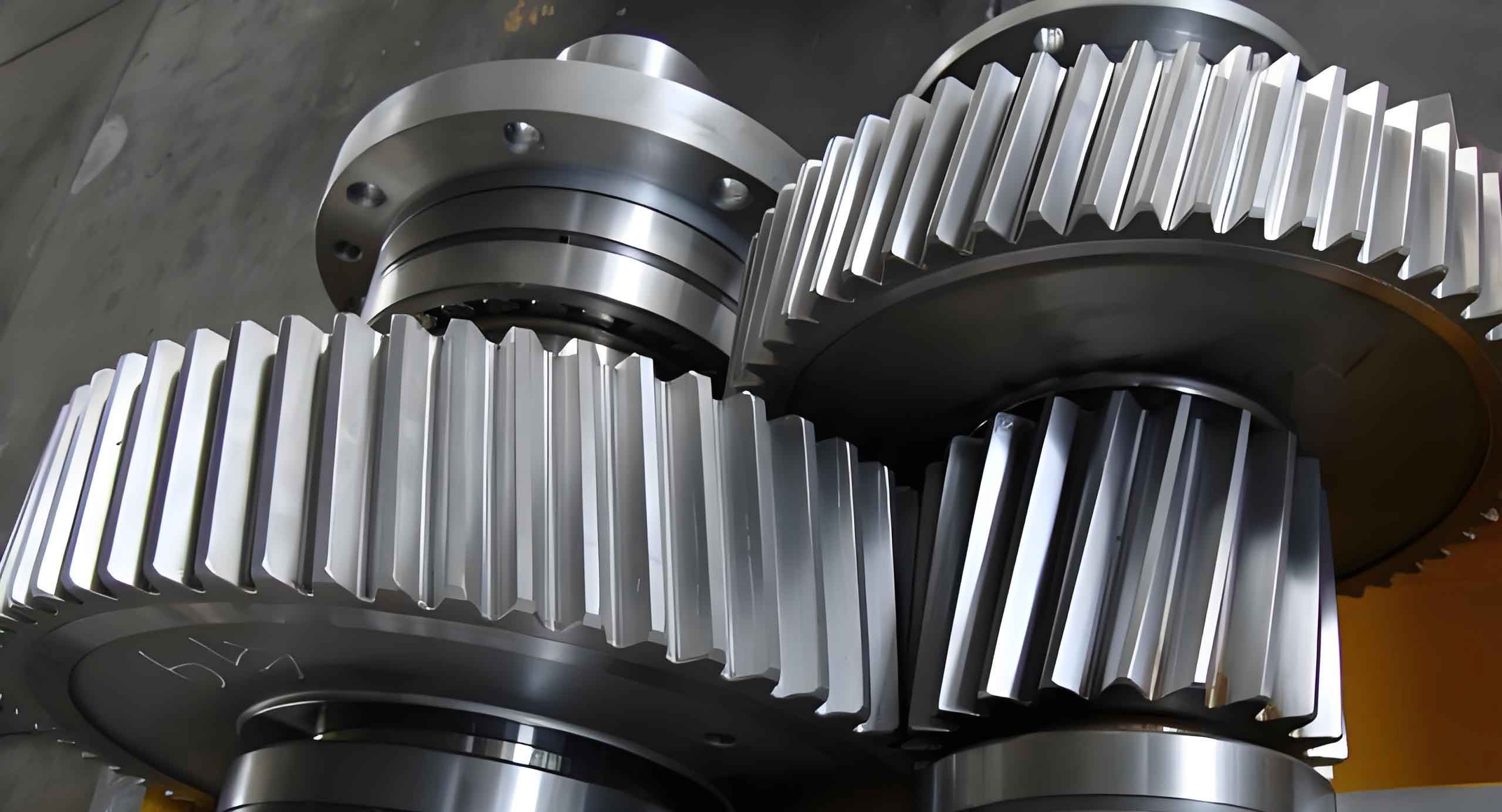
Various approaches exist for modeling involute helical gears in CAD environments like SolidWorks. These have ranged from using spline approximations and importing 2D sketches from other software to employing programming languages (C, MATLAB, VBA) for coordinate generation or relying on third-party plugins like GearTrax. While functional, many of these methods introduce complexity, dependency on external tools, or approximations that compromise geometric accuracy, particularly in the tooth root fillet region. This article presents a direct, precise, and fully parametric modeling methodology for involute helical gears using only the core functionalities within SolidWorks, namely Global Variables and Equation-Driven Curves. This method achieves an exact geometric representation of both the involute flank and the precisely calculated tooth root transition curve derived from the generating tool geometry.
Modeling Philosophy and Core Concepts
The foundation of this parametric method lies in understanding the geometry of the helical gear. In any cross-section perpendicular to its axis, the active tooth profile of a helical gear is a standard involute curve. The shape of this involute, whether on the left or right flank, is solely determined by the base circle radius. The tooth thickness or space width at the pitch circle is directly influenced by the half-angle of the base circle space width or the normal profile shift coefficient. Critically, the tooth profile in one cross-section is rotationally related to the profile in another cross-section along the axis. Starting from a reference end face, the amount of rotation is proportional to the axial distance from that face, defined by the gear’s lead. Therefore, a single gear tooth space can be completely defined by its profile on the starting cross-section and this constant lead. Finally, due to rotational symmetry, all z tooth spaces around the gear axis are identical and evenly spaced at angles of $360°/z$. The modeling strategy, therefore, is to: 1) create the profile of one tooth space on the starting plane as the profile for a sweep cut; 2) create a helix with constant radius (equal to the root radius) and a defined lead as the sweep path; 3) perform the swept cut to create one precise tooth space; and 4) pattern this feature circularly around the axis to generate all teeth of the helical gear.
Parametric Foundation: Global Variables and Key Derivations
The power of this method is its full parametrization. All gear geometry is controlled by a set of global variables in SolidWorks. The user inputs fundamental design parameters, and all dependent geometric variables are calculated automatically through equations. It is essential to set the “Equation Unit for Angle” to “Radians” within SolidWorks. The primary input variables and their calculated counterparts are summarized in the table below.
| Variable Name | Value / Equation | Description |
|---|---|---|
| $z$ | e.g., 7 | Number of Teeth |
| $α_n$ | e.g., $20°/180°·π$ | Normal Pressure Angle |
| $β$ | e.g., $32.5°/180°·π$ | Helix Angle |
| $x_n$ | e.g., 0.5 | Normal Profile Shift Coefficient |
| $m_n$ | e.g., 2.05 mm | Normal Module |
| $hand$ | 1 (Right), -1 (Left) | Hand of Helix |
| $θ_h$ | e.g., 0 | Angular Position of Tooth Space Center |
| $h_{a}^*$ | 0.8 | Addendum Coefficient |
| $h_{f}^*$ | 1.1 | Dedendum Coefficient |
| $ρ_{a0}$ | e.g., 0.4 mm | Cutter Tip Radius |
| $η_b$ | $(π/2 – 2 x_n \tan α_n)/z – \tanα_t + α_t$ | Base Circle Space Width Half-Angle |
| $r_b$ | $\frac{z m_n}{2 \sqrt{\tan^2 α_n + \cos^2 β}}$ | Base Circle Radius |
| $p_z$ | $π z m_n / \sin β$ | Lead of the Helix |
| $d$ | $z m_n / \cos β$ | Pitch Diameter |
| $d_a$ | $d + 2 m_n (x_n + h_{a}^*)$ | Tip Diameter |
| $d_f$ | $d + 2 m_n (x_n – h_{f}^*)$ | Root Diameter |
| $α_t$ | $\arctan(\tan α_n / \cos β)$ | Transverse Pressure Angle |
| $α_G$ | $\arctan\left[\tan α_t – \frac{2(d – d_f – 2ρ_{a0}(1-\sin α_n))}{d \sin(2α_t)} \right]$ | Pressure Angle at Start of Active Profile |
| $e$ | $h_{f}^* m_n – ρ_{a0}$ | Auxiliary Variable for Root Curve |
The derivation of some key equations is crucial for understanding the model’s accuracy. The half-angle of the base circle space width, $η_b$, is derived from the geometry of the basic rack. The transverse tooth space width on the pitch circle is $(π/2 – 2x_t \tan α_t)m_t$, where $x_t = x_n \cos β$ is the transverse shift coefficient and $m_t = m_n/\cos β$ is the transverse module. This arc length must equal the product of the pitch radius and the corresponding angle on the base circle:
$$ \left(\frac{π}{2} – 2x_t \tan α_t\right) m_t = \frac{z m_t}{2} \cdot 2(η_b + \inv α_t) $$
where $\inv α_t = \tan α_t – α_t$ is the involute function. Solving for $η_b$ and substituting the relations for $x_t$ and $α_t$ yields the implemented formula:
$$ η_b = \frac{π/2 – 2 x_n \tan α_n}{z} – \frac{\tan α_n}{\cos β} + \arctan\left(\frac{\tan α_n}{\cos β}\right) $$
The base circle radius for the helical gear, $r_b$, is derived from the transverse plane geometry: $r_b = \frac{d}{2} \cos α_t$. Substituting $d$ and $\cos α_t = 1/\sqrt{1+\tan^2 α_t}$ leads to the compact form:
$$ r_b = \frac{z m_n}{2 \sqrt{\tan^2 α_n + \cos^2 β}} $$
The lead, $p_z$, comes from unwrapping the helix on the pitch cylinder. The triangle formed has the lead as one side, the pitch circumference ($π d$) as the other, and the helix angle $β$ between the lead and the element of the cylinder:
$$ p_z = \frac{π d}{\tan β} = \frac{π}{\tan β} \cdot \frac{z m_n}{\cos β} = \frac{π z m_n}{\sin β} $$
The pressure angle at the start of the active profile (SAP), $α_G$, defines where the involute curve begins and the root fillet curve ends. It is determined by the geometry of the generating tool (hob). The general formula relates the transverse pressure angles at the SAP and the cutter tip:
$$ \tan α_G = \tan α_t – \frac{4(a – e)}{d \sin 2α_t} $$
where $(a – e)$ represents the radial distance from the pitch line to the center of the hob tip radius in the generating process. For a gear generated by a hob with tip radius $ρ_{a0}$, this distance is: $a – e = \frac{d – d_f}{2} – ρ_{a0}(1 – \sin α_n)$. Substituting this into the formula gives the final expression used in the table for the helical gear.
Step-by-Step Modeling Procedure in SolidWorks
Step 1: Input Global Variables
Navigate to Tools > Equations in SolidWorks. Input all variables from the table above. Ensure the “Equation Unit for Angle” is set to “Radians”. The dependent variables (like $η_b$, $r_b$, $p_z$, $α_G$) will update automatically based on the input parameters ($z$, $α_n$, $β$, $x_n$, $m_n$, etc.). This set of 19 variables fully parameterizes the helical gear model.
Step 2: Create the Blank Gear Body
Create a new part. Using either the “Extrude” or “Revolve” feature, generate a solid cylinder. The axis of this cylinder should be the Z-axis (or Front Plane normal), and its diameter should be equal to the tip diameter variable, $d_a$. This cylinder represents the blank from which the tooth spaces will be cut.
Step 3: Create the Sweep Path (Helix)
Create a new 3D sketch. Within this sketch, insert an “Equation Driven Curve” and select “Parametric” as the type. This curve defines the path for the swept cut. The parameter $t$ represents the Z-height.
Parametric Equations for the Helix Path:
$X(t) = \frac{d_f}{2} \cdot \cos\left( hand \cdot \frac{2π}{p_z} \cdot t + θ_h \right)$
$Y(t) = \frac{d_f}{2} \cdot \sin\left( hand \cdot \frac{2π}{p_z} \cdot t + θ_h \right)$
$Z(t) = t$
Set $t_1 = 0$ and $t_2$ to the desired face width of the helical gear (e.g., 80 mm). This creates a helix with a radius equal to the root radius ($d_f/2$), starting at angular position $θ_h$, and with the predefined lead $p_z$. The $hand$ variable controls the direction of rotation (right-hand or left-hand helix). The radius can theoretically be any constant value; using the root radius is conventional.
Step 4: Create the Sweep Profile (Tooth Space Cross-Section)
This is the most critical step, creating the 2D sketch on the “Front Plane” (or any plane normal to the helix axis) that defines the shape to be swept along the helix. The profile consists of four distinct curves: left and right involute flanks, and left and right root fillet curves, connected by root and tip arcs.
- Create a new sketch on the Front Plane.
- Left Involute Flank: Insert an “Equation Driven Curve” (Parametric). For an involute curve, the radial distance $r$ and angular position $φ$ for a given pressure angle parameter $t$ are: $r = r_b / \cos t$, $φ = \tan t – t + θ_h + η_b$. Thus:
$$ X(t) = \frac{r_b}{\cos t} \cdot \cos(\tan t – t + θ_h + η_b) $$
$$ Y(t) = \frac{r_b}{\cos t} \cdot \sin(\tan t – t + θ_h + η_b) $$
Set $t_1 = α_G$ and $t_2$ to a value large enough to cross the tip circle (e.g., $0.3π$). - Right Involute Flank: Insert another “Equation Driven Curve”. For the right flank, the angular offset is $θ_h – η_b$, and the parameter $t$ is negative, representing the negative of the pressure angle.
$$ X(t) = \frac{r_b}{\cos t} \cdot \cos(\tan t – t + θ_h – η_b) $$
$$ Y(t) = \frac{r_b}{\cos t} \cdot \sin(\tan t – t + θ_h – η_b) $$
Set $t_1 = -0.3π$ and $t_2 = -α_G$. - Left Root Fillet Curve: The root fillet is a trochoid generated by the tip of the hob. Its parametric equations are more complex. Based on gear generation theory and setting the generating gear (shaper/hob) pitch radius to infinity (rack generation), the equations for a point on the fillet, corresponding to a hob rotation angle parameter $t$, are:
$$ X(t) = \frac{d}{2} \cos φ + \frac{ρ_{a0}\sin t + e – x_n m_n}{hand \cdot \sin u} \cdot \sin(φ – hand \cdot u) $$
$$ Y(t) = \frac{d}{2} \sin φ – \frac{ρ_{a0}\sin t + e – x_n m_n}{hand \cdot \sin u} \cdot \cos(φ – hand \cdot u) $$
where:
$u = \arctan(\tan t / \cos β)$ (transverse pressure angle on the generating rack),
$φ = θ_h – hand \cdot \frac{π}{z} + \frac{2 \cdot hand}{d} \left[ e \tan α_t + \frac{\cos β}{\tan t}(ρ_{a0}\sin t + e – x_n m_n) + \frac{π m_n}{4 \cos β} – ρ_{a0} \frac{\cos t – 1/\cos α_n}{\cos β} \right]$.
Set $t_1 = α_n$ and $t_2 = π/2$. The endpoint at $t=α_n$ connects precisely to the start of the involute at $α_G$. - Right Root Fillet Curve: Insert another curve with equations adjusted for symmetry:
$$ X(t) = \frac{d}{2} \cos φ’ + \frac{ρ_{a0}\sin t + e – x_n m_n}{hand \cdot \sin u} \cdot \sin(φ’ – hand \cdot u) $$
$$ Y(t) = \frac{d}{2} \sin φ’ – \frac{ρ_{a0}\sin t + e – x_n m_n}{hand \cdot \sin u} \cdot \cos(φ’ – hand \cdot u) $$
where:
$φ’ = θ_h + hand \cdot \frac{π}{z} – \frac{2 \cdot hand}{d} \left[ e \tan α_t + \frac{\cos β}{\tan t}(ρ_{a0}\sin t + e – x_n m_n) + \frac{π m_n}{4 \cos β} – ρ_{a0} \frac{\cos t – 1/\cos α_n}{\cos β} \right]$.
Set $t_1 = α_n$ and $t_2 = π/2$. - Complete the Sketch Profile: Draw a center arc at the origin with radius $d_f/2$ to connect the inner endpoints of the two root fillet curves. Draw lines or arcs to connect the outer endpoints of the two involute curves, closing the profile at the tip diameter. Ensure the sketch forms a single closed contour. The connection between the involute and fillet curves at the parameter $t=α_n$/$α_G$ is mathematically exact, ensuring a perfectly smooth transition.
Step 5: Create the Swept Cut Feature
Use the “Swept Cut” feature. For “Profile”, select the closed sketch created in Step 4. For “Path”, select the 3D helix sketch created in Step 3. Ensure the “Profile Twist” is set to “Follow Path” (or similar, depending on SolidWorks version) to maintain the correct orientation of the profile along the helical path. This operation cuts a single, precise, helical tooth space through the gear blank.
Step 6: Create the Circular Pattern Feature
The final step is to replicate the single tooth space around the entire gear. Use the “Circular Pattern” feature. Select the axis of the gear cylinder (Z-axis) as the “Pattern Axis”. Set the total angle to $360°$, the number of instances to the variable $z$ (number of teeth), and check “Equal spacing”. Select the swept cut feature from Step 5 as the feature to pattern. This completes the three-dimensional model of the involute helical gear.
Advantages and Applications of the Method
This parametric modeling approach offers significant benefits for the design and analysis of helical gears. Its primary advantage is the use of native SolidWorks tools without reliance on external software, plugins, or complex API programming. The model is driven entirely by a set of global variables, making modification extremely efficient; changing a fundamental parameter like the normal module $m_n$ or helix angle $β$ automatically updates the entire three-dimensional geometry of the helical gear. Crucially, the model achieves high geometric fidelity. Not only is the involute tooth flank represented exactly, but the tooth root fillet region is also modeled with precision based on the generating tool geometry, which is vital for accurate finite element analysis (FEA) of bending stresses. This level of detail surpasses methods that use circular arcs or spline approximations for the root. The generated model serves as a perfect digital twin, ready for downstream applications such as virtual assembly, interference checking, kinematic simulation, and advanced stress or contact analysis using FEA or specialized gear software. This establishes a robust foundation for the rapid and reliable design of mechanical systems utilizing helical gears.