
In modern mechanical design, the efficient creation and validation of worm gears are critical due to their widespread application in power transmission systems requiring high reduction ratios, compactness, and smooth operation. Traditional design processes for worm gears are often cumbersome, involving repetitive calculations and manual modeling adjustments. To overcome these inefficiencies, I developed a comprehensive parametric design and simulation framework within UG software, leveraging its expression functionality to automate model generation and enable rapid updates. This methodology not only streamlines the design of worm gears but also integrates motion simulation to verify meshing performance and interference, ensuring robustness before physical prototyping. By focusing on involute-type worm gears, this approach demonstrates how parametric techniques can be extended to other gear and bearing components, significantly reducing design cycles and enhancing accuracy. In this article, I detail the implementation steps, from defining basic parameters using expressions to generating 3D models and conducting dynamic analyses, providing a scalable reference for engineers and designers.
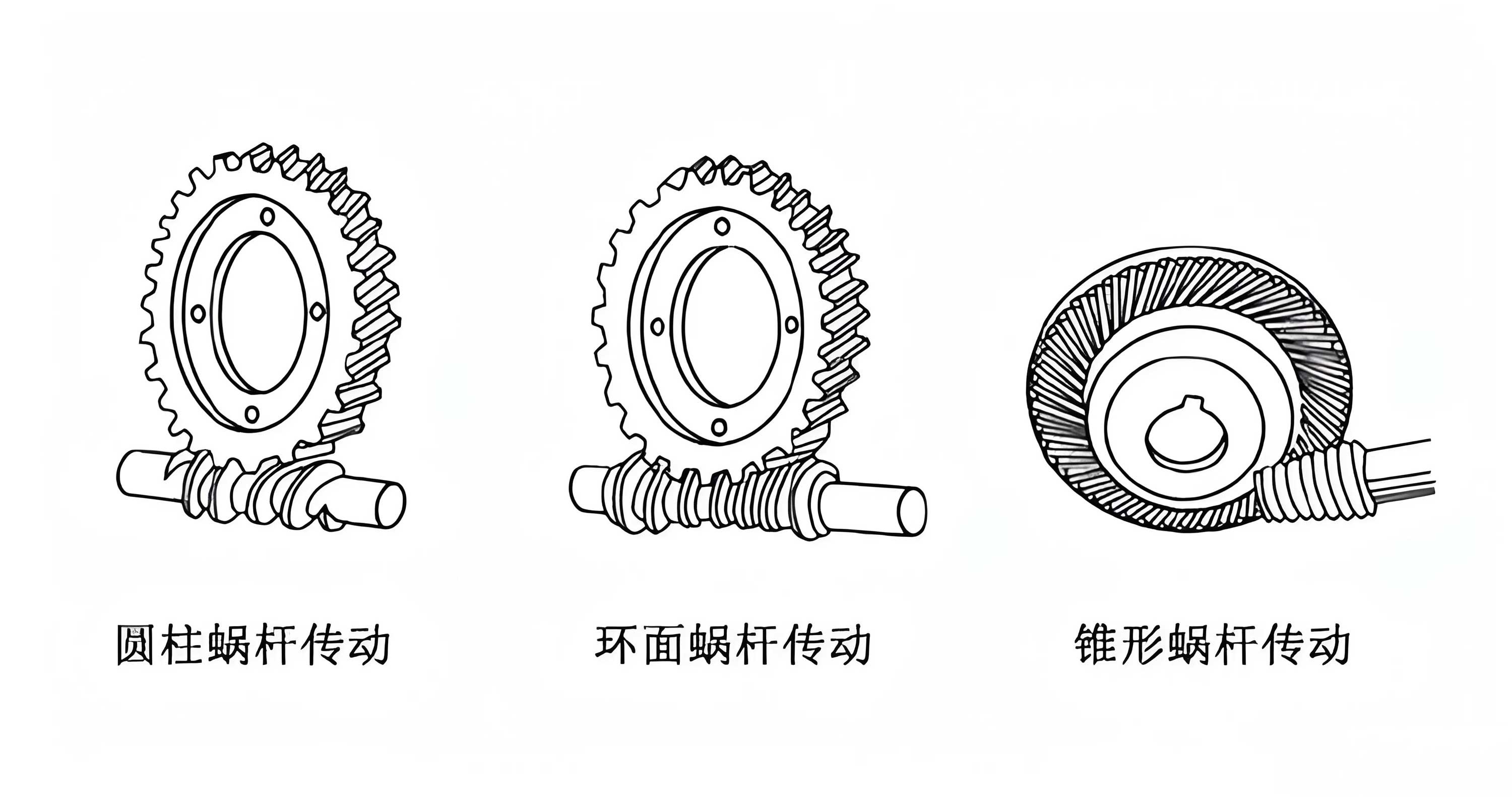
The core of my approach lies in utilizing UG’s expression editor to establish mathematical relationships between key design variables. This allows for a fully associative model where changes propagate automatically, facilitating dynamic design iterations. Worm gears, consisting of a worm and a worm wheel, require precise geometric definitions to ensure proper engagement and motion transmission. I began by defining the fundamental parameters and their interdependencies through formulas, which serve as the foundation for all subsequent modeling steps. The following table summarizes the initial values and calculations for the worm gear set, which are input into UG expressions to drive the parametric design.
| Name | Symbol | Formula | Initial Value |
|---|---|---|---|
| Module | m | – | 2 mm |
| Pressure angle | α | – | 20° |
| Number of worm wheel teeth | Z2 | – | 36 |
| Addendum coefficient | ha* | 1 | 1 |
| Dedendum coefficient | c* | 0.25 | 0.25 |
| Pitch diameter of worm wheel | d | d = Z2 * m | 72 mm |
| Base diameter of worm wheel | db | db = d * cos(α) | Calculated as 67.64 mm |
| Tip diameter of worm wheel | da | da = (Z2 + 2ha*) * m | 76 mm |
| Root diameter of worm wheel | df | df = (Z2 – 2ha* – 2c*) * m | 67 mm |
| Face width of worm wheel | B | – | 30 mm |
| Number of worm threads | Z1 | – | 3 |
| Worm diameter factor | q | – | 13 |
| Pitch diameter of worm | d1 | d1 = m * q | 26 mm |
| Worm lead angle | γ | γ = arctan(Z1 / q) | Calculated as 12.99° |
| Center distance | a | a = m * (Z2 + q) / 2 | 49 mm |
With these parameters defined, I proceeded to implement the parametric design for the worm wheel. In UG, I entered the expressions into the expression editor, creating variables that automatically compute geometric dimensions. For instance, the pitch diameter is expressed as d = Z2 * m, and any change to Z2 or m triggers an update. To generate the tooth profile, I derived parametric equations for the involute curve over a 60° range, which is typical for worm gears to ensure proper meshing. The equations are based on the rolling action of a generating line on the base circle, and they are formulated as follows for one side of the involute:
$$ t = 0 \quad (0 \leq t \leq 1) $$
$$ u = 60t \quad \text{(angle in degrees)} $$
$$ s = \frac{\pi \cdot db \cdot t}{4} \quad \text{(arc length)} $$
$$ x1t = \frac{db}{2} \cos(u) + s \sin(u) $$
$$ y1t = \frac{db}{2} \sin(u) – s \cos(u) $$
$$ z1t = 0 $$
For the opposite side, the coordinates are mirrored: \( x2t = x1t \), \( y2t = -y1t \), and \( z2t = z1t \). These equations are input into UG’s “Law Curve” tool to create the involute curves. Subsequently, I sketched the base, pitch, tip, and root circles on the XC-YC plane, constraining them concentrically, and trimmed the sketch to form the tooth slot contour, which serves as the cross-section for sweeping operations.
Next, I focused on the helical nature of worm gears by defining parametric equations for the tooth spiral. The spiral ensures that the worm wheel teeth align correctly with the worm threads during engagement. For a 60° unfolding angle, the equations for one side of the spiral are:
$$ t2 = 1 \quad (0 \leq t2 \leq 1) $$
$$ u2 = 60t2 $$
$$ x3t = a – B \cos(u2) $$
$$ y3t = -B \tan(\gamma) t2 $$
$$ z3t = B t2 $$
Similarly, the other side is defined as \( x4t = x3t \), \( y4t = -y3t \), and \( z4t = -z3t \). Using the “Law Curve” command, I generated these spiral curves and then replicated them via rotational transformations to create a full set of guide curves for the tooth slots. The sweeping operation, with the spiral as the guide and the tooth contour as the section, produced the 3D tooth slot entity. This slot was then circularly patterned around the wheel axis with an angle of \( \frac{360}{Z2} \) degrees and a count of Z2, resulting in a complete worm wheel model. Additional features like the central bore and keyway were added based on standard specifications, culminating in a fully parametric worm gear component that updates dynamically with parameter changes.
| Element | Parametric Equations | Description |
|---|---|---|
| Involute Curve (Side 1) | $$ x1t = \frac{db}{2} \cos(u) + s \sin(u) $$ $$ y1t = \frac{db}{2} \sin(u) – s \cos(u) $$ $$ z1t = 0 $$ | Defines the tooth profile geometry based on base circle dynamics. |
| Spiral Curve (Side 1) | $$ x3t = a – B \cos(u2) $$ $$ y3t = -B \tan(\gamma) t2 $$ $$ z3t = B t2 $$ | Controls the helical path of the tooth along the wheel face width. |
| Pattern Operation | $$ \text{Angle} = \frac{360}{Z2} $$ $$ \text{Count} = Z2 $$ | Generates multiple tooth slots around the wheel circumference. |
Transitioning to the worm design, I applied a similar parametric approach but adjusted the equations to account for the worm’s threaded structure. The worm, which engages with the worm wheel, requires precise involute profiles along its length to ensure smooth motion transmission. I defined additional variables in the UG expression editor, such as the worm tip radius and lead angle, and formulated equations for the worm’s involute curves over a 90° range. These equations are essential for capturing the complex geometry of worm gears and are expressed as:
$$ \text{For one side: } x5t = \frac{r_o \cos(\delta + q_o)}{\cos(\kappa)} $$
$$ y5t = \frac{r_o \sin(\delta + q_o)}{\cos(\kappa)} $$
$$ z5t = 0 $$
where \( r_o \), \( \delta \), \( q_o \), and \( \kappa \) are derived from the worm’s basic parameters. The opposite side is mirrored: \( x6t = x5t \), \( y6t = -y5t \), and \( z6t = z5t \). After generating these curves with “Law Curve,” I created a sketch with lines and arcs to form the worm thread cross-section. A vertical line of height H was drawn to serve as a guide for sweeping, and a spiral function was defined to control the twist: \( ft = t \cdot \deg\left( \frac{H \tan(\beta)}{r_p} \right) \), where \( \beta \) is the helix angle. The sweep operation, using the vertical line as the guide and the cross-section as the profile, with an angular law defined by ft, produced a single worm thread. This thread was then patterned along the worm axis based on the number of threads Z1, and Boolean operations with cylindrical bodies formed the complete worm model, including tip and root diameters.
The parametric design of worm gears is highly flexible, allowing for quick updates by modifying expression values. For instance, changing the worm wheel tooth count Z2 from 36 to 24, or the module m from 2 to 3, automatically regenerates the 3D models without manual remodeling. This dynamic update capability is a cornerstone of my methodology, demonstrating how UG’s parametric features can accelerate design iterations for worm gears and similar components. The table below summarizes the effect of such parameter changes on key dimensions, highlighting the interdependence of variables in worm gear systems.
| Parameter Change | Effect on Worm Wheel | Effect on Worm | Updated Center Distance |
|---|---|---|---|
| Z2 = 24, m = 2 mm | Pitch diameter d reduces to 48 mm | Worm diameter d1 remains 26 mm | a = 37 mm |
| Z2 = 36, m = 3 mm | Pitch diameter d increases to 108 mm | Worm diameter d1 increases to 39 mm | a = 73.5 mm |
| Z1 = 4, q = 10 | Lead angle γ increases to 21.8° | Worm length may adjust for engagement | a depends on Z2 and m |
To validate the design of worm gears, I integrated motion simulation within UG, which provides a virtual environment to analyze dynamic behavior and detect potential issues like interference. The simulation process begins by assembling the worm and worm wheel models into a mechanism, then defining them as links (e.g., L001 for the worm and L002 for the worm wheel). Revolute joints are assigned to both components, with the worm set as the driving element at a speed of 360 degrees per second to simulate typical operating conditions. A gear joint is added to establish the kinematic relationship between the worm and worm wheel, ensuring proper motion transmission based on the gear ratio defined by the parameters. Importantly, I configured an interference check that highlights colliding areas in real-time and pauses the simulation if clashes occur, providing immediate feedback on design flaws.
The motion simulation for worm gears involves solving the equations of motion over a specified time frame. I set up a solution with a duration of 20 seconds and 300 steps, balancing accuracy and computational efficiency. The results showed smooth meshing between the worm and worm wheel, with no interference detected across the entire cycle, confirming that the parametric design produced geometrically compatible components. This validation step is crucial for worm gears, as it ensures that the theoretical parameters translate into functional motion without physical prototyping. The dynamic visualization also allows for observing velocity and acceleration profiles, which can be analyzed to optimize performance. For example, the transmission ratio \( i \) for worm gears is given by \( i = \frac{Z2}{Z1} \), and the simulation verifies that this ratio is maintained under motion, with the worm wheel rotating at a reduced speed consistent with the design intent.
The integration of parametric design and motion simulation for worm gears offers significant advantages in engineering workflows. By using UG expressions, I achieved a fully associative model where changes cascade through the design, eliminating manual errors and reducing time spent on repetitive tasks. The ability to quickly test different configurations of worm gears—such as varying module, pressure angle, or number of teeth—enables designers to explore optimal solutions for specific applications, from automotive systems to industrial machinery. Moreover, the simulation capabilities provide a cost-effective means to verify meshing quality and durability, which are critical for the reliability of worm gear drives. This methodology not only enhances the design of worm gears but also serves as a template for other parametric components like spur gears, bearings, and cams, where similar expression-based approaches can be applied.
In conclusion, my implementation of a parametric design and simulation framework for worm gears using UG software demonstrates a practical and efficient approach to mechanical design challenges. The use of expressions to drive geometry ensures flexibility and accuracy, while motion simulation adds a layer of validation that guarantees interference-free operation. This comprehensive process, from initial parameter definition to dynamic analysis, underscores the value of digital tools in modern engineering, particularly for complex assemblies like worm gears. As industries continue to demand faster development cycles and higher precision, such parametric methods will become increasingly vital, offering a pathway to innovate and optimize mechanical systems with greater confidence and efficiency. The lessons learned from this work on worm gears can be extended to a wide range of components, fostering a more integrated and responsive design culture.