
In the field of door control systems for rail transit and industrial applications, the demand for compact, high-precision, and reliable drive mechanisms is paramount. Among these, worm gear reducers play a critical role due to their ability to provide high reduction ratios, self-locking capabilities, and smooth operation in confined spaces. This article delves into the comprehensive testing process developed to evaluate the key performance parameters of a specific worm gear reducer designed for door control units. The testing methodology outlined here was instrumental in the development phase, allowing for iterative design improvements and validation against stringent industry standards. By employing a combination of standard equipment and custom-designed fixtures, we established a cost-effective and practical testing protocol that ensured the worm gear reducers met or exceeded performance expectations.
The core of this testing process revolves around verifying multiple performance characteristics, including output shaft integrity, friction torque, backlash, environmental resistance, overload capacity, and longevity. Each test is designed to simulate real-world operating conditions, ensuring that the worm gears can withstand the rigors of continuous use in safety-critical applications. Throughout this discussion, the term “worm gears” will be frequently emphasized, as these components are the heart of the reducer system. The integration of formulas and tables will help summarize complex data and relationships, providing a clear reference for engineers and technicians involved in similar testing endeavors.
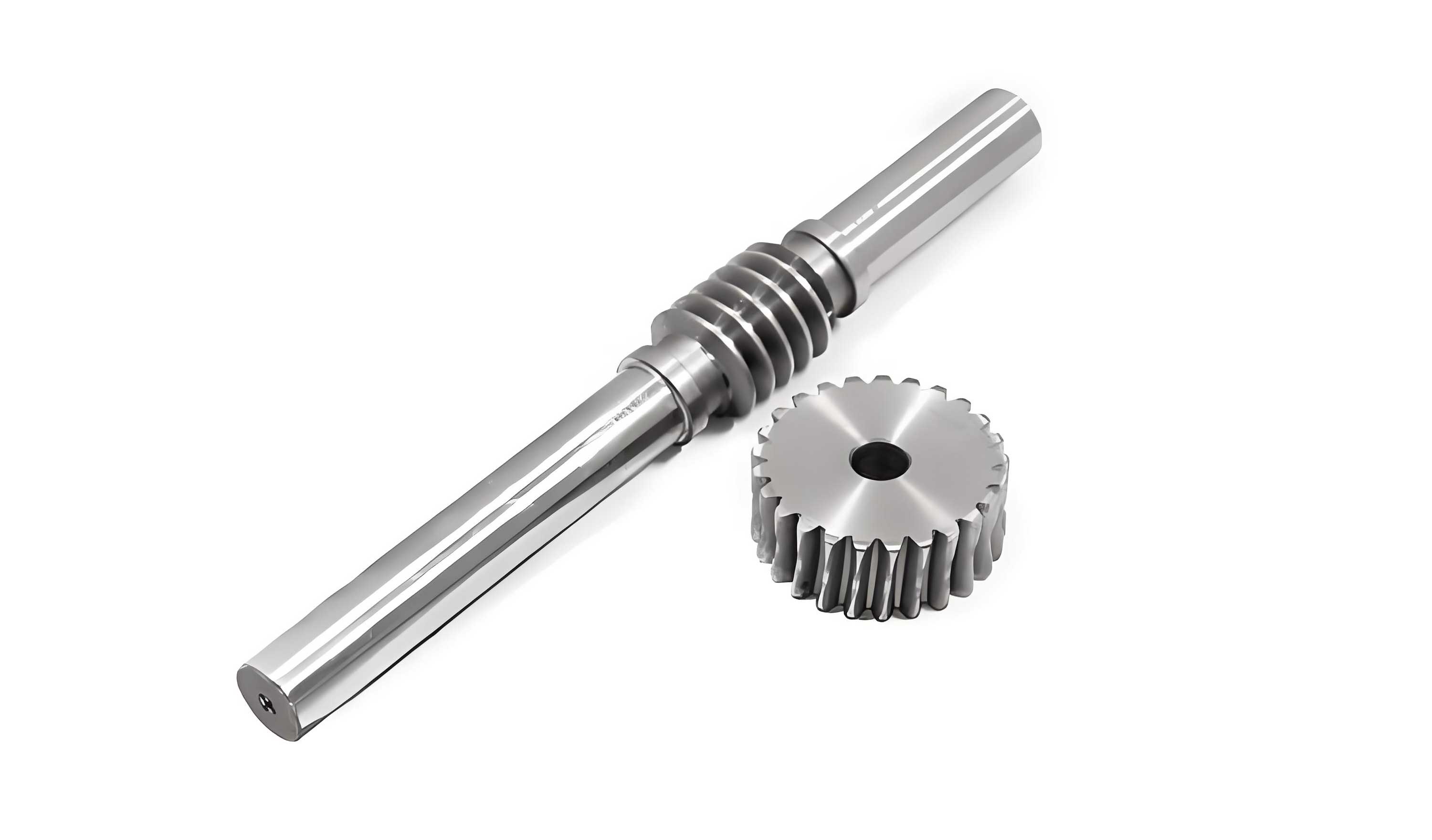
Understanding the structural principles of worm gear reducers is essential before delving into performance testing. A worm gear reducer consists of a worm (a screw-like gear) that meshes with a worm wheel (similar to a helical gear), typically arranged at a 90-degree angle. This configuration allows for significant speed reduction and torque multiplication in a compact footprint. The specific reducer discussed here features a multi-start worm made of hardened steel and a worm wheel fabricated from wear-resistant nylon, which reduces weight, minimizes heat generation, and lowers manufacturing costs. Key components include the housing, end covers, worm shaft, worm wheel, output shaft, bearings, and positioning sleeves. This design prioritizes high transmission accuracy, stiffness, and durability while maintaining a small form factor suitable for door control installations. The use of worm gears in this context offers advantages such as high reduction ratios, quiet operation, and inherent self-locking, though challenges like efficiency losses and thermal management must be addressed through rigorous testing.
The primary performance metrics for these worm gear reducers were derived from industry standards and specific door control requirements. These metrics include output shaft characteristics (axial clearance and radial runout), friction torque, backlash (or lost motion), ingress protection (IP) rating, short-term overload torque tolerance, high-speed operation capability, axial and radial load capacity, electrical parameters, loading performance, lifespan, and resistance to vibration and shock. For instance, a sample reducer with a center distance of 31 mm, a reduction ratio of 10:1, a rated speed of 3200 rpm at the input, and a rated torque of 4 Nm at the output was subjected to tests that often exceeded standard benchmarks to ensure reliability in safety-sensitive environments. The following sections detail the testing processes for each performance aspect, highlighting the methods, equipment, and rationale behind them.
Output Shaft Testing
The output shaft testing focuses on verifying axial clearance and radial runout, which are critical for ensuring precise positioning and minimal play in door control mechanisms. Excessive clearance or runout can lead to inaccuracies in door movement, increased wear, and potential failure. The test involves securing the worm gear reducer horizontally on a fixture and using a dial indicator to measure deviations.
Test Purpose: To determine if the axial clearance and radial runout of the output shaft meet precision-grade specifications.
Test Equipment: Dial indicator (micrometer).
Test Requirements: Axial clearance ≤ 0.1 mm; radial runout ≤ 0.03 mm.
Test Procedure: For axial clearance, the dial indicator is positioned with its contact point parallel to the shaft axis on the output shaft end. An axial force is applied in one direction, and the reading is recorded. An equal force is applied in the opposite direction, and the difference between the two readings gives the axial clearance. For radial runout, the reducer is connected to a motor and operated while the dial indicator measures the radial displacement at a point 2–3 mm from the shaft end. The maximum deviation is noted as the runout. This test ensures that the worm gears and associated components are assembled with tight tolerances, contributing to overall system rigidity.
Friction Torque Testing
Friction torque is a measure of the resistance within the worm gear reducer during operation, impacting efficiency and heat generation. Low friction torque is desirable to minimize energy loss and prevent overheating, especially in continuous duty cycles common in door control systems.
Test Purpose: To evaluate the friction torque of the worm gear reducer (including the integrated motor) under no-load conditions.
Test Equipment: Torque wrench (Model BME-006) and a custom friction torque test fixture.
Test Requirements: Maximum friction torque < 0.6 Nm.
Test Procedure: The reducer is fixed with its output shaft oriented vertically upward. The test fixture is attached to the output shaft, and the torque wrench is connected to the fixture. The shaft is rotated smoothly in both clockwise and counterclockwise directions three times, and the peak torque value observed during rotation is recorded as the friction torque. This test highlights the smoothness of the worm gears and bearings, with lower values indicating better manufacturing quality and lubrication.
Backlash Testing
Backlash, or lost motion, refers to the angular displacement between the input and output shafts when the input is held stationary. Excessive backlash can cause positioning errors and reduce system responsiveness, which is unacceptable in precision door control applications.
Test Purpose: To measure the angular backlash of the worm gear reducer.
Test Equipment: Dial gauge (percent indicator) and a backlash test fixture.
Test Requirements: Backlash ≤ 24 arcminutes.
Test Procedure: The reducer is mounted on a fixture with the output shaft connected to a lever arm of known length (e.g., 50 mm). The input shaft is locked, and the output shaft is gently oscillated. The dial gauge, placed at the end of the lever arm, records the linear displacement \( e \) in millimeters. The angular backlash \( \theta \) in arcminutes is calculated using the formula:
$$ \theta = 60 \times \arcsin\left(\frac{e}{50}\right) $$
This formula derives from the geometric relationship where the lever arm acts as the radius of rotation. For small angles, \( \arcsin(e/50) \approx e/50 \) radians, but the exact calculation ensures accuracy. This test is crucial for assessing the meshing precision of the worm gears, as tight backlash values contribute to higher positional accuracy.
Ingress Protection (IP) Rating Testing
Worm gear reducers in door control systems are often exposed to dust and moisture, making ingress protection vital for long-term reliability. The IP54 rating indicates protection against dust ingress and water splashes from any direction.
Test Purpose: To verify that the reducer meets IP54 standards for dust and water resistance.
Test Equipment: Dust test chamber and standard spray nozzle setup.
Test Requirements: After testing, the reducer must function normally without internal contamination or water damage.
Test Procedure: For dust testing, the reducer is placed in a chamber containing suspended talcum powder for 8 hours. Post-test, it is inspected for dust penetration and operational integrity. For water resistance, a spray nozzle is positioned 3 meters away, and water is sprayed at a flow rate of 10 L/min for 3 minutes from all directions. The reducer is then examined for water ingress and functionality. These tests ensure that the worm gears and internal components are adequately sealed, preventing environmental degradation.
High-Speed Testing
High-speed testing evaluates the worm gear reducer’s ability to operate at elevated input speeds without failure, simulating scenarios like emergency door operations or system overspeed events.
Test Purpose: To assess performance under high rotational speeds.
Test Equipment: High-speed test bench with a servo motor and cooling system.
Test Requirements: The reducer must function normally at an input speed of 10,000 rpm for 1 hour.
Test Procedure: The reducer (without motor) is mounted on a dummy shaft connected to a servo motor via a coupling. A cooling system is activated to manage heat. The servo motor is gradually accelerated to 10,000 rpm, maintained for 1 hour, and then decelerated. Temperature is monitored, and post-test functionality is checked. The test is repeated in reverse rotation. This validates the dynamic balance and thermal stability of the worm gears at extreme speeds.
Axial and Radial Load Testing
Door control mechanisms often impose axial and radial loads on the reducer output shaft due to door weight and operational forces. Testing these loads ensures structural integrity and bearing capacity.
Test Purpose: To determine the reducer’s tolerance to axial and radial forces.
Test Equipment: Custom load test fixtures with force application mechanisms.
Test Requirements: Axial load: 300 N; radial load: 350 N. After testing, the reducer must operate normally.
Test Procedure: For axial load testing, the reducer is mounted on a fixture, and a force of 300 N is applied axially to the output shaft while the reducer runs for 3 minutes. For radial load testing, a weight or force mechanism applies 350 N radially to the shaft end during operation. Performance is observed, and post-test checks ensure no deformation or damage. These tests confirm that the worm gears and shaft bearings can withstand typical installation stresses.
Loading Performance Testing
Loading tests simulate various operational conditions, from no-load to overload, to evaluate efficiency, noise, and thermal behavior. These tests are comprehensive and align with national standards for worm gear reducers.
Test Purpose: To characterize performance under different load conditions, including noise levels and overload capacity.
Test Equipment: Loading test bench with torque sensors, motor drives, and sound level meters.
Test Requirements: Noise ≤ 42 dB(A) under rated conditions (background noise considered); ability to handle 100% overload for 5 minutes and 150% overload for 1 minute.
Test Procedure: The reducer is installed on the test bench. Tests are conducted at no-load, rated load (4 Nm for 1 hour), 100% overload (8 Nm for 5 minutes), and 150% overload (10 Nm for 1 minute). At each stage, input speed is set to 3200 rpm, and noise is measured at 500 mm from the housing. Temperature rise of the motor and housing is recorded. The formula for noise correction accounts for background levels, but the key is ensuring the worm gears operate quietly and efficiently under load. The results validate the gear mesh quality and lubrication effectiveness.
High and Low Temperature Testing
Temperature extremes can affect material properties, lubrication viscosity, and clearances in worm gear reducers. Testing from -40°C to +85°C ensures reliability in diverse climates.
Test Purpose: To verify performance and integrity under thermal extremes.
Test Equipment: Environmental chamber (linear high-low temperature aging box).
Test Requirements: After 2-hour exposure at each extreme, friction torque must remain within limits, noise levels must be acceptable, and no grease leakage should occur at high temperature.
Test Procedure: The reducer is placed in the chamber at -40°C for 2 hours, then removed and tested for friction torque and noise. It is then subjected to +85°C for 2 hours and tested again, with additional checks for grease leakage. This test ensures that the worm gears and nylon components maintain dimensional stability and lubricant performance across the specified range.
Lifespan Testing
Lifespan testing is critical for door control applications, where millions of operating cycles are expected over the product’s lifetime. This test accelerates wear to predict long-term durability.
Test Purpose: To assess the operational life of the worm gear reducer under simulated door cycling conditions.
Test Equipment: Door control system test rig with cycle counters.
Test Requirements: Minimum of 3 million cycles without performance degradation.
Test Procedure: The reducer is integrated into a mock door control system. The motor cycles with a pattern: 3 seconds forward, 1 second stop, 3 seconds reverse, 1 second stop, at rated load. Cycle counts are recorded, and performance parameters (e.g., friction torque, backlash) are checked at intervals (e.g., 300k, 900k cycles up to 3 million). This test directly evaluates the wear resistance of the worm gears and other moving parts over extended use.
Vibration and Shock Testing
Vibration and shock testing simulates transportation and operational vibrations to ensure structural robustness and reliability in harsh environments, such as rail transit.
Test Purpose: To validate the reducer’s resistance to mechanical vibrations and shocks per relevant standards.
Test Equipment: Vibration and shock test platform.
Test Requirements: Compliance with Class 1, Level B of GB/T 21563 (or equivalent standards).
Test Procedure: The reducer is subjected to long-duration random vibrations, shocks, and functional random vibrations in three orthogonal axes (vertical, longitudinal, lateral). Pre- and post-test inspections assess functionality and structural integrity. The vibration profile, such as power spectral density, is controlled to mimic real-world conditions. This test ensures that the worm gears and housing can endure dynamic stresses without failure.
Summary of Test Results
The testing process yielded consistent data across all performance metrics, confirming that the worm gear reducers met the stringent requirements for door control applications. Below is a table summarizing the key test results for the sample reducer:
| Test Parameter | Requirement | Test Result |
|---|---|---|
| Output Shaft Axial Clearance | ≤ 0.1 mm | 0.08 mm |
| Output Shaft Radial Runout | ≤ 0.03 mm | 0.02 mm |
| Friction Torque | < 0.6 Nm | 0.2–0.4 Nm |
| Backlash | ≤ 24 arcmin | 17 arcmin |
| Ingress Protection | IP54 | IP54 achieved |
| High-Speed Operation | 10,000 rpm input | Stable for 1 hour |
| Axial Load Capacity | 300 N | No issues observed |
| Radial Load Capacity | 350 N | No issues observed |
| Loading Performance (Overload) | 150% for 1 minute | Successful operation |
| High/Low Temperature | -40°C to +85°C | Parameters within limits |
| Lifespan | 3 million cycles | Achieved without failure |
| Vibration and Shock | Class 1, Level B | Compliant |
These results demonstrate that the worm gear reducers exhibit high precision, durability, and environmental resistance. The friction torque values, for instance, were well below the threshold, indicating efficient gear meshing and lubrication. The backlash measurement of 17 arcminutes reflects tight manufacturing tolerances, essential for precise door positioning. Moreover, the successful completion of lifespan and overload tests underscores the robustness of the worm gears under sustained and peak loads.
Formulas and Calculations in Testing
Throughout the testing process, mathematical formulas were employed to quantify performance metrics. For example, the backlash calculation relies on trigonometric principles. Given the lever arm length \( L = 50 \) mm and the linear displacement \( e \) (in mm), the angular backlash \( \theta \) in arcminutes is computed as:
$$ \theta = 60 \times \arcsin\left(\frac{e}{L}\right) $$
Since \( \arcsin \) returns an angle in radians, the multiplication by 60 converts it to arcminutes (1 radian ≈ 3437.75 arcminutes, but the factor 60 arises from the small-angle approximation and unit conversion). This formula is pivotal for accurate backlash assessment in worm gear systems.
Another important aspect is the efficiency of worm gears, which can be estimated using the formula for mechanical efficiency \( \eta \):
$$ \eta = \frac{\tan(\lambda)}{\tan(\lambda + \phi)} $$
where \( \lambda \) is the lead angle of the worm and \( \phi \) is the friction angle. While not directly measured in all tests, this relationship influences friction torque and thermal performance. During loading tests, power loss \( P_{\text{loss}} \) can be derived from torque and speed measurements:
$$ P_{\text{loss}} = T \times \omega \times (1 – \eta) $$
with \( T \) as torque and \( \omega \) as angular velocity. These formulas help in analyzing the performance data collected from the worm gear reducers.
Conclusion
The development and implementation of this comprehensive testing process for worm gear reducers have proven invaluable in achieving a product that meets the high demands of door control systems. By focusing on key performance indicators such as output shaft accuracy, friction torque, backlash, and environmental resilience, we ensured that the worm gears could deliver reliable and precise motion control in safety-critical applications. The use of custom test fixtures and standard equipment provided a cost-effective solution for iterative design validation, allowing for optimization of gear geometry, material selection, and lubrication strategies.
The repeated emphasis on worm gears throughout this discussion highlights their central role in the reducer’s functionality. The testing outcomes, summarized in tables and supported by formulas, offer a clear framework for quality assurance and performance benchmarking. Future work may involve extending these tests to other reducer variants or integrating real-time monitoring systems for predictive maintenance. Ultimately, this testing methodology not only validates the current design but also sets a precedent for evaluating similar compact drive systems in industrial and transportation sectors. The success of these worm gear reducers in meeting stringent standards underscores the importance of rigorous, methodical testing in engineering development.