
In the realm of precision mechanical transmission components, the planetary roller screw assembly stands out as a critical innovation for converting rotational motion into linear motion and vice versa. As an integral part of high-end equipment, this assembly offers distinct advantages over traditional ball screw systems, including higher load capacity, greater efficiency, and enhanced durability under demanding conditions. In this article, I will delve into the planetary roller screw assembly industry, examining its development, manufacturing, testing, and applications from a first-person analytical perspective. I aim to provide a detailed overview, enriched with tables and formulas, to summarize the current state and future directions of this technology.
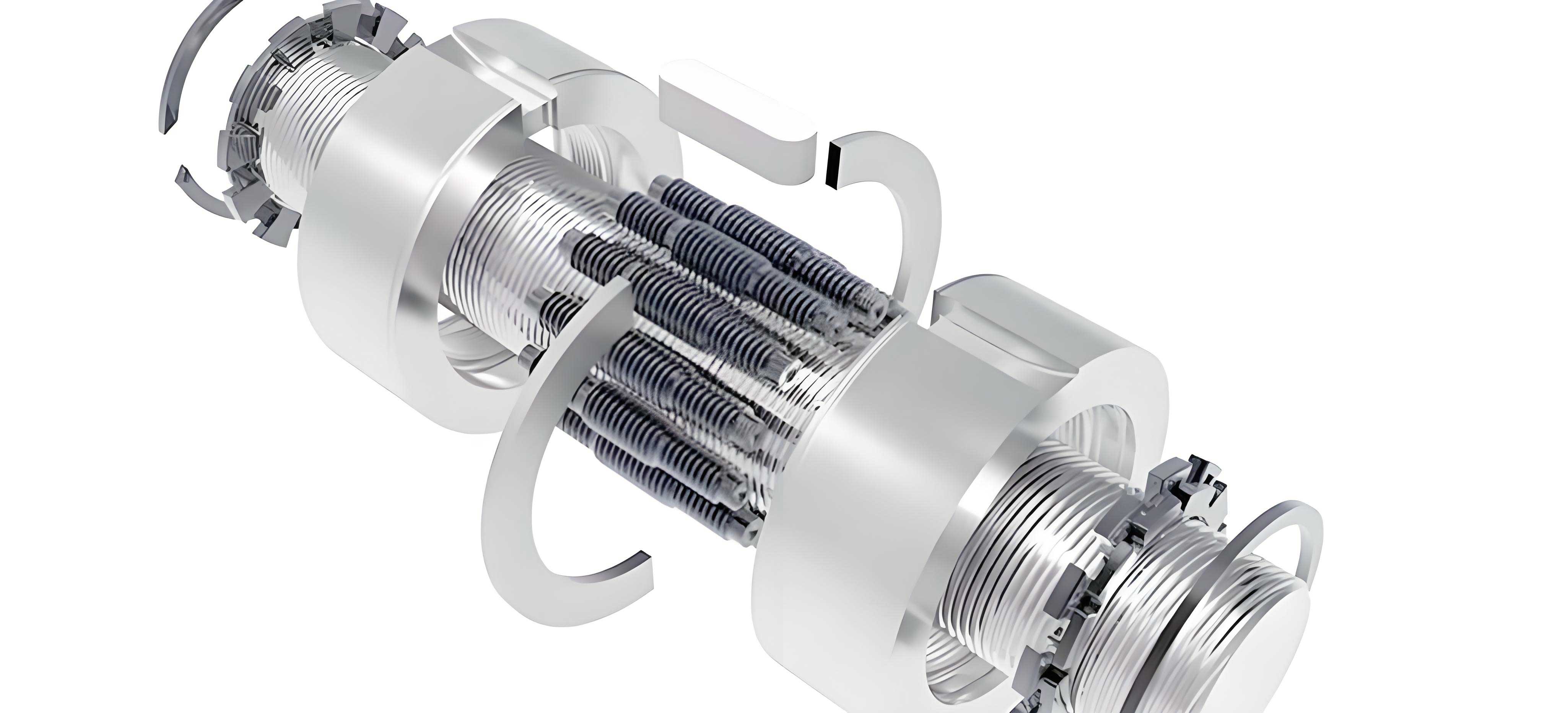
The planetary roller screw assembly functions similarly to a ball screw but utilizes threaded rollers arranged in a planetary configuration around a central screw. This design significantly increases the contact area, leading to superior performance metrics. The fundamental mechanics can be described using the following relationship for linear displacement per revolution: $$ L = P \cdot n $$ where \( L \) is the linear displacement, \( P \) is the pitch of the screw, and \( n \) is the number of revolutions. For a planetary roller screw assembly, the effective load distribution among multiple rollers enhances its capacity, which can be approximated by: $$ F_{max} = k \cdot A_c \cdot \sigma_{allow} $$ where \( F_{max} \) is the maximum axial load, \( k \) is a load distribution factor dependent on the number of rollers, \( A_c \) is the total contact area, and \( \sigma_{allow} \) is the allowable contact stress. This foundational principle underpins why the planetary roller screw assembly is favored in applications requiring high precision and robustness.
Historically, the planetary roller screw assembly was patented in the mid-20th century, but its widespread adoption has been limited by manufacturing complexities and cost. Compared to ball screws, the planetary roller screw assembly involves more intricate components, such as the screw, nut, and multiple rollers with precise threading, necessitating advanced machining techniques. The efficiency \( \eta \) of a planetary roller screw assembly can be expressed as: $$ \eta = \frac{T_{out}}{T_{in}} \approx \frac{F \cdot L}{2\pi \cdot T} $$ where \( T_{out} \) is the output torque, \( T_{in} \) is the input torque, \( F \) is the axial force, and \( T \) is the input rotational torque. Typically, the planetary roller screw assembly achieves efficiencies above 90%, outperforming ball screws in high-load scenarios. This performance edge has driven its integration into sectors like aerospace, defense, and industrial automation, where reliability and compactness are paramount.
To contextualize the global landscape, I have analyzed the planetary roller screw assembly industry across various dimensions, including research, production, and market penetration. The following table summarizes key international and domestic players, highlighting their focus areas and product maturity.
| Region | Key Entities (Generalized) | Primary Focus | Product Maturity | Notable Applications |
|---|---|---|---|---|
| International | European and American manufacturers (e.g., firms in Switzerland, Germany, Sweden, USA) | High-precision design, lubrication systems, structural optimization | Commercialized with mature product lines | Aerospace actuators, military vehicles, robotic systems, automotive production lines |
| Domestic | Research institutes and limited domestic companies | Basic theoretical research, prototype development, small-batch production | R&D or early-stage commercialization | Specialized machinery, testing equipment, pilot projects in industrial automation |
From my assessment, international advancements in the planetary roller screw assembly are driven by decades of empirical experience and robust R&D investments. These entities have developed comprehensive theoretical frameworks for accuracy grading, maintenance protocols, and system integration. For instance, the planetary roller screw assembly products are categorized into several types, such as standard, recirculating, and miniature lead variants, each tailored for specific operational needs. The table below delineates common product classifications and their characteristics.
| Product Type | Description | Typical Lead Range (mm) | Accuracy Grade (Based on Standards) | Primary Use Cases |
|---|---|---|---|---|
| Standard Planetary Roller Screw Assembly | General-purpose design with threaded rollers | 0.5 to 50 | G1 to G5 | Industrial machinery, actuators |
| Recirculating Planetary Roller Screw Assembly | Incorporates recirculation mechanisms for continuous motion | 1 to 30 | G3 to G7 | High-speed automation, CNC systems |
| Miniature Lead Planetary Roller Screw Assembly | Small nut diameter with fine pitch for precision | 0.1 to 2 | G1 to G4 | Medical devices, optical instruments |
| Fixed-Axle Planetary Roller Screw Assembly | Rollers fixed relative to nut for simplified construction | 2 to 20 | G4 to G8 | Heavy-duty lifting, defense equipment |
In contrast, domestic progress in planetary roller screw assembly technology is still nascent, with research primarily concentrated in academic institutions. Studies have focused on theoretical aspects like meshing dynamics, friction analysis, and stiffness computations. For example, the contact stiffness \( K_c \) in a planetary roller screw assembly can be modeled using Hertzian contact theory: $$ K_c = \frac{2E}{1-\nu^2} \sqrt{\frac{R}{\delta}} $$ where \( E \) is the modulus of elasticity, \( \nu \) is Poisson’s ratio, \( R \) is the effective radius of curvature, and \( \delta \) is the deformation. While such theoretical work is valuable, translational to practical, high-volume manufacturing remains a challenge due to limitations in machining infrastructure and process control.
The material selection and heat treatment processes are pivotal for the performance and longevity of a planetary roller screw assembly. Internationally, standard materials include martensitic stainless steels and high-carbon chromium bearing steels, hardened to achieve surface hardness above HRC 56. The wear resistance and fatigue life are enhanced through treatments like carburizing or carbonitriding. The relationship between hardness \( H \) and wear rate \( W \) can be approximated by: $$ W \propto \frac{1}{H^n} $$ where \( n \) is an exponent typically around 2-3 for steel alloys. For specialized applications, such as high-temperature environments, materials like alloy steels (e.g., 42CrMo) are employed, with quenching and tempering to attain core toughness and surface hardness. The table below compares common materials and their properties used in planetary roller screw assembly components.
| Component | Typical Material | Heat Treatment | Hardness (HRC) | Key Properties |
|---|---|---|---|---|
| Screw | 42CrMo alloy steel | Surface hardening (e.g., induction hardening) | 54-60 | High strength, good fatigue resistance |
| Nut and Rollers | GCr15 bearing steel | Through-hardening (quenching and tempering) | 56-60 | Excellent wear resistance, uniform hardness |
| Specialty Screw (High-Temp) | 100Cr6 steel | Deep hardening | >58 | Stability at temperatures up to 180°C |
Manufacturing and installation of a planetary roller screw assembly demand precision equipment and skilled labor. Internationally, dedicated machinery ensures accuracies up to grade G5, with stringent quality assurance protocols. The lead error \( \Delta L \) over a length \( l \) can be controlled to within micrometers, following standards like DIN 69051-3. Installation guidelines emphasize proper handling to prevent corrosion, with torque settings aligned to specifications such as VDI 2230. Domestically, efforts often adapt ball screw manufacturing lines, but this can limit consistency. The production yield \( Y \) for a planetary roller screw assembly can be expressed as: $$ Y = \prod_{i=1}^{n} (1 – p_i) $$ where \( p_i \) is the defect probability at each process step, underscoring the need for optimized workflows.
Testing and validation are crucial for the planetary roller screw assembly, particularly for military and aerospace applications. International companies utilize advanced test rigs to evaluate parameters like dynamic stiffness, speed up to 2 m/s, and lifespan under extreme loads. The dynamic stiffness \( K_d \) can be calculated from frequency response data: $$ K_d = \frac{F(\omega)}{X(\omega)} $$ where \( F(\omega) \) is the force amplitude at frequency \( \omega \), and \( X(\omega) \) is the displacement amplitude. Domestic testing capabilities are emerging, with platforms developed for performance verification, but they often lack the scope for high-volume qualification.
From an application standpoint, the planetary roller screw assembly has seen widespread use internationally in both civilian and defense sectors. In civilian domains, it integrates into electric actuators for valve control, plastic injection molding machines, and autonomous vehicle systems. The force output \( F \) of such an actuator can be derived from the motor torque \( T_m \) and assembly efficiency: $$ F = \frac{2\pi \cdot \eta \cdot T_m}{P} $$ where \( P \) is the screw pitch. In defense, examples include aircraft landing gear, submarine simulators, and weapon deployment systems, where the planetary roller roller screw assembly’s reliability under harsh conditions is critical. Domestically, applications are limited to pilot projects, such as in specialized machinery or test benches, with few instances of large-scale deployment.
Based on my analysis, the industrialization of planetary roller screw assembly products faces several barriers domestically, including equipment limitations, process inefficiencies, and a shortage of expertise. To address these, I propose the following recommendations, summarized in the table below, to foster growth and competitiveness in the planetary roller screw assembly market.
| Recommendation Area | Specific Actions | Expected Outcome |
|---|---|---|
| Manufacturing Technology | Invest in R&D for fine-lead, high-precision machining equipment; develop dedicated production lines for planetary roller screw assembly components. | Improved product accuracy (e.g., achieve G3 grade consistently), reduced production costs. |
| Workforce Development | Establish training programs for technicians on planetary roller screw assembly fabrication and quality control; promote industry-academia collaborations. | Enhanced skill sets, lower defect rates, faster adoption of best practices. |
| Material and Heat Treatment | Research advanced alloys and surface treatments for extreme environments (e.g., nuclear, military); optimize hardening processes for durability. | Extended service life, suitability for high-temperature and high-wear applications. |
| Testing Infrastructure | Build comprehensive test platforms for dynamic performance, fatigue, and environmental simulation; align with international standards. | Reliable product validation, faster certification for critical sectors. |
| Industry Collaboration | Encourage partnerships between research institutions and manufacturers to leverage theoretical models and practical expertise for planetary roller screw assembly innovation. | Accelerated prototyping, knowledge transfer, and commercialization of new designs. |
In conclusion, the planetary roller screw assembly represents a transformative technology in motion control systems, with proven benefits in load capacity, speed, and precision. My examination reveals a mature international industry supported by extensive R&D and manufacturing prowess, whereas domestic efforts are still evolving. The potential for the planetary roller screw assembly in emerging fields like all-electric machinery and advanced robotics is substantial, but realizing this requires concerted efforts in technology upgrading, skill development, and strategic investments. By focusing on these areas, the planetary roller screw assembly can become a cornerstone of next-generation industrial automation, contributing to broader technological self-reliance and innovation.
Throughout this discussion, I have emphasized the multifaceted nature of the planetary roller screw assembly, from its mechanical principles to industrial applications. The integration of formulas and tables aims to provide a quantitative foundation for understanding its advantages and challenges. As the demand for high-performance actuators grows, the planetary roller screw assembly will undoubtedly play an increasingly vital role, and addressing the identified gaps will be key to unlocking its full potential in global markets.