
The planetary roller screw assembly (PRSA) stands as a pivotal electromechanical actuator component, whose performance directly reflects a nation’s capability in precision manufacturing. As a core linear transmission element in high-end equipment, its technological advancement is crucial for maintaining industrial competitiveness. With the rapid development of advanced manufacturing and industrial machinery, user demands for higher transmission performance, service life, and reliability of the planetary roller screw assembly are increasingly stringent.
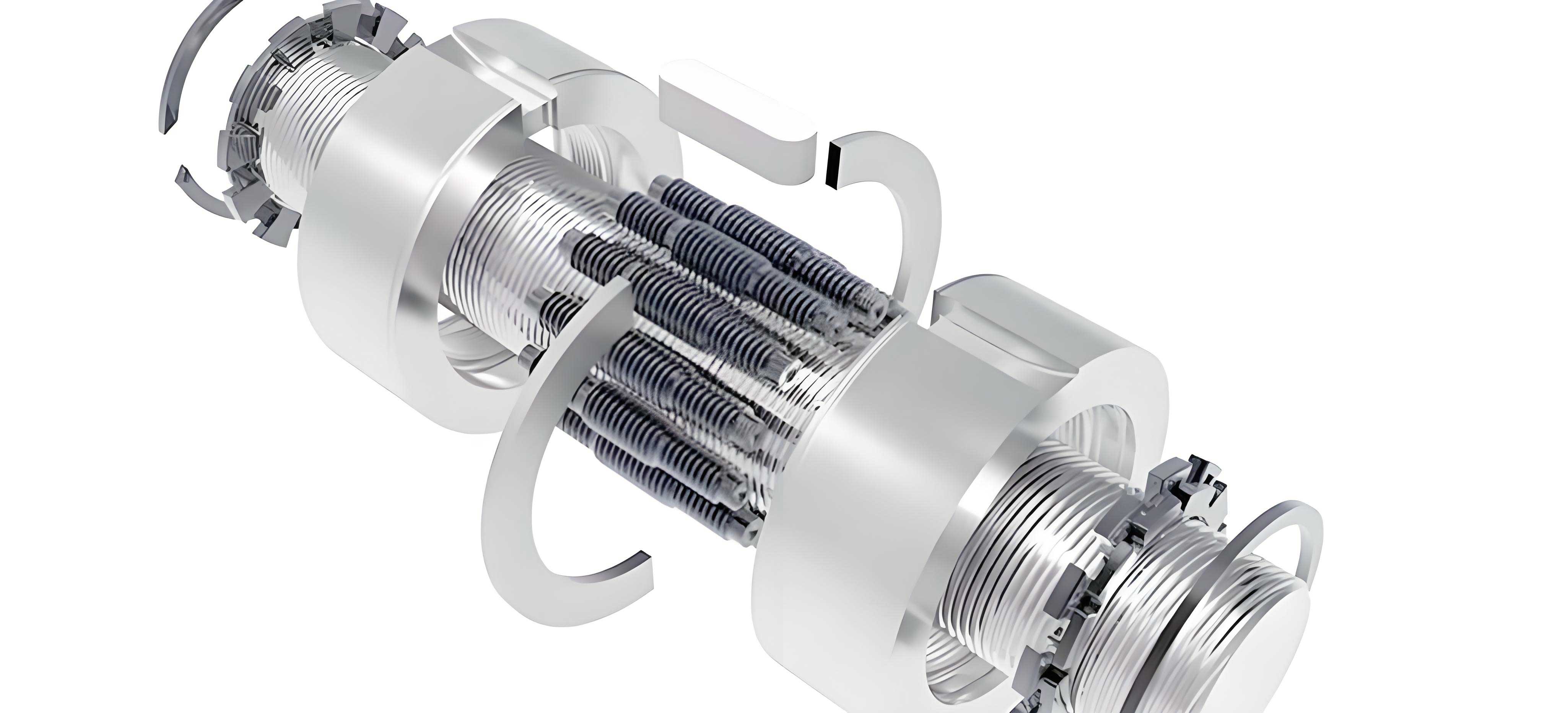
A planetary roller screw assembly is a mechanical device that converts rotary motion into linear motion. It is renowned for its high load capacity, precision, and long service life, finding extensive applications in machine tools, automotive systems, semiconductor manufacturing, and aerospace. Its core components include the screw, nut, rollers, internal gear ring (or synchronizing gear), and a retainer/cage. The rollers perform a planetary motion between the screw and nut, engaging with both via threaded flanks to transmit motion and force. The retainer and internal gear ring play critical roles in positioning and power transmission, respectively.
Currently, disparities in design, machining, and manufacturing technologies mean that domestic planetary roller screw assembly products lag behind international counterparts in key transmission characteristics such as accuracy and efficiency. For instance, the highest international precision grade reaches G1, while domestic products typically achieve only G3. Transmission efficiency for domestic products is often about 10% lower. Life testing under identical conditions shows that domestic planetary roller screw assemblies exhibit earlier wear or roller jamming, resulting in significantly shorter service life. Suboptimal transmission characteristics are a primary contributor to these issues. Therefore, in-depth research into the transmission characteristics of the planetary roller screw assembly is imperative for optimizing parameters, reducing losses, and enhancing performance, thereby fostering the development of high-end manufacturing.
Evolution and Current Landscape of the Planetary Roller Screw Assembly
Since the mid-20th century, roller screw technology has evolved significantly. The fundamental concept of the planetary roller screw assembly was first patented in the 1940s. Subsequent developments led to the establishment of four primary structural configurations, as summarized below:
| Type | Key Features & Motion Relationship | Typical Applications |
|---|---|---|
| Standard/Inverted | Rollers circulate around the screw. The nut or screw has a helical groove, while the other has a straight groove or gear ring for synchronization. $$ \text{Lead}_{screw} = n \cdot \text{Lead}_{roller} $$ where \(n\) is the number of roller threads. | High-precision machine tools, aerospace actuators (e.g., flight control, landing gear). |
| Recirculating | Rollers are guided by a retainer on a closed path, re-circulating within the nut. Allows for long strokes. | Industrial automation, large-stroke linear drives. |
| Differential | Utilizes two screw sections with slightly different leads or a lead difference between screw and nut. Provides high reduction ratios and very fine resolution. $$ \Delta L = |P_s – P_n| \cdot \frac{\theta}{2\pi} $$ where \(P_s\) and \(P_n\) are screw and nut leads, \(\theta\) is rotation angle. | Ultra-precision positioning systems, scientific instruments. |
| Reverse (for Robotics) | The nut rotates and drives the screw linearly, often with a compact form factor. The roller motion principle remains planetary. | Joint actuators for humanoid robots (shoulder, elbow, knee). |
The global market for high-performance planetary roller screw assembly products has seen consolidation, with a few European companies historically dominating. However, the recent surge in demand from sectors like humanoid robotics has stimulated significant R&D and product development efforts worldwide, aiming to achieve localization of these critical components.
State of Research on Transmission Characteristics of the Planetary Roller Screw Assembly
Transmission characteristics are multifaceted, encompassing contact behavior, efficiency, and accuracy. Research in these areas is foundational for performance enhancement.
1. Contact Characteristics
Contact analysis is crucial for understanding load distribution, stress, stiffness, and wear in a planetary roller screw assembly. Research methodologies primarily involve differential geometry, Hertzian contact theory, and finite element analysis (FEA).
Differential geometry is used to establish kinematic models and geometric relationships. The contact condition between the screw-roller and nut-roller interfaces can be derived from conjugate surface theory. The coordinates of a point on the screw thread surface \(\mathbf{r}_s(u, v)\) and its corresponding point on the roller thread surface \(\mathbf{r}_r(u’, v’)\) must satisfy:
$$ \mathbf{r}_s(u, v) = \mathbf{r}_r(u’, v’) $$
$$ \mathbf{n}_s(u, v) \cdot \mathbf{v}_{sr} = 0 $$
where \(\mathbf{n}_s\) is the normal vector on the screw surface and \(\mathbf{v}_{sr}\) is the relative sliding velocity. These models help calculate sliding velocities and contact paths but often assume rigid bodies, neglecting deformations.
Hertzian contact theory is employed to estimate contact pressure and deformation in the elastic regime. For the line contact approximation in a planetary roller screw assembly, the half-width \(b\) of the contact ellipse and maximum contact pressure \(p_0\) are given by:
$$ b = \sqrt{\frac{4 F \rho}{\pi L E^*}} , \quad p_0 = \sqrt{\frac{F E^*}{\pi \rho L}} $$
where \(F\) is the normal load per unit length, \(\rho\) is the equivalent radius of curvature, \(L\) is the effective contact length, and \(E^*\) is the equivalent elastic modulus. This approach is widely used for static load distribution models among rollers. A common model for the load on the \(i\)-th roller \(F_i\) considers the axial load \(F_a\) and a distribution factor:
$$ F_i = \frac{F_a}{n \cos \alpha \cos \beta} \cdot \kappa_i $$
where \(n\) is the number of rollers, \(\alpha\) is the thread profile angle, \(\beta\) is the helix angle, and \(\kappa_i\) is a coefficient accounting for manufacturing errors and deformations. Recent advanced models integrate radial loads \(F_r\) and tilting moments \(M\), showing periodic contact force variation and non-uniform load sharing.
Finite Element Analysis provides the most detailed insight into complex contact phenomena, including effects of bending, detailed thread root stresses, and thermal-mechanical coupling. However, it is computationally expensive, especially for full assembly models with multiple rollers under dynamic conditions.
| Research Method | Advantages | Limitations | Key Focus in PRSA |
|---|---|---|---|
| Differential Geometry | Provides exact kinematic relations and sliding velocities. Essential for geometric design. | Assumes rigidity; cannot predict loads or deformations. | Contact path, pure-rolling condition analysis, geometric error modeling. |
| Hertzian Theory | Analytical solution for elastic contact stress and deformation. Efficient for parametric studies. | Assumes smooth, homogeneous, elastic half-spaces; ignores edge effects and plastic deformation. | Static load distribution, axial stiffness calculation, preliminary stress analysis. |
| Finite Element Analysis | Captures complex geometry, material nonlinearity, and full-field stress/strain. Handles assembly-level analysis. | High computational cost; model preparation is time-consuming; contact convergence issues. | Detailed stress concentration, effects of bending and misalignment, thermo-mechanical analysis. |
2. Transmission Efficiency
Transmission efficiency \(\eta\) of a planetary roller screw assembly is a critical performance metric, defined as the ratio of useful output power to input power. Losses primarily stem from friction at the threaded contacts, bearing friction, and windage.
$$ \eta = \frac{P_{out}}{P_{in}} = \frac{F_a \cdot v}{T \cdot \omega} $$
where \(F_a\) is the axial output force, \(v\) is the linear speed, \(T\) is the input torque, and \(\omega\) is the input angular speed.
The friction torque \(T_f\) in a planetary roller screw assembly has several components: rolling friction \(T_{roll}\), sliding friction \(T_{slide}\), and viscous friction \(T_{visc}\). A simplified model for the total resistive torque can be expressed as:
$$ T_f = T_{roll} + T_{slide} + T_{visc} = \frac{F_a d_m}{2} \left( \frac{\mu_r}{\cos \alpha} + \tan \beta \right) + f_v \omega $$
where \(d_m\) is the pitch diameter, \(\mu_r\) is an equivalent rolling/sliding friction coefficient, \(\beta\) is the helix angle, and \(f_v\) is a viscous damping coefficient. This model shows that efficiency is highly dependent on the helix angle \(\beta\) and the friction coefficient. A major research focus is on dissecting the mixed lubrication regime in the thread contacts, where fluid film lubrication and asperity contact coexist. The friction coefficient \(\mu\) itself is a function of the specific film thickness \(\lambda\):
$$ \lambda = \frac{h_{\min}}{\sqrt{R_{q,s}^2 + R_{q,r}^2}} $$
where \(h_{min}\) is the minimum lubricant film thickness and \(R_q\) are the surface roughness values. For \(\lambda > 3\), full-film lubrication dominates with low friction; for \(\lambda < 1\), boundary lubrication with high friction prevails. The planetary roller screw assembly often operates in the mixed regime (\(1 < \lambda < 3\)).
Experimental studies on dedicated test rigs have mapped efficiency against operational parameters. Key findings include:
– Efficiency generally increases with axial load up to a point, then may plateau or decrease due to increased friction losses.
– Forward (screw-driven) efficiency is typically higher than reverse (nut-driven) efficiency.
– Speed has a complex effect, influencing both viscous losses and lubrication regime.
– Preload, while increasing stiffness and accuracy, invariably reduces transmission efficiency due to increased constant friction torque.
Structural optimization for efficiency involves:
– Thread Parameter Design: Optimizing helix angle \(\beta\) and profile angle \(\alpha\). A larger \(\beta\) reduces the slide-to-roll ratio but can impact stability and load capacity.
– Roller Configuration: Optimizing the number, diameter, and surface finish of rollers to balance load sharing and friction.
– Clearance/Preload Management: Precisely controlling axial backlash to minimize unnecessary sliding and vibration without inducing excessive preload friction.
| Factor | Influence on Efficiency | Mechanism |
|---|---|---|
| Helix Angle (β) | Optimum value exists. Increasing β reduces sliding friction component but may lower mechanical advantage. | Changes the slide-to-roll ratio at the contact. $$ \text{Slide-to-Roll Ratio} \propto \sin \beta $$ |
| Axial Load (Fa) | Efficiency usually increases initially with load, then stabilizes or decreases. | At low load, boundary friction dominates. Higher loads promote elastohydrodynamic lubrication (EHL), reducing friction coefficient until other losses become significant. |
| Speed (ω, v) | Complex non-linear relationship. Often an optimum speed range exists. | Higher speeds improve EHL film thickness but increase viscous churning and windage losses. |
| Preload | Reduces maximum efficiency. | Introduces constant internal friction torque independent of external load. $$ T_{f,preload} = K \cdot F_{preload} $$ |
| Lubrication & Surface Finish | Critical for achieving high efficiency. | Determines the operative lubrication regime (boundary, mixed, EHL). Smoother surfaces promote thicker fluid films. |
3. Transmission Accuracy
Transmission accuracy refers to the fidelity with which the input rotary motion is converted to output linear motion in a planetary roller screw assembly. It is quantified by positioning error, repeatability, and backlash. Errors are cumulative and stem from multiple sources.
Error sources can be categorized and modeled as follows:
Geometric/Manufacturing Errors: These are built into the components.
– Lead error \(\delta P\): Deviation in the pitch of the screw, rollers, or nut.
– Profile angle error \(\delta \alpha\): Deviation from the nominal thread flank angle.
– Eccentricity \(e\): Misalignment of the component’s axis of rotation.
– Cumulative pitch error over a travel length \(L\): \(\Delta L_{geo} = \sum \delta P + f(e, \delta \alpha, L)\).
Elastic Deformations: Under load, the components deform, causing displacement losses.
– Axial deformation of the screw: \(\delta_{screw} = \frac{F_a L}{A_s E}\)
– Contact deformation at thread interfaces (using Hertzian or empirical stiffness \(K_c\)): \(\delta_{contact} = \frac{F_i}{K_c}\)
– Bending deformation of rollers and screw under radial loads.
The total elastic displacement loss \(\Delta L_{elastic}\) is a superposition of these effects.
Thermal Errors: Frictional heat generation causes non-uniform thermal expansion.
– Temperature rise \(\Delta T\) leads to thermal strain \(\epsilon_{th} = \alpha_{th} \Delta T\).
– The associated thermal growth error \(\Delta L_{thermal}\) depends on the temperature distribution \(\Delta T(x,y,z)\) and the coefficient of thermal expansion \(\alpha_{th}\):
$$ \Delta L_{thermal} = \int_0^L \alpha_{th} \cdot \Delta T(x) \, dx $$
This is a major source of drift error in precision applications of the planetary roller screw assembly.
Kinematic Errors: These include errors in the planetary motion, such as roller skid or slip, which violate the ideal kinematic relationship:
$$ \text{Ideal: } v = \frac{P_s}{2\pi} \omega $$
$$ \text{With slip: } v = \frac{P_s}{2\pi} \omega – v_{slip} $$
A comprehensive accuracy model for a planetary roller screw assembly combines these errors:
$$ \text{Total Position Error} = \Delta L_{geo} + \Delta L_{elastic}(F_a, F_r, M) + \Delta L_{thermal}(T, t) + \Delta L_{kinematic} + \text{Backlash} $$
Error compensation techniques are vital for high-accuracy applications. These include:
– Software Compensation: Using a pre-measured error map to offset the command signal.
– Thermal Compensation: Using temperature sensors and a model to predict and correct \(\Delta L_{thermal}\) in real-time.
– Active Control: Using feedback from a high-resolution linear encoder to close the position loop, effectively negating all errors within the bandwidth of the control system, though this does not reduce the mechanical errors within the planetary roller screw assembly itself.
| Error Type | Primary Cause | Nature | Compensation Strategy |
|---|---|---|---|
| Geometric (Static) | Machining inaccuracies (lead, profile, roundness). | Systematic and repeatable over travel. Can be mapped. | Error mapping and software compensation. Improved manufacturing. |
| Elastic (Quasi-Static) | Load-induced deformations of screw, nut, rollers, and contacts. | Function of applied load. Hysteresis may be present. | Model-based compensation using load measurement. Stiffness optimization. |
| Thermal (Dynamic) | Frictional and ambient heat causing expansion. | Time-varying, depends on operating history and conditions. | Thermal models with real-time temperature feedback. Active cooling. |
| Kinematic (Dynamic) | Roller skid, loss of synchronization. | Stochastic, often related to lubrication, load, or acceleration transients. | Optimized preload, lubrication, and control to avoid slip conditions. |
Future Research Directions for the Planetary Roller Screw Assembly
1. Development of High-Fidelity Multi-Physics Models
Future models for the planetary roller screw assembly must transcend single-domain analyses. Integrated multi-physics models coupling dynamics, tribology, thermodynamics, and control are needed. This involves:
– Nonlinear dynamic models that capture transient behaviors like start-up, reversal, and response to impact loads in a planetary roller screw assembly.
– Advanced tribological models integrating mixed-EHL, surface texture effects, and wear progression to predict friction and life more accurately.
– High-fidelity thermal models predicting spatially and temporally varying temperature fields and their impact on thermo-elastic deformations and clearances.
– Digital twin frameworks that combine these models with real-time sensor data for predictive health monitoring and performance optimization of the planetary roller screw assembly.
2. Advancements in Manufacturing and Metrology
The cost and performance of a planetary roller screw assembly are inextricably linked to manufacturing precision. Key challenges include:
– Ultra-Precision Grinding: Developing processes and machine tools capable of consistently achieving sub-micron accuracy on long, slender screws and complex internal nut threads. This is critical for achieving G1/G0 grade performance in a planetary roller screw assembly.
– Surface Engineering: Implementing post-grinding processes like superfinishing, polishing, or laser micro-texturing to achieve superior surface integrity (low roughness, compressive residual stress) that enhances fatigue life and lubrication.
– Intelligent Process Control: Integrating in-process metrology and adaptive control to compensate for thermal drift, wheel wear, and machine vibrations in real-time, minimizing geometric and form errors.
3. Innovations in Materials and Lubrication Systems
– Advanced Materials: Exploring high-strength, wear-resistant alloys, ceramics, or composite materials for critical components. Functional coatings (e.g., DLC, nanocomposite coatings) can drastically reduce friction and wear in the thread contacts of a planetary roller screw assembly.
– Smart Lubrication: Moving beyond static grease packing. Research into:
– Advanced lubricant formulations with solid additives (e.g., graphene, nanotubes) for extreme pressure and temperature conditions.
– Minimum Quantity Lubrication (MQL) or oil-air systems for precise, clean, and efficient lubrication delivery.
– Self-lubricating composite materials or surface-embedded solid lubricants for maintenance-free or long-life applications of the planetary roller screw assembly.
Conclusion
The transmission characteristics of the planetary roller screw assembly have garnered significant research attention, yet the field remains in a stage of active development rather than possessing a mature, complete technological system. Current research on contact mechanics, efficiency, and accuracy provides a solid foundation but often addresses these aspects in isolation.
The path forward requires a holistic, systems-level approach. The integration of high-fidelity multi-physics models will enable accurate prediction and optimization of performance under real-world operating conditions. Breakthroughs in ultra-precision manufacturing are essential to translate optimal designs into physical reality, making high-performance planetary roller screw assembly products more accessible. Simultaneously, innovations in materials science and tribology will push the boundaries of load capacity, speed, efficiency, and service life.
By addressing these interconnected challenges, the next generation of planetary roller screw assemblies will achieve unprecedented levels of precision, reliability, and efficiency. This will solidify their role as indispensable components in the most demanding applications of advanced manufacturing, robotics, and aerospace, driving technological progress across these industries.